Semaglutide
Semaglutide
- In our pharmacy, you can buy semaglutide without a prescription, with delivery available in the UK and other selected regions. It is also prescription-only (Rx) in many regulated markets, so local requirements may vary.
- Semaglutide is used for the treatment of type 2 diabetes and for weight management in certain patients. It is a glucagon-like peptide-1 (GLP-1) receptor agonist, which helps lower blood glucose, reduces appetite, and slows gastric emptying.
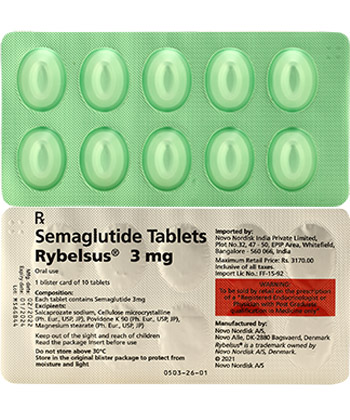
- The usual dose depends on the product and indication: Ozempic is typically started at 0.25 mg once weekly and increased to 0.5 mg, 1 mg, or 2 mg; Wegovy is started at 0.25 mg once weekly and titrated up to 2.4 mg; Rybelsus is usually started at 3 mg once daily and increased to 7 mg or 14 mg.
- Semaglutide is available as a subcutaneous injection in prefilled pens or as an oral tablet.
- How quickly it starts working depends on the form: the injection begins to act within hours, but the full clinical effect is usually seen after several weeks as the dose is gradually increased; the oral tablet also begins to work on the day it is taken, with progressive benefit over time.
- The duration of action is about 1 week for the injection forms, which is why they are taken once weekly. The oral tablet is taken once daily.
- Alcohol should be used with caution, as it may worsen nausea and increase the risk of low blood sugar, especially if semaglutide is used with other diabetes medicines.
- The most common side effects are nausea, vomiting, diarrhoea, abdominal pain, and constipation.
- Would you like to try semaglutide without a prescription?
Semaglutide
Basic Semaglutide Information
- INN (International Nonproprietary Name): Semaglutide
- Brand names available in United Kingdom: Ozempic, Wegovy, Rybelsus
- ATC Code: A10BJ06
- Forms & dosages: Injection (s.c.) 0.25mg, 0.5mg, 1mg, 1.7mg, 2mg, 2.4mg; oral tablet 3mg, 7mg, 14mg
- Manufacturers in United Kingdom: Novo Nordisk
- Registration status in United Kingdom: Prescription-only (Rx)
- OTC / Rx classification: Prescription-only (Rx)
Everyday Use And Best Practices For Semaglutide
Trying to fit semaglutide into a normal week can feel awkward at first, especially if life is already built around school runs, commuting, or shift work.
The good news is that the routine can usually be kept simple.
How to fit semaglutide into daily life:
- Rybelsus is taken once daily, so it works best as part of a fixed morning routine.
- Ozempic injection UK and Wegovy injection are once-weekly, so many people link them to the same day each week, such as Sunday evening or Monday before work.
- Phone reminders help more than memory alone, particularly during busy weeks.
- Repeat prescriptions can prevent last-minute gaps, which is useful for ongoing Semaglutide prescription UK treatment.
- Breakfast tea, early lunches, and larger evening meals are all fine, but a very heavy or greasy meal on dosing days can make nausea worse.
- Follow the prescriber’s instructions exactly and do not change timing on your own, because semaglutide is prescription-only.
For oral tablets, the timing matters more than the meal pattern, so patients should take them exactly as directed.
For injections, food does not affect the timing in the same way, but an empty stomach is not a reason to skip treatment.
People often say that linking a weekly injection to something regular, like bin day or a weekend top-up shop, makes adherence much easier.
If nausea is a concern, lighter meals, smaller portions, and good hydration usually help more than trying to “outsmart” the dose timing.
Safety Priorities And Who Should Avoid Semaglutide
The biggest question many patients ask is whether semaglutide is safe for them to start.
That starts with the formal contraindications and the situations where extra monitoring is needed.
Do not use / seek specialist advice / use caution:
- Do not use if there is a personal or family history of medullary thyroid carcinoma.
- Do not use if there is a personal or family history of multiple endocrine neoplasia syndrome type 2.
- Do not use if there is known hypersensitivity to semaglutide or any excipients.
- Seek advice if there is a history of pancreatitis, diabetic retinopathy, gastroparesis, or severe renal or hepatic impairment.
- Use caution when driving, using machinery, or doing safety-sensitive work if nausea, vomiting, dizziness, or low blood sugar develops.
- Use extra caution with insulin or sulfonylureas, because hypoglycaemia risk rises.
In day-to-day terms, that means pausing anything high risk if symptoms are strong and getting advice promptly.
If a reaction seems serious, clinicians may advise reporting it through the MHRA Yellow Card route.
For patients on Ozempic diabetes injection or Wegovy for weight loss, the practical aim is not to panic over every side effect, but to recognise the warning signs early and act sensibly.
Dosage, Titration And Special-Case Adjustments
People usually want to know the actual dose plan before they start.
The standard regimens are straightforward, but the step-up matters because it reduces gastrointestinal side effects.
| Brand | Usual Starting Dose | Typical Maintenance Range | Route | Frequency |
|---|---|---|---|---|
| Ozempic | 0.25mg | 0.5mg, 1mg, or 2mg in some patients | s.c. | Once weekly |
| Wegovy | 0.25mg | Up to 2.4mg | s.c. | Once weekly |
| Rybelsus | 3mg | 7mg or 14mg | Oral | Once daily |
In practice, titration is usually gradual over about four weeks at each step.
That slower climb is there to help with nausea, bloating, and other tummy-related effects.
In England, prescriptions may attract an NHS charge, while Scotland, Wales, and Northern Ireland generally do not charge NHS patients for prescriptions.
No age-based dose adjustment is normally needed, although older adults may be more sensitive to side effects.
Mild to moderate renal or hepatic impairment usually does not require a routine change, but monitoring makes sense, and severe impairment needs caution.
Treatment is often ongoing, with review every three to six months to check benefit, side effects, and whether the dose still suits the patient.
User Experiences And What UK Patients Commonly Report
What do people actually notice once they start?
Patient-reported experiences often centre on appetite control, fewer cravings, and feeling more able to stick to a routine.
That does not mean everyone gets the same result, but these themes come up often in conversations with pharmacists and GP teams.
Common positive themes reported by patients:
- Easier appetite control during the week.
- Fewer snacks and fewer urges to graze.
- Better adherence when the dose is linked to a fixed weekly habit.
- Reassurance from pharmacists and GP advice during the first few weeks.
Common challenges:
- Nausea, constipation, and reduced appetite.
- Burping or a “too full” feeling after meals.
- Frustration during dose escalation if symptoms flare briefly.
- Supply shortages, especially for Wegovy, which can disrupt plans and cause anxiety.
If side effects are stopping normal eating, affecting work, or getting worse rather than settling, the pharmacist or GP should be contacted.
That is especially important if the patient cannot keep fluids down, has severe abdominal pain, or feels faint.
Buying Semaglutide In The UK: Pharmacies, Prescriptions And Costs
Buying semaglutide safely in the UK means using a legitimate prescription route.
That may be through an NHS prescription or a private prescription, depending on the medicine, the indication, and the patient’s eligibility.
Well-known pharmacy names such as Boots, LloydsPharmacy, and Superdrug are familiar to many people, and reputable UK online pharmacies can also supply prescription medicines legally.
Searches for “Buy semaglutide UK” should always be approached carefully, because counterfeit or unregulated offers do appear online.
In our online pharmacy, semaglutide is available without a prescription, with discreet delivery to United Kingdom in 5-14 days.
Cost and source comparison:
| Buying route | What it means | What to check |
|---|---|---|
| NHS | May be subject to prescription charges in England; generally free in Scotland, Wales, and Northern Ireland | Eligibility, local rules, and current stock |
| Private pharmacy | Price varies by brand, dose, and supply | Prescription validity, medicine name, and delivery terms |
| In-store | Face-to-face collection from a pharmacy | Registration, pharmacist support, and dispensing accuracy |
| Online | Convenient ordering from a UK-registered pharmacy | GPhC registration, contact details, and secure checkout |
Before buying, patients should check that the pharmacy is properly registered, that the product name matches the prescription, and that the pack is from a legitimate source.
What Semaglutide Is And How It Works
Semaglutide is the INN for a GLP-1 analogue classified under ATC A10BJ06.
The best-known brands are Ozempic, Wegovy, and Rybelsus, all developed by Novo Nordisk.
In plain English, it helps the body release insulin when it is needed, lowers glucagon, slows stomach emptying, and can reduce appetite.
How it works at a glance:
| Action | What it can feel like day to day |
|---|---|
| Helps insulin release when needed | Steadier blood sugar control |
| Lowers glucagon | Less unwanted rise in blood glucose |
| Slows stomach emptying | Feeling full sooner |
| Reduces appetite | Smaller portions and fewer cravings |
That combination is why many patients notice they get full more quickly and find eating patterns easier to manage.
It is useful to keep the discussion practical rather than technical, especially when the patient is still deciding whether to speak to a GP or pharmacist.
Main Indications And When Semaglutide Is Used In The UK
Approved use depends on the brand and the condition being treated.
Ozempic is used for type 2 diabetes, Wegovy is used for weight management, and Rybelsus is used for type 2 diabetes.
It is not authorised for type 1 diabetes, and it is not first-line monotherapy in all regions.
| Brand | Approved indication | Route | Comment |
|---|---|---|---|
| Ozempic | Type 2 diabetes | Injection | Often used within specialist or GP-directed care |
| Wegovy | Weight management | Injection | Used where weight-loss treatment is clinically appropriate |
| Rybelsus | Type 2 diabetes | Tablet | Oral option for suitable patients |
Some UK clinics may discuss off-label use, but that should only happen under proper prescribing oversight.
Off-label use is not the same as routine NHS prescribing, and the distinction matters.
For someone seeking weight management support after other approaches have not worked well enough, or for a patient with type 2 diabetes needing a review, semaglutide may be part of a wider treatment plan.
Food, Drink And Medicine Interactions
Most people want a simple answer here: can they still have tea, coffee, or an occasional drink?
Typical UK drinks such as tea and coffee do not have a major direct interaction with semaglutide, but they may worsen nausea if taken on an empty stomach.
Alcohol deserves more caution, particularly if the patient also uses insulin or sulfonylureas, because hypoglycaemia risk and nausea can increase.
Interaction red flags:
- Insulin or sulfonylureas, because blood sugar can fall too low.
- Heavy or rich meals on dosing days, which can worsen stomach upset.
- Over-the-counter remedies and supplements that have not been mentioned to the prescriber.
- Persistent nausea, vomiting, or dizziness after drinking alcohol.
Light meals, adequate hydration, and avoiding very rich foods after dosing are usually more helpful than strict food rules.
If an adverse reaction is suspected, the prescriber may advise Yellow Card reporting.
Latest Evidence And Real-World Insights For UK Readers
Semaglutide has been studied heavily in recent years for blood sugar control, weight loss, and longer-term cardiometabolic benefit.
The headline evidence has strengthened its place in modern diabetes and weight-management care, but everyday use still depends on tolerability, access, and affordability.
| Evidence area | What recent work has focused on | Practical meaning |
|---|---|---|
| Blood sugar control | GLP-1 therapy in type 2 diabetes | Steadier long-term management for suitable patients |
| Weight loss | Use of Wegovy for weight management | More attention on appetite control and adherence |
| Real-world use | Tolerability, supply stability, and long-term persistence | Patients need a plan that is realistic, not just effective on paper |
UK clinicians usually care as much about real-world tolerability as they do about headline efficacy numbers.
Patients are best served by current NHS, EMA, and MHRA information rather than social media claims or anecdotal stories.
Alternative Choices And Comparisons With Other NHS Options
Semaglutide is not the only GLP-1 option, so patients often ask what else is available.
The main comparisons are with liraglutide, dulaglutide, and tirzepatide.
| Medicine | Route | Dosing pattern | Practical point |
|---|---|---|---|
| Liraglutide | Injection | Daily | May suit people who prefer a longer-established option |
| Dulaglutide | Injection | Weekly | Convenient weekly schedule |
| Tirzepatide | Injection | Weekly | Mounjaro may come up in UK discussions, but it is not semaglutide |
| Semaglutide | Injection or tablet | Weekly or daily | Offers both injectable and oral options |
Simple pros and cons checklist:
- Once-weekly convenience.
- Oral option availability.
- Weight-loss focus versus diabetes control.
- Supply reliability and local prescribing rules.
- Tolerability compared with other GLP-1 agonist drugs comparison options.
The right choice depends on diagnosis, side effects, access, and what the prescriber can safely support.
Regulation, Approval And NHS Framework
Semaglutide products are prescription-only and regulated in the UK through the medicines framework under MHRA oversight.
Prescribers and pharmacists rely on approved product information rather than internet rumours or unofficial advice.
Regulatory summary:
Access can depend on the diagnosis, the treatment aim, local commissioning rules, and specialist review.
That matters because a patient seeking Wegovy for weight loss may face different access criteria from someone using Ozempic diabetes injection or Rybelsus tablets for type 2 diabetes.
Supply shortages can also affect real-world availability, so treatment plans sometimes need adjusting.
The safest source of up-to-date advice is the GP, diabetes team, pharmacist, or NHS service.
Frequently Asked Questions About Semaglutide
Can I take semaglutide if I work shifts?
Yes, but consistency matters more than the clock, especially for weekly injections.
Pick a fixed day and use reminders so the routine does not drift.
What if I miss a weekly dose?
Take it as soon as remembered within five days.
If more than five days have passed, wait until the next scheduled dose.
Do I need to store it in the fridge?
Unopened pens should be refrigerated at 2–8°C.
Used pens can be kept at up to 30°C for up to 56 days.
Tablets should be stored below 30°C in the original packaging.
Why do I feel sick after starting?
Nausea is one of the common early side effects and often settles as the dose is increased gradually.
If it is severe, persistent, or stopping normal eating, speak to the pharmacist or GP.
Guidelines For Proper Use And Pharmacist-Style Counselling
The most useful counselling is usually the simplest.
Set a reminder, keep the same dosing day, store the medicine properly, and know when to ask for help.
Checklist for safe use:
- Keep unopened pens refrigerated at 2–8°C and protect them from light.
- Store used pens at no more than 30°C for up to 56 days.
- Keep tablets below 30°C in the original packaging.
- If using a weekly injection, take the missed dose within five days if possible.
- Do not double-dose tablets if a dose is forgotten.
- Contact the GP, diabetes nurse, pharmacist, or NHS service if side effects are persistent, severe, or affecting meals, work, or driving.
- Expect treatment to be reviewed every three to six months.
- Use legitimate supply routes and check the pharmacy is properly registered.
That approach helps patients stay on track without overcomplicating the treatment.
Delivery Across United Kingdom
| City | Region | Delivery time |
|---|---|---|
| London | Greater London | 5-7 days |
| Birmingham | West Midlands | 5-7 days |
| Manchester | North West England | 5-7 days |
| Leeds | West Yorkshire | 5-7 days |
| Glasgow | Scotland | 5-7 days |
| Edinburgh | Scotland | 5-7 days |
| Liverpool | North West England | 5-7 days |
| Bristol | South West England | 5-7 days |
| Sheffield | South Yorkshire | 5-7 days |
| Newcastle upon Tyne | North East England | 5-7 days |
| Nottingham | East Midlands | 5-9 days |
| Leicester | East Midlands | 5-9 days |
| Coventry | West Midlands | 5-9 days |
| Cardiff | Wales | 5-7 days |