Dapsone
In brief
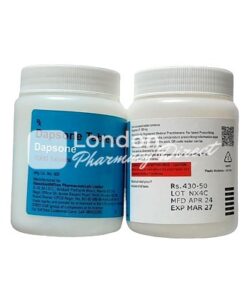
- In our pharmacy, you can buy dapsone without a prescription, with delivery in 5–14 days throughout the United Kingdom. Discreet and anonymous packaging is available.
- Dapsone is used for leprosy (as part of multidrug therapy), dermatitis herpetiformis, Pneumocystis jirovecii pneumonia prophylaxis in some patients and topically for acne; it is a sulfone antibiotic that inhibits bacterial folate synthesis (dihydropteroate synthase) and also has anti‑inflammatory effects via inhibition of neutrophil activity.
- Usual doses: oral 100 mg once daily for leprosy; 50–100 mg daily for dermatitis herpetiformis (titrated to effect); PCP prophylaxis often 100 mg daily or 50 mg twice daily; topical 5% or 7.5% gel applied once or twice daily.
- Forms of administration include oral tablets (commonly 25 mg, 50 mg, 100 mg), topical gel or cream (5% and 7.5%), and inclusion in multidrug leprosy kits.
- Onset: topical acne improvements are commonly seen over 4–12 weeks; dermatitis herpetiformis symptoms often improve within 24–48 hours; for leprosy and systemic infections clinical benefit develops over weeks to months.
- Duration of action: the plasma half‑life is approximately 20–30 hours so once‑daily dosing is usual; treatment courses vary by indication (leprosy commonly 6–24 months as part of MDT, topical acne typically 12+ weeks).
- Alcohol warning: avoid excessive alcohol—alcohol may increase the risk of liver toxicity and can exacerbate haematological risks; exercise caution with liver disease and discuss alcohol use with a clinician.
- The most common side effect is nausea; other important adverse effects include haemolysis and methemoglobinaemia (especially in patients with G6PD deficiency), headache, rash and mild hepatic enzyme elevations.
- Would you like to try dapsone without a prescription?
Basic Dapsone Information
- INN (International Nonproprietary Name): Dapsone (also known as 4,4′-sulfonyldianiline, diaminodiphenyl sulfone, DDS).
- Brand Names Available In United Kingdom: not specified.
- ATC Code: J04BA02 (Antimycobacterials, drugs for treatment of lepra) and D10AX05 (Dermatologicals, topical acne).
- Forms & Dosages: Oral tablets 25mg, 50mg, 100mg; topical gel/cream 5% and 7.5%; multidrug therapy (MDT) packs for leprosy.
- Manufacturers In United Kingdom: not specified.
- Registration Status In United Kingdom: not specified.
- OTC / Rx Classification: Prescription only in nearly all jurisdictions.
Everyday Use & Best Practices
Morning Vs Evening Dosing
Which time of day should you take dapsone?
Oral dapsone is commonly prescribed once daily with typical tablet strengths of 25mg, 50mg and 100mg.
For leprosy the standard is 100mg once daily as part of multidrug therapy, while dermatitis herpetiformis is often 50–100mg daily, titrated to effect.
Many patients prefer evening dosing because early side effects such as nausea or dizziness occur while asleep.
If dapsone increases alertness, vivid dreams or insomnia, discuss switching to morning dosing with your clinician.
Taking With Or Without Meals (UK Diet Habits)
Does food matter when you take dapsone?
Absorption of oral dapsone is not strictly dependent on food, but taking it with a light snack can reduce stomach upset.
Common UK examples are a tea and biscuit or a light breakfast before the tablet.
Avoid very high‑fat meals if you notice more gastrointestinal discomfort after dosing.
For topical dapsone gels (5% or 7.5%), apply a thin layer to clean, dry skin once or twice daily and allow it to dry before moisturiser or make‑up.
- Practical aids: daily pill box, phone reminders for blood tests, and a medication checklist aligned with NHS monitoring.
- Storage: keep tablets and topical gel at room temperature and away from heat or moisture.
Safety Priorities
Who Should Avoid It (MHRA Warnings)
Who must not take dapsone?
Absolute contraindications include known hypersensitivity to dapsone or the sulfone group and severe G6PD deficiency because of the high risk of haemolysis.
Do not use dapsone in patients with acute anaemia or a history of severe methemoglobinaemia.
Severe hepatic impairment is also a reason to avoid systemic dapsone.
Mild to moderate G6PD deficiency, chronic anaemia, or significant renal or hepatic impairment require specialist advice and close monitoring.
Activities To Limit (Driving, Work Safety)
Can dapsone affect driving or work?
Dizziness, headache and unusual tiredness may occur, especially when treatment starts.
Until you know how dapsone affects you, avoid driving heavy goods vehicles, operating machinery or work at height.
Alcohol can worsen dizziness and may increase liver strain, so keep intake moderate and discuss use with your prescriber.
- Red flags: dark urine, breathlessness, pale or blue‑tinged skin or lips — seek urgent medical review.
- Monitoring: baseline full blood count and G6PD test, then regular FBC and liver function tests per clinic protocol.
Dosage & Adjustments
General Regimen (NHS Guidance)
What doses are commonly used?
Oral dapsone tablets are available as 25mg, 50mg and 100mg strengths.
For leprosy the common systemic dose is 100mg once daily as part of WHO multi‑drug therapy combining rifampicin and clofazimine.
Dermatitis herpetiformis is typically treated with 50–100mg daily, titrated down for maintenance when possible.
Topical dapsone gel 5% or 7.5% is applied once or twice daily for acne, usually reviewed after around 12 weeks.
Special Cases (Elderly, Comorbidities)
How are doses adjusted for special patients?
Renal impairment requires caution because of risk of accumulation and methemoglobinaemia; consider dose reduction or alternatives.
Significant hepatic impairment may need dose reduction or avoidance and specialist hepatology input.
Elderly patients do not have a universal dose adjustment but should have closer monitoring for anaemia and interactions.
Children for leprosy are dosed by weight (approximately 1mg/kg up to a 50mg maximum) under paediatric specialist care.
- Missed dose advice: take as soon as remembered unless it is close to the next dose; do not double up.
- Overdose management: supportive care and methylene blue for methemoglobinaemia in hospital settings.
User Testimonials
Positive Reports From UK Patients
Does dapsone help real people?
Many oral users report substantial reduction in blistering and improved disease control for dermatitis herpetiformis when titrated to an effective dose.
Topical users commonly report clearer skin after 8–12 weeks using 5%–7.5% gels, consistent with trial timelines.
Patients frequently cite helpful pharmacist counselling at Boots or LloydsPharmacy for understanding side‑effects and scheduling blood tests.
Common Challenges (Patient.info, NHS Forums)
What problems do patients describe?
Forums and discussion threads highlight early nausea, transient headaches and mild anaemia as common issues when starting systemic dapsone.
Several posts note delays in arranging G6PD testing prior to initiation and concerns about supply or prescription charges.
Topical irritation or dryness with gels occurs; reducing application frequency or adding a non‑comedogenic moisturiser often helps.
- Practical tips: carry a note of your prescription brand, set calendar alerts for FBC, and keep contact details for your GP or dermatology clinic.
- Short patient quote: “My blisters settled in weeks once the dose was right and the pharmacist reminded me about blood tests.”
Buying Guide
Pharmacy Sources (Boots, LloydsPharmacy, Superdrug)
Where can UK patients get dapsone?
Dapsone is prescription‑only in the UK and should be obtained via GP, dermatology or sexual health clinics and dispensed at high‑street chains and independent pharmacies.
Established retailers for dispensing and in‑person counselling include Boots, LloydsPharmacy and Superdrug.
Regulated online pharmacies can dispense on receipt of a valid prescription and provide courier delivery.
In our online pharmacy, dapsone is available without a prescription, with discreet delivery to United Kingdom in 5-14 days.
Price Comparison (NHS Prescription Charge Vs Private)
How much will it cost?
On the NHS, a standard prescription charge applies in England while prescriptions are usually free in Scotland, Wales and Northern Ireland.
Private prescriptions and branded topical products can cost more; generic oral tablets from recognised suppliers tend to be cheaper.
- Tip: ask the pharmacist for generic dapsone 25/50/100mg to reduce price and consider repeat dispensing for long‑term therapy.
- Ordering checklist: confirm the exact strength and formulation, read the patient leaflet and request pharmacist counselling on monitoring.
What’s Inside & How It Works
Ingredients Overview
What is dapsone made of?
Systemic dapsone is diaminodiphenyl sulfone (DDS) and is supplied as oral tablets commonly in 25mg, 50mg and 100mg strengths.
Topical formulations for acne are gels containing 5% or 7.5% dapsone with dermatological excipients for stability and skin tolerability.
Brand names such as Aczone are examples of topical dapsone formulations in international markets, while generics supply the oral product globally.
Mechanism Basics Explained Simply
How does dapsone work?
Dapsone has antimicrobial activity against mycobacteria and anti‑inflammatory effects that reduce neutrophil‑driven skin inflammation.
This explains its role in leprosy as an antimycobacterial (ATC J04BA02) and in acne/dermatological conditions as a topical agent (ATC D10AX05).
The same oxidative action on red blood cells that helps its efficacy also underlies risks such as haemolysis and methemoglobinaemia, particularly in G6PD deficiency.
- Quick note: the mechanism accounts for both benefit and some key adverse effects, which is why baseline blood testing is required.
Main Indications
Approved Uses (MHRA Listing)
What is dapsone licensed to treat?
Dapsone is licensed for leprosy, dermatitis herpetiformis and topical use in acne vulgaris, and appears on the WHO Essential Medicines List.
Oral dapsone is a core drug in multidrug therapy for leprosy, typically given at 100mg daily alongside rifampicin and clofazimine.
Topical dapsone gels are indicated for inflammatory acne and are used for typically 12 weeks or longer as needed.
Off-Label Uses In UK Clinics
When do specialists use dapsone off‑label?
Dermatologists sometimes prescribe oral dapsone for other neutrophilic dermatoses, autoimmune blistering disorders or where alternatives are unsuitable.
Dapsone can also be an option for PCP prophylaxis when trimethoprim‑sulfamethoxazole is contraindicated, but G6PD clearance is essential.
- Off‑label use should have specialist oversight, documented informed consent and clear monitoring (FBC, LFTs).
Interaction Warnings
Food Interactions (Alcohol, Tea/Coffee)
Any food to avoid with dapsone?
There are no major food interactions known, but alcohol may increase dizziness and add liver strain, so keep intake moderate.
High caffeine intake from tea or coffee is not known to change dapsone metabolism but may exacerbate sleep disturbances if dosed at night.
Drug Conflicts (MHRA Yellow Card Reports)
Which drugs interact with dapsone?
Dapsone interacts with other oxidant drugs that increase the risk of haemolysis or methemoglobinaemia and with drugs that alter hepatic metabolism.
Rifampicin, used in leprosy MDT, is an enzyme inducer and can alter dapsone plasma levels, so specialist regimens account for this interaction.
MHRA Yellow Card reports highlight haemolytic anaemia, methemoglobinaemia and hypersensitivity reactions; suspected adverse reactions should be reported.
- Practical step: always provide a complete medicines list to your pharmacist and check OTC remedies before starting dapsone.
- Red‑flag co‑medications: sulfonamides, certain antimalarials and strong enzyme inducers — discuss with your clinician.
Latest Evidence & Insights
What do recent UK and EU studies say?
Research from 2022–2025 has focused on optimising topical dapsone for acne and improving safety monitoring for systemic use.
Topical 5%–7.5% dapsone studies show modest but consistent reductions in inflammatory lesions over 12 weeks, supporting current acne practice.
Systemic safety papers emphasise baseline and interval full blood counts, liver function tests and routine G6PD screening to reduce haemolysis and methemoglobinaemia.
Leprosy programmes continue to rely on dapsone within WHO multidrug therapy, with real‑world MDT data supporting efficacy when combined with rifampicin and clofazimine.
- Clinical takeaway: follow updated MHRA, NICE or specialist guidance and consider alternatives for high‑risk patients.
Alternative Choices
What alternatives are available on the NHS?
Choice of alternative depends on the indication for which dapsone was intended.
For acne, NHS options include topical retinoids, benzoyl peroxide, oral tetracyclines such as doxycycline or lymecycline, and isotretinoin for severe disease.
For dermatitis herpetiformis and neutrophilic dermatoses, alternatives include sulfapyridine or immunosuppressants under specialist care as dapsone‑sparing options.
For PCP prophylaxis, trimethoprim‑sulfamethoxazole is preferred; dapsone is a second‑line option when TMP‑SMX cannot be used but requires G6PD testing.
- Pros/cons checklist: TMP‑SMX is effective but can cause allergic reactions; tetracyclines are useful for inflammatory acne but cause photosensitivity; isotretinoin is highly effective but teratogenic and requires strict monitoring.
Regulation Snapshot
How is dapsone regulated in the UK setting?
Dapsone is prescription‑only and appears on the WHO Essential Medicines List, with licensing by major regulators worldwide.
MHRA safety updates focus on haemolysis and methemoglobinaemia and encourage Yellow Card reporting for adverse events.
Systemic dapsone is often started by specialists such as dermatology or infectious diseases, with GPs continuing repeat prescribing under agreed monitoring plans.
Pharmacists should check G6PD status before dispensing systemic dapsone and counsel patients about baseline tests and follow‑up blood work.
- Supply note: many generics are available from international manufacturers, so brand names and pack sizes may vary between suppliers.
FAQ Section
Do I need a blood test before starting dapsone?
Yes; a baseline full blood count and a G6PD test are recommended to reduce the risk of haemolysis and methemoglobinaemia.
Can I take dapsone while pregnant or breastfeeding?
Pregnancy decisions are specialist‑led; dapsone may be used if benefits outweigh risks but requires careful discussion with the treating clinician.
What if I miss a dose?
Take the missed dose as soon as you remember unless it is close to the next dose; do not double up.
Is topical dapsone safer than oral?
Topical 5%/7.5% gels reduce systemic exposure and therefore systemic side‑effects are less common, though local irritation may occur.
Guidelines For Proper Use
What should a pharmacist tell patients starting dapsone?
Confirm the indication and check that baseline FBC and G6PD results are available before dispensing systemic dapsone.
Explain the dose, dosing time, likely common side‑effects such as nausea or headache, and signs of haemolysis or methemoglobinaemia that require urgent review.
Ask about pregnancy plans and current medications to identify interactions such as rifampicin or sulfonamides.
- Provide written information, set phone reminders for blood tests and advise on Yellow Card reporting for suspected adverse reactions.
- For topical users, suggest patch testing on a small area and recommend non‑comedogenic moisturisers if dryness appears.
Delivery Across United Kingdom
| City | Region | Delivery Time |
|---|---|---|
| London | England | 5-7 days |
| Birmingham | England | 5-7 days |
| Manchester | England | 5-7 days |
| Glasgow | Scotland | 5-7 days |
| Leeds | England | 5-7 days |
| Liverpool | England | 5-7 days |
| Sheffield | England | 5-7 days |
| Edinburgh | Scotland | 5-7 days |
| Bristol | England | 5-7 days |
| Cardiff | Wales | 5-7 days |
| Belfast | Northern Ireland | 5-7 days |
| Newcastle Upon Tyne | England | 5-7 days |
| Nottingham | England | 5-9 days |
| Leicester | England | 5-9 days |
| Plymouth | England | 5-9 days |
Final Safety Checklist
Before starting dapsone ensure there is a baseline full blood count and a G6PD test documented.
Keep a weekly pill organiser and set phone reminders for blood tests and repeat prescriptions.
Store oral tablets and topical gels at room temperature and keep topical gels away from direct heat and moisture.
Avoid doubling missed doses and seek immediate A&E care for cyanosis, severe breathlessness or dark urine, which can indicate methemoglobinaemia or haemolysis.
Prefer in‑person pharmacist counselling when beginning systemic therapy and carry contact details for your GP or dermatology clinic.