Salazopyrin
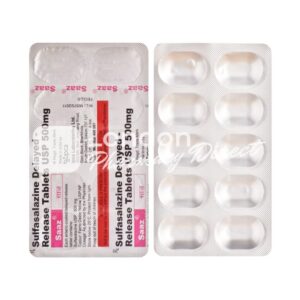
In brief
- Salazopyrin (sulfasalazine) is normally a prescription-only medicine in major markets (UK, EU, US, Canada, Australia); it is supplied via pharmacies and licensed online suppliers — availability varies by country and in some local pharmacies it may sometimes be sold without a receipt, so check local regulations and pharmacy policy.
- Salazopyrin is used for induction and maintenance of remission in ulcerative colitis and for treatment of rheumatoid arthritis and juvenile idiopathic arthritis; it is metabolised by gut bacteria to 5‑aminosalicylic acid (5‑ASA) and sulfapyridine, producing local anti‑inflammatory effects in the bowel (5‑ASA) and systemic immunomodulatory effects (sulfapyridine) in arthritis.
- Typical dosing: for ulcerative colitis adults 1–2 g/day initially (maintenance commonly ~2 g/day, up to 4 g/day for severe disease); for rheumatoid arthritis start ~0.5 g/day and titrate to ~2 g/day (max ~3 g/day); children ≥6 years: ~30–50 mg/kg/day up to about 2 g/day.
- Oral administration as tablets (immediate‑release 500 mg and enteric‑coated/delayed‑release EN‑tabs 500 mg); rarely as suspension in some preparations — take with food and a full glass of water and split the total daily dose into 2–4 doses to improve tolerability.
- Onset of clinical effect is slow: for ulcerative colitis improvements often appear within 3–6 weeks; for rheumatoid arthritis response commonly takes 6–12 weeks.
- Duration of action: the drug is taken daily and therapeutic benefit is maintained with continued use — treatment for months to years may be required to maintain remission, with physician review at regular intervals.
- Avoid excessive alcohol while taking salazopyrin; alcohol may worsen GI upset and increase the risk of liver toxicity — discuss alcohol use with your prescriber.
- The most common side effect is gastrointestinal upset (nausea, vomiting, indigestion, abdominal pain), with other frequent effects including headache, rash and reversible orange‑yellow discolouration of urine; blood and liver monitoring is recommended.
- Would you like to try salazopyrin without a prescription?
Basic Salazopyrin Information
- INN (International Nonproprietary Name): Sulfasalazine
- Brand Names Available In United Kingdom: Azulfidine; Azulfidine EN-tabs; Salazopyrin; Salazopyrine; Sulfasalazin (as regional equivalents)
- ATC Code: A07EC01
- Forms & Dosages: Immediate‑release tablets 500mg; Delayed‑release EN‑tabs 500mg
- Manufacturers In United Kingdom: Pfizer; Heumann Pharma; Actavis; various generic manufacturers (supply from multiple countries)
- Registration Status In United Kingdom: Approved and prescription only
- OTC / Rx Classification: Prescription Only (Rx)
Important Safety Notes Before You Start
Salazopyrin (sulfasalazine) is prescription‑only in the UK and must be obtained via an NHS prescription, hospital clinic or a registered pharmacy.
Always tell your GP or pharmacist if you have a sulfonamide or salicylate allergy, G6PD deficiency, liver or kidney problems, are pregnant or breastfeeding.
Take the tablets with food and a full glass of water and split the total daily dose into 2–4 smaller doses to reduce nausea.
Expect baseline blood tests (FBC, LFTs, renal) and repeat monitoring commonly every 8–12 weeks arranged by your GP or specialist clinic.
Store at room temperature, around 25°C, in the original container and away from moisture and light.
Avoid heavy manual work and check driving advice if you feel dizzy or very tired after starting the medicine.
Everyday Use & Best Practices
Morning Vs Evening Dosing
How soon will I feel better is a common question from patients starting salazopyrin for arthritis or colitis.
Many UK patients split the total daily dose into two doses, taken morning and evening, to reduce gastrointestinal side effects and keep blood levels steady.
When clinicians need higher totals they commonly divide doses into three or four smaller portions across the day.
Delayed‑release EN‑tabs are sometimes gentler on the stomach, especially for patients taking the 500mg tablets.
Follow the exact regimen recommended by your specialist or GP and do not change dose timing without advice.
For rheumatoid arthritis relief patients are usually reminded that benefits may take 6–12 weeks, so daily adherence matters.
Taking With Or Without Meals (UK Diet Habits)
Always take salazopyrin with food and a full glass of water to reduce the risk of nausea.
Link doses to typical UK meals such as breakfast and the evening meal to make the routine easier to remember.
Avoid taking the first dose on an empty stomach before a morning commute when nausea would be disruptive.
Shift workers, for example NHS staff or retail workers, can set phone alarms or use a pill organiser to keep timing consistent.
- Typical Twice‑Daily Schedule: breakfast and evening meal.
- Three‑Times Daily Option: breakfast, mid‑afternoon, evening meal (useful for higher doses).
- Four‑Times Daily Option: distribute evenly with food if prescribed by your clinician.
Daily Routine Checklist
- Check dose prescribed and the total daily amount.
- Take each dose with food and a full glass of water.
- Use a pill organiser or phone alarm for reminders.
- Record any nausea, headaches or fatigue in a symptom diary.
- Attend blood test appointments every 8–12 weeks as arranged by GP or clinic.
Safety Priorities
Who Should Avoid It (MHRA Warnings)
Do not take salazopyrin if you have a known sulfonamide or salicylate allergy.
It is contraindicated in infants under two years, in active porphyria and where intestinal or urinary obstruction exists.
Use caution and specialist review if you have liver or kidney impairment, blood dyscrasias or G6PD deficiency.
Women planning pregnancy, who are pregnant or breastfeeding should discuss risks and benefits with their specialist team.
Baseline bloods and follow‑up monitoring, typically every 8–12 weeks initially, are standard practice to spot rare but serious reactions early.
Activities To Limit (Driving, Work Safety)
Avoid heavy manual handling, operating machinery or driving if you feel dizzy, markedly fatigued or have visual changes after starting treatment.
Inform occupational health if you work in safety‑critical roles such as HGV driving or aviation duties.
Simple Symptom Checklist For Safety‑Critical Work
- Dizziness or light‑headedness.
- Severe fatigue or excessive sleepiness.
- New visual disturbance.
- Severe nausea or vomiting affecting concentration.
Clinic Guidance Table: When Is It Safe To Drive?
- No dizziness or significant drowsiness since the last dose — generally safe to drive.
- New, unexplained dizziness, marked fatigue, visual changes or vomiting — do not drive and contact GP or clinic.
- If in doubt, contact your clinician or occupational health for individual advice.
Dosage & Adjustments
General Regimen (NHS Guidance)
Dosage depends on the condition being treated and is prescribed by clinicians following NHS guidance and the product information.
For ulcerative colitis adults typically start on 1–2g/day in divided doses with maintenance commonly about 2g/day, and severe disease sometimes up to 4g/day.
In rheumatoid arthritis clinicians often begin at a low dose such as 500mg/day and titrate gradually to around 2g/day; maximum doses commonly noted are 3g/day.
Children aged six years and older receive weight‑based dosing around 30–50mg/kg/day in divided doses.
Prescribers generally advise splitting the total daily dose and taking it with food to reduce gastrointestinal side effects.
Baseline blood tests and regular follow‑up every 8–12 weeks are usually arranged by the GP or specialist clinic.
Special Cases (Elderly, Comorbidities)
Older adults and patients with renal or hepatic impairment normally start at the lower end of dosing ranges with closer monitoring.
In G6PD deficiency there is a recognised risk of haemolysis and clinicians may avoid salazopyrin or use alternative therapies.
Dose reductions or switching to another medicine are considered if patients experience intolerance or if laboratory monitoring shows abnormal results.
| Indication | Typical Starting Dose | Maintenance/Max |
|---|---|---|
| Ulcerative Colitis (Adult) | 1–2 g/day divided | 2 g/day (severe up to 4 g/day) |
| Rheumatoid Arthritis (Adult) | 0.5 g/day, titrate | ~2 g/day (max commonly 3 g/day) |
| Juvenile RA (≥6 yrs) | 30–50 mg/kg/day | Up to ~2 g/day |
User Testimonials
Positive Reports From UK Patients
“After three months my flare frequency reduced and I could cut back on prednisolone,” is feedback often shared at clinics by patients on salazopyrin.
Many UK patients report meaningful reductions in joint pain or fewer ulcerative colitis flares after consistent use for several weeks.
Patients commonly highlight reduced steroid dependence and improved ability to work regular shifts as important benefits.
Community pharmacists at Boots and LloydsPharmacy often reassure patients that orange or yellow‑orange urine is benign and reversible.
Clinic nurses and patient support groups frequently provide practical coping tips and medication reminders that patients find helpful.
Common Challenges (Patient.info, NHS Forums)
Early nausea, headaches and the slow onset of benefit — often 6–12 weeks — are frequent frustrations reported by patients on forums such as Patient.info and NHS boards.
Regular blood tests and occasional dose changes are commonly mentioned as practical annoyances.
Patients advise using reminders, pill organisers and discussing branded versus generic options like Salazopyrin versus Azulfidine with the pharmacist.
Pros And Cons — Patient View
- Pros: Effective for many patients, reduces flare frequency, low drug cost compared with some biologics.
- Cons: Slow onset of action, GI side effects early on, need for regular blood and liver monitoring.
Questions To Ask Your Clinician
- What total daily dose is intended and how will it be split across the day?
- Which formulation is best for me — immediate‑release 500mg or EN‑tabs?
- What blood tests and appointments will be needed and who arranges them?
- What alternatives exist if I cannot tolerate salazopyrin?
Buying Guide
Pharmacy Sources (Boots, LloydsPharmacy, Superdrug)
Salazopyrin (sulfasalazine) is prescription‑only in the UK and can be collected from community chains such as Boots, LloydsPharmacy and Superdrug with a valid prescription.
Hospital pharmacies and registered online pharmacies also supply salazopyrin following a clinician’s prescription.
Many patients use NHS repeat prescriptions organised through their GP surgery or hospital clinic for ongoing supply.
Community pharmacists will advise on the available formulations including 500mg immediate‑release tablets and delayed‑release EN‑tabs, and on branded versus generic options.
Always verify that any online pharmacy is GPhC‑registered before supplying prescription medicines.
Price Comparison (NHS Prescription Charge Vs Private)
Prescription policy varies across the UK and prescriptions are free in Scotland, Wales and Northern Ireland.
In England a standard NHS prescription charge applies; check NHS.uk for current rates and exemptions.
Private prescriptions or paying out of pocket may cost more and branded products will generally be more expensive than generics.
- NHS Collection At Community Pharmacy: standard NHS rules apply; many patients use repeat dispensing.
- Hospital Pharmacy Collection: often used for initiation or hospital‑managed monitoring.
- Registered Online Pharmacy: convenient for repeat supplies but ensure GPhC registration.
In our online pharmacy, salazopyrin is available without a prescription, with discreet delivery to United Kingdom in 5-14 days.
What’s Inside & How It Works
Ingredients Overview
The active ingredient in Salazopyrin is sulfasalazine, the international nonproprietary name (INN).
Tablets typically come as 500mg immediate‑release tablets or as delayed‑release EN‑tabs to improve gastrointestinal tolerability.
Sulfasalazine is a sulfonamide linked to 5‑aminosalicylic acid (5‑ASA), and both branded and generic formulations exist.
Manufacturers include Pfizer and multiple generic producers across Europe and beyond, and formulations may vary slightly in release profile.
Store the medication at room temperature and keep it in the original container as advised.
Mechanism Basics Explained Simply
In the gut, bacteria split sulfasalazine into two components: sulfapyridine and 5‑ASA (5‑aminosalicylic acid).
The 5‑ASA component works locally in the bowel to reduce intestinal inflammation and is particularly important for ulcerative colitis.
The sulfapyridine moiety is absorbed and contributes to the systemic anti‑inflammatory effects that can benefit rheumatoid arthritis.
Clinical effects commonly take several weeks to appear, so patients are advised to continue treatment as directed and attend monitoring appointments.
| Component | Role | Common Dose Form |
|---|---|---|
| 5‑ASA | Local anti‑inflammatory in the colon | Released from sulfasalazine in the gut |
| Sulfapyridine | Systemic anti‑inflammatory effects | Absorbed after bacterial split |
| Sulfasalazine Tablet | Prodrug delivering both components | 500mg immediate or EN‑tab |
Main Indications
Approved Uses (MHRA Listing)
Salazopyrin (sulfasalazine) is licensed for ulcerative colitis, rheumatoid arthritis and juvenile idiopathic/rheumatoid arthritis in children aged six years and above.
In ulcerative colitis it is used for induction of remission over several weeks and for maintenance to reduce relapse risk.
For rheumatoid arthritis the clinical benefit often appears after 6–12 weeks and maintenance therapy is commonly around 2g/day for responders.
Initiation is frequently managed in hospital clinics or by rheumatology and IBD services, with shared‑care arrangements for repeat prescribing and monitoring.
Off‑Label Uses In UK Clinics
Some clinicians consider sulfasalazine for other inflammatory conditions when alternatives are unsuitable, but evidence varies by condition.
For Crohn’s disease the evidence for benefit is limited and mesalazine or other immunomodulators are commonly preferred.
Any off‑label use should be discussed with and monitored by a specialist and recorded in the clinical notes.
| Indication | Expected Onset | Monitoring Schedule |
|---|---|---|
| Ulcerative Colitis | 3–6 weeks for induction | Baseline then 8–12 weekly initially |
| Rheumatoid Arthritis | 6–12 weeks | Baseline then 8–12 weekly initially |
| Off‑Label Inflammatory Uses | Variable | Specialist tailored monitoring |
Interaction Warnings
Food Interactions (Alcohol, Tea/Coffee)
Normal tea or coffee do not cause major interactions with salazopyrin.
Alcohol should be limited while taking salazopyrin because of potential effects on liver function and combined risks if other hepatotoxic medicines are used.
Always discuss alcohol intake with your clinician, particularly during pregnancy or when taking other medicines affecting the liver.
Taking doses with food reduces nausea and improves tolerability for many patients.
Drug Conflicts (MHRA Yellow Card Reports)
Sulfasalazine can affect folate metabolism, so folic acid supplementation may be recommended in some regimens.
Combined use with methotrexate or other myelosuppressive medicines can increase haematologic toxicity risk and requires closer monitoring.
Sulfasalazine may alter the response to warfarin and patients on anticoagulants need more frequent INR checks when starting or stopping sulfasalazine.
Always provide a full list of current medicines to your GP or pharmacist and discuss any potential interactions before starting therapy.
- Medicines To Review With Your Clinician: methotrexate; warfarin; other disease‑modifying antirheumatic drugs; folic acid supplementation where indicated.
- Report suspected side effects to the MHRA Yellow Card scheme; your pharmacist can assist with reporting.
Latest Evidence & Insights
Recent reviews and guideline updates through 2022–2024 continue to support sulfasalazine for inducing and maintaining remission in mild–moderate ulcerative colitis and as a disease‑modifying option in rheumatoid arthritis when alternatives are unsuitable.
Meta‑analyses highlight modest effectiveness, a delayed onset of benefit over several weeks and a higher rate of gastrointestinal adverse events compared with mesalazine in certain comparisons.
European safety surveillance and MHRA Yellow Card data underscore rare but serious haematologic or hepatic reactions, reinforcing the need for baseline and ongoing monitoring.
Practice Points For UK Clinicians
- Include salazopyrin in formulary choices for selected patients where monitoring is acceptable and alternatives are unsuitable.
- Balance potential benefit with the monitoring burden and patient preference, especially in women of childbearing potential.
- Keep up to date with NICE guidance, NHS specialty guidelines and recent rheumatology/IBD conference summaries for nuanced recommendations.
Alternative Choices
NHS Prescribing Alternatives With Pros/Cons Checklist
For ulcerative colitis, mesalazine (5‑ASA) formulations such as Asacol or Pentasa are often preferred for topical colonic anti‑inflammatory effect and generally cause fewer allergic reactions.
For rheumatoid arthritis, common alternatives include methotrexate, leflunomide and hydroxychloroquine, with methotrexate frequently used as the first‑line DMARD.
Choice is influenced by comorbidity, pregnancy plans and monitoring capability.
Pros/Cons Checklist
- Sulfasalazine: low drug cost, effective for many patients with UC or RA, requires regular blood and liver monitoring; orange urine is a common reversible effect.
- Mesalazine: fewer systemic effects, often preferred for mild UC.
- Methotrexate: strong DMARD efficacy, teratogenic risk, requires folic acid and separate monitoring.
- Hydroxychloroquine: typically milder DMARD, requires ophthalmic monitoring.
| Medicine | Efficacy | Monitoring | Cost |
|---|---|---|---|
| Sulfasalazine | Moderate for UC and RA | FBC, LFTs, renal function 8–12 weekly initially | Low |
| Mesalazine | Good for UC | Less systemic monitoring | Variable |
| Methotrexate | Strong for RA | Regular blood tests; teratogenic precautions | Low–moderate |
Regulation Snapshot
MHRA Approval & NHS Prescribing Framework
Sulfasalazine (INN: sulfasalazine) marketed as Salazopyrin or Azulfidine is prescription‑only and regulated by the MHRA in the UK.
It is authorised for ulcerative colitis, rheumatoid arthritis and juvenile arthritis, and prescribing follows the SmPC and local NHS formularies.
Hospital specialists commonly initiate therapy with shared‑care transfer to GPs for repeat prescriptions in many areas.
Prescribing And Supply Notes (UK)
Prescriptions must be issued by an authorised prescriber and community pharmacies dispense under NHS rules.
Check product literature for differences between immediate‑release 500mg tablets and delayed‑release EN‑tabs.
Pharmacists play a central role in counselling, monitoring advice and reporting adverse reactions via the MHRA Yellow Card system.
| Regulatory Point | Summary | Who Monitors? |
|---|---|---|
| SmPC Guidance | Follow MHRA‑approved product information | Prescriber / Specialist |
| Repeat Prescribing | Often via GP under shared‑care | GP / Specialist |
| Adverse Reporting | Use MHRA Yellow Card | Pharmacist / Clinician / Patient |
FAQ
How Long Before Salazopyrin Works?
- For rheumatoid arthritis many patients notice benefit within 6–12 weeks.
- For ulcerative colitis induction of effect is typically assessed over 3–6 weeks.
- Continue as advised and attend scheduled reviews with your clinician.
What Blood Tests Are Needed And How Often?
- Baseline full blood count (FBC), liver function tests (LFTs) and renal function are standard before starting.
- Monitoring commonly occurs every 8–12 weeks initially; your GP or clinic will arrange these tests.
- Report sore throat, bruising, unexplained bleeding or jaundice immediately.
Can I Take Other Common Medications?
- Always give your pharmacist a complete medicines list for review.
- Important interactions include methotrexate and warfarin, which require closer monitoring.
- Folic acid may be recommended with certain combinations, as advised by your prescriber.
What About Pregnancy And Fertility?
- Discuss with your specialist as individual decisions vary by clinical circumstances.
- Some clinicians continue sulfasalazine in pregnancy with monitoring and folic acid, but specialist advice is essential.
Guidelines For Proper Use
UK Pharmacist Counselling Style
Confirm indication and check for sulfonamide or salicylate allergy before dispensing.
Review concomitant medicines, explain dose splitting and advise taking each dose with food and a full glass of water.
Discuss formulation choices including 500mg immediate‑release tablets and EN‑tabs for better GI tolerability.
Explain expected onset over weeks, common reversible effects such as orange urine, and red‑flag signs that need immediate GP review.
- Printed Counselling Checklist: indication, dose schedule, food advice, monitoring plan, red‑flag symptoms.
- Provide a patient leaflet and signpost to support groups such as Crohn’s & Colitis UK and Versus Arthritis.
NHS Patient Support Advice
Signpost patients to their GP or specialist clinic for blood monitoring and to charities for peer support.
Recommend NHS.uk for prescription and cost information and advise that community pharmacies can often help with repeat prescriptions and medicine reviews.
Encourage reporting of side effects via the MHRA Yellow Card and keeping a symptom diary to record benefit and adverse effects.
Delivery Across United Kingdom
| City | Region | Delivery time |
|---|---|---|
| London | Greater London | 5-7 days |
| Birmingham | West Midlands | 5-7 days |
| Manchester | Greater Manchester | 5-7 days |
| Glasgow | Scotland | 5-7 days |
| Leeds | West Yorkshire | 5-7 days |
| Edinburgh | Scotland | 5-7 days |
| Liverpool | Merseyside | 5-7 days |
| Bristol | South West England | 5-7 days |
| Newcastle | North East England | 5-9 days |
| Sheffield | South Yorkshire | 5-9 days |
| Nottingham | Nottinghamshire | 5-9 days |
| Southampton | South East England | 5-9 days |
| Plymouth | South West England | 5-9 days |
Final Safety Checklist
Before you start, tell your GP or pharmacist about allergies, G6PD deficiency, liver or kidney problems, pregnancy or breastfeeding.
Take each dose with food and a full glass of water and split the total daily dose into 2–4 doses to reduce nausea.
Ensure baseline FBC, LFTs and renal tests are completed and arrange repeat monitoring commonly every 8–12 weeks.
Stop and seek urgent advice if you develop fever, sore throat, unexplained bruising, jaundice or severe rash.
Keep the medication in the original container at room temperature near 25°C and away from moisture.