Donepezil
In brief
- Donepezil is a prescription-only medicine (POM) in the UK and should be obtained from a pharmacy with a valid prescription; it is not legally available over the counter in the UK.
- Donepezil is used for symptomatic treatment of Alzheimer’s disease (mild to moderate) and works as a reversible acetylcholinesterase inhibitor, increasing central acetylcholine levels to help cognitive function.
- Usual oral dosing for adults starts at 5 mg once daily (commonly at bedtime), with a usual increase to 10 mg once daily after 4–6 weeks if tolerated.
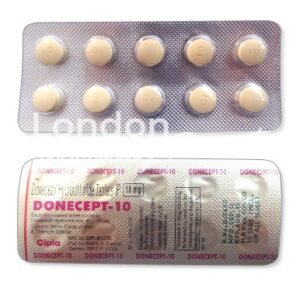
- Forms of administration include oral film‑coated tablets (5 mg, 10 mg) and orodispersible tablets (ODT).
- Pharmacological action (acetylcholinesterase inhibition) begins within hours, but meaningful clinical improvement in cognition or behaviour is usually assessed over weeks (commonly 4–6 weeks).
- Donepezil is administered once daily and its clinical effect is sustained over 24 hours with a long elimination half‑life (around several days), supporting once‑daily dosing and continued chronic use.
- Avoid excessive alcohol while taking donepezil as alcohol may worsen dizziness, sedation, cognitive impairment and other side effects; discuss alcohol use with your prescriber.
- The most common side effect is nausea (other common effects include diarrhoea, vomiting, insomnia, headache, dizziness, fatigue and muscle cramps; bradycardia and syncope can occur and require monitoring).
- Would you like to try donepezil without a prescription?
Basic donepezil information
- INN (international nonproprietary name): Donepezil
- Brand names available in the United Kingdom: Aricept; Aricept Evess (orodispersible tablet); Donepezil Teva; Donepezil Mylan; Donepezil Sandoz; generics from multiple suppliers
- ATC code: N06DA02
- Forms and dosages: Film-coated tablets 5 mg and 10 mg; orodispersible tablets 5 mg and 10 mg
- Manufacturers in the United Kingdom: Eisai and Pfizer (Aricept); generics from several manufacturers including Teva, Sandoz and Mylan
- Registration status in the United Kingdom: Licensed by the MHRA; prescription-only medicine (POM)
- OTC / Rx classification: Prescription-only medicine (POM)
Initial practical instructions, warnings and daily-life integration
Is donepezil prescription-only and who should start it?
Donepezil is prescription-only in the UK under MHRA rules and should only be started after assessment by a GP or an NHS memory clinic.
Keep repeat prescriptions through the NHS or a registered UK pharmacy to ensure continuity and monitoring.
What to do in an overdose emergency?
- Seek immediate emergency care if there is severe vomiting.
- Seek immediate emergency care if there is profuse sweating.
- Seek immediate emergency care if there is a very slow heartbeat (bradycardia).
- Seek immediate emergency care if there are seizures or loss of consciousness.
- Hospital treatment is supportive and IV atropine is the recognised antidote in hospital practice.
Storage and transport guidance for daily life.
Store donepezil at room temperature between 15–30°C and keep tablets dry and away from light.
Always keep medicines out of reach of children and check the packaging for manufacturer stability notes when travelling.
Simple daily-life tips to make taking donepezil easier.
- Choose a single daily slot for the tablet—bedtime is commonly used to reduce nausea and vivid dreams.
- Set a smartphone alarm or use a pill reminder to improve adherence.
- Use a dosette box or ask your pharmacy about blister packs if swallowing or memory is a problem.
- Bring a current medicines list to every appointment and include brand, strength and start date.
How to report concerns or side effects.
Report adverse effects via the MHRA Yellow Card scheme or discuss concerns with your local pharmacist for advice and onward referral.
Everyday use and best practices
Morning vs evening dosing
What time of day should someone take donepezil?
Most UK clinicians start donepezil at 5mg once daily, taken at bedtime to reduce nausea and vivid dreams.
Staying consistent with the same time each day improves adherence and predictability of side effects.
If you switch the dose time, try to pick a reliable mealtime trigger such as after supper or just before bed.
Taking with or without meals
Will donepezil upset the stomach and what helps?
Donepezil may cause gastrointestinal upset, so if nausea occurs take the tablet with a light snack or soon after a typical UK breakfast or supper.
Orodispersible tablets such as Aricept Evess dissolve on the tongue and are useful for people with swallowing difficulties.
- Dosing checklist: Start 5mg at bedtime, stay with the same time each day, take with a light snack if nauseous, ask pharmacist about ODT if swallowing is difficult.
| Formulation | Strengths | Typical use |
|---|---|---|
| Film-coated tablet | 5mg, 10mg | Standard oral dosing, taken once daily. |
| Orodispersible tablet (ODT) | 5mg, 10mg | Useful for swallowing problems; dissolves on the tongue. |
Safety priorities
Who should avoid it (MHRA warnings)
Who must not take donepezil?
Do not use donepezil in anyone with known hypersensitivity to donepezil hydrochloride or to piperidine derivatives.
Check the manufacturer leaflet for excipient allergies specific to a brand such as Aricept or generic formulations.
Use caution or avoid if there is a history of sick sinus syndrome or significant cardiac conduction abnormalities due to bradycardia risk.
Exercise caution if there is active peptic ulcer disease, severe asthma or COPD, urinary outflow obstruction, or a seizure disorder.
Activities to limit (driving, work safety)
Can I drive while taking donepezil?
Avoid driving or operating heavy machinery until you know how donepezil affects you, as dizziness, syncope or blurred vision can occur.
For professional drivers or safety‑critical jobs discuss symptoms with your GP and check NHS and DVLA guidance if your symptoms could affect safe driving.
- Clinician checklist: Check for hypersensitivity, cardiac history, respiratory disease, peptic ulcer history, urinary retention and seizure risk before prescribing.
- Do not drive if: you experience dizziness, fainting, blackouts or marked drowsiness after starting or increasing the dose.
Dosage and adjustments
General regimen (NHS guidance)
What is the usual starting dose?
Typical NHS practice is to start with 5mg once daily, usually at night, and if tolerated after 4–6 weeks increase to 10mg once daily.
Standard oral strengths available in the UK are 5mg and 10mg in film-coated tablets and ODT forms such as Aricept Evess.
The 10mg daily oral dose is the common maximum in UK practice.
Special cases (elderly, comorbidities)
How are doses adjusted for age or illness?
Elderly patients (≥65) do not typically require an initial dose adjustment but should be monitored closely for side effects and tolerability.
Renal impairment usually requires no adjustment as renal excretion of donepezil is minimal.
Exercise caution and monitor in moderate to severe hepatic impairment because liver metabolism matters more for donepezil clearance.
Do not use in children because safety and efficacy have not been established.
| Scenario | Starting dose | Monitoring |
|---|---|---|
| Adult with mild-to-moderate Alzheimer’s | 5mg once daily, increase to 10mg after 4–6 weeks if tolerated | Check GI tolerance, sleep disturbance and heart rate |
| Older adult (≥65) | 5mg once daily, same routine | Monitor for dizziness, bradycardia and falls |
| Renal impairment | No routine adjustment | Standard monitoring |
| Hepatic impairment | Use with caution | Frequent review advised |
Legal status and availability in the UK
Donepezil is a prescription-only medicine (POM) in the UK.
For convenience, our online pharmacy offers donepezil without a prescription, with discreet delivery to the United Kingdom in 9–21 days, but please note UK guidance requires initiation after NHS or GP assessment.
What’s inside and how it works
Ingredients overview
What is the active ingredient?
The active ingredient is donepezil hydrochloride, the INN Donepezil, available as Aricept, Aricept Evess and multiple generics including Donepezil Teva and Donepezil Mylan.
Excipients vary by brand, so always check the patient information leaflet for allergy information before taking any specific product.
Mechanism basics explained simply
How does donepezil help memory?
Donepezil is an acetylcholinesterase inhibitor (ATC code N06DA02) that increases acetylcholine levels in the brain to support nerve cell communication involved in memory and attention.
It is a symptomatic treatment and is not a cure; it may slow decline for some people and improve certain daily functions for a time.
| Form | Active ingredient |
|---|---|
| Film-coated tablet | Donepezil hydrochloride 5mg, 10mg |
| Orodispersible tablet (Aricept Evess) | Donepezil hydrochloride 5mg, 10mg |
Main indications
Approved uses (MHRA listing)
What is donepezil licensed to treat?
Donepezil is licensed for the symptomatic treatment of mild‑to‑moderate Alzheimer’s disease in adults as listed by MHRA and commonly prescribed after diagnostic assessment.
In moderate‑to‑severe disease clinicians commonly prescribe the 10mg once daily oral dose, and combination therapy with memantine may be considered for advanced cases.
Off-label uses in UK clinics
Are there off‑label uses?
Off‑label uses are uncommon but may occur in specialist centres for certain cognitive disorders, and Lewy body dementia patients can be more sensitive and should see a specialist.
- Checklist for indication criteria: Confirm diagnosis from memory clinic or GP, evaluate comorbidities and cardiac history, and document baseline function for future reviews.
- Referral triggers: Rapid decline, syncope, falls, or severe GI intolerance should prompt review by a specialist or memory clinic.
Interaction warnings
Food interactions (alcohol, tea/coffee)
Can food or drink affect donepezil?
Alcohol can worsen dizziness, drowsiness and GI upset, so reduce or avoid alcohol when starting or increasing the dose.
Caffeine from tea or coffee does not change donepezil blood levels but can worsen insomnia or palpitations, so monitor intake if sleep or palpitations occur.
Drug conflicts
Which medicines interact with donepezil?
Medicines that lower heart rate, such as beta‑blockers or some calcium‑channel blockers, can increase the risk of clinically significant bradycardia when combined with donepezil.
NSAIDs and aspirin may raise the risk of gastrointestinal bleeding in patients with peptic ulcer disease taking donepezil, so monitor closely.
Anticholinergic drugs oppose the action of donepezil and can reduce its effectiveness; avoid concurrent anticholinergic agents where possible.
| Drug/class | Interaction risk |
|---|---|
| Beta‑blockers | Increased bradycardia risk; monitor heart rate. |
| NSAIDs / Aspirin | Possible higher GI bleeding risk in susceptible patients. |
| Anticholinergics | Reduce donepezil effectiveness; avoid if possible. |
Alternative choices
What are NHS alternatives to donepezil?
Available alternatives include rivastigmine, which offers a transdermal patch, galantamine, and memantine for moderate‑to‑severe disease or combination therapy.
Each alternative has a different side‑effect profile and delivery option to suit individual needs.
- Rivastigmine pros/cons: Patch reduces GI side effects but may cause skin reactions.
- Galantamine pros/cons: May offer similar cognitive benefit but often needs twice‑daily dosing initially and can cause GI upset.
- Memantine pros/cons: NMDA antagonist for moderate‑to‑severe Alzheimer’s and commonly combined with a cholinesterase inhibitor.
| Drug | Key consideration |
|---|---|
| Rivastigmine | Patch option, monitor skin and GI tolerability. |
| Galantamine | Twice daily dosing at start, watch GI side effects. |
| Memantine | Used in moderate‑to‑severe disease; combined therapy possible. |
Regulation snapshot
What is the legal status of donepezil in the UK?
Donepezil is MHRA‑registered and is a prescription‑only medicine across the UK available as branded Aricept and Aricept Evess as well as multiple generics such as Donepezil Teva and Donepezil Mylan.
Prescribing usually follows a memory clinic referral or GP assessment with follow‑up monitoring for efficacy and adverse effects as standard NHS practice.
Report suspected adverse reactions via the MHRA Yellow Card scheme and consult the patient information leaflets available from pharmacies and manufacturers.
| Item | Status |
|---|---|
| MHRA registration | Registered for use in the UK. |
| Prescription classification | Prescription‑only medicine (POM). |
FAQ
Will donepezil cure Alzheimer’s?
No, donepezil treats symptoms and can stabilise function for some people but it is not a cure.
Can I drive while taking donepezil?
Only if you feel safe to do so and you should stop driving if you experience dizziness, blackouts or significant drowsiness and inform your GP since DVLA guidance may apply.
What if I miss a dose?
If you miss a dose take the next dose at the usual time and do not double up to catch up.
If you often forget ask a pharmacist about blister packs or reminder aids.
Guidelines for proper use
UK pharmacist counselling style
How should a pharmacist counsel someone starting donepezil?
Confirm the exact brand and formulation dispensed, explain usual timing (often bedtime), and outline common side effects such as GI upset, vivid dreams and possible bradycardia.
Review other medicines for interactions, especially beta‑blockers, NSAIDs and anticholinergics, and offer practical aids such as dosette boxes or ODT use tips.
Provide a medicines list card for carers containing brand, dose, start date and emergency contacts.
NHS patient support advice
What support should patients and carers expect from the NHS?
Regular reviews by the GP or memory clinic are standard to assess benefit versus side effects and carers should attend reviews where possible.
Encourage reporting adverse events through the MHRA Yellow Card and signpost to local dementia support groups and the Alzheimer’s Society for practical help.
When to call the GP or hospital: call urgently for severe vomiting, fainting, very slow heartbeat or seizures because these require immediate assessment.
- Pharmacist counselling checklist: confirm formulation, advise on timing, review side effects and interactions, recommend adherence aids, supply PIL.
- Patient/carer support checklist: attend reviews, carry a medicines list card, report side effects to MHRA Yellow Card, contact emergency services for severe symptoms.
Delivery across the United Kingdom
| City | Region | Delivery Time |
|---|---|---|
| London | Greater London | 9–21 days |
| Birmingham | West Midlands | 9–21 days |
| Manchester | Greater Manchester | 9–21 days |
| Glasgow | Scotland | 9–21 days |
| Leeds | West Yorkshire | 9–21 days |
| Liverpool | Merseyside | 9–21 days |
| Sheffield | South Yorkshire | 9–21 days |
| Edinburgh | Scotland | 9–21 days |
| Bristol | South West England | 9–21 days |
| Newcastle Upon Tyne | North East England | 9–21 days |
| Nottingham | Nottinghamshire | 9–21 days |
| Southampton | South Coast | 9–21 days |
| Plymouth | Devon | 9–21 days |