Zoloft
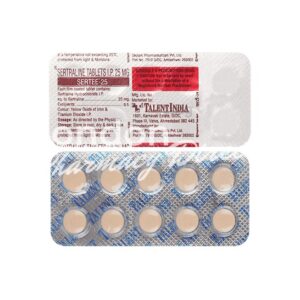
In brief
- In our pharmacy, you can buy Zoloft without a prescription, with delivery available throughout the United Kingdom in discreet packaging.
- Zoloft (sertraline) is used to treat major depressive disorder, obsessive compulsive disorder, panic disorder, post-traumatic stress disorder, and social anxiety disorder. It is a selective serotonin reuptake inhibitor (SSRI), which works by increasing serotonin levels in the brain.
- The usual dose of Zoloft is 50 mg once daily for depression and OCD; 25 mg daily may be used to start treatment for panic disorder, PTSD, or social anxiety disorder. The typical dose range is 50–200 mg per day, with a maximum of 200 mg per day.
- The form of administration is by mouth as film-coated tablets in 25 mg, 50 mg, and 100 mg strengths, or as an oral concentrate/solution 20 mg/mL. The oral concentrate must be diluted before use.
- Zoloft usually begins to work within 1–4 weeks, although some people may notice early improvement before this.
- The duration of action is around 24 hours, so it is usually taken once daily. For treatment courses, benefit is often assessed over 6–12 weeks, and maintenance treatment may continue for months or longer.
- Alcohol should be avoided or used with caution, as it can increase drowsiness, dizziness, impaired judgement, and may worsen depression or anxiety symptoms.
- The most common side effects are nausea, diarrhoea, dry mouth, headache, insomnia, drowsiness, dizziness, sweating, fatigue, and sexual side effects such as reduced libido or delayed ejaculation.
- Would you like to try Zoloft without a prescription?
Basic Zoloft information
- INN (international nonproprietary name): Sertraline
- Brand names available in the United Kingdom: Lustral (Pfizer); generic sertraline. Zoloft is the original brand name
- ATC code: N06AB06
- Forms and dosages: Tablets 25 mg, 50 mg, 100 mg; oral solution/concentrate 20 mg/mL, 60 mL multidose bottle
- Manufacturers in the United Kingdom: Pfizer (Lustral); generics from companies such as Teva, Sandoz and Accord
- Registration status in the United Kingdom: Licensed by the MHRA; prescription-only medicine
- OTC / Rx classification: Prescription-only medicine (POM)
Everyday use and best practices
Morning vs evening dosing
Patients are usually told to take sertraline once daily, at the same time each day.
If Zoloft feels a bit activating, some people prefer morning dosing.
If it makes you feel drowsy, evening dosing may suit you better.
The main thing is consistency rather than constantly changing the time.
- Do take it daily, following the same routine.
- Do follow the prescriber’s plan if the dose is changed.
- Don’t keep moving the dose around unless a clinician advises it.
- Do ask a pharmacist if you are unsure when to take sertraline.
A lot of people link daily dosing to another habit, such as brushing teeth or making the first cup of tea, because that makes adherence easier.
Taking with or without meals
Sertraline can be taken with or without food, so it usually fits neatly into a normal UK routine.
If nausea crops up, taking sertraline with breakfast or a snack often helps.
Practical examples include tea and toast, cereal, yoghurt, or a light lunch.
Do not crush or split the tablet unless the tablet is scored and a pharmacist or doctor has confirmed that it is suitable.
- Do take it with food if your stomach feels unsettled.
- Do keep tablets in a routine alongside another habit.
- Don’t alter the tablet form without advice.
- Don’t assume a brand change means the medicine has changed.
Safety priorities
Who should avoid it
Sertraline is prescription only in the UK, and the prescription should always be checked against the patient’s history.
MHRA sertraline warnings are especially important when there is a history of bipolar disorder, seizure disorders, bleeding problems, or severe liver disease.
It should not be taken with MAOIs or pimozide, and disulfiram is also a problem if the oral concentrate is being used.
A GP or pharmacist review matters even more if someone is switching brands.
- Avoid if there is a known allergy to sertraline or excipients.
- Avoid with MAOIs or pimozide.
- Use extra caution in bipolar disorder, epilepsy, bleeding disorders, and severe hepatic impairment.
- Discuss carefully in pregnancy or breastfeeding.
Activities to limit
Sertraline side effects can include drowsiness, dizziness, tremor, or blurred concentration, especially at the start or after a dose increase.
That means driving on sertraline, cycling in traffic, working at height, or using machinery should be approached cautiously until you know your own response.
A builder on a ladder, a delivery driver, or someone using safety-critical equipment may need to wait until they feel steady.
If you feel unwell for work, contact your GP or pharmacist rather than stopping suddenly.
- Do avoid driving if you feel sleepy or dizzy.
- Do take extra care with ladders and machinery.
- Don’t push through symptoms if concentration is poor.
- Do seek advice before making changes to treatment.
Dosage and adjustments
General regimen
NHS-style sertraline dosage depends on the condition being treated.
For major depressive disorder and OCD, the usual starting dose is 50 mg once daily.
For panic disorder, PTSD, and social anxiety, treatment often starts at 25 mg and is then increased.
For PMDD (an off-label use in the UK, usually specialist-led), sertraline may be used as 50 mg daily either continuously or during the luteal phase.
The maximum daily dose is usually 200 mg, while PMDD is often capped at 150 mg.
| Condition | Initial dose | Typical range | Max. daily dose |
|---|---|---|---|
| Major depressive disorder | 50 mg once daily | 50–200 mg/day | 200 mg |
| Obsessive compulsive disorder | 50 mg once daily | 50–200 mg/day | 200 mg |
| Panic disorder, PTSD, social anxiety | 25 mg start, often titrated to 50 mg | 50–200 mg/day | 200 mg |
| Premenstrual dysphoric disorder (off-label in the UK) | 50 mg daily | 50–150 mg/day | 150 mg |
Improvement may take 1 to 4 weeks, and many acute courses need at least 6 to 12 weeks.
Special cases
Older adults may be more sensitive to antidepressants such as sertraline, so clinicians usually choose the lowest effective dose and increase slowly.
In liver impairment, the product data advises reducing the dose or increasing the dosing interval because clearance is reduced.
Renal impairment usually does not need a specific adjustment, but caution is still sensible in severe disease.
The 25 mg, 50 mg and 100 mg strengths make stepwise titration easier, but dose changes should never be made just because someone feels better.
- Do follow the prescribed titration plan.
- Do report side effects early.
- Don’t reduce or increase the dose on your own.
- Do ask about sertraline dose adjustment if liver problems or frailty are present.
Legal status and availability in the UK
Sertraline is a prescription-only medicine (POM) in the UK.
In our online pharmacy, Zoloft is available without a prescription, with discreet delivery to the United Kingdom in 9–21 days.
What’s inside and how it works
Ingredients overview
The INN is sertraline. Zoloft is the original brand name; in the UK the Pfizer brand is Lustral.
Common forms include 25 mg, 50 mg, and 100 mg tablets, plus a 20 mg/mL oral solution or concentrate.
The oral concentrate must be diluted before use and is not the same as the tablets.
| Form | Strength | Usage notes |
|---|---|---|
| Tablets | 25 mg, 50 mg, 100 mg | Film-coated, scored |
| Oral solution/concentrate | 20 mg/mL | Must be diluted before use |
Mechanism basics explained simply
Sertraline is an SSRI.
That means it increases the amount of serotonin available in the brain, which may help mood, anxiety, and obsessive symptoms over time.
Its ATC code is N06AB06, which identifies it as a selective serotonin reuptake inhibitor.
Main indications
Approved uses
Sertraline is licensed for major depressive disorder, OCD, panic disorder, PTSD and social anxiety disorder.
UK prescribing is based on clinical judgement, NICE-style practice, and individual assessment rather than a one-size-fits-all plan.
People should not expect the full effect straight away, because the benefit builds gradually.
| Condition | Usual starting dose | Usual range |
|---|---|---|
| Major depressive disorder | 50 mg once daily | 50–200 mg/day |
| OCD | 50 mg once daily | 50–200 mg/day |
| Panic disorder, PTSD, social anxiety | 25 mg start | 50–200 mg/day |
Off-label uses in UK clinics
Some clinicians use sertraline off-label, for example for premenstrual dysphoric disorder (PMDD), when the evidence and patient need support it.
That should always be explained clearly, with informed consent and review.
Off-label use does not mean unsafe, but it should be documented and monitored.
Interaction warnings
Food interactions
There is no major food restriction with sertraline.
Alcohol is best limited or avoided, especially at the start, because it can worsen drowsiness, low mood, or poor judgement.
Tea and coffee are not usually prohibited, although too much caffeine may make anxiety or sleep problems worse in some people.
Taking sertraline with food may reduce nausea.
- Do limit alcohol at the start.
- Do watch caffeine if anxiety is worse.
- Do take with food if nausea appears.
- Don’t assume all drinks and foods are a problem.
Drug conflicts
All medicines should be checked, including over-the-counter products and herbal remedies such as St John’s wort.
Serotonin syndrome is the key concern with other serotonergic medicines.
Medicines to flag include MAOIs, triptans, tramadol, some migraine medicines, linezolid, and pimozide.
Suspected side effects can be reported through the MHRA Yellow Card scheme.
- Check antidepressants and migraine treatments.
- Check tramadol and linezolid.
- Check herbal products, especially St John’s wort.
- Report suspected side effects through Yellow Card.
Alternative choices
NHS prescribing alternatives with pros and cons
Common SSRI alternatives to sertraline include fluoxetine, paroxetine, citalopram, and escitalopram.
Some may suit sleep, anxiety, or side-effect tolerance better, but none is universally best.
Choice on the NHS often depends on previous response and interaction profile.
- Fluoxetine: may suit some people needing a longer half-life option.
- Paroxetine: can help some anxiety presentations, but tolerability may be less favourable for others.
- Citalopram: familiar SSRI option, though individual side effects differ.
- Escitalopram: often considered when a different SSRI is needed.
When a switch may be considered
A switch may be discussed if nausea persists, sexual side effects are troublesome, sleep is poor, or the response is not good enough.
Do not switch or stop without a prescriber plan, because withdrawal or relapse can happen.
A useful checklist for a consultation includes sedation, weight change, sexual side effects, and previous treatment history.
Regulation snapshot
MHRA approval and NHS prescribing framework
Sertraline is prescription only in the UK and sits within standard NHS and private care routes.
MHRA oversight focuses on safety, product quality, and post-marketing reporting.
Generic sertraline may come from different licensed suppliers, including Teva, Sandoz, Accord, or other manufacturers.
The name on the box may change, but the active ingredient remains the same.
What UK patients should check on the pack
Check the name, strength, batch, and expiry date, especially if the colour or brand changes.
Packaging can vary without changing the active ingredient, so a different box does not automatically mean a different medicine.
Pharmacists are often the easiest first contact for label, dosing, and supply questions.
| What to check | Why it matters |
|---|---|
| Name | Confirms the medicine is sertraline |
| Strength | Helps avoid dosing errors |
| Batch | Useful for supply traceability |
| Expiry date | Checks the medicine is still in date |
Frequently asked questions
Common UK patient questions
How long does sertraline take to work? Some people notice changes in 1 to 4 weeks, but full benefit often takes longer.
Can I drink alcohol? Small amounts may be tolerated by some people, but it is safer to limit alcohol, particularly at the start.
What if I miss a dose? Take it when remembered unless it is nearly time for the next dose, and do not double up.
Guidelines for proper use
UK pharmacist counselling style
Sertraline counselling is straightforward: take it once daily, keep to the same time, do not stop suddenly, and tell a clinician about all medicines and supplements.
Side effects often improve, but persistent or severe symptoms need review.
The oral solution must be diluted before use and stored correctly away from heat and moisture.
- Do take sertraline as prescribed.
- Do store it at room temperature and protect it from moisture.
- Do dilute the oral concentrate before use.
- Don’t stop suddenly without advice.
NHS patient support advice
Contact your GP, practice nurse, community pharmacist, NHS 111, or urgent care if you feel very unwell, suicidal, confused, or have signs of serotonin syndrome.
Regular reviews help check effectiveness, side effects, and whether the dose still suits your needs.
A safe daily checklist is simple: take it as prescribed, store it safely, keep follow-up appointments, and report concerns early.
Delivery across the United Kingdom
| City | Region | Delivery time |
|---|---|---|
| London | Greater London | 9–21 days |
| Birmingham | West Midlands | 9–21 days |
| Manchester | North West England | 9–21 days |
| Liverpool | North West England | 9–21 days |
| Leeds | Yorkshire and the Humber | 9–21 days |
| Glasgow | Scotland | 9–21 days |
| Edinburgh | Scotland | 9–21 days |
| Cardiff | Wales | 9–21 days |
| Belfast | Northern Ireland | 9–21 days |
| Sheffield | Yorkshire and the Humber | 9–21 days |
| Bristol | South West England | 9–21 days |
| Nottingham | East Midlands | 9–21 days |
| Leicester | East Midlands | 9–21 days |
| Newcastle upon Tyne | North East England | 9–21 days |