Prednisolone
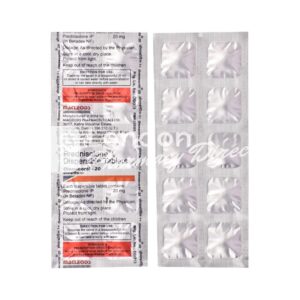
In brief
- Prednisolone can be purchased from pharmacies in the UK and many other countries, and it is generally prescription only (Rx). It is not an over-the-counter medicine in major markets because it can cause serious side effects, although some pharmacies may offer it through prescription services or online medical assessment.
- Prednisolone is a systemic corticosteroid used for inflammatory, allergic, autoimmune, and immune-related conditions such as asthma/COPD flare-ups, severe allergic reactions, rheumatoid arthritis, and adrenal insufficiency. It works by reducing inflammation and suppressing the immune response.
- The usual adult dose depends on the condition: 40–50 mg daily for acute asthma/COPD, 10–15 mg daily for rheumatoid or autoimmune disease, 30–60 mg daily for severe allergic reactions, and 5–7.5 mg daily for adrenal insufficiency. In children, dosing is usually 1–2 mg/kg/day with a maximum of 40 mg, under specialist supervision.
- Prednisolone is available as tablets, oral suspension/syrup, injections for hospital use, and in some markets as eye drops or cream. Tablets are commonly 1 mg, 2.5 mg, 5 mg, 10 mg, or 25 mg.
- Prednisolone usually starts to work within a few hours, although the exact onset depends on the condition and the form used. For some symptoms, improvement may be noticed the same day.
- The duration of action is typically about 12–36 hours, so it is often taken once daily, usually in the morning. Treatment length varies from a few days to long-term use depending on the illness.
- Alcohol is best avoided or kept to a minimum while taking prednisolone, as it may increase the risk of stomach irritation, ulcers, and other side effects, especially with higher doses or longer courses.
- The most common side effects include increased appetite, indigestion, mood changes, difficulty sleeping, and fluid retention. Long-term use can also increase the risk of weight gain, high blood pressure, diabetes, and osteoporosis.
- Would you like to try prednisolone without a prescription?
Basic Prednisolone Information
- INN (International Nonproprietary Name): Prednisolone.
- Brand names available in United Kingdom: Deltacortril, Deltastab, Dilacort, Pevanti.
- ATC Code: H02AB06.
- Forms & dosages: Tablets in 1 mg, 2.5 mg, 5 mg, 10 mg, and 25 mg strengths; oral suspension or syrup in 5 mg/5 mL, 10 mg/5 mL, and 15 mg/5 mL strengths; injection for hospital use in 10 mg/mL, 25 mg/mL, and 40 mg/mL strengths; eye drops and cream in 0.5% and 1% strengths.
- Manufacturers in United Kingdom: AstraZeneca, Teva, and Morningside.
- Registration status in United Kingdom: Approved, Prescription Only.
- OTC / Rx classification: Prescription Only.
Everyday Use And Best Practices For UK Patients
Thinking about the best time to take prednisolone, or wondering whether it should be swallowed with breakfast or left until later in the day?
For many UK patients, the small details matter because they make the course easier to stick to and may reduce side effects.
Prednisolone tablets are usually taken in the morning, ideally with breakfast, to fit the body’s natural steroid rhythm and to reduce sleep disturbance.
If a clinician has prescribed a split dose, follow that plan exactly and do not change the timing yourself, because it can affect both symptom control and side effects.
Many people link the morning dose to a fixed routine, such as teeth brushing, the school run, or putting the kettle on, because simple habits help with adherence.
- Take prednisolone with or after food if you can, as taking prednisolone with food may help reduce stomach upset.
- A normal British breakfast such as toast, cereal, or yoghurt is usually enough to buffer the tablet.
- If nausea is a problem, ask a pharmacist whether a snack or a different formulation would suit you better.
- If you take more than one regular medicine, keep a short daily note so nothing gets missed or doubled.
A patient picking up Deltacortril tablets on a Friday evening might only need a few practical reminders, but those reminders can make the whole course far smoother.
Quick checklist: take it in the morning, take it with food, keep to the same time daily, and ask for advice if the tablets upset your stomach.
Morning Vs Evening Dosing
Morning dosing is usually preferred because it matches the body’s natural steroid rhythm and is less likely to disturb sleep.
Evening doses can leave some people feeling wired, restless, or unable to settle at night.
If your prescriber changes the schedule, use that exact plan and do not self-adjust the morning dose prednisolone routine without advice.
Taking With Or Without Meals
Prednisolone can be taken with or after meals, and that is often the simplest way to reduce indigestion.
A light breakfast is usually enough, so you do not need a special meal plan just to take the medicine safely.
If tablets are hard to swallow, or if a child needs treatment, a pharmacist can advise on prednisolone syrup or another suitable form.
Safety Priorities: Who Should Avoid Prednisolone And What To Limit
Is prednisolone suitable for everyone, or are there people who need extra caution before starting it?
In the UK, prednisolone is a Prescription Only medicine, so it should not be started without clinical advice.
That matters because steroid tablets safety is not just about the dose; it also depends on your medical history, other medicines, and how long you need treatment.
- Tell your GP, pharmacist, or hospital team if you have diabetes, glaucoma, stomach ulcers, high blood pressure, osteoporosis, infections, or a history of mood changes on steroids.
- It may not be suitable if you have certain untreated infections or if your immune system is already weakened.
- Children, pregnant people, and older adults may need closer supervision and dose review.
- If your vision, sleep, mood, or concentration changes, take extra care with driving and safety-sensitive tasks.
- Use caution with ladders, machinery, and physically demanding work, especially if you feel shaky or less alert.
- If you are on a short course, remember that steroids can mask fatigue while the underlying illness is still there.
MHRA prednisolone safety advice is there for a reason, because prednisolone side effects can be significant in the wrong setting.
If a symptom feels severe, do not wait for it to pass on its own; seek advice promptly.
Who Should Avoid It
People with diabetes, glaucoma, ulcers, high blood pressure, osteoporosis, infections, or previous steroid-related mood problems should make those details clear before treatment starts.
Older adults often need closer review because the risks of bone loss, blood sugar changes, and blood pressure problems are higher.
Children and pregnant people may still use prednisolone when needed, but dosing and monitoring are more carefully tailored.
Activities To Limit
If prednisolone affects your concentration, sleep, or eyesight, avoid driving until you feel safe again.
Work at height, using machinery, or other tasks where a mistake could cause injury should be approached carefully.
Even when symptoms start improving quickly, keep pacing yourself because the illness being treated may still be affecting your energy.
Dosage And Dose Adjustments In Everyday UK Practice
How much prednisolone is right for asthma, allergy, or an inflammatory flare?
The answer depends on the condition, the severity, and whether it is a short course or longer-term treatment.
| Condition | Typical Starting Dose | Usual Regimen |
|---|---|---|
| Acute asthma/COPD | 40–50 mg daily | Morning dose for 5–7 days, then taper or stop |
| Severe allergic reaction | 30–60 mg daily | Short course for several days, then taper |
| Rheumatoid/autoimmune disease | 10–15 mg daily, up to 60 mg | Lowest effective dose, then reduce over weeks or months |
| Adrenal insufficiency | 5–7.5 mg daily | Maintenance treatment, sometimes higher in stress |
| Children’s conditions | 1–2 mg/kg daily, max 40 mg | Short courses, usually under specialist supervision |
- Do not stop suddenly if your course has lasted longer than advised, because tapering may be needed.
- Children usually need lower doses by body weight.
- Older adults should use the lowest effective dose because of higher risk of osteoporosis, diabetes, and hypertension.
- Liver or kidney impairment may mean lower doses or changes to tapering.
- If you miss a dose, follow the prescriber’s instructions rather than doubling up.
Prednisolone dosage is not one-size-fits-all, so a prednisolone 5mg tablet may be enough for maintenance in one person but far too low for an acute flare in another.
Likewise, a prednisolone 25mg strength may be part of a short course for a breathing flare-up, but it should only be used exactly as prescribed.
General Regimen
For acute asthma and COPD, common starting doses are 40–50 mg daily in the morning for 5–7 days.
For severe allergy, 30–60 mg daily may be used briefly.
For rheumatoid and autoimmune disease, lower doses such as 10–15 mg daily are often used, with specialist review if treatment continues.
Special Cases
Children are generally dosed by body weight, with 1–2 mg/kg/day and a maximum of 40 mg.
Older adults need the lowest effective dose, and long-term use requires extra care.
If kidney or liver function is reduced, clearance may be slower, so dose changes can be needed.
User Experiences And What UK Patients Commonly Report
What do patients actually say after starting prednisolone, and which problems come up most often?
In everyday practice, the medicine is often praised because it works quickly, especially for breathing problems, allergic reactions, and inflammatory pain.
That fast response is one reason prednisolone patient reviews are often positive, particularly when people feel much better within days.
- Many patients say the benefit is noticeable fast during flare-ups.
- Tablets and liquid forms are familiar to NHS prescribers and pharmacists.
- Short courses are often appreciated because symptom relief can be rapid.
- Common complaints include sleep disturbance, increased appetite, mood change, bloating, and indigestion.
- Some people say tapering instructions are confusing and want clearer written guidance.
- Patients often ask whether the medicine is “strong”, when the real issue is dose and duration rather than the name alone.
Prednisolone experiences in UK forums often sound similar to what is heard across the counter: “It helped quickly, but I didn’t sleep well” or “My appetite shot up for a few days”.
That is exactly why reporting troublesome effects early is sensible, especially if symptoms feel severe or unusual.
Positive Reports From UK Patients
People often value the speed of relief and the fact that prednisolone is well recognised by NHS clinicians.
It can be especially useful for short flare-ups when rapid control matters.
Common Challenges
Sleep disturbance, appetite changes, mood swings, and indigestion are frequent discussion points.
Written tapering plans help many patients, because the stopping stage can feel less straightforward than starting the course.
Buying Prednisolone In The UK: Where And How
Trying to work out where to get prednisolone, what it should cost, and whether an online pharmacy is legitimate?
In the UK, prednisolone is a prescription medicine, so it is usually supplied through community pharmacies such as Boots, LloydsPharmacy, and Superdrug when prescribed.
Online pharmacies can dispense it too, but they should be UK-regulated and should require a valid prescription.
Our online pharmacy can also arrange access with discreet delivery to the United Kingdom in 5–14 days, alongside the usual medication guidance.
| Source | How It Works | Typical Cost Pattern |
|---|---|---|
| NHS in England | Usually subject to a prescription charge unless exempt | Standard NHS charge or exemption |
| NHS in Scotland, Wales, and Northern Ireland | Generally free on the NHS | No prescription charge in most cases |
| Private prescription | Medicine price plus prescriber and pharmacy fees | Often higher overall |
Prednisolone NHS supply is usually straightforward, but the exact brand can vary, and the same medicine may appear as Deltacortril, Deltastab, Dilacort, or Pevanti.
Prednisolone price UK comparisons are best done with the full prescription in hand, because dose, quantity, and whether a brand is used will affect the final amount.
Pharmacy Sources
Boots, LloydsPharmacy, and Superdrug can all supply prednisolone when it has been prescribed appropriately.
UK-regulated online pharmacies can dispense it too, provided the prescription is valid and the process is clear.
Price Comparison
In England, patients usually pay the NHS prescription charge unless they are exempt.
In Scotland, Wales, and Northern Ireland, NHS prescriptions are generally free.
Private prescriptions can cost more because medicine and professional fees are usually charged separately.
What Prednisolone Is And How It Works
What is prednisolone, and why do clinicians use it so often for inflammation?
Prednisolone is a systemic corticosteroid, classified in ATC group H02AB06, and it reduces inflammation while dampening overactive immune responses.
In simple terms, it helps calm swelling, redness, tight airways, and immune-driven flare-ups, which is why it is used more for steroid tablets for inflammation than for pain alone.
- INN: Prednisolone.
- Synonyms: Prednisolonum and Prednisolona.
- Common UK forms: Tablets and oral suspension or syrup.
- Tablets strengths: 1 mg, 2.5 mg, 5 mg, 10 mg, and 25 mg.
- Syrup strengths: 5 mg/5 mL, 10 mg/5 mL, and 15 mg/5 mL.
Because prednisolone works systemically, it is used when a local treatment is not enough or when inflammation is affecting more than one area.
Mechanism Basics Explained Simply
The medicine does not just mask symptoms; it calms the inflammatory process itself.
That is why it is useful in asthma, allergy, rheumatoid disease, and adrenal insufficiency when prescribed correctly.
Main Indications For Prednisolone In UK Care
Which conditions commonly lead to a prednisolone prescription in UK practice?
NHS and MHRA-aligned use includes asthma or COPD flare-ups, allergic reactions, rheumatoid and autoimmune conditions, and adrenal insufficiency.
| Condition | Common Use | Usual Starting Dose |
|---|---|---|
| Acute asthma/COPD | Short course for flare-ups | 40–50 mg/day |
| Severe allergic reaction | Short course to settle inflammation | 30–60 mg/day |
| Rheumatoid/autoimmune disease | Ongoing specialist-managed control | 10–15 mg/day, up to 60 mg |
| Adrenal insufficiency | Maintenance replacement support | 5–7.5 mg/day |
Off-label use can happen in specialist clinics when the expected benefit outweighs the risk, but the reason for use and the expected duration should always be clear.
For eye or skin problems, local treatment such as drops or cream may be preferred where that is clinically appropriate.
Approved Uses
Acute asthma and COPD, severe allergy, autoimmune disease, and adrenal insufficiency are the main established uses seen in UK care.
Prednisolone for asthma is often prescribed as a short course because the aim is rapid control of inflammation.
Off-Label Uses In UK Clinics
Specialists may use prednisolone for other inflammatory conditions when appropriate.
If a local form is better, a cream or eye drop may be chosen instead of tablets.
Food, Alcohol, And Medicine Interactions
Do you need to avoid alcohol, tea, coffee, or everyday medicines when taking prednisolone?
Taking the tablets with food is usually sensible, because it can help reduce stomach upset.
Moderate alcohol may worsen stomach irritation for some people, so it is sensible to ask a pharmacist if you drink regularly.
Tea and coffee are not major direct interactions, but caffeine can make jitteriness or sleep problems worse if prednisolone already affects you.
- Be careful if you also take NSAIDs, diabetes medicines, warfarin, seizure medicines, or immune-affecting drugs.
- Tell healthcare professionals about every medicine, inhaler, and supplement you use.
- Some antibiotics, antifungals, and antivirals can interact depending on the exact drug.
- Report suspected reactions through the MHRA Yellow Card scheme if advised.
Caution: prednisolone interactions can be important even during short courses, so a quick medication check is worth doing before starting.
Food Interactions
Food does not usually stop prednisolone from working, but it can make the dose easier on the stomach.
Alcohol may aggravate indigestion or gastric irritation, especially if you already have a sensitive stomach.
Drug Conflicts
NSAIDs, warfarin, diabetes medicines, and immunosuppressants are the main groups that need caution.
Antibiotics and antifungals may also matter, depending on the exact medicine.
Latest Evidence And Practical Insights
What has recent evidence changed about prednisolone use between 2022 and 2025?
The main message is consistent: use short, targeted courses for flare-ups when possible, and avoid prolonged treatment unless there is a clear reason.
- Recent evidence continues to support the lowest effective dose.
- Guidance has increasingly stressed regular review of ongoing treatment.
- Steroid-sparing strategies are being used more often in long-term inflammatory disease.
- Patient counselling is getting more attention, especially around insomnia, mood changes, and tapering.
- Better written instructions can reduce avoidable harm.
That means patients should always ask how long the course should last, whether a taper is needed, and what to do if symptoms return after stopping.
Practical takeaway: the safest plan is often the shortest plan that still controls the flare properly.
Key UK And EU Studies 2022–2025
Recent updates continue to support the lowest effective dose and the shortest workable course.
There is also increasing focus on reducing the total steroid burden in long-term inflammatory disease.
What This Means For Patients
Ask how long you should take it, ask whether you need to taper, and ask what to do if symptoms come back.
Clear instructions matter as much as the tablets themselves.
Alternatives To Prednisolone In NHS Prescribing
Is prednisolone always the best choice, or could a local or steroid-sparing treatment be better?
Depending on the condition, NHS prescribing may use inhaled steroids, topical steroids, non-steroid anti-inflammatory medicines, or other immunomodulators instead of oral tablets.
For respiratory problems, inhaled options may reduce systemic side effects.
For skin and eye conditions, local treatment can be preferable if the problem is limited to one area.
| Option | Possible Benefit | Possible Drawback |
|---|---|---|
| Prednisolone | Fast action and strong anti-inflammatory effect | More systemic side effects and interaction risk |
| Inhaled steroids | Less whole-body exposure for airway disease | May not be enough for severe flare-ups |
| Topical steroids | Useful for local skin or eye inflammation | Not suitable for all conditions |
| Steroid-sparing treatment | Can help with longer-term control | May take longer to work |
- Fast action is one of prednisolone’s biggest strengths.
- Systemic side effects are its main weakness.
- Ask whether the problem is localised enough for a cream, inhaler, or drop.
- Ask whether steroid-sparing treatment would suit long-term control better.
Prednisolone alternatives are worth discussing when long-term use is being considered, because reducing steroid exposure can be a sensible goal.
NHS Prescribing Alternatives
Inhaled, topical, and other steroid-sparing medicines may be preferred depending on the diagnosis.
Local treatment is often better when the inflammation is limited to one area.
Pros And Cons Checklist
Prednisolone is fast and familiar, but it can cause more systemic effects than local options.
Alternative treatment may be slower, but it can be better suited to ongoing control.
Regulation Snapshot For UK Patients
Why is prednisolone prescription only, and what does that mean in practical terms?
Prednisolone is approved by the MHRA and is Prescription Only in the UK because its side effects can be serious.
That applies across most major markets, where it is also registered as an Rx medicine rather than an over-the-counter product.
| Topic | UK Position |
|---|---|
| MHRA approval | Approved |
| Legal class | Prescription Only |
| OTC availability | Not available over the counter |
| Brand examples | Deltacortril, Deltastab, Dilacort, Pevanti |
| Forms | Tablets, oral suspension, injections, eye drops, cream |
UK patients often receive counselling at the point of dispensing, which is useful because prednisolone regulation UK rules are designed to keep use safe and appropriate.
MHRA Approval And NHS Prescribing Framework
The medicine is approved, but it is not sold over the counter because the risks are too significant without assessment.
Pharmacist counselling at the point of supply is an important part of safe use.
FAQ On Prednisolone
These are the questions that come up most often at the counter.
- When should I take prednisolone? Usually in the morning with food, unless told otherwise.
- Can I stop suddenly? Not always; longer courses may need tapering.
- Is prednisolone the same as a painkiller? No, it is a steroid that reduces inflammation.
- Will it affect prescriptions or travel? Keep the original label and carry a copy of your prescription if travelling.
If you are unsure about how to take prednisolone, a pharmacist is usually the best first point of contact.
If symptoms worsen, seek urgent medical help rather than increasing the dose yourself.
Practical Reassurance
Most people want two things answered quickly: when to take it and whether it can be stopped safely.
Those answers depend on the exact course length and the condition being treated.
Guidelines For Proper Use And Pharmacist-Style Counselling
What would a pharmacist usually check before handing over prednisolone?
The main points are simple: take it exactly as prescribed, know the strength, and know what to do if side effects appear.
- Take exactly as prescribed.
- Use a reminder app, blister pack, or calendar if the course is short and time-limited.
- Check the label for the exact strength, such as 1 mg, 5 mg, 10 mg, or 25 mg, or liquid strengths like 5 mg/5 mL.
- If you use the liquid form, measure with an oral syringe or medicine spoon, not a kitchen spoon.
- Ask the pharmacist to explain tapering in plain English if the plan changes.
A medication list is useful if you see more than one clinician or need urgent care.
For longer use, ask about bone protection, blood pressure checks, and blood sugar monitoring.
Seek help promptly if you develop severe mood change, black stools, breathlessness, or signs of infection.
UK Pharmacist Counselling Style
Clear instructions, written dose plans, and a reminder system make the medicine much easier to manage.
Liquid prednisolone should always be measured accurately with proper dosing equipment.
NHS Patient Support Advice
If side effects become worrying, contact your GP, NHS 111, or a pharmacist.
In England, remember to check prescription charge exemptions, while prescriptions in Scotland, Wales, and Northern Ireland are generally free.
Delivery Across United Kingdom
| City | Region | Delivery time |
|---|---|---|
| London | Greater London | 5-7 days |
| Birmingham | West Midlands | 5-7 days |
| Manchester | North West England | 5-7 days |
| Glasgow | Scotland | 5-7 days |
| Edinburgh | Scotland | 5-7 days |
| Leeds | West Yorkshire | 5-7 days |
| Liverpool | North West England | 5-7 days |
| Bristol | South West England | 5-7 days |
| Cardiff | Wales | 5-7 days |
| Newcastle upon Tyne | North East England | 5-7 days |
| Nottingham | East Midlands | 5-9 days |
| Sheffield | South Yorkshire | 5-9 days |
| Aberdeen | Scotland | 5-9 days |
| Swansea | Wales | 5-9 days |
| Plymouth | South West England | 5-9 days |