Efavirenz
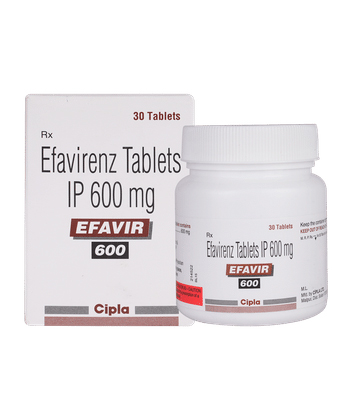
Efavirenz
- Efavirenz is prescription‑only in most countries and should be obtained from a pharmacy with a valid prescription; while some pharmacies or suppliers in certain settings may dispense it without a prescription, this is not legal or recommended and carries safety risks.
- Efavirenz is an antiretroviral used for the treatment and prevention of HIV‑1 infection; it is a non‑nucleoside reverse transcriptase inhibitor (NNRTI) that blocks HIV reverse transcriptase and is used as part of combination antiretroviral therapy.
- The usual adult dose is 600 mg orally once daily (taken with or after food); for post‑exposure prophylaxis it is commonly given as 600 mg daily as part of a combination regimen for 28 days; paediatric dosing is weight‑based (eg ≥35 kg: 600 mg once daily).
- Administered orally as tablets or capsules — commonly 200 mg and 600 mg tablets, 50 mg paediatric capsules and fixed‑dose combination tablets (eg Atripla).
- Plasma concentrations typically peak within about 3–5 hours; some CNS effects can occur within hours and measurable virological improvements are usually evident within 1–2 weeks of therapy.
- Efavirenz has a long terminal half‑life (roughly 40–55 hours), allowing once‑daily dosing; therapeutic antiviral effect is maintained over 24 hours and treatment for HIV is intended to be continuous lifelong when used in ART.
- Avoid or limit alcohol while taking efavirenz — alcohol can worsen liver toxicity and exacerbate central nervous system side effects such as dizziness, sedation and impaired concentration.
- The most common adverse effects are central nervous system symptoms (vivid dreams, insomnia, dizziness, impaired concentration), together with nausea, rash and elevated liver enzymes.
- Would you like to try “efavirenz” without a prescription?
Efavirenz

Basic Efavirenz Information
- INN (International Nonproprietary Name): Efavirenz
- Brand Names Available In United Kingdom: Stocrin; Atripla; Efavirenz Mylan; Efavirenz Teva; Efavirenz Zentiva
- ATC Code: J05AG03 (monotherapy); combination ATC J05AR06 for emtricitabine/tenofovir/efavirenz
- Forms & Dosages: Tablet 600 mg and 200 mg; capsule 50 mg (paediatric) and 200 mg; fixed‑dose combination Atripla (600 mg efavirenz + 200 mg emtricitabine + 300 mg tenofovir disoproxil)
- Manufacturers In United Kingdom: Teva UK; Mylan (generic suppliers); originator listed as Bristol‑Myers Squibb (Stocrin/Sustiva)
- Registration Status In United Kingdom: Licensed and marketed; national approvals include MHRA listing and EMA approval since 1999
- OTC / Rx Classification: Prescription only (Rx)
Everyday Use And Best Practices
Morning Vs Evening Dosing
Many people worry about when to take efavirenz during busy UK routines.
Efavirenz is prescribed as 600 mg once daily as part of combination antiretroviral therapy and should be taken exactly as your NHS clinic or HIV clinic prescribes.
Clinically, many patients take efavirenz at night to reduce daytime dizziness and vivid dreams; this is a common and practical approach in the UK.
If you work shifts or your routine varies, choose a consistent 24‑hour time and set a daily alarm or use NHS app reminders to support adherence.
Do not stop efavirenz without advice from your HIV clinic or pharmacist because interruption can lead to loss of virological control and resistance.
Taking With Or Without Meals (UK Diet Habits)
MHRA guidance allows taking efavirenz with or after food, and a light snack commonly used in the UK—such as toast, a bowl of cereal or a small supper—can reduce nausea.
A heavier, fatty meal may increase absorption in some individuals and occasionally raises CNS side effects, so a modest breakfast or supper is usually preferable for tolerance.
Keep tablets in the original packaging and store below 30°C away from moisture to preserve stability.
- Daily reminders: set NHS app alerts, use a pill box, link doses to an existing habit (tooth brushing), or ask your pharmacy for repeat dispensing.
- If you miss a dose: take as soon as remembered unless it is close to the next dose; do not double dose.
- Storage: original pack, below 30°C, dry place.
- Pregnancy advice: discuss contraception with your clinic because of teratogenic risk.
Safety Priorities
Who Should Avoid It (MHRA Warnings)
Safety is the priority before starting efavirenz.
Efavirenz is contra‑indicated in known hypersensitivity to efavirenz or formulation components and in severe hepatic impairment.
Special caution is required for people with a history of severe psychiatric illness, depression, psychosis or seizures because CNS adverse effects such as insomnia, vivid dreams, dizziness and confusion are well documented.
Women of child‑bearing potential should use effective contraception while taking efavirenz due to teratogenic risk and should discuss alternative regimens with their clinic if planning pregnancy.
Activities To Limit (Driving, Work Safety)
Avoid driving or operating heavy machinery until you know how efavirenz affects you, since dizziness and impaired concentration are common early on.
Workers in safety‑critical roles (transport, construction, some healthcare procedures) should notify occupational health confidentially so reasonable adjustments can be arranged.
Report severe rash, new or worsening mood changes, or new seizures immediately to your clinic.
- Pre‑start checklist: hypersensitivity, current liver function tests, psychiatric history, seizure history, pregnancy intentions.
- When to stop and seek help: severe skin reaction, persistent suicidal thoughts, repeated seizures.
- Reporting: consider MHRA Yellow Card reporting for serious suspected adverse reactions.
Dosage And Adjustments
General Regimen (NHS Guidance)
The standard adult dose in the UK is efavirenz 600 mg taken orally once daily as part of combination antiretroviral therapy, with the WHO DDD listed as 0.6 g per day.
Efavirenz is commonly given with two nucleoside reverse transcriptase inhibitors or as a fixed‑dose combination such as Atripla.
For post‑exposure prophylaxis, efavirenz has been used at 600 mg daily as part of a 28‑day combined regimen when clinic protocols include it.
Never use efavirenz alone; always follow a combination ART plan to prevent resistance.
Special Cases (Elderly, Comorbidities)
Children are dosed by weight—those ≥35 kg commonly receive 600 mg once daily, with lower weight bands using 200 mg or paediatric 50 mg capsules as appropriate.
Elderly patients generally start the standard dose but require close monitoring because pharmacokinetic data are limited in older adults.
Avoid efavirenz in moderate to severe hepatic impairment and use with caution in mild dysfunction with liver function monitoring.
No renal dose adjustment is needed for mild to moderate impairment, but data are limited for severe renal disease so specialist advice is required.
| Weight Band | Typical Dose | Notes |
|---|---|---|
| ≥35 kg | 600 mg once daily | Common adult dosing |
| Lower weight bands | 200 mg / 50 mg formulations | Paediatric dosing by weight |
| Hepatic impairment | Avoid in moderate/severe | Monitor LFTs if mild |
User Testimonials
Positive Reports From UK Patients
Patients on UK forums and Patient.info often highlight the convenience of once‑daily efavirenz tablets and the effectiveness in achieving viral suppression when adherence is good.
Fixed‑dose combinations such as Atripla receive praise for simplifying therapy into a single tablet, which many say improved day‑to‑day life once side effects settled.
Several patients report quality‑of‑life improvements after viral suppression is established and side effects reduce over weeks.
Common Challenges (Patient.info, NHS Forums)
Early CNS effects such as vivid dreams, insomnia and dizziness are frequently reported but usually diminish after a few weeks.
Some users experience persistent concentration problems or mood changes that prompt discussion of switching to alternatives like dolutegravir.
- Pros: once‑daily dosing, good virological efficacy, availability in generics and combinations.
- Cons: early CNS side effects, possible rash, GI upset in some people.
- Support services: pharmacy pill boxes, NHS repeat prescriptions, pharmacy‑led adherence reviews at Boots or LloydsPharmacy, clinic mental health referrals.
Buying Guide
Pharmacy Sources (Boots, LloydsPharmacy, Superdrug)
In the UK efavirenz is a prescription‑only medicine and is normally dispensed via NHS or hospital pharmacies and high‑street pharmacies such as Boots and LloydsPharmacy.
Private prescriptions or registered online pharmacies can supply brand or generic efavirenz products but always check MHRA registration and pharmacy credentials before ordering.
In our online pharmacy, efavirenz is available without a prescription, with discreet delivery to United Kingdom in 5-14 days.
Price Comparison (NHS Prescription Charge Vs Private)
Patients in England pay the standard NHS prescription charge unless exempt, whereas Scotland, Wales and Northern Ireland have different arrangements and many patients receive prescriptions at no charge locally.
Private costs vary by supplier and pack size; generic manufacturers include Teva, Mylan and Zentiva while originator brands include Stocrin and Atripla.
| Product | Typical Strength | Likely Source |
|---|---|---|
| Efavirenz (generic) | 200 mg, 600 mg | Teva, Mylan, Zentiva via pharmacies |
| Stocrin / Sustiva | 600 mg | Originator brand—selected pharmacies/hospital supply |
| Atripla (combination) | 600/200/300 mg | Gilead—hospital supplies and some pharmacies |
Avoid unregulated online sellers and report suspicious sources to MHRA or NHS fraud teams.
What’s Inside And How It Works
Ingredients Overview
Efavirenz (INN efavirenzum) is an NNRTI available as tablets of 600 mg and 200 mg and capsules for paediatric dosing (50 mg, 200 mg).
The fixed‑dose combination Atripla includes 600 mg efavirenz with 200 mg emtricitabine and 300 mg tenofovir disoproxil.
Generic manufacturers include Teva, Mylan and Zentiva while the originator brand is associated with Bristol‑Myers Squibb.
Mechanism Basics Explained Simply
Efavirenz binds to HIV‑1 reverse transcriptase in a way that prevents the virus from copying its genetic code.
This reduces viral replication, lowers viral load and helps the immune system recover when efavirenz is used as part of combination ART.
Efavirenz is not used alone because mono‑therapy risks resistance development; always follow combination regimens.
- Forms: tablets 200 mg / 600 mg; capsules 50 mg / 200 mg; combination tablet Atripla.
- Action: NNRTI — inhibits reverse transcriptase.
Main Indications
Approved Uses (MHRA Listing)
Efavirenz is licensed for treatment of HIV‑1 infection as part of combination antiretroviral therapy and is listed on the WHO Model List of Essential Medicines.
It has also been used within some post‑exposure prophylaxis (PEP) regimens as a component for approximately 28 days when recommended by clinics.
Efavirenz should never be used as monotherapy and is always prescribed with at least two other antiretrovirals.
Off‑Label Uses In UK Clinics
Some clinics have historically trialled reduced doses such as 400 mg in selected patients or used pharmacokinetic‑guided approaches, though many UK services now favour integrase inhibitors like dolutegravir for initial regimens.
- Before starting: confirm diagnosis, pregnancy status, psychiatric history and baseline liver function.
- Documentation: any off‑licence dosing should be clinic‑documented and monitored closely.
Interaction Warnings
Food Interactions (Alcohol, Tea/Coffee)
Alcohol can worsen CNS side effects such as dizziness and sleep disturbance especially during treatment initiation, so limiting intake is advisable.
There is no clinically significant interaction with tea or coffee, but caffeine may exacerbate insomnia which is a common efavirenz effect.
Drug Conflicts (MHRA Yellow Card Reports)
Efavirenz is metabolised via CYP450 and has several important drug interactions.
Contraindicated combinations include voriconazole, elbasvir/grazoprevir, St John’s Wort and some benzodiazepines and ergot derivatives.
Always provide your pharmacist with a full medicines list including OTCs and herbal remedies so interaction checks can be run.
| Interaction | Action |
|---|---|
| St John’s Wort | Contra‑indicated — reduces efavirenz levels and risks treatment failure |
| Certain benzodiazepines / ergot derivatives | Avoid or adjust — risk of toxicity or reduced efficacy |
| Alcohol | Limit during initiation due to additive CNS effects |
Report suspected interactions to MHRA via Yellow Card and ask your pharmacy (Boots, LloydsPharmacy) to run a formal check.
Latest Evidence And Insights
Key UK & EU Studies 2022–2025
Recent UK and EU guideline updates and cohort studies up to 2025 have emphasised a shift from efavirenz‑based regimens towards integrase inhibitors such as dolutegravir for many patients, driven by tolerability and metabolic profiles.
Despite the shift, surveillance shows efavirenz retains virological efficacy when adherence is maintained and is still used in settings where it is tolerated or preferred.
What This Means For Patients
Clinicians will balance efficacy, side‑effect profile and reproductive plans when recommending efavirenz or an alternative.
If CNS side effects are intolerable, many UK clinics proactively consider switching to integrase inhibitors; conversely, patients stable and tolerating efavirenz may remain on it with routine monitoring.
- Switching criteria: persistent CNS effects, pregnancy planning, severe hepatic impairment, problematic drug interactions, or patient preference.
- Monitoring: regular viral load checks and liver function tests per clinic protocol.
- Discuss alternatives with your HIV clinic before making changes.
Alternative Choices
NHS Prescribing Alternatives With Pros/Cons Checklist
Common NHS alternatives include dolutegravir, rilpivirine and fixed combinations containing bictegravir where available.
Dolutegravir is favoured for tolerability and resistance barrier but has been associated with weight gain in some reports.
Rilpivirine may have fewer CNS effects but is unsuitable for high baseline viral loads and requires certain dietary considerations.
- Dolutegravir: pro — well tolerated, once daily; con — weight gain concerns in some studies.
- Rilpivirine: pro — fewer CNS effects; con — not for high viral loads, food requirements.
- Bictegravir combinations: pro — potent and well tolerated; con — availability and cost may limit use.
When To Consider Switching
Consider switching if persistent CNS side effects affect daily life, if pregnancy is planned, severe hepatic impairment develops, problematic drug interactions emerge, or the patient prefers an alternative.
Switching requires a viral load check and review of resistance history and should be managed by the HIV clinic.
- Baseline checks before switching: viral load, resistance history, LFTs, pregnancy status.
- Follow‑up: viral load at standard clinic intervals after a regimen change.
Regulation Snapshot
MHRA Approval & NHS Prescribing Framework
Efavirenz has been approved by the EMA since 1999 and is licensed in the UK with national approvals listed via MHRA.
It is prescription‑only and appears on national formularies and the WHO Model List of Essential Medicines.
The ATC code is J05AG03 for efavirenz monotherapy and J05AR06 for the emtricitabine/tenofovir/efavirenz combination.
Safety Reporting And Monitoring
Adverse events should be reported via the MHRA Yellow Card scheme and documented within local clinic safety systems.
Prescribers should document informed consent regarding CNS effects and teratogenicity and perform baseline tests such as viral load and liver function tests.
| Item | Detail |
|---|---|
| Approvals | EMA approval 1999; MHRA national listing |
| ATC | J05AG03 (efavirenz); J05AR06 (combination) |
| WHO DDD | 0.6 g orally per day |
| Storage | Store below 30°C; protect from moisture |
FAQ Section
3–4 Common UK Patient Questions
Q1: Can I drive while taking efavirenz?
A1: Not until you know how it affects you; avoid driving if you feel dizzy, sleepy or have impaired concentration and inform DVLA or occupational health if persistent impairment affects safety‑critical roles.
Q2: Is efavirenz safe in pregnancy?
A2: Efavirenz has teratogenic risk and women should discuss contraception and pregnancy planning with their HIV clinic; many clinicians recommend alternatives when conception is planned.
Q3: What happens if I miss a dose?
A3: Take it as soon as remembered unless it is near the next dose; do not double dose and contact your clinic if multiple doses are missed.
Q4: Can I mix efavirenz with herbal remedies?
A4: Avoid St John’s Wort and other unvetted herbal products because of interactions; check with your pharmacist who can run a full interaction check.
- Checklist For Clinic Reviews: current pregnancy plans, mental health history, all medicines and herbal supplements, and any perceived side effects such as sleep disturbance or mood change.
Guidelines For Proper Use
UK Pharmacist Counselling Style
Pharmacists in the UK should verify the prescription, review current medicines and counsel on dosing time, storage, missed‑dose action and common side effects in plain language.
Suggest taking efavirenz at night if worrying about CNS effects and always ask about pregnancy intentions and psychiatric history during counselling.
Offer adherence aids such as NHS app reminders, pill boxes, pharmacy repeat dispensing and medication reviews.
NHS Patient Support Advice
Refer patients to the HIV clinic for baseline tests including viral load and liver function tests and for routine monitoring and mental health support where needed.
Encourage reporting side effects to the MHRA Yellow Card scheme and provide manufacturer and NHS information leaflets.
- Pharmacist screening questions: pregnancy plans, current mood or psychiatric history, seizure history, full medication list including OTCs.
- When to escalate: severe rash, suicidal ideation, repeated seizures or unexplained hepatic enzyme rises.
- Resources: signpost to clinic helplines and patient support groups.
Delivery Across United Kingdom
| City | Region | Delivery time |
|---|---|---|
| London | England | 5-7 days |
| Birmingham | England | 5-7 days |
| Manchester | England | 5-7 days |
| Glasgow | Scotland | 5-7 days |
| Edinburgh | Scotland | 5-7 days |
| Leeds | England | 5-7 days |
| Liverpool | England | 5-7 days |
| Bristol | England | 5-7 days |
| Sheffield | England | 5-9 days |
| Newcastle | England | 5-9 days |
| Nottingham | England | 5-9 days |
| Cardiff | Wales | 5-9 days |
| Belfast | Northern Ireland | 5-9 days |
| Leicester | England | 5-9 days |