Aciclovir
In brief
- Aciclovir can be purchased from pharmacies and online pharmacies in many countries, including the UK, often without a prescription in practice, although it is officially prescription-only in most regions for higher-strength or systemic forms.
- Aciclovir is used to treat herpes simplex infections, genital herpes, cold sores, shingles (herpes zoster) and chickenpox, and it works by inhibiting viral DNA polymerase, which stops the herpes virus from multiplying.
- The usual dose depends on the condition and formulation: for adults, 200 mg five times daily for herpes simplex, 400 mg twice daily or 200 mg 3–5 times daily for suppression, 800 mg five times daily for shingles, and 800 mg four times daily for chickenpox; topical cream is usually applied five times daily.
- It is available as tablets, cream, ointment, oral suspension, and intravenous infusion.
- Aciclovir usually starts working within a few hours, although symptom improvement may take 1–2 days or longer depending on the infection and how early treatment is started.
- The duration of action is relatively short, so it is taken several times a day; treatment courses usually last 5–10 days for active infections, 7–10 days for shingles, and longer for suppressive therapy if needed.
- There is no strict alcohol interaction, but it is best to avoid or limit alcohol because dehydration may increase the risk of side effects, especially kidney-related problems.
- The most common side effects are nausea, vomiting, diarrhoea, abdominal pain, headache, dizziness, and local skin irritation with the cream.
- Would you like to try aciclovir without a prescription?
Basic Aciclovir Information
- INN (International Nonproprietary Name): Aciclovir
- Brand names available in United Kingdom: Zovirax, Aciclovir (generic)
- ATC Code: J05AB01
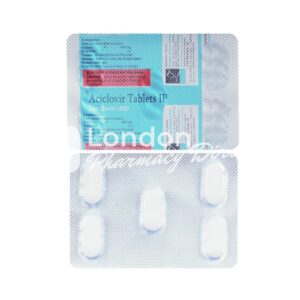
- Forms & dosages: Tablets 200mg, 400mg, 800mg; cream 5%; suspension 200mg/5ml; intravenous vials 250mg, 500mg, 1000mg
- Manufacturers in United Kingdom: GlaxoSmithKline, Sandoz/Novartis, Mylan, Ranbaxy/Sun Pharma, Sanofi, Arena Group, ratiopharm
- Registration status in United Kingdom: Prescription only
- OTC / Rx classification: Rx — Prescription only
Everyday Use And How To Fit Aciclovir Into Normal Life
Can a treatment with several doses a day still fit around a normal UK routine?
For many people, yes, it can.
Aciclovir tablets UK are often taken more than once daily, so the easiest way to stay on track is to link each dose to something you already do.
That might mean breakfast, the school run, lunch, tea, and bedtime.
If a prescription says Aciclovir 200mg, Aciclovir 400mg, or Aciclovir 800mg, the important thing is to take it at evenly spaced times and follow the label exactly.
A pharmacist may also advise a simple dosing routine that matches your day, which can make generic aciclovir much easier to remember.
- Keep doses tied to regular habits, not random clock times.
- Use alarms on your phone if work or childcare makes the day unpredictable.
- Take the next dose when remembered if it is due fairly soon, but never double up.
- If a dose is missed, continue with the normal schedule rather than trying to catch up.
- Keep tablets somewhere safe and dry so daily use does not become a chore.
Food usually does not cause a problem either.
Aciclovir can be taken with or without meals, so a dose after toast and cereal, a packed lunch, or an evening meal is usually fine.
If nausea appears, taking it after food may make it feel gentler on the stomach.
Hydration matters as well, especially if you are busy, unwell, or drinking less than usual.
A few extra glasses of water through the day can help support daily use and food and drinks habits without making treatment feel complicated.
Safety Priorities Before And During Treatment
Before starting aciclovir, what should be checked first?
That question matters because the medicine is prescription only in the UK and should be matched against the patient’s PMR or GP record.
The main absolute reason to avoid it is known hypersensitivity to aciclovir, valaciclovir, or an excipient in the formulation.
Extra caution is needed in people with renal impairment, dehydration, neurological disorders, or older adults.
Care is also sensible if the person is taking nephrotoxic medicines, because kidney risk can rise when fluid intake is poor or kidneys are already under strain.
Warning box: seek urgent help if severe confusion, unusual drowsiness, reduced urine output, or a suspected allergic reaction develops.
- Use caution if you have kidney problems or a history of reduced renal function.
- Be careful if you are dehydrated, for example during vomiting, fever, or poor oral intake.
- Older adults may be more sensitive to aciclovir side effects, especially dizziness or confusion.
- Speak to a pharmacist or GP before use if you take medicines that can affect the kidneys.
- Do not drive or operate machinery if the medicine makes you feel unsteady or sleepy.
Driving advice is straightforward but important.
If dizziness, sleepiness, confusion, or blurred thinking occurs, avoid driving, ladders, or safety-critical work until you feel normal again.
Most people tolerate treatment well, but kidney-related warning signs should never be ignored.
Dosage And Dose Adjustments
How much aciclovir is usually taken?
The answer depends on the infection being treated and whether the medicine is oral or topical.
For herpes simplex skin and mucosal infections, including initial genital herpes, the common adult oral regimen is 200mg five times daily for 5 to 10 days.
For recurrent genital herpes or suppression, 400mg twice daily or 200mg three to five times daily may be used, sometimes for up to 6 to 12 months.
For shingles, the usual adult oral dose is 800mg five times daily for 7 to 10 days.
For chickenpox, 800mg four times daily for 5 days may be used when started early.
Aciclovir cream is typically applied five times daily for 4 to 5 days, with a maximum of 10 days.
| Condition | Usual Adult Regimen | Typical Form |
|---|---|---|
| Herpes simplex and genital herpes | 200mg five times daily for 5–10 days | Tablets or cream |
| Recurrent genital herpes or suppression | 400mg twice daily or 200mg three to five times daily | Tablets |
| Shingles | 800mg five times daily for 7–10 days | Tablets |
| Chickenpox | 800mg four times daily for 5 days | Tablets |
| Cold sores and genital lesions | Apply five times daily for 4–5 days | Cream |
Children are usually dosed by body weight, and younger children may need Aciclovir suspension rather than tablets.
Older adults may need closer monitoring of renal function because the risk of neurotoxicity is higher.
In severe renal impairment, dosing frequency may need reducing, such as halving the frequency when creatinine clearance is below 10ml/min.
People with CKD, dehydration, or several long-term medicines should never adjust the dose themselves.
That decision belongs with a clinician who can balance safety, kidney function, and the reason for treatment.
What UK Patients Report In Everyday Use
What do people in the UK usually like about aciclovir?
Many say it can shorten outbreaks when started early, especially for cold sores and genital herpes.
That matters when someone notices the first tingling sensation on a Friday evening and wants treatment before the rash or sore becomes more troublesome.
Patients also value familiar brand names such as Zovirax and generic aciclovir, along with the convenience of community pharmacy collection and repeat prescriptions.
- Early treatment can reduce the length and severity of an outbreak.
- Zovirax and generic aciclovir are widely recognised and trusted.
- Pharmacy support is often used for quick questions about tablets or cream.
- Repeat prescriptions can make ongoing management simpler.
The main frustrations are also predictable.
Frequent daily dosing can be hard to remember, and late treatment tends to be less useful.
Some people find aciclovir cold sore cream less convenient than tablets, particularly if they are at work or away from home.
In UK practice, NHS advice and pharmacist support are often highly trusted because they are practical, local, and easy to access.
Buying Aciclovir In The UK
Where should aciclovir be bought safely in the UK?
Because it is prescription only, it is usually supplied through the NHS, a private prescription, or a registered online pharmacy after proper assessment.
Major pharmacy chains such as Boots, LloydsPharmacy, and Superdrug may supply it when the legal prescribing route is in place.
Using a registered UK pharmacy matters because supply should be tied to a real clinical check, not just a quick checkout page.
In our online pharmacy, aciclovir is available without a prescription, with discreet delivery to United Kingdom in 5-14 days.
| Supply Route | Typical Cost Pattern | Notes |
|---|---|---|
| NHS prescription in England | Prescription charge usually applies | Depends on exemption status |
| NHS prescription in Scotland, Wales, and Northern Ireland | Usually free | Standard NHS access route |
| Private prescription | Varies by pharmacy and pack size | May be quicker for some patients |
| Online pharmacy supply | Varies by service and formulation | Check for UK registration and proper screening |
For some people, electronic repeat dispensing can make access easier and reduce delays.
A pharmacist may also help choose between tablets, cream, or suspension depending on the site of infection and the patient’s age.
That practical advice often matters as much as the price itself.
What Aciclovir Contains And How It Works
What exactly is inside aciclovir products?
The active ingredient is aciclovir, also called the International Nonproprietary Name.
In the UK, it is available as tablets in 200mg, 400mg, and 800mg strengths, as a 5% cream, as a 200mg/5ml suspension, and in hospital IV forms for severe infection.
Zovirax and generic aciclovir are the names most people recognise on UK pharmacy shelves.
- Aciclovir is the active antiviral ingredient.
- UK forms include tablets, cream, suspension, and hospital IV vials.
- J05AB01 is the ATC code used for systemic aciclovir.
- Topical aciclovir products fall under dermatological antiviral classification.
In simple terms, it helps stop herpes viruses multiplying.
It does not cure the virus or remove all future risk, but it can reduce symptoms, speed healing, and lower the severity of outbreaks when used early.
That is why clinicians often stress starting treatment as soon as symptoms begin.
Main Conditions Treated With Aciclovir
Which conditions does aciclovir treat in routine UK practice?
The core approved uses cover herpes simplex infections of the skin and mucosa, initial and recurrent genital herpes, herpes zoster, and varicella.
Topical treatment is commonly used for cold sores and genital lesions, while ophthalmic ointment may be used for eye involvement.
| Condition | Usual Form | Typical Use |
|---|---|---|
| Herpes labialis and skin herpes | Cream or tablets | Reduce symptoms and healing time |
| Genital herpes | Tablets | Treat initial episodes or recurrences |
| Shingles | Tablets | Treat herpes zoster |
| Chickenpox | Tablets | Used early after rash onset |
| Cold sores | Cream | Topical treatment of lip lesions |
Some UK clinics may also use aciclovir prophylactically in immunocompromised patients, but that should always be specialist-led.
Local NHS or hospital guidance can differ, so off-label use should not be assumed from one setting to another.
Interaction Warnings And Practical Precautions
Do tea, coffee, or alcohol clash with aciclovir?
There are no major food interactions, but hydration is important.
Tea and coffee do not usually cause a problem, although they should not replace water.
Alcohol does not directly interact, but heavy drinking can worsen dehydration and make side effects feel more noticeable.
- Mention kidney medicines, including nephrotoxic drugs, to a pharmacist or GP.
- Tell the pharmacist about over-the-counter painkillers as well as prescribed medicines.
- Include supplements in the medicine check, especially if you take several products each day.
- Report suspected side effects through the UK Yellow Card scheme.
Medicines that affect the kidneys can raise risk, especially if fluid intake is poor.
That is why a quick pharmacist check is sensible before starting, especially for anyone with CKD, dehydration, or multiple long-term medicines.
Latest Evidence And Practical Insights
Has anything changed recently for aciclovir?
The short answer is that it remains a well-established antiviral, supported by long-standing NHS and European practice for herpes virus infections.
Between 2022 and 2025, the most relevant message for patients has stayed the same: start early, take the full course, and respect kidney safety.
Real-world benefit still comes from the basics rather than from dramatic new breakthroughs.
- Earlier treatment tends to work better than delayed treatment.
- Adherence matters because missed doses can reduce benefit.
- Renal safety remains important, especially in older adults and people with CKD.
- Suppression therapy can help people with frequent recurrences when clinically appropriate.
For many patients, choosing the right antiviral comes down to practical needs, tolerance, and how often outbreaks happen.
Aciclovir remains a sensible first option because it is familiar, widely available, and usually affordable on the NHS.
Alternatives And When They May Be Preferred
What if aciclovir is not the best fit?
UK clinicians sometimes consider valaciclovir, famciclovir, penciclovir, or docosanol depending on the infection, the person’s age, kidney function, and how often outbreaks occur.
| Alternative | Possible Advantage | Possible Limitation |
|---|---|---|
| Valaciclovir | Simpler dosing for some people | May not be the first choice in every case |
| Famciclovir | Different regimen may suit some patients | Choice depends on clinical context |
| Penciclovir | Topical option for cold sores | Not for all infection sites |
| Docosanol | Topical cold sore management | Availability and suitability vary |
For many people, aciclovir still makes sense because it is familiar, cost-conscious, and widely used.
Pharmacists and GPs often balance convenience, availability, previous response, and prescribing policy before choosing the best antiviral.
Regulation And Prescribing In The UK
How is aciclovir regulated in the UK?
It is a prescription-only medicine used through standard NHS and GP prescribing pathways.
Depending on the indication, people may access it through a GP, sexual health service, urgent care, or a hospital specialist.
The legal route matters because the dose, duration, and form need to match the infection and the patient’s medical history.
Pharmacists can advise on symptom relief and tell you whether a GP review is needed, but they cannot supply prescription aciclovir without an appropriate legal route.
Online pharmacies should be UK-regulated and should ask proper health questions before supply.
That protects patients from the wrong formulation, the wrong dose, or a missed kidney warning.
Frequently Asked Questions About Aciclovir
Can I Take Aciclovir With Food?
Yes, aciclovir can usually be taken with or without food.
If it upsets the stomach, taking it after a meal may help.
How Quickly Does It Work For Cold Sores?
It tends to work best when started early, at the tingling or first sore stage.
That early start often gives the best chance of reducing symptom length and severity.
What If I Miss A Dose?
Take it when remembered if the next dose is not nearly due.
If it is almost time for the next dose, skip the missed one and continue as normal.
Never double up.
Can I Get It On The NHS?
Yes, aciclovir is commonly prescribed on the NHS when clinically appropriate.
England usually has a prescription charge, while prescriptions are generally free in Scotland, Wales, and Northern Ireland.
Proper Use And Pharmacist-Style Counselling Points
What would a UK pharmacist usually stress at the counter?
Take aciclovir exactly as prescribed, space doses evenly, and drink enough fluids.
Start treatment early when advised, because delay often reduces benefit.
Complete the course, even if the area starts to settle before the final tablet.
- Store tablets and cream at room temperature, usually under 25°C.
- Keep the cream tube tightly capped and do not freeze it.
- Protect the medicine from light and moisture.
- Check the label carefully because tablets, cream, and suspension have different instructions.
- Speak to a community pharmacist, GP, sexual health clinic, or NHS 111 if symptoms are severe, eye-related, or unusual.
Seek urgent help for eye pain, confusion, reduced urine, or any sign of allergy.
Those are the moments when treatment needs prompt review rather than routine self-care.
Delivery Across United Kingdom
| City | Region | Delivery time |
|---|---|---|
| London | Greater London | 5-7 days |
| Birmingham | West Midlands | 5-7 days |
| Manchester | North West England | 5-7 days |
| Glasgow | Scotland | 5-7 days |
| Liverpool | North West England | 5-7 days |
| Leeds | West Yorkshire | 5-7 days |
| Edinburgh | Scotland | 5-7 days |
| Bristol | South West England | 5-7 days |
| Cardiff | Wales | 5-7 days |
| Newcastle upon Tyne | North East England | 5-7 days |
| Nottingham | East Midlands | 5-9 days |
| Sheffield | South Yorkshire | 5-9 days |
| Leicester | East Midlands | 5-9 days |
| Coventry | West Midlands | 5-9 days |
| Aberdeen | Scotland | 5-9 days |