
Cabergoline
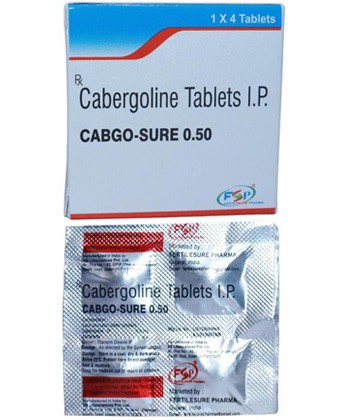
Cabergoline
- Available from pharmacies and licensed online suppliers, but cabergoline is prescription-only (Rx / POM / S4) in most countries; some unregulated vendors may offer it without a prescription, which is not recommended.
- Cabergoline is used to treat hyperprolactinaemia and prolactinomas, Parkinson’s disease (as a dopaminergic agent) and to suppress lactation; it is a dopamine D2 receptor agonist that reduces prolactin secretion and exerts dopaminergic effects in the central nervous system.
- Usual dosages: for hyperprolactinaemia often start 0.25 mg twice weekly, titrating up to 0.5–1 mg twice weekly as needed; for Parkinson’s disease 0.5–1 mg daily with titration (max around 3 mg/day); for lactation suppression a single 1 mg dose or 0.25 mg every 12 hours for 2 days are used in some regimens.
- Administered orally as tablets, commonly 0.5 mg or 1 mg tablets; taken with or without food as directed by the prescriber.
- Biochemical effects on prolactin can be seen within 24–72 hours; symptomatic or clinical improvement may take days to several weeks depending on the indication.
- Cabergoline has a long duration of action (plasma half-life roughly 60–70 hours), permitting infrequent dosing (eg twice weekly or as prescribed); effects may persist several days to a week after a dose.
- Avoid alcohol while taking cabergoline where possible, as alcohol can worsen dizziness, sedation and orthostatic hypotension and increase risk of adverse effects.
- The most common side effect is nausea.
- Would you like to try cabergoline without a prescription?
Cabergoline
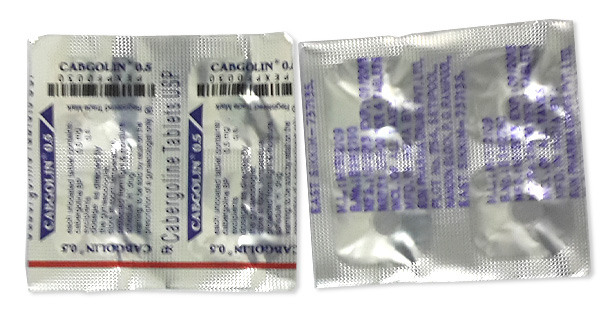
Basic Cabergoline Information
- INN (International Nonproprietary Name): Cabergoline.
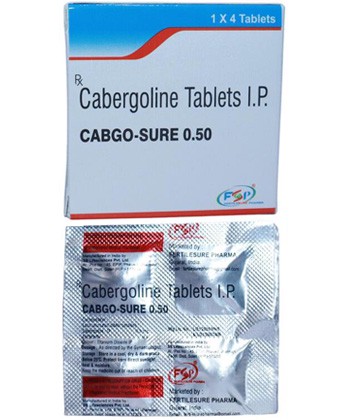
- Brand Names Available In United Kingdom: Cabergoline Accord (0.5 mg tablets, blister, 8 tabs) is the commonly available product.
- ATC Code: G02CB03 (prolactin inhibitor) and N04BC06 (dopaminergic agent).
- Forms & Dosages: Tablets are the usual form, typically 0.5 mg strength in the UK; 1 mg tablets are used in some markets for Parkinson’s disease.
- Manufacturers In United Kingdom: Accord Healthcare is the listed manufacturer for the UK pack example.
- Registration Status In United Kingdom: Licensed and prescription-only (POM) in the UK; distributed in blister packs (example: Cabergoline Accord 0.5 mg).
- OTC / Rx Classification: Prescription-only medicine (POM) in the United Kingdom.
Practical Instructions And Warnings
Cabergoline is prescription-only (POM) in the UK and must be taken exactly as your NHS or specialist prescriber directs.
Do not share your medicine with anyone else and keep it in its original packaging when travelling.
If you have a history of heart valve disease, pulmonary or pericardial fibrosis, uncontrolled hypertension, or an ergot allergy tell your prescriber before taking cabergoline.
Take cabergoline with food or a small snack to reduce nausea, and plan twice‑weekly doses on fixed days (for example Monday and Thursday) to avoid missed doses.
Avoid driving or operating heavy machinery until you know how cabergoline affects you and report suspected side effects via the MHRA Yellow Card scheme.
Bring all current medicines to your pharmacist for a medicines review and store cabergoline below 25°C, protected from light.
Everyday Use And Best Practices
Morning Vs Evening Dosing
Which time of day works best depends on how cabergoline affects you.
Many patients on the standard hyperprolactinaemia regimen use fixed weekdays, for example Monday and Thursday, to reduce missed doses.
Because cabergoline can cause dizziness and orthostatic hypotension some people prefer to take it in the evening to avoid lightheadedness during commuting or work.
If you plan evening dosing consider taking the tablet just after your main meal and then sitting or lying down for 30–60 minutes.
For Parkinson’s regimens, doses are usually daily and scheduled as advised by neurology; follow specialist instructions exactly.
Taking With Or Without Meals (UK Diet Habits)
Taking cabergoline with food or a small snack lowers the chance of nausea for many patients.
Typical UK breakfast choices (for example a full breakfast or a cereal and toast) are sufficient to reduce stomach upset when you take your tablet.
If you suffer from gastritis or persistent nausea try a small snack and the dose after eating rather than on an empty stomach.
Pharmacist Tip: request a medicines-use review at a community pharmacy (Boots or LloydsPharmacy) to confirm dose days and set reminder alarms on a calendar app.
- Dosing Schedule Checklist: Choose fixed weekdays (eg. Mon/Thu); note dose on calendar; use a pill organiser for blister packs.
- Side-Effect Actions: If you feel faint, stop activity and sit or lie down; seek GP or NHS 111 advice if symptoms persist; report adverse events on the Yellow Card.
Safety Priorities
Who Should Avoid It (MHRA Warnings)
Avoid cabergoline if you are hypersensitive to cabergoline, ergot derivatives, or any excipient listed in the leaflet.
Do not take cabergoline if you have known valvular heart disease confirmed by echocardiogram.
Do not use cabergoline with a history of pulmonary, pericardial or retroperitoneal fibrosis.
Uncontrolled hypertension is a contraindication and pregnancy or lactation require specialist discussion rather than self-initiation for lactation suppression.
Long‑term, high‑dose use (as in some Parkinson’s regimes) has been associated with cardiac valvulopathy and needs specialist monitoring.
Activities To Limit (Driving, Work Safety)
Avoid driving, cycling or operating heavy machinery until you know how cabergoline affects alertness and blood pressure.
Don’t mix cabergoline with excessive alcohol because that can worsen dizziness and fainting.
If you experience hallucinations, severe dizziness, new palpitations or chest pain contact NHS 111 or your GP urgently.
| Activity | Advice |
|---|---|
| Driving or Cycling | Avoid until you know effects; stop if you feel dizzy or faint. |
| Operating Heavy Machinery | Not advised during dose titration or if drowsy. |
| Work At Height | Avoid until stable on treatment and well reviewed by clinician. |
Dosage And Adjustments
General Regimen (NHS Guidance)
For hyperprolactinaemia and prolactinoma start low and use intermittent dosing: commonly 0.25 mg twice weekly with gradual titration.
Maintenance doses often reach 0.5–1 mg twice weekly depending on response and prolactin levels.
For Parkinson’s disease regimens are higher and typically start at 0.5–1 mg daily and may be titrated up, with maximum reported doses around 3 mg per day divided.
For lactation suppression product information quotes either a single 1 mg dose or 0.25 mg every 12 hours for two days.
Special Cases (Elderly, Comorbidities)
Elderly patients should start at the lowest recommended dose and titrate slowly because sensitivity increases with age.
In mild to moderate renal impairment routine dose change is not always needed but close monitoring is advised.
Hepatic impairment requires a lower starting dose and cautious titration due to reduced clearance.
Children: safety and efficacy have not been established in paediatric patients.
| Indication | Initial Dose | Maintenance / Monitoring |
|---|---|---|
| Hyperprolactinaemia / Prolactinoma | 0.25 mg twice weekly | Adjust to 0.5–1 mg twice weekly; prolactin checks and clinical review |
| Parkinson’s Disease | 0.5–1 mg daily (titrate) | Max reported ~3 mg/day divided; specialist monitoring and cardiac assessment if high dose |
| Cessation Of Lactation | 1 mg single dose or 0.25 mg every 12 h for 2 days | Short regimen; clinician guidance required |
User Testimonials
Positive Reports From UK Patients
"My galactorrhoea settled within weeks and my periods normalised," is a typical report on UK patient forums for those started on low‑dose cabergoline for high prolactin.
Many users appreciate the twice‑weekly schedule compared with daily medicines and find pharmacy counselling at Boots or LloydsPharmacy useful for nausea prevention advice.
Patients trying for pregnancy sometimes report improved fertility markers after several months of treatment.
Common Challenges (Patient.info, NHS Forums)
Initial nausea, dizziness and sleepiness are commonly reported and often settle after dose adjustment or taking food with the tablet.
Some patients express concern about long‑term cardiac risk, especially those on Parkinson’s doses, and request echocardiography from their specialist.
Practical patient tips include keeping a symptom diary, photographing blister packs for clinic records, and asking the GP to document baseline blood pressure and arrange ECG/echo if indicated.
- Patient Tips: Keep a record of side effects; take photos of packaging for appointments; ask for baseline BP and specialist referral if needed.
- Anonymised Quote: "Twice‑weekly dosing fits my job and the pharmacist helped me find the best mealtime to take it."
Buying Guide
Pharmacy Sources (Boots, LloydsPharmacy, Superdrug)
Cabergoline is prescription-only in the UK and can be collected on an NHS prescription from national chains (Boots, LloydsPharmacy, Superdrug) or from local community pharmacies.
Private prescriptions may be dispensed by the same retailers and by registered online pharmacies that require a valid prescription and GPhC registration.
Price Comparison (NHS Prescription Charge Vs Private)
In England NHS prescription charges apply per item; prescriptions are free in Scotland, Wales and Northern Ireland for residents.
Private costs vary between suppliers and between brand and generic products; generic cabergoline (Accord, Mylan, Sandoz) is often cheaper than branded Dostinex/Cabaser.
| Source | Notes |
|---|---|
| NHS Prescription | Collect from Boots, LloydsPharmacy or local pharmacy; charge applies in England per item |
| Private Prescription / Online Pharmacy | Dispensed on presentation of a valid prescription; ensure the pharmacy is GPhC‑registered |
Checklist For Verifying Online Pharmacies: check GPhC registration, require a valid prescription, provide clear contact details and dispensing information.
What’s Inside And How It Works
Ingredients Overview
The active ingredient is cabergoline (INN).
Typical tablet strength in the UK is 0.5 mg; excipients differ by manufacturer so always check the patient information leaflet if you have known excipient allergies.
Manufacturers supplying the UK market include Accord Healthcare and global suppliers include Pfizer, Mylan, Sandoz and Teva in other markets.
Mechanism Basics Explained Simply
Cabergoline is a dopamine agonist and works by binding dopamine receptors in the pituitary to reduce prolactin secretion.
Lower prolactin levels shrink many prolactinomas and relieve symptoms such as galactorrhoea and menstrual disturbance.
At higher doses used for Parkinson’s disease cabergoline stimulates dopaminergic pathways in the brain to help motor symptoms.
| Ingredient | Role | Patient Note |
|---|---|---|
| Cabergoline (0.5 mg) | Active dopamine agonist | Common UK tablet strength; check leaflet for excipients |
Main Indications
Approved Uses (MHRA Listing)
Primary licensed uses include hyperprolactinaemia and prolactin‑secreting pituitary adenomas (prolactinomas).
Cabergoline is also authorised for Parkinson’s disease in higher-dose regimens under specialist supervision and is quoted for short‑term lactation suppression in product literature.
Off-Label Uses In UK Clinics
Common off‑label roles include adjunct use in fertility or IVF protocols to lower prolactin in anovulatory infertility cases.
Off‑label use should be discussed and agreed with the treating clinician with clear explanation of risks and benefits.
Monitoring: long‑term or higher‑dose therapy warrants periodic prolactin measurements and cardiac monitoring such as echocardiography when indicated.
Interaction Warnings
Food Interactions (Alcohol, Tea/Coffee)
Alcohol can magnify dizziness and orthostatic effects so avoid heavy drinking when starting or increasing cabergoline.
Caffeine from tea or coffee does not have a critical interaction but can worsen tremor or anxiety in sensitive individuals.
Taking cabergoline with food reduces the likelihood of nausea for many patients.
Drug Conflicts (MHRA Yellow Card Reports)
Drugs that block dopamine receptors (certain antipsychotics and some antiemetics) may reduce cabergoline’s effectiveness.
Other ergot derivatives and dopamine agonists have additive effects and should be managed by your prescriber.
Strong CYP3A4 modifiers are a theoretical concern; although cabergoline is not heavily CYP-dependent, caution is advised with potent inhibitors or inducers.
| Drug / Food | Risk | Action |
|---|---|---|
| Alcohol | Increased dizziness, fainting | Avoid while adjusting dose |
| Antipsychotics | Reduced cabergoline effect | Discuss alternatives with prescriber |
| Domperidone | Can help nausea but may add QT risk | Use only after cardiac review and pharmacist check |
Report suspected interactions and adverse reactions through the MHRA Yellow Card scheme; pharmacies and GP surgeries can assist with reporting.
Latest Evidence And Insights
Recent UK and EU analyses up to 2024 emphasise that cardiac valvulopathy risk is associated with cumulative exposure and higher doses, notably in Parkinson’s cohorts.
Low‑dose twice‑weekly regimens used for hyperprolactinaemia show a markedly lower risk profile in cohort studies but clinicians remain vigilant.
Specialist guidance recommends baseline cardiovascular assessment where risk factors exist and echocardiography for long‑term high‑dose users.
- Key Finding: Cardiac valvulopathy risk correlates with cumulative high‑dose exposure.
- Key Finding: Low‑dose regimens effectively control prolactin with fewer cardiac signals in available cohorts.
- Clinical Note: Follow MHRA safety communications and endocrinology guidance for monitoring intervals.
Alternative Choices
When cabergoline is unsuitable or not tolerated, common NHS alternatives include bromocriptine and, where available, quinagolide.
Bromocriptine is a daily ergot dopamine agonist with a long clinical history; it often causes more nausea and requires more frequent dosing compared with cabergoline.
Quinagolide is a non‑ergot, once‑daily option in some areas though availability varies across NHS formularies.
| Alternative | Pros | Cons |
|---|---|---|
| Bromocriptine | Long history of use; often lower cost | Daily dosing; higher nausea/orthostatic symptoms |
| Quinagolide | Once daily; non‑ergot | Variable availability |
If switching agents arrange supervised cross‑titration and interaction checks with your prescriber and pharmacist.
Regulation Snapshot
Cabergoline is a prescription-only medicine (POM) in the UK and is licensed across Europe.
Primary care clinicians may initiate cabergoline for straightforward hyperprolactinaemia after appropriate tests, but referral to endocrinology or neurology is common for tumours, fertility or Parkinson’s disease management.
MHRA and EMA advisories about valvulopathy have influenced monitoring recommendations, particularly for higher-dose therapy.
| Regulator | Approval Status | Prescribing Notes |
|---|---|---|
| MHRA | Licensed; POM | Report adverse events via Yellow Card |
| EMA | Authorised across member states | Follow specialist guidance for high doses |
FAQ
-
Can I get cabergoline without a prescription?
No — cabergoline is prescription-only (POM) in the UK; see your GP or specialist clinic, or use an online pharmacy that requires a valid prescription and is GPhC‑registered.
-
How long before I see improvement?
Many patients see reductions in prolactin and symptom improvement within 2–4 weeks, though tumour shrinkage and fertility effects may take months and routine blood tests are used to follow response.
-
Is cabergoline safe during pregnancy?
If you are pregnant or planning pregnancy discuss this with your specialist — treatment is often paused unless absolutely necessary and must be managed under specialist supervision.
-
What happens if I miss a dose?
For twice‑weekly regimens take the missed dose as soon as you remember unless the next scheduled dose is imminent; do not double up doses and contact your GP or pharmacist if unsure.
Guidelines For Proper Use
UK Pharmacist Counselling Style
Confirm indication and exact dose schedule with the patient and verify cardiac, hepatic and renal history and any known ergot allergy.
Advise on timing with food and recommend sitting or lying down for 30–60 minutes if dizziness occurs.
Explain common side effects such as nausea, dizziness and orthostatic hypotension and what to do if severe side effects develop.
Check all current medicines for interactions, give the patient the manufacturer leaflet and explain how to report adverse events via the MHRA Yellow Card.
Advise storage below 25°C in the original packaging and signpost NHS information and local specialist clinics for follow-up.
NHS Patient Support Advice
Arrange follow-up blood tests and GP or specialist reviews, commonly every few months initially for prolactin monitoring.
Request echocardiography if on long‑term or high‑dose therapy and arrange referrals to endocrinology or neurology when needed.
Use repeat dispensing through trusted chains or EPS arrangements and ask the GP about generic options if cost is a concern.
Delivery Across United Kingdom
| City | Region | Delivery Time |
|---|---|---|
| London | England | 5-7 days |
| Birmingham | England | 5-7 days |
| Manchester | England | 5-7 days |
| Glasgow | Scotland | 5-7 days |
| Leeds | England | 5-7 days |
| Liverpool | England | 5-7 days |
| Edinburgh | Scotland | 5-7 days |
| Bristol | England | 5-7 days |
| Sheffield | England | 5-9 days |
| Leicester | England | 5-9 days |
| Coventry | England | 5-9 days |
| Bradford | England | 5-9 days |
| Kingston upon Hull | England | 5-9 days |
Purchase Note: In our online pharmacy cabergoline is available to order with a valid prescription, with discreet delivery to United Kingdom in 5-14 days; we dispatch branded and generic packs following prescription verification.