Dostinex
In brief
- In our pharmacy, you can buy dostinex without a prescription, with delivery in 5–14 days throughout the United Kingdom. Discreet and anonymous packaging. (Note: Dostinex is classed as prescription-only in most countries; please follow local regulations.)
- Dostinex (cabergoline) is used to treat hyperprolactinaemia, prolactin‑secreting pituitary adenomas and related menstrual/fertility disorders; it is a dopamine D2 receptor agonist that inhibits pituitary prolactin secretion.
- The usual starting dose is 0.5 mg per week (single or divided); titrate by 0.5 mg/week as needed with common maintenance dosing up to 1 mg twice weekly and typical maximums around 2 mg/week for hyperprolactinaemia (higher doses used rarely under specialist supervision).
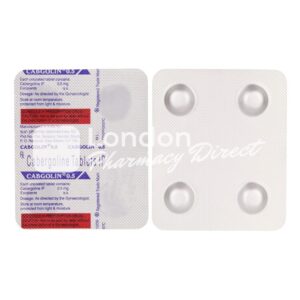
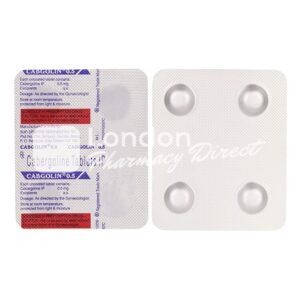
- Oral tablets (commonly 0.5 mg; generics may be 0.25 mg or 1 mg in some regions), usually supplied in bottles or blister packs.
- Cabergoline begins to lower serum prolactin within 24–72 hours, with symptom improvement often seen over days to a few weeks.
- Long‑acting effect allowing once‑ or twice‑weekly dosing; the drug’s effects persist for several days (half‑life is long, commonly measured in multiple days).
- Avoid excessive alcohol while taking dostinex, as alcohol can worsen dizziness, drowsiness and the risk of orthostatic hypotension.
- The most common side effect is nausea; other frequent adverse effects include headache, dizziness, fatigue, constipation and orthostatic hypotension (rare psychiatric effects have been reported).
- Would you like to try dostinex without a prescription?
Basic Dostinex Information
- INN (International Nonproprietary Name): Cabergoline
- Brand Names Available In United Kingdom: Dostinex; Cabaser; generics labelled as cabergoline
- ATC Code: G02CB03
- Forms & Dosages: Tablet oral 0.5 mg is common; generics may be available as 0.25 mg or 1 mg in some markets; packaging varies (bottles or blister packs)
- Manufacturers In United Kingdom: Pfizer (original developer of Dostinex) and multiple generic manufacturers; local pharmacy can confirm exact suppliers
- Registration Status In United Kingdom: Licensed and prescription-only (MHRA/EMA alignment)
- OTC / Rx Classification: Prescription Only Medicine (Rx)
Worried about starting cabergoline (Dostinex) and how it will fit into daily life?
This guide outlines essential instructions, safety checks and practical tips for UK patients prescribed cabergoline for high prolactin or prolactinomas.
Follow MHRA and NHS guidance: cabergoline is prescription-only and should be started only after GP or specialist review.
Keep clinic letters (endocrinology, fertility clinic) to show the prescriber and pharmacy when arranging repeat prescriptions.
Safety first: do not drive or operate heavy machinery until you know how cabergoline affects you, because common side effects include dizziness and drowsiness.
If you have a history of heart valve disease, uncontrolled hypertension, severe liver disease or prior sensitivity to ergot drugs, do not take cabergoline without specialist review — these are recognised absolute contraindications in product data.
Practical daily-life notes: take doses on the same day(s) each week, use a weekly pill box or phone reminder, and store tablets in original packaging at 20–25°C away from moisture.
Preferable checklist before treatment: measure blood pressure, review heart history and request baseline liver tests.
Use a simple weekly dosing calendar: write the weekday selected for your weekly 0.5 mg or split dose and tick it each week.
Everyday Use & Best Practices
Morning Vs Evening Dosing
Many UK clinicians recommend taking cabergoline on a single scheduled day each week, often in the evening to reduce nausea or dizziness on active days.
For hyperprolactinaemia, starting doses are commonly 0.5 mg once weekly, often as a single tablet before any titration.
Some patients split the weekly dose across two days if single-dose side effects are poorly tolerated.
Evening dosing after dinner can fit typical UK meal patterns and reduce disruption during the working week.
Taking With Or Without Meals
Cabergoline can be taken with or without food, though taking it after a meal or with a light snack may help if you experience nausea.
This is useful for those who have hearty UK breakfasts or dinners and want to reduce side-effect risk on dosing day.
Avoid heavy alcohol around dosing because alcohol may worsen dizziness and orthostatic hypotension.
Practical tip: link your weekly dose to a regular habit such as Sunday evening tea to improve adherence.
- Dosing Schedule: Start 0.5 mg once weekly on a chosen evening; consider splitting dose if unwell.
- Side-Effect Mitigation: Take with food, sit up slowly from lying/sitting, avoid alcohol on dose day, and rest if drowsy.
Safety Priorities
Who Should Avoid It (MHRA Warnings)
Absolute contraindications include uncontrolled hypertension, known hypersensitivity to cabergoline or ergot derivatives, and history of cardiac valvular fibrosis.
Pregnancy and breastfeeding are special cases: cabergoline is not recommended to suppress lactation, and pregnancy use should be discussed with a specialist.
Inform prescribers about any psychiatric history because rare psychiatric adverse events, including hallucinations, have been reported.
Activities To Limit (Driving, Work Safety)
Avoid driving, cycling or operating heavy machinery until you know how cabergoline affects you due to risks of dizziness and somnolence.
If your job involves heights or other safety-sensitive tasks, inform your employer and arrange occupational health or GP advice about temporary adjustments.
Report sudden fainting, severe dizziness or syncope immediately to your GP or A&E.
- Pre-Start Screening: Blood pressure check, cardiac murmur/valve history, liver function baseline and psychiatric history review.
- Post-Dose Warnings: If excessive dizziness, vision changes or severe fatigue occur, stop activity and seek medical advice.
Dosage & Adjustments
General Regimen (NHS Guidance)
Typical starting dose for hyperprolactinaemia is 0.5 mg per week, commonly taken as a single 0.5 mg tablet on a set day.
Prescribers may titrate by 0.5 mg per week as needed, with many maintenance regimens up to around 2 mg per week for most patients.
Higher doses are used only in specialist care and monitoring is intensified for those patients.
Clinicians recheck serum prolactin and clinical response to decide on dose adjustments and frequency.
Special Cases (Elderly, Comorbidities)
No universal dose reduction is required for elderly patients, but those over 65 need closer monitoring for adverse events.
Severe hepatic impairment warrants starting at a lower dose and close follow-up because liver handling of the drug may be affected.
Severe renal impairment rarely changes dosing, but overall tolerance should be monitored closely.
- Start: 0.5 mg once weekly for most adults.
- Maintenance: Titrate to effective dose, commonly up to 2 mg/week for hyperprolactinaemia.
- Maximum: 2 mg/week commonly for hyperprolactinaemia; specialist care may give higher doses when indicated.
User Testimonials
Positive Reports From UK Patients
Many UK patients report restored periods and improved fertility after prolactin normalisation with cabergoline.
Once-weekly dosing is often praised for convenience compared with daily alternatives, and many report only mild, transient side effects.
Pharmacies and specialist clinics commonly receive feedback that cabergoline improves symptoms and reproductive outcomes when used with monitoring.
Common Challenges (Patient.info, NHS Forums)
Commonly reported issues include transient nausea, dizziness or fatigue on dose days and concern about rare cardiac risks.
Patients frequently ask about driving and workplace restrictions; evening dosing and taking antiemetics or food can help manage symptoms.
For supply and cost queries, patients report using major chains or registered online pharmacies for repeat supplies.
- Patient Tips: Choose an evening dose, keep clinic letters handy, use a weekly reminder and ask your pharmacist about nausea remedies.
- When To Contact Clinician: Persistent dizziness, palpitations, fainting, new psychiatric symptoms or pregnancy planning questions.
Buying Guide
Pharmacy Sources (Boots, LloydsPharmacy, Superdrug)
Dostinex and cabergoline generics are prescription-only in the UK and stocked by major chains and independent community pharmacies.
Ask the pharmacist about packaging and brand — Pfizer supplies Dostinex while generics may be labelled simply as cabergoline.
Remember to bring ID and prescription when collecting in line with NHS pharmacy procedures.
Price Comparison (NHS Prescription Charge Vs Private)
On the NHS, prescription charging applies in England unless the patient is exempt; Scotland, Wales and Northern Ireland generally offer free prescriptions.
Private prescriptions and private online clinics add consultation and medication charges; compare brand Dostinex versus generic cabergoline prices if paying privately.
In our online pharmacy, dostinex is available without a prescription, with discreet delivery to United Kingdom in 5-14 days.
What’s Inside & How It Works
Ingredients Overview
The active ingredient is cabergoline (INN), most commonly supplied as a 0.5 mg tablet.
Generics may be available in different strengths in some regions; excipients vary so consult the pharmacist if there are allergy concerns.
Pfizer is the original manufacturer of Dostinex and many generic suppliers produce cabergoline internationally.
Mechanism Basics Explained Simply
Cabergoline is a dopamine agonist that suppresses prolactin secretion from the pituitary gland (ATC G02CB03).
Lowering prolactin often restores menstrual cycles, improves fertility and can shrink prolactin-secreting adenomas.
Clinical effects are dose-dependent and require periodic blood tests to check serum prolactin and tailor therapy.
- Mechanism → Effect → Monitoring: Dopamine agonist action → Reduced prolactin and restored ovulation → Regular blood tests and clinical review.
Main Indications
Approved Uses (MHRA Listing)
Primary indications in the UK include hyperprolactinaemia and prolactin-secreting pituitary adenomas (prolactinoma).
Treatment goals are to normalise serum prolactin, restore gonadal function and reduce tumour size where appropriate.
Dostinex/cabergoline is licensed and prescription-only for these indications.
Off-Label Uses In UK Clinics
Off-label uses can include some fertility clinic protocols and, at higher doses under specialist care, Parkinson’s disease with alternative formulations such as Cabaser.
Cabergoline is not recommended for postpartum lactation suppression due to serious risks and should not be used for this purpose.
- Indication Vs Dose: Hyperprolactinaemia start 0.5 mg/week with prolactin checks; prolactinoma dosing follows similar principles with imaging and specialist oversight.
Interaction Warnings
Food Interactions (Alcohol, Tea/Coffee)
There are no major formal food interactions listed, but alcohol can increase dizziness and orthostatic hypotension risk around dosing.
Strong caffeine may increase jitteriness, though it is not a formal contraindication; moderation is sensible on dose days.
Drug Conflicts (MHRA Yellow Card Reports)
Cabergoline interacts with drugs that affect blood pressure or the central nervous system, and with drugs that antagonise or agonise dopamine receptors.
Ergot history is relevant because cabergoline is an ergot derivative; drugs that prolong QT or affect heart valves need specialist review.
Patients should report suspected adverse reactions via the MHRA Yellow Card scheme; pharmacists can assist with submissions.
- Bring To Appointments: A full list of current medicines, including over-the-counter remedies and supplements.
- Common Interacting Classes: Antipsychotics, other dopamine agents, antihypertensives and QT-prolonging drugs.
Latest Evidence & Insights
Key UK & EU Studies 2022–2025 (Summary)
Recent reviews and observational studies up to 2025 have concentrated on long-term safety, especially cardiac valvulopathy surveillance with cabergoline.
The recommendation trend is for targeted baseline echocardiography in patients who will need higher or long-term dosing and more pragmatic monitoring for low-dose users.
National safety reporting and systematic data collection continue to refine monitoring guidance and real-world efficacy measures for prolactin control.
What It Means For Patients
For most people on standard doses (for example ≤2 mg/week) benefits usually outweigh risks when prescribers perform baseline checks and sensible monitoring.
Discuss new research findings with an endocrinologist and ask whether an echocardiogram is recommended for your planned dose and duration.
Keep MHRA and NHS information pages bookmarked for updates and safety notices.
Alternative Choices
NHS Prescribing Alternatives With Pros/Cons Checklist
Alternatives include bromocriptine and quinagolide depending on availability and patient factors.
Bromocriptine is older, usually requires daily dosing and may cause more gastrointestinal side effects.
Quinagolide is a non-ergot dopamine agonist used in some European settings and may be preferred in specific cases.
- Bromocriptine: Daily dosing, longer pregnancy experience; more GI side effects.
- Quinagolide: Non-ergot option where available; suitability depends on local formulary.
Practical Switch Considerations
Switching dopamine agonists must be supervised by a specialist with repeat prolactin testing and appropriate titrations.
Consider the patient’s fertility plans, side-effect profile, drug interactions and cost when selecting an alternative.
Pharmacists can advise on supply and price differences between brand Dostinex and generics when patients request a switch.
Regulation Snapshot
MHRA Approval & Status
Dostinex (cabergoline) is licensed and prescription-only in the UK, with records aligned to EMA classifications for prolactin inhibitors.
Pfizer is the original trademark holder while multiple generics supply cabergoline internationally.
Registration records and product labels are available via MHRA and EMA public databases.
NHS Prescribing Framework
GPs and specialists prescribe cabergoline under standard NHS rules; repeat prescribing commonly requires clinic review and recent monitoring results.
In England a prescription charge may apply unless the patient is exempt; Scotland, Wales and Northern Ireland usually offer free prescriptions.
Pharmacies must verify prescriptions before supply and will advise on monitoring expectations.
FAQ Section
Will Cabergoline Affect My Fertility Or Periods?
Yes — by lowering prolactin it commonly restores ovulation and regular periods, and fertility clinics use it to treat prolactin-related infertility.
Expect hormone monitoring, blood tests and specialist follow-up while on treatment.
What If I Miss A Dose Or Feel Very Unwell?
If you miss a single weekly dose, take it when remembered unless the next scheduled dose is close; do not double doses.
For overdose signs such as collapse, hallucinations or severe hypotension seek emergency medical care and bring any remaining tablets to A&E.
Contact your GP or on-call endocrinologist for persistent side effects or worrying symptoms.
- Emergency Signs: Fainting, severe shortness of breath, chest pain, sudden severe dizziness, new severe psychiatric symptoms.
- Out-Of-Hours: Use NHS 111 for urgent advice; go to A&E if life‑threatening.
Guidelines For Proper Use
UK Pharmacist Counselling Style
Confirm the indication and exact dose before supply, typically 0.5 mg weekly to start for hyperprolactinaemia.
Check contraindications: cardiac valve disease, uncontrolled hypertension, ergot allergy and significant hepatic disease.
Advise on common side effects including nausea and dizziness and on precautions about driving and alcohol.
Suggest supportive measures such as taking the tablet after food, sitting up slowly and reporting adverse effects to the MHRA Yellow Card scheme.
NHS Patient Support Advice
Ask patients to bring clinic letters and medication lists to GP and pharmacy appointments to support safe repeat prescribing.
Recommend regular blood tests for prolactin and consider echocardiography for those on higher or long-term doses.
For repeat supplies contact local Boots, LloydsPharmacy or an NHS community pharmacy; registered online pharmacies can supply but check GPhC registration.
Delivery Across United Kingdom
| City | Region | Delivery Time |
|---|---|---|
| London | England | 5-7 days |
| Birmingham | England | 5-7 days |
| Manchester | England | 5-7 days |
| Glasgow | Scotland | 5-7 days |
| Edinburgh | Scotland | 5-7 days |
| Leeds | England | 5-7 days |
| Bristol | England | 5-7 days |
| Liverpool | England | 5-7 days |
| Sheffield | England | 5-7 days |
| Newcastle Upon Tyne | England | 5-7 days |
| Belfast | Northern Ireland | 5-7 days |
| Cardiff | Wales | 5-7 days |
| Nottingham | England | 5-7 days |
| Plymouth | England | 5-9 days |
Quick Read Checklist For Patients
Before Starting: bring GP or clinic letters, request baseline prolactin and liver tests, check blood pressure and report cardiac history.
Weekly Routine: choose a single evening, set a phone reminder, take after food if nauseous and avoid alcohol around the dose.
When To Contact: persistent severe dizziness, fainting, new chest symptoms, unexplained swelling or new psychiatric symptoms.
Pharmacy Tips: ask about generic cabergoline tablets if cost is a concern, and confirm brand and excipients if allergic history is present.
Final Notes For Clinicians And Pharmacists
Document doses and monitoring in GP records and ensure patients understand the weekly schedule and safety issues around driving and work.
Consider echocardiography for patients expected to require higher or long-term cabergoline dosing and liaise with endocrinology for dose adjustments.
Encourage patients to report side effects to the MHRA Yellow Card scheme and provide clear follow-up plans for blood tests and clinical review.