Permethrin
Permethrin
- In many pharmacies you can buy permethrin products without a prescription (particularly 1% lice formulations available OTC); the 5% cream used for scabies is prescription-only in many countries though local regulations vary and some outlets may sell OTC—online purchase and home delivery are commonly available.
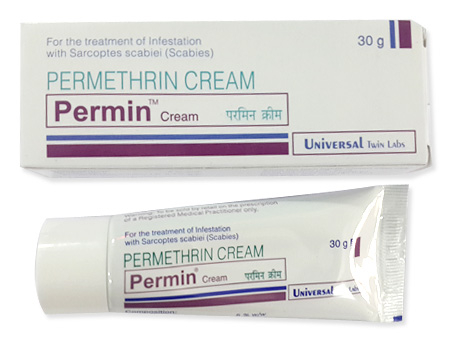
- Permethrin is used to treat scabies and head lice; it is a synthetic pyrethroid that acts on parasite nerve cell sodium channels causing paralysis and death of mites and lice.
- Usual dosages: for scabies adults and children ≥12 years apply a full tube of 5% cream (typically 30–60 g) head-to-toe and leave for 8–14 hours (children: approx ½ tube for 6–12 years, ¼ tube for 1–5 years, 1/8 tube for infants 2 months–1 year); for head lice apply the lotion/cream to washed hair, saturate, leave about 10 minutes, then rinse and repeat after 7 days if live lice persist.
- Form of administration is topical only — cream (5%) for scabies, lotion/cream (1%) for lice, sprays (0.25–0.5%) and combination lice kits are also available.
- Onset time: permethrin begins killing mites and lice on contact within minutes to hours, although symptom relief (especially itch) may take days.
- Duration of action: a single scabies application acts during the 8–14 hour contact period with residual effect sufficient to kill mites; pediculicidal activity for lice can persist for several days and a repeat treatment after 7 days is commonly recommended if needed.
- Alcohol warning: there is no specific systemic contraindication to drinking alcohol with topical permethrin, but avoid applying alcohol-containing products to treated skin, and be cautious with alcohol if you experience dizziness or other CNS symptoms.
- The most common side effect is local skin irritation — burning, stinging, itching, redness or swelling at the application site.
- Would you like to try permethrin without a prescription?
Permethrin
Basic Permethrin Information
- INN (International Nonproprietary Name): Permethrin
- Brand Names Available In United Kingdom: Lyclear
- ATC Code: P03AC04
- Forms & Dosages: Cream 5%; Lotion 1%; Spray 0.25% and 0.5%; Combination kits for lice treatment
- Manufacturers In United Kingdom: Major suppliers listed include GlaxoSmithKline (Lyclear), Reckitt (Nix), Taro Pharmaceuticals (Acticin)
- Registration Status In United Kingdom: Not specified
- OTC / Rx Classification: 1% formulations usually OTC for lice; 5% cream commonly prescription-only for scabies
Instructions And Quick Warnings For UK Patients
Worried about using veterinary products or the wrong strength at home?
- Use only human‑labelled permethrin products at the correct strength (1% or 5%).
- Do not use veterinary formulations — concentration and excipients differ and are not suitable for people.
- 5% cream is commonly prescription‑only for scabies; 1% lotion or cream for head lice is available OTC in many places — check MHRA/NHS guidance and ask a pharmacist.
- Apply exactly as directed and avoid eyes, mouth and broken skin; wash hands after application and keep the product out of reach of children.
- Wash bedding and clothing on a hot wash or seal items in plastic for 72 hours to prevent reinfestation.
- Seek urgent care for breathing problems, severe allergic reaction, or ingestion; for persistent symptoms after treatment contact NHS 111 or your GP.
Stepwise Home-Care Checklist:
- Treat the affected person according to the product label (5% cream head‑to‑toe for scabies; 1% lotion for lice as directed).
- Treat close contacts at the same time if advised by your pharmacist or GP.
- Hot wash bedding, towels and worn clothes; items that cannot be washed should be sealed in plastic for 72 hours.
- Vacuum carpets and soft furnishings and store soft toys in sealed bags for 72 hours where practical.
Emergency Warning:
- If you or a child develops breathing difficulty, facial swelling, or collapse after exposure, call 999 immediately.
- Accidental ingestion or severe CNS symptoms require immediate emergency assessment.
Everyday Use & Best Practices
Morning Vs Evening Dosing
Are you unsure whether to treat in the morning or at night?
For scabies treated with permethrin 5% cream a common approach is evening application so the cream remains in contact overnight, typically for 8–14 hours as per product guidance.
For head lice using a 1% lotion or cream many UK brands advise application to dry or washed hair, left for about 10 minutes then rinsed, which can fit into a morning routine or be done after school.
A practical tip is to schedule scabies application before bed and lice treatment at a time when you can supervise hair saturation and combing.
Taking With Or Without Meals (UK Diet Habits)
Worried about tea, biscuits or a curry after treatment?
Topical permethrin has minimal systemic absorption so meals, tea or coffee do not affect how well it works and usual UK eating patterns can continue.
For small children coordinate treatment with mealtimes and naps to reduce the chance of rubbing cream into eyes or mouth.
When households include multiple members, treat close contacts concurrently and follow a clear household checklist for laundry and toys to reduce the chance of reinfestation.
Safety Priorities
Who Should Avoid It (MHRA Warnings)
Do you have allergies or very young children at home?
Absolute contraindications include known hypersensitivity to permethrin or other synthetic pyrethroids, and neonates under two months where safety has not been established.
Use with caution on severely inflamed or weeping skin — a clinician may prefer alternatives in these cases.
If you have a history of ragweed allergy inform your prescriber because cross‑reactions have been reported.
Older adults and people with sensitive skin should consider a patch test or supervised use and report any burning, stinging or widespread rash promptly.
Activities To Limit (Driving, Work Safety)
Can treatment affect your ability to drive or operate machinery?
Topical permethrin does not normally impair driving or machinery use, but if you experience dizziness, marked headache or sensory symptoms after application avoid driving or safety‑critical work until symptoms resolve.
Avoid heavy manual tasks if you develop skin irritation at the application site.
When supervising children, prevent them from rubbing treated skin into their eyes and watch for signs of local irritation or neurological symptoms.
Report suspected adverse reactions via the MHRA Yellow Card scheme and consult a pharmacist in Boots or LloydsPharmacy for immediate advice if unsure.
Dosage & Adjustments
General Regimen (NHS Guidance)
How much should each person use and when should it be repeated?
For scabies, standard practice is permethrin 5% cream applied from head to toe for adults and children aged 12 years and above, typically a full tube (30–60g) left on for 8–14 hours.
Children dosing scales down: up to ½ tube for 6–12 years, up to ¼ tube for 1–5 years, and up to 1/8 tube for infants 2–12 months, with neonates under two months excluded.
For head lice a 1% lotion is applied to saturate the hair, left about 10 minutes then rinsed, and repeated after seven days only if live lice are still present.
Special Cases (Elderly, Comorbidities)
Do older patients or those with liver or kidney problems need dose changes?
Elderly patients generally require no routine dose adjustment but monitor for fragile skin and increased irritation.
Because systemic absorption is minimal there are no specific adjustments required for liver or kidney impairment according to available data.
For extensive dermatitis or broken skin seek clinician review, as supervised or alternative treatments may be safer in those situations.
User Testimonials
Positive Reports From UK Patients
Wondering whether real people find permethrin helpful?
Many UK patients report rapid relief of scabies itch following an overnight application of 5% cream and successful lice clearance with 1% lotions when contacts and bedding are managed at the same time.
Pharmacists at Boots or LloydsPharmacy are often praised for clear OTC advice and families value prompt GP prescriptions when scabies is suspected.
Common Challenges (Patient.info, NHS Forums)
What issues do people commonly face after treatment?
Persistent itch after treatment (post‑scabetic itch) is frequently discussed on Patient.info and NHS forums and can last for weeks despite successful eradication of mites.
Parents commonly report difficulty ensuring complete hair saturation for lice and sometimes require a second treatment or adjunct wet‑combing to fully clear nits.
Mild burning or local irritation is common and usually transient; severe rashes are unusual and should be reported via the MHRA Yellow Card system.
Buying Guide
Pharmacy Sources (Boots, LloydsPharmacy, Superdrug)
Where can you pick up permethrin in the UK?
Permethrin 1% lotions and creams for head lice are widely available OTC at high‑street chains such as Boots, LloydsPharmacy and Superdrug and at reputable online pharmacies.
Permethrin 5% cream for scabies commonly requires a prescription and is dispensed via GP prescriptions, sexual health or dermatology clinics, and licensed online prescribing services.
Look for trusted brands such as Lyclear on UK shelves and check product leaflets for strength and application instructions.
Price Comparison (NHS Prescription Charge Vs Private)
How much will treatment cost me?
In England an NHS prescription charge applies per item unless exempt, whereas prescriptions are free in Scotland, Wales and Northern Ireland.
OTC 1% lice products are generally low cost in pharmacies and supermarkets; prescription 5% creams may incur pharmacy dispensing charges if issued privately.
Consider pharmacy loyalty schemes or an NHS prescription prepayment certificate if you expect repeated prescriptions.
In our online pharmacy permethrin is available without a prescription for eligible products, with discreet delivery to United Kingdom in 5-14 days.
What’s Inside & How It Works
Ingredients Overview
Curious what’s in the tube you are about to use?
Licensed topical preparations list permethrin as the active ingredient at 1% strength for lice and 5% strength for scabies, with excipients varying by brand and formulation.
Check the product leaflet for preservatives, fragrances or emulsifiers if you have sensitive skin or known allergies to excipients.
Major brands on the market include Lyclear (GlaxoSmithKline), Nix (Reckitt) and Acticin (Taro) as noted in product information.
Mechanism Basics Explained Simply
How does permethrin actually kill lice and mites?
Permethrin is a synthetic pyrethroid that acts on insect nerve membranes causing paralysis and death on contact, targeting parasites where they live on the skin or hair.
It works topically and does not deeply penetrate the skin beyond surface layers where scabies mites and lice reside.
Eggs (nits) may be more resistant so combining chemical treatment with mechanical removal such as wet‑combing can improve outcomes for head lice.
Main Indications
Approved Uses (MHRA Listing)
What is permethrin licensed for in routine practice?
Permethrin topical formulations are licensed for scabies (5% cream) and pediculosis/head lice (1% lotion or cream) across many jurisdictions and covered by EMA/European approvals.
NHS practice usually routes scabies treatment via prescription for 5% cream and recognises OTC 1% options for head lice management.
Off-Label Uses In UK Clinics
Are there other, less common clinical uses?
Some clinics use permethrin for crab (pubic) lice or specific ectoparasitic infestations where clinical judgement supports it, and dermatology services may combine topical and systemic agents for resistant or crusted cases under specialist supervision.
Off‑label use should be documented and discussed with a clinician, and alternatives considered when resistance or intolerance is suspected.
Interaction Warnings
Food Interactions (Alcohol, Tea/Coffee)
Do I need to change what I eat or drink when using permethrin?
Topical permethrin has minimal systemic absorption so normal diet and hot drinks such as tea or coffee need not be altered when using the product.
If you experience dizziness or a notable headache after application it is sensible to avoid heavy alcohol until symptoms resolve.
Drug Conflicts (MHRA Yellow Card Reports)
Could permethrin interfere with other medicines?
Significant drug interactions are uncommon for topical permethrin because systemic levels are very low, but inform your GP or pharmacist if you have epilepsy or are taking multiple neuroactive medicines.
Avoid combining other topical insecticidal products unless directed by a clinician and separate household chemical sprays from personal treatments to reduce combined exposure.
Report suspected adverse reactions via the MHRA Yellow Card scheme; local pharmacists at Boots or Lloyds can assist with reporting.
Latest Evidence & Insights
Recent UK & EU Studies 2022–2025
What does recent research tell patients about permethrin?
Recent UK and EU literature has reinforced that permethrin 5% remains an effective topical scabicide in many settings, with attention on verification and household management to prevent reinfestation.
Head lice studies show variable success tied to application technique and local resistance patterns, and combining chemical treatment with mechanical removal increases clearance in several trials.
Ongoing surveillance recommends monitoring resistance trends and considering alternative agents where local resistance is reported.
Practical Takeaways For Patients
What practical steps should patients take from the evidence?
Follow application instructions precisely, treat close contacts concurrently, manage bedding and clothing with hot washes or sealing for 72 hours, and re‑assess after 7–10 days if live mites or lice persist.
If local resistance is suspected pharmacists may suggest alternatives such as dimeticone or malathion depending on local guidance and availability.
Alternative Choices
NHS Prescribing Alternatives
What are the next options if permethrin is unsuitable or ineffective?
NHS alternatives include malathion for lice, benzyl benzoate or crotamiton for scabies in some settings, and oral ivermectin for specialist indications such as crusted scabies or public‑health directed treatments.
Dimeticone‑based lotions are popular OTC alternatives for head lice when permethrin resistance is suspected due to their physical mode of action.
Pros/Cons Checklist
- Malathion: pros — can work against some resistant lice; cons — odour and flammability, longer application times.
- Dimeticone: pros — low irritation, physical action; cons — may need mechanical combing for nits.
- Benzyl Benzoate: pros — low cost; cons — higher risk of skin irritation and multiple applications.
- Oral Ivermectin: pros — systemic single‑dose options for some difficult cases; cons — prescription‑only and not suitable in pregnancy or young infants.
Regulation Snapshot
MHRA Approval & Labelling
How is permethrin regulated and labelled in the UK?
Permethrin formulations fall under ATC classification P03AC04 and are subject to MHRA and previously EMA labelling that covers licensed indications, contraindications and safety details on product leaflets.
Packaging and wording vary by manufacturer, with creams commonly at 5% for scabies and lotions 1% for lice.
NHS Prescribing Framework
What should patients expect when seeking prescriptions?
5% permethrin cream for scabies is generally prescription‑only and provided by GPs, sexual health or dermatology clinics, while 1% lice products are often OTC in community pharmacies and retail chains.
Prescription charging varies across the UK and pharmacists can advise on when to refer for a prescription and how to report adverse events to regulators.
FAQ Section
Will Permethrin Cure The Itch Immediately?
Will I stop itching the day after treatment?
Not always; mites may be killed quickly but the immune response can cause post‑scabetic itch that lasts days to weeks even after successful eradication.
If live mites persist beyond two weeks contact your GP for re‑assessment or alternative management.
Can I Use It If Pregnant Or Breastfeeding?
Is topical permethrin safe during pregnancy or while breastfeeding?
Discuss use with your GP or midwife; topical permethrin is sometimes used in pregnancy when benefits outweigh risks and clinicians often consider topical treatment acceptable case‑by‑case.
Breastfeeding mothers should avoid applying permethrin to the breast area immediately before feeding and consult their prescriber for tailored advice.
How To Handle School And Childcare Return?
When can my child go back to nursery or school?
For head lice many schools accept children back after the first appropriate treatment, but verify the school’s policy; for scabies notify the school or nursery and advise that treatment has started and household contacts are being managed.
Provide a simple checklist to school staff summarising notification, treatment status and laundering steps to make return smoother.
Guidelines For Proper Use
UK Pharmacist Counselling Style
What will a pharmacist ask and advise when you request permethrin?
A pharmacist will ask about symptoms and duration, previous treatments, allergies, pregnancy status and household contacts before recommending a product.
They will explain the difference between 1% and 5% strengths, demonstrate application steps, clarify leave‑on times and give instructions on when to repeat treatment.
A printed checklist for treat‑all contacts, hot wash bedding, bag unwashables for 72 hours and wet‑comb hair for lice is commonly provided in community pharmacies.
NHS Patient Support Advice
Who should you contact if problems arise after treatment?
For urgent queries contact NHS 111, for prescriptions contact your GP, and for complex or persistent cases ask for referral to sexual health or dermatology clinics.
Pharmacists can document advice in the patient record and help with MHRA Yellow Card reporting where needed.
Delivery Across United Kingdom
| City | Region | Delivery Time |
|---|---|---|
| London | Greater London | 5-7 days |
| Birmingham | West Midlands | 5-7 days |
| Manchester | Greater Manchester | 5-7 days |
| Glasgow | Scotland | 5-7 days |
| Leeds | West Yorkshire | 5-7 days |
| Sheffield | South Yorkshire | 5-9 days |
| Edinburgh | Scotland | 5-7 days |
| Bristol | South West England | 5-9 days |
| Newcastle Upon Tyne | North East England | 5-9 days |
| Liverpool | Merseyside | 5-7 days |
| Belfast | Northern Ireland | 5-9 days |
| Cardiff | Wales | 5-9 days |
| Brighton | East Sussex | 5-9 days |
| Plymouth | Devon | 5-9 days |