Diamox
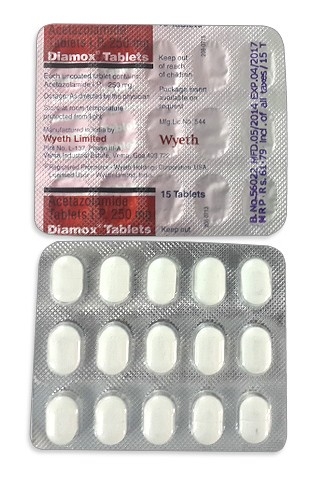
Diamox
- You can purchase Diamox (acetazolamide) from some online and international pharmacies, and in many places it is prescription-only; however, availability without a prescription can vary by country and seller. In the UK, EU, US and most other regulated markets it is generally a prescription medicine.
- Diamox is used to treat glaucoma, certain types of epilepsy, fluid retention (edema), idiopathic intracranial hypertension, and to prevent or treat acute mountain sickness. It works as a carbonic anhydrase inhibitor, reducing fluid production in the eye and promoting the loss of bicarbonate, salt and water through the kidneys.
- The usual adult dose depends on the condition: for glaucoma, 250–1,000 mg daily in divided doses; for edema, 250–375 mg once daily; for epilepsy, 250–1,000 mg daily in divided doses; and for altitude sickness prevention, 500–1,000 mg daily, usually started 24–48 hours before ascent.
- Diamox is usually taken by mouth as tablets or extended-release capsules; injectable forms also exist for hospital use.
- It typically starts working within a few hours after oral use, though for altitude sickness it is usually started 1–2 days before travel to high altitude for best effect.
- The duration of action is generally around 10–15 hours, which is why it may be taken multiple times per day depending on the formulation and indication.
- Avoid or limit alcohol while taking Diamox, as it can increase dizziness, dehydration and sleepiness, and may make side effects worse.
- The most common side effects are tingling in the fingers or toes, frequent urination, tiredness, altered taste, nausea, and mild stomach upset.
- Would you like to try Diamox without a prescription?
Diamox
Basic Diamox Information
- INN (International Nonproprietary Name): acetazolamide
- Brand names available in United Kingdom: Diamox
- ATC Code: S01EC01
- Forms & dosages: Tablets for oral use, commonly 250 mg tablets in blisters/cartons; other strengths and forms may exist in other markets, but UK product information most commonly refers to Diamox 250 mg Tablets.
- Manufacturers in United Kingdom: not specified
- Registration status in United Kingdom: prescription medicine under clinician supervision
- OTC / Rx classification: prescription-only medicine
Everyday Use And Best Practices
Wondering whether Diamox is better in the morning or later in the day?
In UK practice, Diamox is a prescription carbonic anhydrase inhibitor, so the first rule is simple: follow the exact dose on the prescription or label from your clinician or pharmacist.
Because acetazolamide can increase urine output, many people find morning dosing easier to fit around work, commuting, school runs, or travel, while later doses may disturb sleep.
It is usually taken with or without food, but taking it with breakfast, lunch, or a light supper can help reduce nausea or tummy upset.
A common practical approach is to link the dose to a routine you already have, such as after breakfast before the school run or after a light lunch if the prescriber has advised more than one daily dose.
Do not adjust the dose yourself, especially if it has been prescribed for glaucoma, epilepsy, oedema, or altitude sickness.
For day-to-day use, a short checklist helps: drink water as advised, take it with a meal if your stomach is sensitive, know what to do if you miss a dose, and keep your pharmacy contact details handy for questions about acetazolamide, acetazolamide tablets, acetazolamide 250mg, and Diamox.
Safety Priorities
The most important safety point is that Diamox is prescription-only and it is not suitable for everyone.
Before starting, UK patients should check whether they have any of the main contraindications below.
- Allergy to acetazolamide or sulfonamides.
- Marked kidney disease or dysfunction.
- Liver disease or cirrhosis.
- Low sodium or low potassium.
- Metabolic acidosis or hyperchloremic acidosis.
People with kidney stones, breathing problems, or significant frailty may also need extra review before starting.
In everyday life, tiredness, dizziness, blurred vision, pins and needles, and frequent urination can affect driving, cycling, machinery, and shift work.
If the condition itself already affects vision or alertness, check local guidance and follow the prescriber’s advice before doing safety-critical tasks.
Urgent help is needed for a severe rash, breathing difficulty, confusion, very poor urine output, or severe weakness.
Dosage And Adjustments
The dose depends on the condition, so it should be prescribed individually rather than guessed from another person’s regimen.
| Condition | Typical adult dose | Practical note |
|---|---|---|
| Glaucoma | 250–1000 mg/day in divided doses | Often used when rapid pressure lowering is needed |
| Oedema | 250–375 mg once daily in the morning | Sometimes given intermittently |
| Epilepsy | 250–1000 mg/day in divided doses | Used as an adjunct in selected patients |
| Altitude sickness | 500–1000 mg/day in divided doses | Usually started before ascent |
Do not exceed the prescribed dose, and do not stop suddenly without medical advice if it is being used long term for a chronic condition.
Older adults often need closer monitoring because the medicine is mainly removed by the kidneys.
People with kidney impairment may need a lower dose or may be advised not to take it, while liver disease needs special caution.
Blood tests may be needed for electrolytes, kidney function, and acid-base balance, especially if treatment is ongoing.
That is why acetazolamide 250mg tablets are best used with structured UK prescribing, rather than casual dose changes at home.
What Patients Commonly Report
What do people actually say once they have started it?
What patients commonly report is not proof, but it does give a useful sense of how Diamox feels in real life.
Many people with IIH describe fewer headaches or pressure symptoms after dose titration, and some glaucoma patients notice better eye-pressure control when it is added to their treatment plan.
Travellers using it for altitude sickness often say the benefit is noticeable, but not always dramatic at first, especially if they are expecting a “switch-on” effect within hours.
Common side effects mentioned most often are tingling in fingers or toes, tiredness, altered taste, increased urination, and occasional nausea.
A simple checklist works well here: what improved, what side effects appeared, and when to call the GP or pharmacist for advice.
In the UK, people often rely on pharmacist advice, NHS app guidance, and GP follow-up when deciding whether to continue or adjust treatment.
Buying Guide
In the UK, Diamox is usually obtained through an NHS GP, a hospital specialist, or a private prescriber.
Common pharmacy routes include Boots, LloydsPharmacy, Superdrug, local independent pharmacies, and legitimate online pharmacies registered in the UK.
If you are comparing access routes, a simple table is often helpful.
| Supply route | Typical access | Cost note |
|---|---|---|
| NHS prescription | GP or hospital | England may charge unless exempt |
| Private prescription | Private prescriber | Price varies by pharmacy and pack size |
| Online pharmacy | UK-registered distance selling pharmacy | Check registration before ordering |
In England, prescription charges may apply unless you are exempt, while in Scotland, Wales, and Northern Ireland NHS prescriptions are generally free.
Always check GPhC registration, and for online sellers verify distance-selling legitimacy before ordering.
Unregulated websites should be avoided because counterfeit or unsafe stock is a real risk.
For patients who want a simple, discreet checkout experience, our online pharmacy offers Diamox without a prescription, with discreet delivery to United Kingdom in 5-14 days.
What Is Inside And How It Works
Diamox is the best-known brand name for acetazolamide, the generic name used internationally.
In UK packaging, you will commonly see Diamox 250 mg Tablets, usually in blister packs inside cartons, with each tablet containing acetazolamide 250 mg.
| Brand | Strength | Pack style |
|---|---|---|
| Diamox | 250 mg | Blister packs in cartons |
| Acetazolamide | 250 mg | Generic pharmacy packs |
It works by blocking carbonic anhydrase, which makes the kidneys excrete more salt, bicarbonate, and water.
That lowers fluid build-up, reduces eye pressure, and can also help with altitude sickness by encouraging breathing through a mild metabolic acidosis.
In plain English, it helps remove excess fluid and pressure without needing a complicated dosing trick.
Main Uses
What is Diamox actually used for in UK clinical practice?
Its approved uses are glaucoma, certain forms of epilepsy, oedema from heart failure or drugs, and prevention or treatment of acute mountain sickness.
| Condition | Why it is used | Practical note |
|---|---|---|
| Glaucoma | Reduces eye pressure | Often short term or as an add-on |
| Oedema | Helps remove fluid | Less potent than loop diuretics |
| Epilepsy | Adjunct seizure control | Used in selected cases |
| Altitude sickness | Prevents or eases symptoms | Usually started before ascent |
For glaucoma, it reduces aqueous humour production and lowers intraocular pressure.
For oedema, it can help when fluid retention is linked to heart failure or drug effects, particularly if metabolic alkalosis is part of the picture.
For epilepsy, it is not first-line, but it can help in difficult-to-control seizure disorders, especially absence seizures.
For altitude sickness, it is commonly started 24 to 48 hours before ascent and continued during the climb.
Some specialists also use acetazolamide off-label for idiopathic intracranial hypertension, but that should only happen under specialist supervision.
Interaction Warnings
There is no strict forbidden food list, but alcohol can worsen dizziness, dehydration, and unsteadiness.
- Alcohol may make side effects feel stronger.
- Stay hydrated, especially in hot weather, travel, or strenuous exercise.
- Tea and coffee do not have a major direct interaction, but too much caffeine may worsen jitteriness or dehydration in some people.
Major interaction groups to discuss with a pharmacist or GP include high-dose salicylates, other diuretics, medicines that affect electrolytes, and drugs that may increase side effects or kidney risk.
Tell your pharmacist about every prescribed, over-the-counter, and herbal product you take, because acetazolamide interactions are often about combined side effects rather than one obvious clash.
Do not combine it casually with other medicines used for eye pressure or fluid retention without advice, because that can increase the chance of low electrolytes or dehydration.
Yellow Card reporting remains important for any unexpected reaction, especially if you suspect an acetazolamide side effect that feels unusually severe.
Latest Evidence And Insights
What does newer research mean for everyday patients?
From 2022 to 2025, acetazolamide has remained widely used for glaucoma, IIH, epilepsy, oedema, and altitude illness, while newer work has looked at heart failure, sleep apnea, and kidney stone risk.
| Research finding | What it means in practice |
|---|---|
| 125–250 mg twice daily supports altitude sickness prevention | Use the lowest effective dose where possible |
| IIH reviews continue to support acetazolamide | Specialists still use it early when pressure control is needed |
| Kidney stone risk is higher at sustained doses | Hydration and monitoring matter more over time |
| Heart failure studies explore adjunct use | It may help selected hospital patients with volume overload |
For UK patients, the practical message is straightforward: the best dose is often the lowest effective dose, especially where side effects or kidney issues are a concern.
Specialists may choose it when rapid pressure reduction or altitude prophylaxis is needed, because acetazolamide research still supports its role in those settings.
Alternative Choices
Is Diamox always the best option?
Not necessarily, and the best alternative depends on the condition being treated.
- For glaucoma, topical eye drops or other pressure-lowering medicines may be preferred.
- For oedema, loop diuretics or specialist heart-failure regimens may be better.
- For migraine-like or pressure-related problems, specialists may choose other agents depending on the diagnosis.
- For altitude sickness, gradual ascent and non-drug prevention strategies still matter.
Diamox is not usually the first choice for long-term migraine prevention.
People with kidney disease, liver disease, breathing disorders, or previous severe side effects need specialist input before any switch.
When the aim is everyday usability, the safest option is the one that fits the condition and the patient, not simply the strongest-sounding medicine.
Regulation Snapshot
Diamox and acetazolamide are prescription medicines in the UK and are used under clinician supervision.
| Regulator | Prescription status | Access route | Patient cost |
|---|---|---|---|
| MHRA | Prescription-only | GP, hospital, private prescriber | Depends on NHS route |
NHS prescription charges differ across the UK, with England charging in many cases and Scotland, Wales, and Northern Ireland generally providing free NHS prescriptions.
Pharmacists remain a key access point for advice on interactions, dose timing, and side effects, especially when patients collect acetazolamide tablets for the first time.
Frequently Asked Questions
-
What is Diamox used for?
It is used for glaucoma, some seizure disorders, oedema, and altitude sickness, and sometimes by specialists for IIH.
-
How long before altitude travel should I start it?
Many travel regimens start it 24 to 48 hours before ascent, but your prescriber may adjust this.
-
Can I take it with food?
Yes, it can usually be taken with or without food, and a meal can help if it upsets your stomach.
-
What side effects should make me seek help?
Seek urgent help for severe rash, breathing problems, confusion, severe weakness, or very reduced urine output.
For mild side effects, a pharmacist, GP, NHS 111, or urgent care service can advise on what to do next.
Guidelines For Proper Use
Take acetazolamide exactly as prescribed, keep hydrated unless told otherwise, and do not double doses after a missed tablet.
Check in early if you have kidney issues, are pregnant, are breastfeeding, or take several medicines, because these are common reasons for extra monitoring in UK practice.
- Take the dose at the time agreed with your prescriber.
- Drink enough water unless fluid restriction has been advised.
- Report troublesome side effects early.
- Keep your medicine list up to date.
- Use your regular pharmacy where possible for continuity.
Red flags need urgent assessment: a severe rash, breathing problems, confusion, severe weakness, or very reduced urine output.
That kind of practical counselling is what makes Diamox advice safer, whether it is being used short term or as part of longer safe use in the UK.
Delivery Across United Kingdom
| City | Region | Delivery time |
|---|---|---|
| London | England | 5-7 days |
| Birmingham | England | 5-7 days |
| Manchester | England | 5-7 days |
| Leeds | England | 5-7 days |
| Liverpool | England | 5-7 days |
| Sheffield | England | 5-9 days |
| Bristol | England | 5-7 days |
| Newcastle upon Tyne | England | 5-7 days |
| Nottingham | England | 5-9 days |
| Glasgow | Scotland | 5-7 days |
| Edinburgh | Scotland | 5-7 days |
| Cardiff | Wales | 5-7 days |
| Belfast | Northern Ireland | 5-7 days |
| Coventry | England | 5-9 days |
| Leicester | England | 5-9 days |