Varenicline
Varenicline
- In our pharmacy, you can buy varenicline without a prescription, with delivery in 5–14 days throughout the United Kingdom. Discreet and anonymous packaging.
- Varenicline is used to help adults stop smoking; it is a partial agonist at α4β2 nicotinic acetylcholine receptors, reducing cravings and withdrawal symptoms while blocking the rewarding effects of nicotine.
- The usual dosage is a titration: 0.5 mg once daily on days 1–3, 0.5 mg twice daily on days 4–7, then 1 mg twice daily from day 8; standard treatment is 12 weeks, with an optional extension to 24 weeks in some patients.
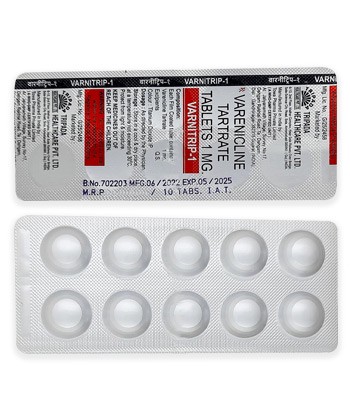
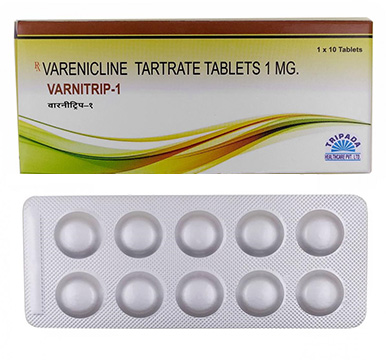
- It is given orally as film‑coated tablets, commonly 0.5 mg and 1 mg strengths, taken twice daily when at maintenance dose.
- Some reduction in craving may be noticed within a few days of starting treatment; meaningful clinical benefit is often seen within 1–2 weeks.
- The elimination half‑life is approximately 24 hours and therapeutic effects persist while the drug is taken; dosing is typically twice daily to maintain effect.
- Avoid excessive alcohol and use alcohol with caution while taking varenicline, as alcohol can worsen side effects such as dizziness, mood changes or impaired judgement; discuss alcohol use with a healthcare professional.
- The most common side effect is nausea (often dose‑related); other frequent effects include insomnia, abnormal dreams, headache, constipation, vomiting and mild mood changes—monitor for rare but serious neuropsychiatric symptoms and stop the drug if severe behavioural changes or suicidal thoughts occur.
- Would you like to try “varenicline” without a prescription?
Varenicline
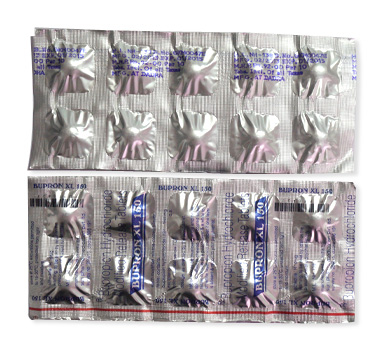
Basic Varenicline Information
- INN (International Nonproprietary Name): Varenicline — varenicline tartrate is the active ingredient.
- Brand Names Available In United Kingdom: Champix (film-coated tablets 0.5 mg and 1 mg) and various generics; verify local pharmacy stock.
- ATC Code: N07BA03 — drugs used in nicotine dependence (varenicline).
- Forms & Dosages: Film-coated tablets 0.5 mg and 1 mg commonly supplied in starter/titration blisters (e.g., 11 × 0.5 mg then packs of 1 mg tablets).
- Manufacturers In United Kingdom: Pfizer is the original developer (Champix); generic manufacturers supply alternative branded tablets — check pharmacy registers for licensed suppliers.
- Registration Status In United Kingdom: Approved as a prescription medicine under EU/UK regulatory frameworks and listed by major agencies.
- OTC / Rx Classification: Prescription Only (Rx) — not available over the counter in normal supply chains.
Immediate Warnings: Varenicline is prescription-only (Rx) and should not be started without review by a GP, NHS stop-smoking adviser or pharmacist.
Tell the clinician about any current or past psychiatric history, heart disease, pregnancy, breastfeeding or kidney problems before starting treatment.
Daily-Life Integration: Set a quit date and align the titration starter pack with your routine, using phone alarms for morning and evening doses.
Keep tablets in the original blister to protect from moisture and store below 25°C.
If you miss a dose, take it when remembered unless it is close to the next dose; do not double-dose.
Overdose requires urgent medical attention — seek emergency care immediately.
Safety Note: The MHRA advises monitoring for mood changes and rare severe skin reactions; report adverse events via the Yellow Card scheme.
If you drive or operate machinery and experience dizziness, insomnia or vivid dreams, avoid those activities until symptoms settle.
- Pre-treatment safety checklist: GP/pharmacist review; renal history; psychiatric review; pregnancy/breastfeeding check; concurrent medicines list.
- Wallet-sized emergency checklist (carry with you): Drug: varenicline; Current dose; GP/clinic contact; Allergies; Known psychiatric history.
Everyday Use & Best Practices
Morning Vs Evening Dosing
Follow the standard titration: 0.5 mg once daily for days 1–3, 0.5 mg twice daily for days 4–7, then 1 mg twice daily from day 8.
Many patients find it easiest to take one tablet at waking and one in the evening, for example with breakfast and after dinner.
If you experience morning nausea, consider moving the first dose to mid-morning while keeping roughly 12 hours between doses.
Set phone alarms, use a visible blister pack at breakfast or place tablets next to your toothbrush to build a routine.
Keep dosing consistent and do not double up if a dose is missed; take the missed dose when you remember unless it is near the next scheduled dose.
Use the starter blister to guide correct titration and to avoid accidental dose changes during the first week.
Taking With Or Without Meals (UK Diet Habits)
Varenicline can be taken with or without food, so pair doses with typical UK meals like tea and toast or cereal to help remember them.
Avoid very greasy, heavy breakfasts if you notice nausea after the morning dose.
Stay hydrated and eat small, regular meals; ginger biscuits or plain crackers are useful remedies for mild nausea.
Strong tea or coffee do not have a known interaction, but reduce large amounts of caffeine if you experience insomnia.
- Daily routine bullets: Quit date set; Morning dose with breakfast; Evening dose after dinner; Alarm set; Blister visible.
- Bedside checklist for missed doses: If remembered within a few hours, take it; if close to next dose, skip; never double-dose.
Safety Priorities
Who Should Avoid It (MHRA Warnings)
Absolute contraindications include known hypersensitivity to varenicline or excipients and a history of severe cutaneous adverse reactions.
Relative contraindications include a history of serious psychiatric illness, significant cardiovascular disease, and pregnancy or breastfeeding.
MHRA guidance and the product information require careful assessment and follow-up for people with mental health or cardiac histories before prescribing.
Report any new or worsening psychiatric symptoms immediately to your GP or prescriber and consider stopping treatment pending review.
Varenicline is not indicated in children and is prescription-only for adults with motivation to quit smoking.
Activities To Limit (Driving, Work Safety)
Common adverse effects include nausea, dizziness, insomnia and vivid dreams; check how you react before driving or operating machinery.
Until you know how varenicline affects you, avoid driving, cycling on busy roads or operating heavy machinery if you feel drowsy or emotionally unstable.
For shift workers and safety-critical roles, discuss initiation with occupational health because NHS employers may need documentation.
- Pre-treatment safety screening checklist: current medications; psychiatric history; cardiac history; pregnancy test if applicable; renal function history.
- Contraindications vs monitoring needs table summary: hypersensitivity → avoid; psychiatric history → close monitoring; renal impairment → dose adjustment.
Dosage & Adjustments
General Regimen (NHS Guidance)
The usual adult regimen begins with 0.5 mg once daily for days 1–3, then 0.5 mg twice daily on days 4–7, followed by 1 mg twice daily from day 8 onwards.
Recommended treatment duration is 12 weeks, with consideration of an additional 12 weeks (total 24 weeks) for those who are abstinent at week 12.
NHS stop-smoking services commonly combine the pharmacological regimen with behavioural support to improve success rates.
Use starter packs to ensure correct titration during the first week and provide clear instructions on when to stop smoking relative to your quit date.
Special Cases (Elderly, Comorbidities)
No routine dose reduction is required for older adults unless renal impairment is present; monitor tolerability in the elderly cohort.
For moderate renal impairment, keep a maximum of 1 mg per day, and for severe renal impairment (CrCl <30 ml/min) reduce maximum to 0.5 mg per day.
Liver impairment usually does not require adjustment, but exercise caution in severe hepatic disease.
Varenicline is not indicated in children and should be avoided in pregnancy and breastfeeding when possible.
| Regimen Stage | Daily Dose |
|---|---|
| Days 1–3 | 0.5 mg once daily |
| Days 4–7 | 0.5 mg twice daily |
| From Day 8 | 1 mg twice daily (standard) |
| Severe renal impairment | Max 0.5 mg/day |
| Moderate renal impairment | Max 1 mg/day |
User Testimonials
Positive Reports From UK Patients
Many UK patients report a noticeable reduction in cravings within one to two weeks of starting varenicline and feel better able to resist cigarettes.
Success stories often note fewer withdrawal symptoms and reduced urge intensity, particularly when paired with NHS stop-smoking support or group sessions.
Patients praise starter packs for their clear titration schedule and for helping them stick to the prescribed routine during the first days.
Real-world feedback from clinics suggests varenicline often yields higher quit rates when behavioural counselling is available alongside the medication.
Common Challenges (Patient.info, NHS Forums)
Common issues raised on Patient.info and NHS community threads include nausea, vivid dreams, sleep disturbance and mood variability.
Some users pause treatment because of these side effects or because of cost and access barriers when seeking private supplies.
Peer tips include taking doses with food, splitting timing if nausea occurs, consulting a GP about symptomatic antiemetics, and checking in with a pharmacist for reassurance.
- Top coping strategies: take with small snacks; move morning dose slightly later if needed; maintain hydration; contact a pharmacist for side-effect advice.
- Testimonial box: “After a week on the Champix starter pack and phone support from the NHS adviser, my cravings were much easier to manage.”
Buying Guide
Pharmacy Sources (Boots, LloydsPharmacy, Superdrug)
In the United Kingdom, varenicline is prescription-only and should be obtained via a GP, NHS stop-smoking service or a private consultation at a registered pharmacy chain.
Major high-street pharmacy chains such as Boots, LloydsPharmacy and Superdrug can provide private prescribing or signpost to NHS services depending on local policy.
Accredited online pharmacies and some community clinics offer prescriptions and delivery; always confirm the pharmacy is GPhC-registered before ordering.
Generic varenicline is available from some suppliers, and pack types often mirror original starter blisters described in product information.
Price Comparison (NHS Prescription Charge Vs Private)
On the NHS, prescription charges vary by nation: England commonly has a prescription fee unless the patient is exempt, while Scotland, Wales and Northern Ireland generally provide prescriptions free for residents.
Private prescriptions and pharmacy consultations incur charges that vary by clinic and retailer, and brand (Champix) tends to cost more than generics.
In our online pharmacy, varenicline is available without a prescription, with discreet delivery to United Kingdom in 5-14 days.
| Source | Pros | Cons |
|---|---|---|
| NHS Stop-Smoking Service | Often free; includes counselling | Depends on local availability |
| High-Street Pharmacy (Private) | Convenient, quick consultation | Private fee applies |
| Accredited Online Pharmacy | Home delivery; discrete | Check registration; may be private cost |
What’s Inside & How It Works
Ingredients Overview
The active ingredient is varenicline tartrate, commonly supplied as film-coated tablets of 0.5 mg and 1 mg in blister packs.
Pack sizes vary but frequently include starter blister configurations such as 11 x 0.5 mg then 42 x 1 mg tablets to complete titration and maintenance phases.
Excipients differ by manufacturer and patients with allergies should check the patient information leaflet or ask a pharmacist for the exact list before taking the medicine.
Mechanism Basics Explained Simply
Varenicline is a nicotinic receptor partial agonist that stimulates nicotinic receptors enough to reduce withdrawal and cravings.
It also blocks nicotine’s rewarding effects, so if a patient smokes while taking varenicline the pleasure gained from nicotine is reduced.
This dual action lowers craving intensity and cigarette reward, which is why trials have shown improved quit rates compared with placebo.
- Tablet strengths/pack sizes: 0.5 mg and 1 mg; starter/titration blister packs are common.
- Simple mechanism diagram label: Partial agonist → reduces cravings; Antagonist effect → lowers reward from smoking.
Main Indications
Approved Uses (MHRA Listing)
Varenicline is approved for smoking cessation in adults and is intended for people who are motivated to stop smoking.
Treatment is prescription-only and should be offered alongside behavioural support per MHRA and NHS guidance.
Standard treatment length is 12 weeks with an option to extend up to 24 weeks for patients who have achieved abstinence at week 12 to help maintain long-term quit success.
Off-Label Uses In UK Clinics
Some clinicians may use varenicline in dual users of cigarettes and e-cigarettes to support reduction-to-quit strategies, though such use should be documented and monitored.
There is no licensed paediatric indication and off-label use in children is not recommended due to lack of established safety and efficacy.
| Scenario | Approved/Off-Label |
|---|---|
| Smoking cessation in adults | Approved |
| Dual users (cigarettes + e-cigarettes) | Sometimes off-label with monitoring |
| Use in children | Not indicated |
Interaction Warnings
Food Interactions (Alcohol, Tea/Coffee)
No major food–drug interactions are established and varenicline may be taken with or without food.
Advise patients that alcohol can lower inhibitions and increase the risk of relapse during the early cessation period, so reducing alcohol is sensible.
Heavy caffeine intake can aggravate insomnia and vivid dreams, therefore recommend moderating tea and coffee if sleep disturbance occurs.
Drug Conflicts (MHRA Yellow Card Reports)
Varenicline has few pharmacokinetic interactions, but monitor patients on antidepressants, antipsychotics or anticonvulsants for changes in mood or seizure threshold.
MHRA Yellow Card reports have flagged rare neuropsychiatric events; coordinate with mental health teams if significant changes in mood or behaviour are observed.
Always check concomitant medicines via the BNF and report suspected adverse reactions using the Yellow Card reporting steps.
| High-Risk Co-Medication | Monitoring Advice |
|---|---|
| Antidepressants | Watch for mood changes; liaise with prescriber |
| Antipsychotics | Monitor for behavioural changes |
| Anticonvulsants | Be alert to seizure threshold changes |
Latest Evidence & Insights
Key UK & EU Studies 2022–2025
Recent UK and EU literature continues to support varenicline’s effectiveness compared with placebo and several comparators for smoking cessation.
Meta-analyses through 2022–2025 show improved abstinence rates at six to twelve months when varenicline is combined with behavioural support.
Population studies continue to use varenicline as a standard comparator in pharmacoepidemiology and signal reviews emphasise psychiatric monitoring rather than wholesale withdrawal.
Practical Takeaway For Patients
For UK patients, varenicline remains an evidence-based option and is routinely offered through NHS stop-smoking services or by prescription with follow-up.
Discuss expected duration, how side effects will be managed and the possibility of extending treatment to 24 weeks if abstinence is achieved at week 12.
- Top trial findings: better quit rates vs placebo; best outcomes when combined with counselling.
- What this means for you: use behavioural support and contact services early if mood or sleep problems develop.
Alternative Choices
NHS Prescribing Alternatives With Pros/Cons Checklist
Common NHS options are nicotine replacement therapy (patches, gums, lozenges), bupropion (Zyban) and varenicline.
Varenicline often shows higher quit rates in trials and reduces the rewarding effects of smoking, but it has side effects such as nausea and vivid dreams and requires psychiatric caution.
NRT is flexible and available over the counter, useful when patients prefer non-prescription options, but may have lower efficacy when used without behavioural support.
Bupropion is an alternative pharmacological option for those who cannot use varenicline, but it carries a seizure risk and a different side-effect profile.
When To Choose An Alternative
Consider NRT or bupropion for patients with significant psychiatric instability, pregnancy, breastfeeding, or severe renal impairment that complicates varenicline dosing.
Shared decision-making with the GP or NHS stop-smoking adviser is essential to weigh benefits and risks in individual cases.
- Pros/cons quick checklist: Varenicline — effective but psychiatric caution; NRT — OTC, flexible; Bupropion — alternative mechanism, seizure risk.
- Decision flowchart note: If psychiatric history severe → consider NRT or bupropion; if renal impairment severe → avoid full varenicline dose.
Regulation Snapshot
MHRA Approval & NHS Prescribing Framework
Varenicline (Champix/Chantix) is approved across the EU/UK regulatory framework and is a prescription-only medicine.
NHS stop-smoking services commonly prescribe varenicline alongside counselling per MHRA-approved product information and SPC guidance.
Clinicians and pharmacists should check MHRA updates and the current SPC for the most recent safety advice and prescribing details.
Practical UK Notes (Prescription Charges, Pharmacy Chains)
Prescription costs differ across UK nations: England typically charges per prescription unless exempt, while Scotland, Wales and Northern Ireland largely offer free prescriptions to residents.
Use GPhC-registered pharmacies such as Boots, LloydsPharmacy and Superdrug or NHS routes to obtain varenicline, and verify manufacturers via MHRA/EMA resources when using generics.
- Prescriber checklist: consult SPC, assess renal function, screen psychiatric history, report adverse events to Yellow Card.
- Mini table of prescription rules: England — prescription charge unless exempt; Scotland/Wales/Northern Ireland — largely free for residents.
Delivery Across United Kingdom
| City | Region | Delivery Time |
|---|---|---|
| London | England | 5-7 days |
| Birmingham | England | 5-7 days |
| Manchester | England | 5-7 days |
| Glasgow | Scotland | 5-7 days |
| Liverpool | England | 5-7 days |
| Leeds | England | 5-7 days |
| Sheffield | England | 5-7 days |
| Bristol | England | 5-7 days |
| Edinburgh | Scotland | 5-7 days |
| Cardiff | Wales | 5-7 days |
| Belfast | Northern Ireland | 5-7 days |
| Nottingham | England | 5-9 days |
| Leicester | England | 5-9 days |
| Southampton | England | 5-9 days |
| Plymouth | England | 5-9 days |
FAQ Section
Q1: How Long Before I Should Quit Smoking After Starting Varenicline?
Set a quit date within the first two weeks of treatment; the titration schedule brings you to full dose by day 8, which is the usual point to stop smoking.
NHS advisors can help you pick a practical date based on your routine and support needs.
Q2–Q4: Common Patient Queries
Q2: Can I drink alcohol while on varenicline?
A2: Moderate alcohol intake is not a pharmacological contraindication, but alcohol can increase relapse risk so reducing alcohol is advised during early cessation.
Q3: What if I miss a dose?
A3: Take the missed dose as soon as you remember unless it is near the next dose; do not double-dose to catch up.
Q4: Can I take varenicline if breastfeeding or pregnant?
A4: Varenicline is generally not recommended in pregnancy or breastfeeding; discuss risks and alternatives with your GP or specialist midwife.
- When To Call Your GP: new or worsening mood changes, suicidal thoughts, severe allergic reactions, persistent vomiting or signs of severe skin reaction.
Guidelines For Proper Use
UK Pharmacist Counselling Style
Pharmacists should confirm the prescription legitimacy and check the patient’s renal history, psychiatric and cardiac background before handing out varenicline.
Explain the titration schedule clearly, discuss common side effects such as nausea and vivid dreams, and provide management strategies like taking doses with food.
Offer follow-up contact within one to two weeks, provide the patient information leaflet and advise on proper storage below 25°C in the original blister pack.
Encourage Yellow Card reporting of serious adverse events and document counselling in the patient record.
NHS Patient Support Advice
Refer patients to NHS stop-smoking services for one-to-one behavioural support, local quit groups and helplines which improve quit rates when combined with medication.
Document consent, monitoring plans and schedule a review at four and twelve weeks to consider extension to 24 weeks if abstinent.
- Pharmacist counselling checklist: check SPC, review renal function if indicated, screen psychiatric/cardiac history, explain titration, set follow-up.
- Patient take-home checklist: Dose times; storage advice; emergency contacts; GP details; Yellow Card reporting instructions.