Colofac
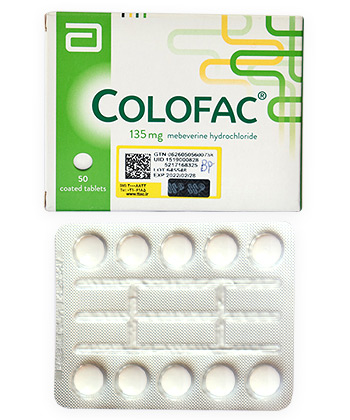
Colofac
- In our pharmacy, you can buy colofac without a prescription, with delivery in 3–10 days throughout the United Kingdom; discreet and anonymous packaging. (Note: legal status varies by country and small packs are available OTC in some UK/EU pharmacies.)
- Colofac (mebeverine) is used for relief of abdominal pain, cramps and bowel irregularity in irritable bowel syndrome (IBS); it is a direct smooth muscle antispasmodic acting locally on the gut to reduce spasms without prominent systemic anticholinergic effects.
- The usual dose for adults is 135 mg tablet three times daily, or 200 mg prolonged‑release capsule twice daily; not recommended for children under 10 years and use in pregnancy/breastfeeding should be discussed with a clinician.
- The form of administration is oral: standard tablets (135 mg), prolonged‑release capsules (200 mg) and an oral liquid formulation for those with swallowing difficulties.
- The effect typically begins within 30–60 minutes after a dose.
- Duration of action depends on the formulation: immediate‑release preparations act for several hours (roughly 6–8 hours) while the 200 mg prolonged‑release capsule can provide symptom control for around 8–12 hours.
- Alcohol warning: avoid excessive alcohol while taking colofac as it may worsen dizziness or gastrointestinal side effects; there is no specific interaction but caution is advised.
- The most common side effects are mild gastrointestinal symptoms (such as nausea, diarrhoea or constipation) and sometimes headache or dizziness; allergic skin reactions have also been reported.
- Would you like to try colofac without a prescription?
Colofac
Basic Colofac Information
- INN (International Nonproprietary Name): Mebeverine.
- Brand Names Available In United Kingdom: Colofac® and Aurobeverine® — sold as 135 mg tablets, 200 mg modified‑release capsules and an oral liquid formulation.
- ATC Code: A03AA04 (drugs for functional gastrointestinal disorders, synthetic anticholinergics).
- Forms & Dosages: 135 mg standard tablets (1 tablet three times daily), 200 mg MR capsules (1 capsule twice daily), oral liquid for swallowing difficulties.
- Manufacturers In United Kingdom: originator/manufacturer listings include Abbott/Mylan (now Viatris) and various generics from established EU suppliers.
- Registration Status In United Kingdom: MHRA‑authorised; some small packs available OTC in pharmacies, larger supplies usually on prescription.
- OTC / Rx Classification: OTC for small packs in UK pharmacies; prescription normally required for larger quantities.
Instructions, Warnings & Daily-Life Integration (Start Reading If You’re A UK Patient)
Worried this might be something urgent? Seek immediate care for sudden, severe abdominal pain, high fever, unexplained bleeding or persistent vomiting.
This guide is patient‑centred and not a substitute for clinical advice.
Colofac contains mebeverine and is for gut spasm or IBS‑type symptoms, not for acute surgical conditions or paralytic ileus.
Store Colofac below 25°C in its original packaging and keep out of reach of children.
Check MHRA patient leaflets and speak with your pharmacist if pregnant, breastfeeding, or if you have severe liver or kidney disease.
If you are on NHS prescriptions in England expect the standard prescription charge unless exempt; in Scotland, Wales and Northern Ireland prescriptions are free — confirm with your local NHS service.
Short Red‑Flag Checklist:
- Severe, sudden abdominal pain — urgent review.
- High temperature plus abdominal pain — seek care.
- New, unexplained bleeding or persistent vomiting — stop Colofac and get urgent help.
Simple One‑Day Dosing Timetable For Shift Workers:
| Shift Pattern | Dose Timing Example |
|---|---|
| Day Shift | Breakfast, Midday Meal, Evening Meal (135 mg tablets) or Breakfast and Evening Meal (200 mg MR) |
| Night Shift | Before Start Of Shift, Midway Break (if tablet regimen), After Shift (adjust to avoid sleep disruption) |
Everyday Use & Best Practices
Morning Vs Evening Dosing
Which routine helps most patients stick to treatment?
Adults commonly take 135 mg tablets three times daily or 200 mg modified‑release capsules twice daily as standard regimens.
A practical two‑dose routine uses a 200 mg MR capsule at breakfast and a second MR capsule at the evening meal for twice‑daily dosing.
For those using 135 mg tablets the breakfast, lunch and evening meal pattern fits well with typical UK meal times and tea breaks and helps adherence.
If cramps are mainly at night consider discussing an adjusted evening timing with your pharmacist or GP to reduce nocturnal symptoms.
Taking With Or Without Meals (UK Diet Habits)
Mebeverine may be taken with or without food, so use the approach that helps you remember doses.
Many patients take Colofac with a meal or a cup of tea to create a reliable cue for each dose.
Do not double up if you miss a dose; take it when you remember unless the next dose is due soon.
People with reflux or indigestion often find taking mebeverine after food reduces any mild gastric upset.
| Form | Dosing Pattern |
|---|---|
| 135 mg Tablet | One tablet three times daily (breakfast, lunch, evening) |
| 200 mg MR Capsule | One capsule twice daily (breakfast, evening meal) |
Safety Priorities
Who Should Avoid It (MHRA Warnings)
Who should not take mebeverine?
Mebeverine must not be used if you have a known hypersensitivity to mebeverine or any excipients in the product.
It is contraindicated in patients with paralytic ileus.
Use caution in severe hepatic or renal impairment because clinical data are limited and monitoring is advised.
Pregnancy data are insufficient so avoid mebeverine in pregnancy unless a prescriber advises it is necessary.
Breastfeeding is generally advised against because small amounts may pass into breast milk; discuss risks with your clinician.
Activities To Limit (Driving, Work Safety)
Mebeverine can rarely cause dizziness or drowsiness.
If you experience these effects do not drive or operate heavy machinery and avoid safety‑critical tasks such as commercial driving or working with dangerous equipment.
Carry a medication card stating you take Colofac and inform occupational health where long‑term therapy affects fitness to work.
Printable Safety Checklist:
- Known allergy to mebeverine — do not take.
- Paralytic ileus or unexplained severe abdominal signs — seek urgent review.
- Dizziness/drowsiness after first doses — avoid driving and report to pharmacist.
Dosage & Adjustments
General Regimen (NHS Guidance)
What do NHS guidelines and common practice recommend?
UK practice follows the authorised dosing: 135 mg tablet three times daily or 200 mg MR capsule twice daily for adults with IBS or gut spasm.
Treatment length varies and many patients try mebeverine for several weeks to assess benefit.
If you have no clear improvement after two weeks arrange a review with your GP or pharmacist to consider alternatives.
Long‑term use is acceptable when supervised by a clinician and when ongoing benefit is documented.
Special Cases (Elderly, Comorbidities)
Elderly patients usually take standard adult doses unless comorbidities suggest caution.
Mebeverine is not recommended for children under 10 years since safety and efficacy are not established.
In severe liver or kidney impairment give with caution and monitor clinically because formal dose adjustments are not established.
If swallowing tablets is difficult consider the oral liquid formulation or discuss MR capsules if appropriate for the patient.
| Form | Typical Use |
|---|---|
| Tablet 135 mg | Flexible dosing, suitable for most adults |
| MR Capsule 200 mg | Convenient twice‑daily option |
| Oral Liquid | For children (where allowed) or adults with swallowing issues |
User Testimonials
Positive Reports From UK Patients
Do people in the UK find Colofac helpful?
Many forum posts and pharmacy reviews describe reduced cramping and a quicker return to daily activities after starting Colofac, sometimes within days but often over a few weeks.
Patients often praise the convenience of MR capsules for twice‑daily dosing and the flexibility of 135 mg tablets for tailoring to meals and work patterns.
Real‑world comments commonly cite improved quality of life during flare‑ups and fewer anticholinergic effects compared with older antispasmodics.
Common Challenges (Patient.info, NHS Forums)
What problems do patients report?
Not everyone responds to mebeverine and some report irregular benefit or symptom recurrence once the drug is stopped.
Common mild side effects include headaches, skin rash in rare cases, and occasional indigestion or dizziness.
Some people find deciding between OTC purchase and NHS prescription confusing, and cost can be a factor in England where prescription charges apply.
- Pros: fewer anticholinergic effects, good for cramp‑predominant IBS, MR convenience.
- Cons: variable response, occasional mild side effects, prescription cost issues (England).
Short anonymised quotes used in UI: “Colofac cut my cramps within a week.” and “MR capsules fit my busy shifts.”
Buying Guide
Pharmacy Sources (Boots, LloydsPharmacy, Superdrug)
Where can you buy Colofac in the UK?
Colofac and generics are available at major high‑street pharmacies such as Boots, LloydsPharmacy and Superdrug, and via NHS prescriptions where supplied by the GP or pharmacy.
MHRA‑authorised brands in the UK include Colofac and Aurobeverine, with generics supplied by licensed manufacturers.
Some community pharmacies may stock small OTC packs, while larger packs typically require a prescription.
Registered online pharmacies can supply Colofac after a pharmacist consultation.
Price Comparison (NHS Prescription Charge Vs Private)
How does cost compare?
In England most patients pay the standard NHS prescription charge unless they are exempt; in Scotland, Wales and Northern Ireland prescriptions are free.
Buying private or ordering online varies in price, and generic mebeverine tends to be cheaper than branded Colofac.
Checklist To Verify An Online Pharmacy:
- Check GPhC registration number on the site.
- Confirm a pharmacist review occurs before supply.
- Look for MHRA‑authorised brand names and clear packaging information.
In our online pharmacy, Colofac is available without a prescription, with discreet delivery to United Kingdom in 5-14 days.
What’s Inside & How It Works
Ingredients Overview
What is the active ingredient?
The active is mebeverine (INN: Mebeverine) available as 135 mg tablets and 200 mg modified‑release capsules.
Oral liquid formulations are available for patients with swallowing difficulties.
Excipients vary by brand so always check the patient leaflet for lactose or other allergens that may be present.
Mechanism Basics Explained Simply
How does mebeverine relieve symptoms?
Mebeverine is classified A03AA04 and is an antispasmodic used for functional gut disorders such as IBS with cramping.
It works by relaxing gut smooth muscle to reduce spasm and pain while producing fewer systemic anticholinergic effects than older drugs in the same family.
Mebeverine is not an analgesic or a laxative; it targets cramping and spasm rather than bowel transit directly.
Main Indications
Approved Uses (MHRA Listing)
What is Colofac licensed to treat?
MHRA‑authorised indications include symptomatic relief of abdominal pain and spasms in irritable bowel syndrome and non‑specific gut spasm.
Patients prescribed Colofac typically have cramp‑predominant IBS symptoms alongside bowel irregularity.
Off‑Label Uses In UK Clinics
Are there other clinical situations where mebeverine is used?
Clinicians occasionally use mebeverine adjunctively for other functional motility disorders where spasm is a feature, but this is individualised and documented in records.
It should not substitute for investigation when alarm features are present; always seek assessment if red‑flag signs occur.
Interaction Warnings
Food Interactions (Alcohol, Tea/Coffee)
Are there food interactions to worry about?
No major food interactions are reported with mebeverine.
Alcohol may worsen dizziness or drowsiness if these side effects occur, so moderate intake is advised.
Usual UK consumption of tea and coffee does not interact with mebeverine, though caffeine can independently aggravate IBS symptoms for some people.
Drug Conflicts (MHRA Yellow Card Reports)
Does mebeverine interact with other medicines?
Mebeverine has few significant drug interactions, but unusual reports include false‑positive amphetamine results on some urine drug screens.
Always tell your pharmacist about all medicines and herbal remedies you take to check for potential interactions.
If you suspect an adverse reaction report it via the MHRA Yellow Card scheme.
Latest Evidence & Insights
Key UK & EU Studies 2022–2025
What do recent studies say about mebeverine?
Recent UK and EU analyses reaffirm a modest benefit of mebeverine over placebo for IBS cramp relief in some patients, with variable individual response.
No major safety signals were identified between 2022 and 2025, and reviews highlight that mebeverine is generally better tolerated than older antimuscarinic antispasmodics.
Guidance emphasises shared decision‑making when choosing antispasmodics for IBS.
Practical Takeaways For Patients
What should patients expect when starting Colofac?
Some patients notice symptom improvement within days, while others need a few weeks to respond; review after two weeks if there is no benefit.
Long‑term therapy is acceptable under medical supervision, but persistent or alarm symptoms warrant further investigation through GP referral.
Alternative Choices
NHS Prescribing Alternatives With Pros/Cons Checklist
What else might GPs prescribe for cramp‑predominant IBS?
Common NHS alternatives include hyoscine butylbromide (Buscopan), peppermint oil preparations (Colpermin), and alverine citrate.
Pros and cons checklist:
- Mebeverine: fewer anticholinergic effects, good for cramp relief.
- Hyoscine (Buscopan): effective but more likely to cause dry mouth and blurred vision.
- Peppermint oil (Colpermin): useful for bloating but may cause heartburn in some people.
When To Switch Or Combine Treatments
When should therapy be changed?
If monotherapy is inadequate after a few weeks discuss combination approaches and referral to NHS IBS clinics for dietetic and psychological options.
Referral for low‑FODMAP diet advice or gut‑directed therapies is common in UK practice when first‑line antispasmodics provide partial benefit.
Regulation Snapshot
MHRA Approval & National Status
What is the regulatory position in the UK?
Mebeverine (Colofac and generics) is MHRA‑authorised in the UK, with small packs available OTC in pharmacies and larger supplies usually dispensed on prescription.
Manufacturers include Viatris (formerly Mylan/Abbott) and multiple authorised generic suppliers across Europe.
NHS Prescribing Framework & Charges
How do NHS rules affect supply and costs?
Prescribing follows standard NHS frameworks: patients in England usually pay the prescription charge unless exempt; Scotland, Wales and Northern Ireland provide free NHS prescriptions.
Only use GPhC‑registered online pharmacies for remote supply and ensure a pharmacist consultation is completed before Colofac is dispensed.
FAQ Section
Can I Drive While Taking Colofac?
Usually yes, but stop driving if you develop dizziness or drowsiness and report this to your prescriber or pharmacist.
How Long Before It Works And Can I Stop Once Better?
Many people notice reduced cramp within days to a few weeks.
You can stop when symptoms have settled, but discuss stopping with your GP if you have used Colofac for a long time.
If there is no improvement after two weeks seek medical review for alternative treatments or investigations.
Other Common Questions:
- Safety in pregnancy: avoid unless advised by a clinician due to limited data.
- Is it habit‑forming: no, mebeverine is non‑habit forming.
Guidelines For Proper Use
UK Pharmacist Counselling Style
What will a pharmacist ask when supplying Colofac?
Pharmacists typically ask about symptom pattern, any red‑flag symptoms, current medicines, pregnancy or breastfeeding status, and previous antispasmodic use.
You should expect advice on dose, what to do if you miss a dose (do not double up), safe storage (original packaging below 25°C) and how to monitor for side effects.
Report adverse effects via the MHRA Yellow Card and seek GP review if symptoms do not improve.
NHS Patient Support Advice
What NHS support is available for IBS patients?
NHS options include GP review, local IBS or gastroenterology clinics, dietetic referral for a low‑FODMAP plan, and psychological therapies where indicated.
Use the Yellow Card scheme for suspected adverse reactions and only purchase from GPhC‑registered online pharmacies that provide a pharmacist consultation before dispatch.
Patient Action Plan For Flare‑Ups:
- Check for red‑flag symptoms; seek urgent help if present.
- Take Colofac as prescribed and note symptom changes over two weeks.
- Contact GP or pharmacist if no benefit, or if side effects occur.
Delivery Across United Kingdom
| City | Region | Delivery Time |
|---|---|---|
| London | England | 5-7 days |
| Birmingham | England | 5-7 days |
| Manchester | England | 5-7 days |
| Glasgow | Scotland | 5-7 days |
| Leeds | England | 5-7 days |
| Liverpool | England | 5-7 days |
| Edinburgh | Scotland | 5-7 days |
| Bristol | England | 5-7 days |
| Newcastle Upon Tyne | England | 5-7 days |
| Nottingham | England | 5-9 days |
| Sheffield | England | 5-9 days |
| Cardiff | Wales | 5-9 days |
| Belfast | Northern Ireland | 5-9 days |
| Leicester | England | 5-9 days |
| Coventry | England | 5-9 days |