Praziquantel
In brief
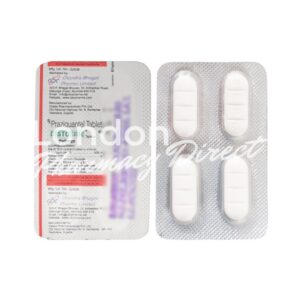
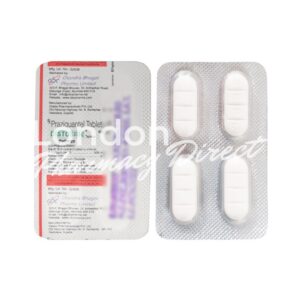
- Praziquantel at London Pharmacy Direct is supplied as a 600mg tablet in packs of 4, 12, 20, 40 or 80, delivered across the UK in 9–21 days.
- The medicine paralyses parasitic worms and damages their outer coat, so the immune system can remove them; it is used for schistosomiasis (bilharzia), tapeworms and liver or lung fluke infections.
- No praziquantel product holds a UK licence, so any supply here is an unlicensed medicine; the dose depends on body weight and is usually split into two or three parts taken within one day, 4 to 6 hours apart.
- The tablets are bitter, so swallow them whole or in pieces with water and food; women who are breastfeeding should not nurse on the day of treatment or for the next 72 hours.
- Rifampicin lowers its effect, and ocular cysticercosis rules it out; dizziness, sleepiness and stomach discomfort tend to pass within a day. It is a POM.
Basic praziquantel information
- INN (international nonproprietary name): Praziquantel
- Brand names available in the United Kingdom: Biltricide (imported), generic praziquantel
- ATC code: P02BA01
- Forms and dosages: 600 mg film-coated tablets are the standard form
- Manufacturers in the United Kingdom: Bayer AG (originator, Biltricide) and generic manufacturers
- Registration status in the United Kingdom: Prescription-only medicine (POM); not licensed in the UK and usually supplied as an imported medicine
- OTC / Rx classification: Prescription-only medicine (POM)
Everyday use and best practices for UK patients
Trying to fit praziquantel into a normal day can feel awkward if you have work, school runs, or a train booked across the country.
For many infections, praziquantel tablets are taken on a single day, so a bit of planning makes the whole thing much easier.
The exact timing depends on the prescribed regimen, so follow the label or pharmacist and GP instructions rather than guessing.
If multiple doses are prescribed, keep them evenly spaced and take each dose with water.
Many people use phone alarms, which is often the simplest way to keep on track when life is busy.
A pill organiser can help, but only use one if a clinician or pharmacist has advised it, especially if you need to split tablets.
Before you take it, a useful checklist is: confirm the dose, check the timing, have water ready, and clear your diary if you can.
Community pharmacy teams are a good place to ask about how to plan the day when you take praziquantel.
Safety priorities and who should avoid praziquantel
Safety comes first, particularly on a day when you still need to work, drive, or care for children.
Praziquantel is a prescription-only medicine in the UK and should not be used by anyone with a known allergy to praziquantel or the tablet excipients.
It must not be used for ocular cysticercosis because treatment can trigger severe eye inflammation.
In the first trimester of pregnancy, it is generally avoided unless a clinician decides the benefits outweigh the risk.
Short-term side effects such as dizziness, headache, malaise, nausea, and stomach upset can affect how steady or alert you feel.
That means caution with driving, operating machinery, climbing ladders, or doing anything unsafe if you feel unwell.
Extra care is sensible if you have liver disease, a history of arrhythmia, or severe kidney impairment, because exposure and side effects may be harder to manage.
Warning box: if you develop a rash, swelling, severe dizziness, chest symptoms, or eye pain, seek medical advice promptly.
- Do not take it if you have known hypersensitivity to praziquantel.
- Do not use it for ocular cysticercosis.
- Ask for specialist advice in early pregnancy.
- Be cautious if you have liver, kidney, or heart rhythm problems.
- Limit driving or work at height if you feel dizzy or unwell.
Dosage, split doses, and special adjustments
People often ask whether praziquantel doses are fixed or weight-based, and the answer is that the prescription is usually written in mg/kg.
That matters because praziquantel 600 mg tablets are the standard strength, so adults and children may need fractional tablets depending on body weight and the infection being treated.
Schistosomiasis, tapeworm infection, and some fluke infections are often treated in a single day, while cysticercosis needs a much longer course under specialist care.
Children generally use the same mg/kg approach as adults, with tablets split if needed.
Older adults usually do not need a dose change if liver and kidney function are normal.
Liver impairment needs caution because drug exposure and CNS toxicity can rise, and severe kidney impairment also needs review because data are limited.
| Condition | Typical dose | Usual duration |
|---|---|---|
| Schistosomiasis | 20 mg/kg three times in one day | Single day |
| Taeniasis (tapeworm) | 10–25 mg/kg once | One dose |
| Clonorchiasis / Opisthorchiasis | 25 mg/kg three times in one day | Single day |
| Cysticercosis | 50 mg/kg/day in three doses | 14–30 days |
If you are unsure whether a tablet needs splitting, ask the pharmacist before leaving the counter.
Legal status and availability in the UK
Praziquantel is a prescription-only medicine (POM) in the UK. It is not licensed in the UK and is usually supplied as an imported medicine.
In our online pharmacy, praziquantel is available without a prescription, with discreet delivery to the United Kingdom in 9–21 days.
What is inside praziquantel and how it works
Praziquantel is the active ingredient, and the standard tablet strength is usually 600 mg.
It belongs to the antiparasitic medicine group, with ATC code P02BA01, and the broader P02B category for anthelmintics for oral use.
| What it is | What it does |
|---|---|
| Praziquantel | Damages the parasite’s outer surface so the body can remove it more easily |
| WHO essential medicine | Used globally as a cornerstone of schistosomiasis control |
That simple mechanism is why praziquantel is used for schistosomiasis, tapeworms, and some fluke infections.
It is also recognised as a WHO essential medicine, which is one reason it remains such an important part of public health programmes.
Main indications and when UK clinicians use it
Not every worm infection is treated the same way, so the parasite has to be identified before choosing the medicine.
In UK practice, praziquantel is used for schistosomiasis, taeniasis, and specific fluke infections such as clonorchiasis and opisthorchiasis.
Cysticercosis is different and needs prolonged treatment with specialist oversight.
Clinicians usually rely on travel history, stool or serology results, or specialist infection advice rather than self-diagnosis.
| Condition | Typical use | Treatment length |
|---|---|---|
| Schistosomiasis | Standard treatment for confirmed infection | Single day |
| Taeniasis | Tapeworm tablets for one-off treatment | One dose |
| Clonorchiasis / Opisthorchiasis | Used in specialist parasitic infection care | Single day |
| Cysticercosis | Specialist regimen with close monitoring | 2–4 weeks |
Some uses are effectively off-label depending on the exact condition, but the medicine is well established in parasitic infection treatment.
Interaction warnings: food, drink, and medicines
Most concerns are about other medicines rather than normal UK foods, although alcohol can make dizziness or stomach upset worse.
Tea and coffee are not major known problems, but if nausea is strong, plain food and water are usually easier to tolerate.
Because temporary liver enzyme elevation can happen, it is sensible to tell the pharmacist or GP about everything you take, including herbal remedies.
- Medicines that affect the liver.
- Strong enzyme inducers or other medicines that change drug levels.
- Drugs that may make dizziness, headache, or nausea harder to manage.
- Any regular treatment for heart rhythm problems.
- Anything you are taking for parasitic infection already.
If you notice an unexpected reaction, report it through the MHRA Yellow Card scheme and ask a pharmacist to review the combination.
Alternatives to praziquantel and how to compare them
Sometimes the best medicine is not praziquantel, even when a patient is expecting it.
Alternatives include albendazole, mebendazole, niclosamide, and triclabendazole, but they are not interchangeable because each works best for different parasites.
For example, niclosamide may be used for some tapeworms, while triclabendazole is used for specific fluke infections.
| Alternative | Where it may be preferred | Practical note |
|---|---|---|
| Albendazole | Other worm infections where a different spectrum is needed | Often used in general deworming |
| Mebendazole | Common intestinal worm infections | Not a direct substitute for praziquantel |
| Niclosamide | Some tapeworm infections | May be chosen when tapeworm treatment is the aim |
| Triclabendazole | Specific fluke infections | Used when the parasite type calls for it |
Clinicians choose based on parasite type, pregnancy status, age, liver disease, and availability, so the “best” option depends on the diagnosis rather than on convenience alone.
Regulation snapshot: MHRA and NHS
Praziquantel is a prescription-only medicine (POM) in the UK, so prescribing usually runs through NHS or private clinician pathways rather than self-selection.
It is not licensed in the UK and is usually supplied as an imported medicine. Patients may see different brand names or import labels, but the active ingredient remains praziquantel.
| Regulator or body | Status | What it means for patients |
|---|---|---|
| MHRA | Not licensed in the UK; supplied as an imported medicine | Prescription-only medicine (POM) |
| WHO | Prequalified and on the Essential Medicines List | Supported in global disease control programmes |
Frequently asked questions from UK patients
Can I drive after taking it?
If you feel well, you may be able to drive, but dizziness can make driving unsafe.
Do I take it with food?
Food is not usually a major issue, but taking it with water and following the prescribed instructions is sensible.
What if I miss a dose?
Take it as soon as remembered, unless the next dose is nearly due; do not double up.
Is it safe in pregnancy?
Pregnancy needs clinician advice, especially in the first trimester, when treatment is generally avoided unless benefits outweigh the risk.
Proper use and pharmacist counselling in the United Kingdom
Good counselling makes a real difference, especially with a medicine that may only be taken for a day.
Always follow the prescription exactly and read the packaging label before you leave the pharmacy.
Ask the pharmacist to explain tablet splitting, dose timing, and the side effects you might notice, particularly if you are taking praziquantel 600 mg tablets for schistosomiasis.
Mention liver disease, heart rhythm problems, pregnancy, or any current medicines so the dose can be checked properly.
Keep tablets in the original packaging, store them at room temperature away from moisture and light, and do not freeze or expose them to high heat.
If you have multiple doses, set reminders so nothing gets missed.
Contact the dispensing pharmacist, NHS 111, or your GP if symptoms are severe, if vomiting prevents you taking the dose, or if you think you are having an allergic reaction.
- Keep the tablets in the original pack.
- Store them at 15–30°C and protect them from light and moisture.
- Ask about dose splitting before starting.
- Use reminders if several doses are due in one day.
- Seek urgent help for overdose symptoms, chest symptoms, severe allergy, or eye pain.
Delivery across the United Kingdom
| City | Region | Delivery time |
|---|---|---|
| London | England | 9–21 days |
| Birmingham | England | 9–21 days |
| Manchester | England | 9–21 days |
| Leeds | England | 9–21 days |
| Liverpool | England | 9–21 days |
| Sheffield | England | 9–21 days |
| Bristol | England | 9–21 days |
| Leicester | England | 9–21 days |
| Nottingham | England | 9–21 days |
| Newcastle upon Tyne | England | 9–21 days |
| Edinburgh | Scotland | 9–21 days |
| Glasgow | Scotland | 9–21 days |
| Cardiff | Wales | 9–21 days |
| Belfast | Northern Ireland | 9–21 days |