Orlistat
In brief
- Orlistat 120 mg is a prescription-only medicine (POM) in the UK, while the 60 mg strength (alli) is a pharmacy medicine (P).
- Orlistat is used for weight loss and weight maintenance as part of a reduced-calorie, low-fat diet and lifestyle programme. It works by inhibiting gastrointestinal lipases, which reduces the breakdown and absorption of dietary fat in the gut.
- The usual dosage is 60 mg three times daily with main meals for alli, or 120 mg three times daily with main meals for prescription treatment.
- The form of administration is a hard gelatin capsule taken by mouth.
- It starts working with the first doses, as it acts in the gastrointestinal tract during the meal, with fat blocking beginning within hours of taking it.
- The duration of action is tied to each meal, with each dose acting for the digestion of that meal only; treatment is usually used long-term while weight loss remains clinically beneficial.
- Alcohol does not have a specific direct interaction with orlistat, but excessive alcohol intake is not advisable during weight management and may hinder weight-loss efforts.
- The most common side effects are oily spotting, flatulence, urgent or frequent bowel movements, fatty or oily stools, abdominal discomfort, diarrhoea, and sometimes faecal incontinence.
- Would you like to try orlistat without a prescription?
Basic orlistat information
- INN (international nonproprietary name): Orlistat
- Brand names available in the United Kingdom: alli (60 mg); Xenical (120 mg); generic orlistat
- ATC code: A08AB01
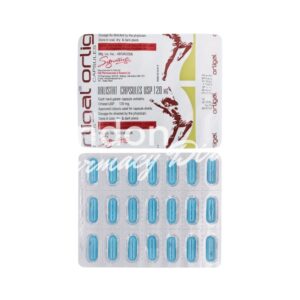
- Forms and dosages: Hard gelatin capsules, 60 mg and 120 mg
- Manufacturers in the United Kingdom: Roche, GlaxoSmithKline, and various generic suppliers
- Registration status in the United Kingdom: Licensed; the 60 mg strength is a pharmacy medicine (P) and the 120 mg strength is a prescription-only medicine (POM)
- OTC / Rx classification: 60 mg: pharmacy medicine (P); 120 mg: prescription-only medicine (POM)
Everyday use and best practices
Thinking about how to fit orlistat into a normal day?
For most people, it works best alongside a reduced-calorie, lower-fat eating plan, not as a stand-alone fix.
High-fat meals are the main reason people notice oily stools, urgency, and occasional leakage, so food choice matters as much as the capsule itself.
Orlistat capsules are usually taken with each main meal that contains fat, and the dose is skipped if the meal is missed or fat-free.
A simple UK routine is breakfast, lunch, and the evening meal, with the capsule taken close to the meal rather than at bedtime.
That timing suits daily habits better and avoids taking it too late when there is no meal to match.
Morning vs evening dosing
Morning dosing can suit people who eat breakfast with some fat, such as toast with spread, eggs, or yoghurt.
Evening dosing is just as reasonable if the main meal is later in the day, but it should still be linked to food rather than to bedtime.
If a meal is skipped, there is no need to “catch up” later.
Taking with or without meals
Before you take each dose, a quick checklist helps.
- Has the meal got some fat in it?
- Have you actually eaten the meal?
- Are you keeping to the lower-fat plan that makes orlistat easier to tolerate?
- Have you left the capsule until the meal, not long after?
That simple routine is the sort of practical advice pharmacists give every day for long-term weight management with Alli 60 mg or Xenical 120 mg.
Safety priorities
Who should avoid orlistat?
The most important MHRA-style warnings are straightforward: it is not suitable in pregnancy, in chronic malabsorption syndromes, or if someone is allergic to orlistat or any excipients.
It is also not recommended for children under 12 years, because safety and efficacy have not been established in that age group.
In day-to-day practice, the biggest issue is often tolerability rather than sedation.
If side effects are severe, persistent, or worrying, speak to a pharmacist, GP, or NHS 111.
Orlistat does not usually cause drowsiness, so driving and most work activities are generally unaffected, but toileting urgency can still be disruptive at the wrong moment.
Who should avoid it
- Pregnancy.
- Chronic malabsorption syndromes.
- Known hypersensitivity to orlistat or excipients.
- Children under 12 years.
- Extra caution is needed with a history of oxalate kidney stones, diabetes, thyroid disease, or ciclosporin use.
Activities to limit
A long drive, a school run, or a meeting in the office can all become awkward if urgent defecation starts at the wrong time.
That is why planning bathroom access is part of orlistat safety, not just convenience.
Dosage and adjustments
The standard regimen is simple: 120 mg three times daily with main meals for prescription use, or 60 mg three times daily for OTC Alli where available.
It is not a “more is better” medicine, and doubling up after a missed dose is not advised.
If a meal is missed or contains no fat, the dose should also be skipped.
Orlistat is usually continued long-term only while clinically meaningful weight loss is being maintained.
General regimen
| Strength | Usual use | Frequency |
|---|---|---|
| 60 mg | OTC Alli | Three times daily with main meals |
| 120 mg | Prescription orlistat | Three times daily with main meals |
Special cases
No specific dose adjustment is generally required in older adults.
Use caution in hepatic impairment and renal impairment because data are limited, so clinical judgement matters.
Children under 12 should not routinely use it.
For people with obesity who are using orlistat capsules as part of a wider programme, the real aim is steady progress rather than rapid change.
Legal status and availability in the UK
Orlistat 120 mg is a prescription-only medicine (POM) in the UK, while the 60 mg strength (alli) is a pharmacy medicine (P).
In our online pharmacy, orlistat is available without a prescription, with discreet delivery to the United Kingdom in 9–21 days.
What is inside and how it works
Orlistat is the INN, and the best-known brand names are Alli and Xenical.
It is usually supplied as hard gelatin capsules, with the ATC code A08AB01 placing it in the peripherally acting antiobesity products group.
That classification matters because it tells you how the medicine behaves: locally in the gut rather than systemically through the whole body.
Ingredients overview
Common forms sold in the UK include 60 mg and 120 mg capsules.
Brand and generic versions may differ in packaging, but the active ingredient remains orlistat.
Mechanism basics explained simply
Orlistat blocks fat absorption in the gut, so some dietary fat passes through the body instead of being absorbed.
Because it is not absorbed in significant amounts systemically, it does not act like a stimulant or an appetite suppressant.
Xenical and generic orlistat contain the same active ingredient, so the differences are mainly brand, strength, and packaging.
Main indications
Orlistat uses in the UK focus on weight loss and weight maintenance in obesity.
It is intended to be part of a wider weight-management programme with diet and activity changes.
It is not a quick fix, and it works best for people who can follow a reduced-calorie, lower-fat eating plan.
Approved uses
- Obesity.
- Weight loss maintenance.
- Long-term support alongside lifestyle modification.
Off-label uses in UK clinics
UK clinics generally focus on licensed indications and individual assessment rather than broad off-label prescribing.
That keeps treatment aligned with MHRA approved use and current clinical practice.
Interaction warnings
Food choices are the main practical interaction issue.
Higher-fat meals increase gastrointestinal side effects, while tea or coffee are not major direct interaction concerns, although caffeinated drinks may affect bowel habits in some people.
Alcohol is not the headline issue with orlistat, but a lower-fat diet still makes the medicine easier to live with.
Food interactions
| Item | Practical effect |
|---|---|
| High-fat meals | More oily stools and urgency |
| Tea or coffee | No major direct interaction, but bowel habits may vary |
| Low-fat meals | Better tolerated and may mean the dose is skipped |
Drug conflicts
Ciclosporin is the key medicine interaction to watch, as orlistat may reduce ciclosporin efficacy and monitoring may be needed.
People with diabetes may need medication adjustment as weight reduces, and thyroid disease may need monitoring for hypothyroidism.
If side effects seem unusual or severe, report them through the Yellow Card scheme.
Alternative choices
Choosing between orlistat and another weight-loss medicine often comes down to how the medicine works, what side effects you can tolerate, and what is available on the NHS.
Orlistat is non-systemic, which suits some people who want to avoid appetite-suppressing drugs.
However, gastrointestinal side effects can be limiting, especially if meal planning is inconsistent.
Alternatives such as liraglutide (Saxenda) and semaglutide (Wegovy) work differently as GLP-1 agonists, while naltrexone/bupropion (Mysimba) is a tablet option.
NHS prescribing alternatives
- Saxenda: may suit people needing a different mechanism, but NHS access criteria apply.
- Wegovy: injectable GLP-1 option, but availability and prescribing criteria matter.
- Orlistat: simpler local action, but GI side effects may be a downside.
When another medicine may suit better
Ask your GP or pharmacist if you need a different option because of bowel symptoms, diabetes treatment, thyroid monitoring, or difficulty sticking to a low-fat meal plan.
That same conversation can also help when you are comparing options or deciding between capsules and injection-based treatment.
Regulation snapshot
Orlistat is licensed in the UK, with 60 mg classed as a pharmacy medicine (P) and 120 mg as a prescription-only medicine (POM).
Patients may access it through pharmacies or NHS prescribing depending on eligibility and product strength, with the MHRA framework guiding use.
That means the same medicine can appear in different routes of supply, but the safety messages remain the same.
MHRA approval and NHS prescribing framework
For UK use, the key point is that access depends on the route and the strength, not on a completely separate medicine identity.
Frequently asked questions
How quickly does orlistat work?
It works from the first doses in the gut, but visible weight changes depend on diet, regular use, and how consistently you follow the programme.
Can I take it if I eat very little fat?
If a meal contains no fat, skip the dose.
That is part of normal use, not a problem.
What happens if I miss a dose?
Do not double the dose.
If the meal was missed or had no fat, simply leave that dose out and carry on with the next meal.
Is orlistat a prescription-only medicine?
The 120 mg strength is a prescription-only medicine (POM) in the UK, while the 60 mg strength (alli) is a pharmacy medicine (P).
Guidelines for proper use
Take orlistat with meals that contain fat, and keep to a lower-fat eating pattern so the medicine is easier to tolerate.
Plan bathroom access early on, especially if you are travelling, because urgent stools can happen when fat intake is too high.
Some people also keep spare underwear in a bag for peace of mind on busy days.
For ongoing weight management or other medical conditions, speak to a pharmacist or GP, and use NHS resources for diet and activity support.
UK pharmacist counselling style
- Take it with main meals that contain fat.
- Skip the dose if the meal is missed or fat-free.
- Keep meals lower in fat to reduce oily stools and urgency.
- Do not double up after a missed dose.
NHS patient support advice
Store capsules below 25°C, away from moisture and direct sunlight.
Use the medicine as part of a wider weight-management programme, not as a substitute for food changes.
If side effects are persistent, or if you have diabetes, thyroid disease, kidney stone history, or ciclosporin use, get advice before carrying on.
Delivery across the United Kingdom
| City | Region | Delivery time |
|---|---|---|
| London | Greater London | 9–21 days |
| Birmingham | West Midlands | 9–21 days |
| Manchester | North West England | 9–21 days |
| Glasgow | Scotland | 9–21 days |
| Edinburgh | Scotland | 9–21 days |
| Liverpool | North West England | 9–21 days |
| Leeds | Yorkshire and the Humber | 9–21 days |
| Bristol | South West England | 9–21 days |
| Newcastle upon Tyne | North East England | 9–21 days |
| Cardiff | Wales | 9–21 days |
| Nottingham | East Midlands | 9–21 days |
| Sheffield | Yorkshire and the Humber | 9–21 days |
| Leicester | East Midlands | 9–21 days |
| Aberdeen | Scotland | 9–21 days |
Further practical points on orlistat
If you are comparing Alli 60 mg with Xenical 120 mg, the main difference is strength and access rather than the core action.
Generic orlistat is also supplied, but the counselling is the same.
For long-term weight loss and maintenance, the medicine works best when the plan is realistic, meals are lower in fat, and follow-up is built in.