Naltrexone
In brief
- In some online pharmacy markets, naltrexone may be offered without a prescription, but in the UK and most other major jurisdictions it is a prescription-only medicine (Rx). Delivery and availability depend on local regulations and supplier policies.
- Naltrexone is used to support treatment of alcohol dependence and, in detoxified patients, opioid dependence. It is an opioid receptor antagonist that blocks the effects of opioids and helps reduce the rewarding effects of alcohol.
- The usual oral dose is 50 mg once daily after a 25 mg test dose in opioid dependence; for alcohol dependence, 50 mg once daily is common. Some regimens use 100 mg on Mondays, Wednesdays and Fridays. The extended-release injection is 380 mg every 4 weeks.
- The form of administration is an oral tablet, or a monthly intramuscular depot injection for the extended-release formulation.
- It starts working within about 1 to 2 hours after an oral dose; the injection begins releasing medicine over the first few days after administration.
- Its action lasts about 24 hours for tablets, while the depot injection provides continuous effect for around 4 weeks.
- Alcohol should be avoided or strictly limited while using naltrexone, especially at the start of treatment, because it is used to help reduce drinking rather than to cause aversion. Excess alcohol can worsen liver risk and undermine treatment.
- The most common side effects are nausea, headache, dizziness, insomnia, abdominal pain, diarrhoea, anxiety, and raised liver enzymes; injection-site reactions can occur with the depot form.
- Would you like to try naltrexone without a prescription?
Basic Naltrexone Information
- INN (International Nonproprietary Name): Naltrexone
- Brand Names Available In United Kingdom: Naltrexone Accord
- ATC Code: N07BB04
- Forms & Dosages: Tablet (oral) 25 mg, 50 mg, 100 mg; extended-release injection 380 mg per vial (monthly IM)
- Manufacturers In United Kingdom: Accord Healthcare
- Registration Status In United Kingdom: Prescription Only (Rx)
- OTC / Rx Classification: Prescription Only (Rx)
Everyday Use And Best Practices
Wondering when to take naltrexone tablets, and how to fit them into a normal day?
Oral naltrexone hydrochloride is usually taken once daily, and consistency matters more than the exact clock time.
Many UK patients choose a morning routine because it is easier to remember, but an evening dose can suit shift workers if the prescriber agrees.
The monthly injection option, Vivitrol 380 mg IM every 4 weeks, may be used where available as a supervised alternative.
It can be taken with food if nausea is a problem, which is often helpful alongside familiar UK meal patterns such as breakfast before work or supper after the school run.
Simple habits make daily dosing easier, and pharmacists in Boots, LloydsPharmacy, Superdrug, or a local community pharmacy are often the first point of UK pharmacy advice.
- What to do if nausea happens: take the dose with a meal, sip water slowly, and speak to the pharmacist if it keeps happening.
- How to fit treatment into work or family routines: set a phone alarm, keep the tablets in the original pack, and link the dose to brushing teeth or making tea.
Safety Priorities
Is it safe to start if opioids were used recently, or if there is a history of liver trouble?
Naltrexone must not be started if the person is currently opioid-dependent or has a positive opioid urine test before treatment begins.
MHRA warnings also make the main contraindications very clear: acute hepatitis, liver failure, and hypersensitivity to naltrexone or excipients.
People taking opioid painkillers, including codeine, morphine, oxycodone, or tramadol, need specialist review first because treatment can block their pain relief and may trigger withdrawal.
- Do not use if… there is current physiologic opioid dependence, a positive opioid test, acute hepatitis, liver failure, or known allergy to the medicine.
- Seek urgent help if… severe abdominal pain, jaundice, vomiting, or signs of withdrawal appear.
Dizziness, sleep disturbance, and nausea can affect concentration at the start, so driving and operating machinery should be approached carefully until the person knows how they react.
Risky work tasks should be avoided early on if they involve ladders, heavy machinery, or safety-critical decisions.
Side effects can be reported through the Yellow Card scheme, and the NHS medicines service is a useful route for follow-up advice when anything unexpected happens.
Dosage And Adjustments
What dose is usually used, and does age change the plan?
The common adult oral regimen for opioid dependence is a 25 mg test dose, then 50 mg daily once detox is complete.
For alcohol dependence, the usual adult dose is 50 mg daily.
Some regimens use supervised three-times-weekly dosing, although daily use is the most common approach in UK prescribing.
The extended-release injection schedule is 380 mg every 4 weeks where prescribed.
Prescribing is usually specialist-led in addiction care, and it is commonly paired with counselling and psychosocial support.
| Option | Typical Dose | Who It May Suit |
|---|---|---|
| Oral naltrexone | 25 mg test, then 50 mg daily | Adults who can manage daily dosing and follow-up |
| Oral naltrexone | 50 mg daily | Adults with alcohol dependence who prefer tablets |
| Extended-release injection | 380 mg every 4 weeks | People where monthly supervised treatment is preferred |
Children under 18 are not typically treated because safety and efficacy are not established.
Older adults do not automatically need a lower dose, but monitoring matters if there is liver or kidney disease.
Caution is needed in renal impairment, and liver function tests are important in hepatic disease.
User Testimonials
What do patients often say after starting treatment?
UK patient experience is usually mixed, but a few themes come up again and again in counselling conversations and online forums.
Some people describe reduced cravings, better control, and feeling more able to engage with counselling.
Those reports are anecdotal, not proof, but they do help set realistic expectations.
- Benefits people often mention: fewer cravings, more control, and better engagement with recovery support.
- Drawbacks people often mention: nausea, headaches, insomnia, and frustration with avoiding opioids for pain relief.
Daily adherence can be a real challenge, so reminders or supervised dosing sometimes make all the difference.
Patient.info, NHS forums, and pharmacist conversations often shape real-world expectations, but prescriber advice should always come first.
Buying Guide
Where can naltrexone be bought, and what should be checked before ordering?
Naltrexone is prescription only, so it should be obtained through an NHS or private prescription.
Major chains such as Boots, LloydsPharmacy, and Superdrug, along with independent pharmacies, can dispense it if they stock it or can order it in.
Online pharmacies may also supply it, but the pharmacy should be registered with the General Pharmaceutical Council and follow MHRA-compliant supply standards.
In our online pharmacy, naltrexone is available without a prescription, with discreet delivery to United Kingdom in 5-14 days.
That said, everyone should still check stock before travelling, especially for a first-time dispensing visit or a same-day collection plan.
| Supply Route | Typical Access | Likely Cost |
|---|---|---|
| NHS prescription | Prescriber-led, then dispensed by a pharmacy | England prescription charge applies; free in Scotland, Wales, and Northern Ireland |
| Private prescription | Private prescriber or clinic, then pharmacy dispensing | Varies by pharmacy and sourcing needs |
Pricing can differ if the pharmacy has to source the medicine specially, and private costs are not fixed.
What Is Inside And How It Works
What exactly is in the medicine, and why does it help?
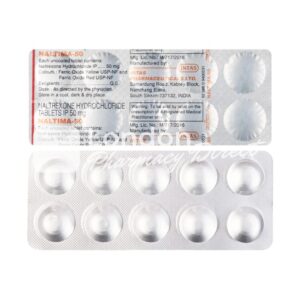
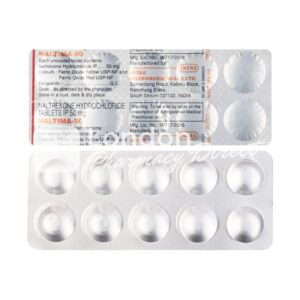
The active ingredient is naltrexone hydrochloride, usually supplied as oral tablets in 25 mg, 50 mg, and 100 mg strengths.
The usual adult tablet strength in the UK is 50 mg, while the monthly injectable form is 380 mg where available.
Simple explainer: naltrexone is an opioid antagonist, which means it blocks opioid receptors.
Think of it like blocking a lock so the key cannot turn.
That receptor blockade reduces the rewarding effects of alcohol and opioids, which can support recovery by lowering reinforcement and cravings.
It does not cure dependence on its own, but it can be an important part of a wider treatment plan.
For professionals, its ATC code is N07BB04, which places it in the group used in alcohol dependence.
Main Indications
Which patients is naltrexone usually prescribed for?
The main licensed uses are alcohol dependence and opioid dependence after detoxification.
It is generally started only once opioid-free status has been confirmed, because starting too early can trigger withdrawal.
In NHS and specialist addiction services, medicine is usually paired with psychosocial treatment rather than used as stand-alone care.
Some clinicians also discuss low-dose naltrexone, or other off-label approaches, but these are not the standard licensed indications and specialist assessment is essential.
| Licensed Use | Common Dose | Typical Support Package |
|---|---|---|
| Opioid dependence after detoxification | 25 mg test, then 50 mg daily | Detox confirmation, counselling, relapse prevention |
| Alcohol dependence | 50 mg daily | Psychosocial treatment, follow-up, shared decision-making |
Interaction Warnings
Do tea, coffee, or alcohol matter, and which medicines are the biggest concern?
There are no major food interactions in the usual sense, and tea or coffee are not known to interact meaningfully.
Caffeine may still worsen anxiety or sleep problems in some people, so a late-night coffee habit can make side effects feel worse.
Alcohol use should be discussed because treatment is often aimed at reducing drinking, and the wider plan matters as much as the tablet.
The most important interaction is with opioid medicines, because naltrexone can block them and may trigger withdrawal if opioids are still in the system.
Tell dentists, A&E staff, and GPs before procedures that might need pain relief, because standard opioid analgesia may not work properly.
- Mention these medicines: codeine-containing products, morphine, oxycodone, tramadol, and any opioid painkillers.
- Also mention: over-the-counter cold remedies that may contain opioids in some countries, plus any hepatotoxic medicines or supplements.
Unexpected reactions should be reported through Yellow Card reporting so safety signals are not missed.
Latest Evidence And Insights
What does recent evidence suggest about naltrexone in real life?
Across UK and EU studies from 2022 to 2025, naltrexone remains useful for some people with alcohol dependence and selected opioid dependence cases, especially when adherence is supported.
Outcomes are often better when medication is combined with counselling, peer support, and structured follow-up.
Real-world adherence is still a challenge, and that remains one of the main reasons people do not get the full benefit.
| What Recent Studies Tend To Show | What This Means For Patients |
|---|---|
| Better results with counselling and follow-up | Medication works best as part of a wider recovery plan |
| Adherence remains difficult in everyday life | Reminders, supervision, and routine matter a lot |
| Useful for some patients, not all | Shared decision-making is important before starting |
NHS services increasingly emphasise recovery-oriented care, practical adherence support, and a plan that fits the person’s life.
Alternative Choices
What if naltrexone is not the right fit?
The best alternative depends on the goal: abstinence, reduction, or opioid substitution.
For alcohol dependence, acamprosate, disulfiram, and nalmefene are commonly discussed.
For opioid dependence, methadone and buprenorphine are the main alternatives or adjunctive therapies.
Local NHS service policies can differ, and some options are easier to access than others depending on commissioning and specialist pathways.
| Medicine | Practical Pros | Practical Cons |
|---|---|---|
| Acamprosate | Often used for abstinence support | Requires regular dosing |
| Disulfiram | Can support alcohol avoidance | Needs careful monitoring and strong motivation |
| Nalmefene | Used for alcohol dependence in Europe | Access and local use vary |
| Methadone | Established opioid substitution option | Specialist monitoring needed |
| Buprenorphine | Useful for opioid dependence treatment | May not suit every pain or recovery plan |
Regulation Snapshot
How is naltrexone regulated in the UK?
Naltrexone is prescription only in major markets, and UK use should align with MHRA standards and local formularies.
Pharmacists may confirm supply, but initiation and follow-up are usually prescriber-led.
Local commissioning and specialist addiction pathways can affect access, so the route can vary between areas.
| Who Can Prescribe | Where It Is Dispensed | What Monitoring Is Needed |
|---|---|---|
| GP, specialist, or private prescriber | Community pharmacy or online pharmacy | Follow-up, liver tests where indicated, and adherence review |
NHS access can differ between England and the devolved nations because prescription charging and service pathways are not identical.
Frequently Asked Questions
Can I take naltrexone if I have used codeine recently?
Not until a prescriber has checked that opioids are fully out of the system, because naltrexone can trigger withdrawal and block pain relief.
Is it taken every day or once a month?
Oral treatment is usually daily, while the monthly injection is 380 mg every 4 weeks where prescribed.
Will I have to pay for it on the NHS?
That depends on where you live in the UK, because England prescription charges differ from Scotland, Wales, and Northern Ireland.
What if I miss a dose?
Take it as soon as remembered, unless the next dose is close; do not double up.
For simple questions about timing, storage, or collection, the pharmacy team is often the best first contact.
Guidelines For Proper Use
How can treatment be used safely day to day?
Take naltrexone exactly as prescribed, and do not start if opioids are present.
Keep a list of all medicines, including over-the-counter pain relief and herbal products, so nothing important is missed at review.
Adherence strategies such as alarms, blister packs, and family support can be very helpful when routines are busy.
Counselling, relapse prevention, and follow-up appointments are key parts of treatment, not extras.
- Daily use: take the dose at the same time each day, store tablets at room temperature, and protect them from moisture.
- Missed dose: take it when remembered, skip it if the next dose is near, and never double the dose.
- When to seek help: contact the GP, addiction service, or NHS 111 if withdrawal, jaundice, severe abdominal pain, or worrying side effects appear.
Injectable products should follow the label storage instructions, and many patients place a lot of trust in community NHS pharmacists for practical support.
Delivery Across United Kingdom
| City | Region | Delivery time |
|---|---|---|
| London | England | 5-7 days |
| Birmingham | England | 5-7 days |
| Manchester | England | 5-7 days |
| Leeds | England | 5-7 days |
| Liverpool | England | 5-7 days |
| Glasgow | Scotland | 5-7 days |
| Edinburgh | Scotland | 5-7 days |
| Cardiff | Wales | 5-7 days |
| Belfast | Northern Ireland | 5-7 days |
| Newcastle upon Tyne | England | 5-9 days |
| Nottingham | England | 5-9 days |
| Sheffield | England | 5-9 days |
| Aberdeen | Scotland | 5-9 days |
| Swansea | Wales | 5-9 days |