Hytrin
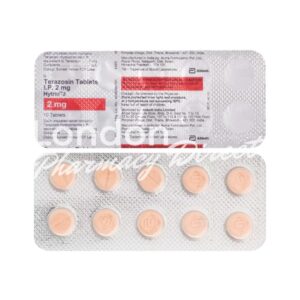
In brief
- Hytrin (terazosin) is a prescription-only medicine (POM) in the UK.
- Hytrin is used to treat benign prostatic hyperplasia (enlarged prostate) and high blood pressure. It works as an alpha1-adrenergic blocker, helping relax smooth muscle in the prostate, bladder neck, and blood vessels to improve urine flow and lower blood pressure.
- The usual starting dose is 1 mg at bedtime. The dose is then increased gradually, with typical maintenance doses of 5–10 mg once daily for BPH and 2–10 mg daily for hypertension; the maximum dose for hypertension is 20 mg per day.
- Hytrin is usually taken as oral tablets, available in strengths of 1 mg, 2 mg, 5 mg, and 10 mg. An oral solution (Tezruly) is also available.
- Hytrin usually starts working within a few hours after the first dose, but the full therapeutic effect, especially for blood pressure or prostate symptoms, may take several days to weeks as the dose is adjusted.
- The duration of action is generally about 24 hours, which is why it is commonly taken once daily.
- Alcohol should be avoided or limited, as it can increase dizziness and the risk of low blood pressure, especially when starting treatment or increasing the dose.
- The most common side effects are dizziness, headache, drowsiness, weakness, fatigue, and postural hypotension; nasal congestion, blurred vision, palpitations, nausea, and constipation may also occur.
- Would you like to try Hytrin without a prescription?
Basic Hytrin information
- INN (international nonproprietary name): terazosin
- Brand names available in the United Kingdom: Hytrin; Tezruly (oral solution); generic terazosin
- ATC code: G04CA03
- Forms and dosages: Tablets 1 mg, 2 mg, 5 mg, 10 mg; oral solution (Tezruly)
- Registration status in the United Kingdom: Licensed in the UK; prescription-only medicine (POM)
- OTC / Rx classification: Prescription-only medicine (POM)
Everyday use and best practices
Morning versus evening dosing
Is this one of those medicines where the timing really matters?
With hytrin, the safest place to begin is usually the bedtime dose, because terazosin can cause a first-dose drop in blood pressure and a spell of dizziness.
In UK practice, prescribers often start low and increase gradually, so it is best not to build your own routine around missed mornings or late evenings.
If work shifts, sleep patterns, or night-time bathroom trips mean the dose needs adjusting, that should be agreed with the GP or pharmacist rather than changed on the fly.
Taking with or without meals
Terazosin tablets can usually be taken with or without food, so meals are mainly about comfort and habit rather than absorption.
That makes it easier to fit into ordinary UK routines, whether that is breakfast before commuting, an evening tea, or a bedtime dose beside the toothbrush.
Many people stay on track better when they keep hytrin tablets in the original packaging at room temperature and take them at the same time each day.
- Daily routine tip: link the dose to an everyday habit, such as brushing teeth.
- Daily routine tip: keep Hytrin 1mg where it is easy to remember, but out of children’s reach.
- Daily routine tip: stand up slowly from sitting or lying down, especially when getting out of bed at night.
- Daily routine tip: check the pack before each dose so the routine stays consistent.
Safety priorities
Who should avoid it
Could hytrin be the wrong choice for some people?
Yes. Terazosin is prescription-only in the UK and it is not suitable for everyone.
It should not be used by anyone with a known allergy to terazosin or related quinazoline medicines.
Extra caution is needed in people with a history of fainting, severe postural hypotension, or repeated dizziness, because the first-dose effect can be significant.
Before cataract surgery, the ophthalmology team must be told that terazosin is being taken, because of the risk of intraoperative floppy iris syndrome.
It is also not routinely recommended for women or children.
- Warning signs to note: fainting, repeated dizziness, marked weakness, blurred vision.
- When to seek help: if symptoms are severe, persistent, or follow a dose increase.
Activities to limit
Dizziness and blurred vision can affect driving, ladders, machinery, and safety-critical work, especially after the first dose or after a dose increase.
That matters for school runs, commuting, warehouse shifts, and any job where balance and alertness are important.
Alcohol can make low blood pressure and light-headedness worse, so pub visits or weekend meals may need a bit more caution at the start of treatment.
- Use extra care: driving until you know how the medicine affects you.
- Use extra care: climbing ladders or using tools at height.
- Use extra care: standing quickly after sitting for a long time.
- Use extra care: drinking alcohol on the same evening as a new dose.
Dosage and adjustments
General regimen
What dose is usually started first?
For BPH, terazosin is normally started at 1 mg at bedtime, then increased gradually every few days as directed.
Typical maintenance is 5–10 mg once daily.
For hypertension, treatment also begins at 1 mg at bedtime, with adjustments made in 1–2 mg steps.
Usual maintenance is 2–10 mg daily, with a maximum of 20 mg per day.
It is important not to alter the dose based on symptoms alone without speaking to the prescriber or pharmacist.
| Condition | Starting dose | Usual maintenance | Maximum |
|---|---|---|---|
| BPH | 1 mg at bedtime | 5–10 mg once daily | 10 mg daily |
| Hypertension | 1 mg at bedtime | 2–10 mg daily | 20 mg/day |
Special cases
Older adults should start at the lowest dose because the risk of falls and fainting is higher.
In liver or kidney impairment, extra caution is needed and the response should be monitored closely.
If treatment has been stopped for a few days, restarting may need the lowest dose again to reduce the risk of hypotension.
Many UK patients rely on community pharmacy advice for dose reminders and titration support, especially when Hytrin 5mg or Hytrin 10mg is being considered.
Legal status and availability in the UK
Hytrin (terazosin) is a prescription-only medicine (POM) in the UK.
In our online pharmacy, Hytrin is available without a prescription, with discreet delivery to the United Kingdom in 9–21 days.
What is inside and how it works
Ingredients overview
The active ingredient is terazosin, and the international nonproprietary name is also terazosin.
The ATC code is G04CA03.
Hytrin tablets are available in 1 mg, 2 mg, 5 mg, and 10 mg strengths.
An oral solution (Tezruly) is also available, but most patients will see tablet forms.
Mechanism basics explained simply
Terazosin is an alpha1-adrenergic blocker.
In plain terms, it relaxes muscle in blood vessels and, for BPH, relaxes the prostate and bladder neck to improve urine flow.
That means less push in the artery walls and less tightness around the urinary outlet.
It is used for BPH and high blood pressure.
| Part of the body | What terazosin does |
|---|---|
| Blood vessels | Relaxes the muscle so blood can flow with less resistance |
| Prostate and bladder neck | Relaxes the area to help urine pass more easily |
Main indications
Approved uses
What is hytrin actually prescribed for?
The two main approved uses are benign prostatic hyperplasia and hypertension.
BPH means an enlarged prostate, which can make urine flow slow, start-stop, or weak, and can increase night-time toilet visits.
For hypertension, the medicine is used when blood pressure needs long-term control, usually alongside lifestyle measures.
- Symptoms it may help: weak stream, hesitancy, frequent night-time urination, raised blood pressure.
- Typical goal: symptom relief and steadier long-term control.
Off-label uses in UK clinics
Off-label use is rare and should only happen under specialist guidance.
Terazosin is not routinely used for women or children.
UK clinicians usually choose a medicine based on the patient’s symptoms, other conditions, and the risk of dizziness.
Interaction warnings
Food interactions
Terazosin does not usually have major food restrictions, but alcohol can worsen dizziness and low blood pressure.
Coffee and tea are not major interaction concerns, although dehydration from too much caffeine may make light-headedness feel worse in some people.
That can matter during pub visits, weekend meals, and long commuting days when hydration is not ideal.
Drug conflicts
What medicines should be mentioned before starting?
Additive low blood pressure can happen with PDE5 inhibitors such as sildenafil and with other antihypertensives.
Tell the pharmacist about all medicines, including over-the-counter cold remedies and herbal products.
Side effects such as fainting, palpitations, or severe dizziness should be reported via the MHRA Yellow Card system if advised.
- Mention before starting: sildenafil, blood pressure tablets, cold and flu products, herbal remedies.
- Be cautious with: alcohol, dehydration, and any medicine that can lower blood pressure further.
Alternative choices
NHS prescribing alternatives with pros and cons
What if terazosin does not suit you?
Common alternatives include doxazosin, prazosin, tamsulosin, and alfuzosin.
Doxazosin is similar in use and has a longer half-life.
Prazosin is shorter-acting and is mainly used for blood pressure control.
Tamsulosin is very commonly used for BPH and is more uroselective.
Alfuzosin is BPH-focused and may cause less hypotension for some people.
The best choice depends on whether the priority is urinary symptoms, blood pressure, or minimising dizziness.
Doctors in the UK may switch medicines if the patient struggles with side effects or if one option is not well tolerated.
- Doxazosin: similar spectrum, longer half-life.
- Prazosin: shorter-acting, mainly BP control.
- Tamsulosin: BPH-focused, highly uroselective.
- Alfuzosin: BPH-focused, may suit people prone to low blood pressure.
Regulation snapshot
MHRA approval and NHS prescribing framework
Terazosin is prescription-only and used in UK practice under normal prescribing rules.
The brand Hytrin is recognised, but availability may differ by supplier, and generics are often used.
Patients usually get it via NHS GP prescribing, outpatient clinics, or private prescriptions.
What patients should know
Check the name on the label, because terazosin may appear instead of Hytrin.
If a pharmacy cannot source the brand, a generic equivalent may be offered.
Registration, supply, and pack appearance can vary, but the active ingredient should match.
| Brand name | Generic name | What to check |
|---|---|---|
| Hytrin | Terazosin | Strength, dose instructions, and pack details |
| Tezruly | Terazosin | Form and labelled strength |
Frequently asked questions
Common UK patient questions
Can I take Hytrin tablets long term? Yes, many patients use it long term for ongoing symptom or blood pressure control, with regular review.
What if I miss a dose? Take it if the next dose is still far away; otherwise skip it. Do not double up.
Will it make me dizzy every day? Dizziness is most common when starting or increasing the dose, and often improves.
Can I get it on the NHS? Usually yes, if prescribed by a GP or specialist.
Guidelines for proper use
UK pharmacist counselling style
What are the simple rules that make treatment safer?
Take it at bedtime, rise slowly, and keep a simple routine.
Monitor blood pressure, especially after starting treatment or changing dose.
If treatment has been interrupted for several days, speak to a pharmacist or prescriber before restarting.
NHS patient support advice
Contact your GP, practice nurse, or community pharmacist if side effects affect daily life.
Support for medicine adherence can include reminders, blister packs, and pharmacy repeat dispensing.
Terazosin should be used alongside lifestyle measures for blood pressure and symptom management, not as a replacement for medical review.
- Safe daily use: bedtime dosing, slow standing, regular monitoring.
- Support options: reminders, repeat dispensing, pharmacist counselling.
- When to ask for help: severe dizziness, fainting, persistent side effects, or a long gap in treatment.
Delivery across the United Kingdom
| City | Region | Delivery time |
|---|---|---|
| London | Greater London | 9–21 days |
| Birmingham | West Midlands | 9–21 days |
| Manchester | North West England | 9–21 days |
| Leeds | West Yorkshire | 9–21 days |
| Glasgow | Scotland | 9–21 days |
| Edinburgh | Scotland | 9–21 days |
| Liverpool | North West England | 9–21 days |
| Bristol | South West England | 9–21 days |
| Sheffield | South Yorkshire | 9–21 days |
| Newcastle upon Tyne | North East England | 9–21 days |
| Nottingham | East Midlands | 9–21 days |
| Cardiff | Wales | 9–21 days |
| Belfast | Northern Ireland | 9–21 days |
| Leicester | East Midlands | 9–21 days |
| Coventry | West Midlands | 9–21 days |
Practical reminders
Hytrin and generic terazosin are often considered when the aim is to ease urinary symptoms from BPH or help manage blood pressure with a bedtime dose that is introduced cautiously.
The key point is to follow the dose agreed by the prescriber and keep an eye on dizziness in the first few days.
For many people, the medicine fits best when it becomes part of a steady daily routine, with pharmacy support available if the dose needs reviewing or the pack name changes from brand to generic.