Amiloride
In brief
- In our pharmacy, you can buy amiloride without a prescription, with delivery in 5–14 days throughout the United Kingdom. Discreet and anonymous packaging.
- Amiloride is used to treat oedema and hypertension and to reduce potassium loss when given with thiazide diuretics. It is a potassium‑sparing diuretic that blocks epithelial sodium channels (ENaC) in the distal tubule and collecting duct, reducing sodium reabsorption and decreasing potassium excretion.
- The usual adult dose is 5–10 mg once daily (often starting at 5 mg); in congestive heart failure doses of 5–20 mg per day in divided doses may be used. Do not exceed 20 mg per day.
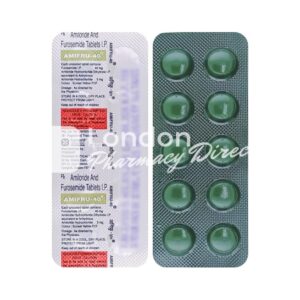
- Oral tablets — most commonly 5 mg (some markets also supply 10 mg); available alone or in combination with thiazide diuretics (e.g. hydrochlorothiazide/amiloride).
- The effect typically begins within 2–4 hours after an oral dose.
- Duration of action is usually around 24 hours (effects may persist for up to a day).
- Avoid excessive alcohol — alcohol can increase dizziness, dehydration and blood‑pressure changes while taking diuretics.
- The most common side effect is hyperkalaemia (high blood potassium).
- Would you like to try amiloride without a prescription?
Basic Amiloride Information
- INN (International Nonproprietary Name): Amiloride.
- Brand Names Available In United Kingdom: Amiloride Hydrochloride — commonly supplied as 5 mg tablets in packs of 28 or 56 by manufacturers including Mylan, Teva and Bristol.
- ATC Code: C03DB01 — Potassium‑sparing diuretics, plain.
- Forms & Dosages: Tablets are the most common form; standard strength is 5 mg. Some international markets also supply 10 mg tablets. Combination products exist with thiazide diuretics.
- Manufacturers In United Kingdom: Mylan, Teva, Bristol Labs.
- Registration Status In United Kingdom: Amiloride Hydrochloride is approved by the MHRA and classified as a prescription‑only medicine (POM).
- OTC / Rx Classification: Prescription‑only medicine (POM) in the UK.
Instructions & Quick Warnings For UK Patients
This medicine is prescription‑only in the UK and should be obtained via an authorised prescriber and pharmacy.
Check the MHRA listing for “Amiloride Hydrochloride” and local product packs; the most common pack contains 5 mg tablets.
Key immediate risks include hyperkalaemia, which can cause arrhythmia, dizziness and worsening renal impairment.
Stop the medicine and seek urgent care for severe weakness, palpitations or fainting.
Carry a medication card listing amiloride and all other medicines, and keep a record of blood tests and results for routine monitoring.
Before adding any over‑the‑counter medicine or supplement, particularly NSAIDs or potassium supplements, check with the pharmacist.
Avoid starting new high‑potassium diets or supplements without clinical advice.
Be cautious with alcohol as it can increase dizziness and dehydration.
Urgent Warning Signs:
- Severe weakness or muscle paralysis.
- Heart palpitations, irregular heartbeat or fainting.
- Marked dizziness or collapse.
- Reduced urine output or sudden change in kidney function.
Practical Checklist To Carry:
- Medicine card with drug name, dose, prescriber and contact details.
- List of current medicines including OTCs and supplements.
- Dates and results of recent blood tests for potassium and renal function.
| Local Pharmacy | Contact |
|---|---|
| Boots | Local branch or NHS 111 for out‑of‑hours |
| LloydsPharmacy | Local branch or online prescription services |
| Independent Pharmacy | Contact details on NHS website |
Everyday Use & Best Practices
Morning Vs Evening Dosing
Most UK prescriptions use once‑daily dosing, typically starting at 5 mg daily and sometimes increasing to 5–10 mg or divided doses for oedema or hypertension.
If the prescription says once daily, take amiloride at the same time each day to keep blood levels steady and reduce missed doses.
For split dosing, take each dose approximately 12 hours apart so blood levels remain even.
If nocturia is a problem, discuss taking the larger dose in the morning with your prescriber.
Taking With Or Without Meals (UK Diet Habits)
Amiloride may be taken with or without food so choose whichever routine helps adherence.
Taking the tablet with breakfast is a practical option given common UK meal patterns and can reduce missed doses.
Be cautious if your typical breakfast includes high‑potassium foods such as bananas or orange juice, because dietary potassium combined with amiloride raises serum potassium.
Daily Checklist For Use:
- Time: same time each day (write it on your medication card).
- Dose: confirm mg and whether once or split dosing.
- Blood Test Dates: note baseline and repeat test dates.
| Dose Timing | Common Side Effects |
|---|---|
| Morning | Less nocturia, better daytime adherence |
| Evening | May increase overnight diuresis; discuss if this causes disturbance |
| Split Dose | May reduce side effects in some patients |
Safety Priorities
Who Should Avoid It (MHRA Warnings)
Absolute contraindications include known hypersensitivity to amiloride, anuria, acute or severe chronic renal impairment, Addison’s disease and baseline hyperkalaemia greater than 5.5 mmol/L.
Patients with diabetes, elderly people and anyone taking ACE inhibitors, ARBs or potassium supplements need careful review before starting.
Monitoring of renal function and serum potassium is essential because amiloride raises the risk of hyperkalaemia and related cardiac problems.
Discuss any history of kidney disease, adrenal disorders or baseline high potassium with the prescriber.
Activities To Limit (Driving, Work Safety)
Amiloride can cause dizziness, light‑headedness or fatigue in some people.
Do not drive or operate heavy machinery until you know how the medicine affects you.
If you work shifts or perform manual tasks, inform your employer and arrange a clinical review after starting treatment.
Pre‑Start Screening Checklist:
- Baseline blood tests for potassium and creatinine.
- Full medicines list including OTCs and supplements.
- Any symptoms of dizziness, syncope or cardiac history.
Dosage & Adjustments
General Regimen (NHS Guidance)
The standard adult starting dose for oedema or hypertension is commonly 5–10 mg once daily.
In congestive heart failure, doses may be titrated up to 20 mg per day in divided doses but should not exceed 20 mg/day.
When combined with thiazide diuretics (for example in co‑amilozide), amiloride often starts at 5 mg with adjustments to the thiazide component as required.
Long‑term conditions usually require regular monitoring and dose review.
Special Cases (Elderly, Comorbidities)
Elderly patients should start low, often at 5 mg, with closer monitoring of serum potassium and creatinine.
In renal impairment, avoid amiloride in severe disease or anuria; consider dose reduction or specialist advice in moderate impairment.
Paediatric use is not routinely recommended and is exceptional; consult a specialist for under‑18s.
| eGFR Category | Suggested Action |
|---|---|
| eGFR ≥60 ml/min/1.73m2 | Standard dosing with routine monitoring |
| eGFR 30–59 | Use caution; consider lower dose and more frequent monitoring |
| eGFR <30 or Anuria | Avoid; contraindicated in severe impairment |
- Monitoring Schedule: baseline, 1–2 weeks after start or change, then monthly until stable and thereafter per clinician (often quarterly).
User Testimonials
Positive Reports From UK Patients
Many UK patients on forums report reduced leg and ankle swelling when amiloride is effective for fluid control.
Users appreciate the small tablet size and the convenience of once‑daily dosing when that regimen is prescribed.
Some patients say stable blood results and fewer GP visits make life easier when monitoring is straightforward.
Common Challenges (Patient.info, NHS Forums)
Recurring themes in patient discussions include the need for frequent blood tests and anxiety about hyperkalaemia.
Interactions when starting ACE inhibitors or confusion where multiple clinicians prescribe can also be reported as difficulties.
A minority stop treatment because of dizziness or gastrointestinal upset.
Pros and Cons (Anecdotal):
- Pros: Effective for oedema, potassium‑sparing, once‑daily options.
- Cons: Requires monitoring, risk of high potassium, interactions.
Checklist For Your GP Or Pharmacy Visit:
- Bring recent blood test results and a list of all medicines.
- Mention any symptoms such as dizziness, cramps or palpitations.
- Ask how often monitoring will occur and who will arrange it.
Buying Guide
Pharmacy Sources (Boots, LloydsPharmacy, Superdrug)
Amiloride is supplied in the UK as Amiloride Hydrochloride, typically as 5 mg tablets in packs of 28 or 56 from manufacturers such as Mylan, Teva and Bristol.
It is available on NHS prescription and on private prescription through community pharmacy chains such as Boots, LloydsPharmacy and Superdrug, independent pharmacies and registered online pharmacies.
Bring ID and a current prescription where required and ask the pharmacist about generic options to reduce cost.
Price Comparison (NHS Prescription Charge Vs Private)
In England the standard NHS prescription charge applies per item; in Scotland, Wales and Northern Ireland prescriptions are free for most patients.
Private prescription costs vary by pharmacy and brand; generic options are usually cheaper.
Safe Online Purchase Checklist:
- MHRA registration for the online pharmacy.
- Pharmacist contact details and a real UK address.
- Prescription required from an authorised prescriber.
Note: In our online pharmacy, amiloride is available without a prescription, with discreet delivery to United Kingdom in 5-14 days.
What’s Inside & How It Works
Ingredients Overview
The active ingredient is amiloride, usually presented as amiloride hydrochloride in the UK market.
Standard tablet strength is 5 mg; some other markets supply 10 mg tablets.
Excipients vary by manufacturer, so check the packaging or patient information leaflet if there are known allergies.
Combination products pair amiloride with a thiazide diuretic in some preparations.
Mechanism Basics Explained Simply
Amiloride is a potassium‑sparing diuretic that blocks epithelial sodium channels (ENaC) in the distal nephron.
This reduces sodium reabsorption and, importantly, decreases potassium loss compared with many other diuretics.
Because it reduces potassium excretion, the drug carries a greater risk of hyperkalaemia when combined with RAAS inhibitors.
- ENaC Blockade → Increased Sodium Excretion.
- ENaC Blockade → Reduced Potassium Excretion → Monitor Potassium.
Main Indications
Approved Uses (MHRA Listing)
Amiloride is licensed for oedema and hypertension in adults where a potassium‑sparing effect is required or to counter thiazide‑induced potassium loss.
Typical starting doses: 5–10 mg daily for oedema or hypertension; congestive heart failure dosing may be 5–20 mg/day in divided doses with careful titration and monitoring.
MHRA classifies amiloride as a prescription‑only medicine.
Off‑Label Uses In UK Clinics
Off‑label uses may include preventing hypokalaemia during combination diuretic therapy and rare ENaC‑related genetic syndromes, usually on a specialist basis.
Off‑label prescribing should be individualised, discussed with the patient and documented with informed consent.
| Indication | Typical Starting Dose | Monitoring Frequency |
|---|---|---|
| Oedema/Hypertension | 5–10 mg daily | Baseline, 1–2 weeks, then per clinician |
| Congestive Heart Failure | 5–20 mg/day divided | Frequent monitoring during titration |
Interaction Warnings
Food Interactions (Alcohol, Tea/Coffee)
There are no major direct interactions with tea or coffee.
Caffeine and alcohol can affect blood pressure and hydration and alcohol may increase dizziness or fainting risk while taking amiloride.
Avoid salt substitutes or large increases in dietary potassium such as daily banana smoothies without discussing with your clinician.
Drug Conflicts (MHRA Yellow Card Reports)
Significant interactions include ACE inhibitors, ARBs, spironolactone/eplerenone, other potassium‑sparing diuretics, potassium supplements and potassium‑containing salt substitutes — all can raise serum potassium.
NSAIDs can reduce diuretic effect and worsen renal function when combined with amiloride.
Trimethoprim is also known to increase potassium and should be used with caution.
- High‑Risk Drugs To Declare: ACEi, ARB, spironolactone, eplerenone, potassium supplements, trimethoprim, NSAIDs.
Report suspected adverse reactions via the MHRA Yellow Card scheme and consult your pharmacist before starting any new medicine.
Latest Evidence & Insights
Key UK & EU Studies 2022–2025
Recent literature since 2022 reinforces the established safety message that potassium‑sparing diuretics carry an increased hyperkalaemia risk when used with RAAS inhibitors or in renal impairment.
No major new randomised controlled trials have overturned existing practice, and guideline updates continue to stress careful patient selection and routine monitoring.
Sources for current reviews include NICE guidance, BMJ Clinical Evidence and systematic reviews on PubMed.
Practical Takeaways For Patients
Baseline renal function and potassium measurement is required before starting amiloride.
Repeat tests are commonly performed 1–2 weeks after initiation or dose change and then periodically according to clinical stability.
| Evidence Type | Key Recommendation |
|---|---|
| Guidelines/Reviews | Baseline and early follow‑up monitoring for potassium/renal function |
| Observational Data | Increased hyperkalaemia risk in renal impairment and with RAAS inhibitors |
Alternative Choices
NHS Prescribing Alternatives With Pros/Cons Checklist
Alternatives considered by prescribers include spironolactone or eplerenone (aldosterone antagonists), triamterene (another ENaC blocker), and thiazide or loop diuretics either alone or in combination.
Spironolactone is effective for heart failure and resistant hypertension but may cause endocrine side effects such as gynaecomastia and also raises potassium.
Triamterene has a similar potassium‑sparing profile to amiloride.
Thiazides and loop diuretics provide stronger sodium loss but commonly cause hypokalaemia unless combined with a potassium‑sparing agent.
- Pros/Cons Checklist: efficacy for oedema/BP, potassium risk, endocrine effects, monitoring needs and cost/availability.
Choosing Based On Patient Priorities
Choice depends on the clinical aim, comorbidities such as renal function or heart failure, potential interactions and patient preference about monitoring frequency and side effects.
Discuss options with a GP or cardiologist and use pharmacy consultations to understand side‑effect trade‑offs.
| Drug | Key Side‑Effect |
|---|---|
| Spironolactone | Gynaecomastia, hyperkalaemia |
| Triamterene | Hyperkalaemia; similar ENaC action |
Regulation Snapshot
MHRA Approval & Classification
Amiloride (as Amiloride Hydrochloride) is MHRA approved in the UK and is classified as a prescription‑only medicine (POM).
Its ATC classification is C03DB01 under potassium‑sparing diuretics, plain.
NHS Prescribing Framework & Reporting
Prescribers follow local formularies and NHS guidance with standard monitoring requirements for renal function and potassium.
Adverse reactions should be reported via the MHRA Yellow Card scheme and community pharmacists can advise on monitoring schedules and repeat prescriptions.
| Regulatory Status | Typical Pack Sizes | Report Side Effects |
|---|---|---|
| POM (MHRA) | 5 mg tablets, packs of 28 or 56 | MHRA Yellow Card |
FAQ Section
Common UK Patient Questions
Q: Can I drink alcohol while taking amiloride?
A: Moderate alcohol is usually safe but avoid heavy drinking as alcohol may increase dizziness or dehydration; discuss concerns with your prescriber.
Q: How often will I need blood tests?
A: Baseline renal function and potassium are required; repeat about 1–2 weeks after starting or changing dose and then as clinically indicated, often every 1–3 months initially.
Q: What if I miss a dose?
A: Take as soon as you remember unless it is near the time for the next dose; do not double up. Contact your pharmacist if unsure.
Q: Can pregnant or breastfeeding women take it?
A: Use in pregnancy or breastfeeding requires specialist advice and a careful risk‑benefit discussion with your clinician.
| Test | Typical Timing |
|---|---|
| Baseline K+ and Creatinine | Before starting |
| Early Follow‑Up | 1–2 weeks after start or dose change |
Guidelines For Proper Use
UK Pharmacist Counselling Style
Pharmacists should confirm identity and indication, review the full medicines list including OTCs and supplements, and check baseline blood test results before supply.
Counselling should cover the signs of hyperkalaemia, important drug interactions (ACEi/ARB/NSAIDs/potassium), driving cautions and storage at 20–25°C.
Provide a printed medication checklist and advise patients when to seek urgent care for alarming symptoms.
NHS Patient Support Advice
Use NHS services for practice nurse or phlebotomy appointments for blood tests and order repeats via the NHS App or practice online systems where available.
If prescription cost is a concern, discuss generic options or prescription exemptions with the practice or pharmacist.
Report adverse effects to the MHRA Yellow Card and keep a medication card with drug name, dose, prescriber and monitoring dates.
- Pharmacy Counselling Checklist: ID confirmed, indication checked, medicines list reviewed, monitoring dates given, warning signs explained.
| Who To Contact | When |
|---|---|
| GP | Routine monitoring and repeat prescriptions |
| Pharmacist | Drug interactions and minor queries |
| NHS 111 | Non‑urgent advice out of hours |
| A&E | Severe weakness, palpitations or collapse |
Delivery Across United Kingdom
| City | Region | Delivery Time |
|---|---|---|
| London | Greater London | 5-7 days |
| Birmingham | West Midlands | 5-7 days |
| Manchester | Greater Manchester | 5-7 days |
| Glasgow | Scotland | 5-7 days |
| Leeds | West Yorkshire | 5-7 days |
| Liverpool | Merseyside | 5-7 days |
| Bristol | South West England | 5-7 days |
| Edinburgh | Scotland | 5-7 days |
| Sheffield | South Yorkshire | 5-7 days |
| Newcastle Upon Tyne | North East England | 5-7 days |
| Nottingham | Nottinghamshire | 5-7 days |
| Cardiff | Wales | 5-7 days |
| Belfast | Northern Ireland | 5-7 days |
| Swansea | Wales | 5-9 days |
| Stoke-on-Trent | Staffordshire | 5-9 days |