Strattera
In brief
- Strattera (atomoxetine) is a prescription-only medicine (POM) in the UK.
- Strattera is used to treat attention deficit hyperactivity disorder (ADHD) in children, adolescents and adults. It is a non-stimulant, selective noradrenaline reuptake inhibitor that helps improve attention and reduce hyperactivity and impulsivity.
- The usual dose depends on age and weight: children and adolescents often start at about 0.5 mg/kg/day and increase to around 1.2 mg/kg/day; adults usually start at 40 mg/day and may increase to a target of 80 mg/day, with a maximum of 100 mg/day.
- It is taken by mouth as capsules, usually once daily in the morning, or divided into two doses in the morning and late afternoon/evening.
- Strattera does not work immediately; some improvement may be noticed within 1–2 weeks, but it can take 4–6 weeks or longer for the full benefit.
- The duration of action is about 24 hours, which is why it is generally taken once daily.
- Avoid alcohol or use it with great caution, as alcohol may worsen dizziness, drowsiness and other side effects.
- The most common side effects are decreased appetite, dry mouth, nausea, stomach upset, tiredness, dizziness, headache and sleep disturbances.
- Would you like to try Strattera without a prescription?
Basic Strattera information
- INN (international nonproprietary name): Atomoxetine
- Brand names available in the United Kingdom: Strattera; generic atomoxetine may also be supplied
- ATC code: N06BA09
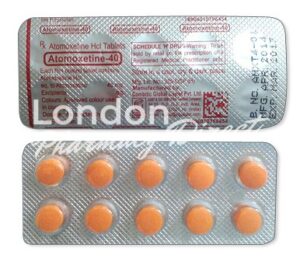
- Forms and dosages: 10 mg yellow capsule, 18 mg blue capsule, 25 mg red/brown capsule, 40 mg blue/white capsule, 60 mg yellow capsule, 80 mg brown capsule, 100 mg blue/white capsule
- Manufacturers in the United Kingdom: Eli Lilly and multiple generic manufacturers
- Registration status in the United Kingdom: Prescription-only medicine (POM); licensed in the UK as Strattera for ADHD
- OTC / Rx classification: Prescription-only medicine (POM)
- Classification: Psychoanaleptics; centrally acting sympathomimetic
- Standard dosages and indications: ADHD in children aged 6 years and over, adolescents and adults; adults usually start at 40 mg daily and titrate towards 80 mg daily, maximum 100 mg daily; children and adolescents usually start at about 0.5 mg/kg/day and increase after at least 3 days
- Use-cases: Mainly indicated for ADHD when stimulants are contraindicated, ineffective, or cause unwanted side effects; may suit patients at risk of substance misuse
Everyday use and best practices for Strattera
Strattera is a prescription-only, non-stimulant ADHD medication used for children aged 6 years and over, adolescents and adults in the UK.
For most people, the routine is simple once it has been set up properly.
It is usually taken once a day in the morning, although some patients are told to split the dose into morning and late afternoon or evening.
That split can help if the full daily dose feels too activating or if side effects need a gentler start.
Atomoxetine for ADHD can be taken with or without food, which fits breakfast habits, packed lunches, school runs and shift work.
Benefits do not usually appear straight away, and it can take 4 to 6 weeks before the effect becomes noticeable.
Capsules are available in colour-coded strengths, so it matters that each one is taken exactly as prescribed and not swapped between strengths.
For UK patients, the best approach is consistency rather than perfection.
- Take Strattera capsules at the same time each day.
- Link the dose to a fixed habit, such as brushing teeth or having breakfast.
- Use the exact strength on the prescription, even if the capsules look similar.
- Keep going unless a GP or specialist tells you to change the plan.
Morning vs evening dosing
Many patients ask whether morning dosing is always best.
The answer is that morning use is common, but the prescriber may choose a split dose if that suits the person better.
If tiredness, sleep disruption or stomach upset becomes troublesome, the timing may need reviewing with the clinician.
Taking with or without meals (UK diet habits)
This medicine does not usually depend on mealtimes.
That makes it easier for people who grab toast on the school run, have a packed lunch at work, or work rotating shifts.
If nausea happens, taking it with food may feel easier, but the main rule is to keep the daily routine steady.
Safety priorities before starting Strattera
Before starting atomoxetine, UK patients need to check for a few important safety issues.
Some conditions make Strattera unsafe, and others mean closer monitoring is needed early on.
That is especially important in children and adolescents, where psychiatric monitoring is advised because of the warning on suicidal thoughts and behaviour.
If a patient feels palpitations, faintness, agitation or noticeable mood changes, they should contact their GP, pharmacist or urgent care promptly.
Driving, cycling and safety-sensitive work may also need a pause if dizziness, fatigue or behaviour changes appear.
- Known allergy to atomoxetine or any capsule component.
- Narrow-angle glaucoma.
- Current or recent MAOI use within 14 days.
- Severe cardiovascular disorders such as severe hypertension or tachyarrhythmias.
- Suicidal thoughts, especially in children and adolescents.
Who should avoid it (MHRA warnings)
These red flags matter before the first capsule is taken.
They are not the sort of things to leave until the next routine review.
People with severe heart disease, recent MAOI treatment or a history of serious allergy should not start without specialist advice.
Activities to limit (driving, work safety)
Dizziness, fatigue and sleep changes can make ordinary tasks less safe at first.
That includes driving to work, cycling in traffic and operating tools or machinery.
If the medicine makes concentration worse before it gets better, it is sensible to avoid risky jobs until the prescriber is happy with the response.
Strattera dosage and adjustments
People often want a simple answer to the dose, but Strattera dosing depends on age, weight, liver function and response to treatment.
Changes should always be made by a GP or specialist, not by the patient.
In the UK, treatment is usually reviewed after an initial trial period, because the response can take time to judge properly.
| Age group | Usual starting dose | Usual target dose | Maximum dose |
|---|---|---|---|
| Adults | 40 mg daily | 80 mg daily | 100 mg daily |
| Children and adolescents | About 0.5 mg/kg/day | About 1.2 mg/kg/day after at least 3 days | 1.4 mg/kg/day or 100 mg, whichever is lower |
| Children under 6 years | Not recommended | Not recommended | Not recommended |
General regimen (NHS guidance)
Adults usually begin with Strattera 40 mg daily and then move towards 80 mg daily if the clinician feels that is appropriate.
Some people stay on one daily dose, while others are told to split it.
For younger patients, the dose is calculated from body weight rather than chosen as a fixed tablet strength.
Special cases (elderly, comorbidities)
Data in older adults are limited, so caution is advised if there are other health conditions.
Liver impairment needs dose reduction, with half the usual dose in moderate impairment and one-quarter in severe impairment.
Mild or moderate kidney impairment usually does not need an adjustment, but severe impairment still needs caution.
Legal status and availability in the UK
Strattera is a prescription-only medicine (POM) in the UK.
In our online pharmacy, Strattera is available without a prescription, with discreet delivery to the United Kingdom in 9–21 days.
What’s inside Strattera and how it works
Atomoxetine is the international nonproprietary name, and Strattera is the best-known brand name in the UK.
Its ATC code is N06BA09.
The medicine is supplied as capsules in colour-coded strengths, which helps pharmacies and patients identify the right pack.
Strattera works differently from methylphenidate or amphetamine-based ADHD medicines.
It is a non-stimulant ADHD medication that helps improve attention and impulse control without the same euphoric effect seen with stimulant drugs.
That is one reason it is not a controlled substance and is sometimes chosen when misuse risk is a concern.
| Strength | Capsule colour | Common packaging |
|---|---|---|
| 10 mg | Yellow, marked Lilly | Blister packs |
| 18 mg | Blue | Blister packs |
| 25 mg | Red/brown | Blister packs |
| 40 mg | Blue/white | Blister packs |
| 60 mg | Yellow | Blister packs |
| 80 mg | Brown | Blister packs |
| 100 mg | Blue/white | Blister packs |
Ingredients overview
The active ingredient is atomoxetine.
Any capsule components must be checked if a patient has known hypersensitivity.
Mechanism basics explained simply
In plain English, atomoxetine helps the brain use chemical signals linked with attention and self-control more effectively.
It does this without the stimulant effect of medicines such as methylphenidate (Ritalin, Concerta) or lisdexamfetamine (Elvanse).
Main indications for Strattera
The main licensed use is ADHD in children aged 6 years and over, adolescents and adults.
In UK practice, it is often considered when stimulants are not suitable, not tolerated or not effective enough.
It may also be preferred when there is concern about misuse or the patient wants a non-stimulant option.
- ADHD in children aged 6 years and over.
- ADHD in adolescents.
- ADHD in adults.
- Situations where stimulant treatment is not appropriate.
- Patients who prefer a non-stimulant ADHD medication.
Approved uses (MHRA listing)
Strattera is primarily used for ADHD, and that is the licence patients should focus on.
Prescribing is based on age, clinical need and response over time.
Off-label uses in UK clinics
Any non-licensed use should be specialist-led.
That means the patient should not assume an off-label approach is suitable without a proper assessment.
Interaction warnings with food, drink and medicines
Food usually does not cause major problems with atomoxetine, but drink and medicine interactions still matter.
Alcohol can make dizziness or drowsiness more noticeable.
Tea and coffee are part of daily life for many UK patients, but caffeine can make anxiety, palpitations or sleep issues feel more obvious in some people when treatment starts.
Patients should tell their pharmacist about all prescription medicines, over-the-counter products and supplements.
MAO inhibitors are contraindicated, and caution is needed with medicines that affect heart rate, blood pressure or mental health.
- Tell your pharmacist if you take antidepressants.
- Tell your pharmacist if you take blood pressure medicine.
- Tell your pharmacist if you use cold remedies, supplements or sleep aids.
- Tell your pharmacist if you have had palpitations or faintness on other medicines.
Food interactions (alcohol, tea/coffee)
There are no major food restrictions for most patients.
Alcohol is the main drink to watch, because it may worsen drowsiness or dizziness.
Caffeine does not interact in the same way, but it can make certain side effects more noticeable.
Drug conflicts
Important medicine conflicts should always be checked before starting treatment.
Side effects can also be reported through the Yellow Card system, which helps monitor safety in the UK.
Alternatives to Strattera
Patients often want to know what else is available if Strattera is not the right fit.
The main alternatives include stimulant medicines such as Ritalin, Concerta and Elvanse, plus the non-stimulant Intuniv (guanfacine).
Stimulants may work faster, while Strattera may suit patients who want to avoid a controlled drug or who have a misuse risk.
The best choice depends on sleep, appetite, heart health, anxiety, previous response and practical daily life.
| Medicine | Type | Key point |
|---|---|---|
| Ritalin | Stimulant | Often works quickly |
| Concerta | Stimulant | Extended-release methylphenidate |
| Elvanse | Stimulant | Lisdexamfetamine prodrug |
| Intuniv | Non-stimulant | Guanfacine |
Pros and cons
- Choose a stimulant if faster onset is important and it is clinically suitable.
- Consider Strattera if a non-stimulant ADHD medication is preferred.
- Consider non-stimulants if misuse risk, sleep problems or appetite issues are a major concern.
- Review heart conditions, anxiety and previous treatment response before deciding.
When an alternative may suit better
If Strattera causes side effects that do not settle, or if benefit is too slow after an adequate trial, the prescriber may look at another option.
That decision belongs with the ADHD clinician, not the patient alone.
Regulation snapshot for UK patients
Strattera is prescription only in the UK.
Atomoxetine is licensed in the UK, and it is available through both NHS and private prescribing routes.
It is not a controlled substance, which matters for patients concerned about stigma, travel paperwork or misuse risk.
In real practice, ADHD prescribing usually follows a specialist assessment and is reviewed over time for both benefit and side effects.
Generic atomoxetine may be used where available, depending on formulary and supply.
| Regulation point | UK meaning |
|---|---|
| Prescription only | Must be prescribed by a qualified clinician |
| Not a controlled substance | Lower abuse potential than stimulant medicines |
| NHS framework | Specialist-led assessment and ongoing review |
| Private access | Possible through a private prescriber and pharmacy |
MHRA approval and prescription rules
The medicine is authorised for ADHD, but access still depends on a valid prescription.
That keeps use clinically supervised and helps reduce unsafe self-treatment.
NHS prescribing framework
Patients are generally assessed and monitored within specialist pathways, with the GP and pharmacist involved in ongoing support where appropriate.
FAQ: common Strattera questions in the UK
How long does it take to work?
It usually takes 4 to 6 weeks to judge benefit properly.
What if I miss a dose?
Take it when remembered unless the next dose is near, and do not double up.
Can I take it with other medicines?
Some combinations are fine, but antidepressants, blood pressure medicines and MAO inhibitors need checking by a clinician or pharmacist.
Is it safe in pregnancy or breastfeeding?
Specialist advice is needed, rather than trying to manage this alone.
How to use Strattera properly day to day
Good daily use is mostly about routine, storage and knowing when to ask for help.
UK pharmacists often suggest keeping the capsules in the original pack, away from moisture and light, and out of reach of children.
Storage should be at 15 to 25°C.
If a dose is missed, the usual advice is to take it when remembered unless the next dose is close, and never to double up.
Overdose needs immediate medical attention, especially if somnolence, hyperactivity, stomach upset or abnormal behaviour appear.
If side effects interfere with work, school or family life, the GP should know.
- Use phone reminders or a pill routine.
- Link the dose to breakfast or another fixed daily habit.
- Store capsules in the original packaging.
- Keep them at 15 to 25°C and protect them from moisture and light.
- Ask a pharmacist early if supply or side effects become a problem.
UK pharmacist counselling style
It helps to be practical.
For example, a patient who takes breakfast late on school days may do better with a reminder on their phone rather than trying to remember by feeling alone.
NHS patient support advice
Pharmacists are a trusted source of advice in the UK, especially for side effects, generics and everyday adherence problems.
That advice can make treatment easier to live with and safer over time.
Delivery across the United Kingdom
| City | Region | Delivery Time |
|---|---|---|
| London | England | 9–21 days |
| Birmingham | England | 9–21 days |
| Manchester | England | 9–21 days |
| Leeds | England | 9–21 days |
| Glasgow | Scotland | 9–21 days |
| Edinburgh | Scotland | 9–21 days |
| Liverpool | England | 9–21 days |
| Bristol | England | 9–21 days |
| Sheffield | England | 9–21 days |
| Newcastle upon Tyne | England | 9–21 days |
| Cardiff | Wales | 9–21 days |
| Belfast | Northern Ireland | 9–21 days |
| Nottingham | England | 9–21 days |
| Leicester | England | 9–21 days |
| Coventry | England | 9–21 days |