Depakote
In brief
- In our pharmacy, you can buy Depakote without a prescription, with delivery in 9–21 days throughout the United Kingdom. Discreet and anonymous packaging.
- In the UK, Depakote (valproate semisodium) is licensed for acute manic episodes in bipolar disorder (sodium valproate products are used for epilepsy); it increases brain GABAergic activity, modulates voltage‑gated sodium channels and stabilises neuronal excitability.
- Usual dose: for manic episodes treatment often starts at 750 mg/day in divided doses and is increased as rapidly as tolerated, usually to 1,000–2,000 mg/day; dosing should be individualised and monitored by the prescriber.
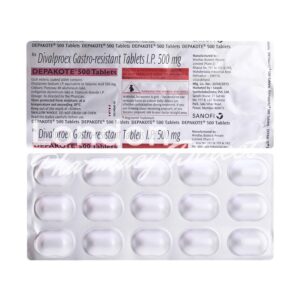
- Form of administration: oral gastro-resistant tablets (250 mg, 500 mg).
- Onset time: plasma levels peak about 1–4 hours after a dose; mood stabilisation in mania may take days to weeks.
- Duration of action: the elimination half‑life in adults is typically around 9–16 hours, so divided daily dosing is usual.
- Alcohol warning: avoid alcohol while taking depakote — it increases central nervous system depression, worsens sedation and may raise the risk of liver toxicity.
- The most common side effect is nausea (other frequent effects include tremor, drowsiness/sedation, weight gain, hair loss and mild thrombocytopenia; routine monitoring of liver function and blood counts is recommended).
- Would you like to try Depakote without a prescription?
Basic Depakote information
- INN (international nonproprietary name): valproate semisodium (divalproex sodium)
- Brand names available in the United Kingdom: Depakote; Convulex (valproic acid); generic valproate products
- ATC code: N03AG01
- Forms and dosages: gastro-resistant tablets 250 mg and 500 mg
- Manufacturers in the United Kingdom: Sanofi
- Registration status in the United Kingdom: licensed by the MHRA; prescription-only medicine
- OTC / Rx classification: Prescription-only medicine (POM)
Read this first: Depakote (valproate semisodium) is a prescription‑only medicine (ATC N03AG01) and must be taken only on a clinician’s advice following NHS prescribing.
Pregnancy carries major risks — valproate is teratogenic — so women of childbearing potential must discuss contraception and alternatives with their prescriber and follow MHRA risk‑management steps, including the Pregnancy Prevention Programme.
Store tablets at room temperature (20–25°C) and protect from moisture.
Never share medication and carry a printed wallet card with drug name and dose for clinic visits.
If you miss a dose, take it as soon as remembered unless the next dose is near; do not double up.
For overdose signs such as severe drowsiness, breathing problems or coma call 999 or go to A&E.
For counselling on side effects, interactions and repeat prescriptions ask your community pharmacist.
Morning vs evening dosing
Worried about when to take Depakote so it fits your day?
Choose a consistent time that suits your routine — morning with breakfast if you have a structured day, or evening if you find it causes sedation.
If prescribed twice daily aim for roughly 12‑hour spacing between doses.
Swallow the gastro-resistant tablets whole and do not crush or chew them.
- Morning routine: take with a light breakfast such as porridge or toast; set a phone alarm; use a pillbox to keep doses organised.
- Evening routine: take with a small evening meal if nausea is an issue; avoid taking immediately before heavy alcohol consumption.
Caffeine from tea or coffee does not have a major interaction but may worsen tremor or sleep disturbance, so consider limiting intake later in the day.
Practical checklist: pillbox, phone alarms and a clinic card listing your valproate dose.
Taking with or without meals (UK diet habits)
Worried about stomach upset with Depakote?
Taking Depakote with food can reduce nausea for many people.
A light UK breakfast such as porridge, toast or a small yoghurt works well for morning doses.
For evening doses a small meal — beans on toast, a sandwich or a modest portion — often helps.
Avoid taking a dose immediately before a heavy drinking session; alcohol increases drowsiness and may raise seizure risk.
Do not crush the tablets; swallow them with a drink of water.
If nausea persists ask your GP or pharmacist about antiemetic options and dose timing adjustments.
Safety priorities
Who should be most cautious about Depakote?
Absolute contraindications include known hypersensitivity to valproate, severe liver disease, urea cycle disorders and known mitochondrial disorders such as Alpers‑Huttenlocher.
Valproate is contraindicated for migraine prevention in pregnancy and carries a high teratogenic risk for foetuses.
Relative contraindications needing close monitoring include coagulopathies, history of pancreatitis, renal impairment and older age.
Before starting clinicians will typically arrange baseline liver function tests, full blood count and consider plasma level monitoring.
- Avoid driving or operating heavy machinery until you know how it affects you because it can cause dizziness and drowsiness.
- Tell your employer if you work in safety‑critical roles or at heights and keep documented clinical advice on file.
Keep a checklist of contraindications and ensure routine monitoring is followed under NHS or specialist guidance.
Who should avoid it (MHRA warnings)
Do you have liver disease or a metabolism disorder?
Avoid Depakote if you have severe hepatic impairment, urea cycle disorders, known mitochondrial disease or a history of hypersensitivity to valproates.
Women of childbearing potential must discuss contraception and alternatives due to MHRA pregnancy warnings and may be enrolled in risk‑management programmes.
If you have bleeding disorders or are taking anticoagulants expect more frequent blood monitoring for thrombocytopenia.
Always confirm contraindications with your prescriber and pharmacist before starting treatment.
Activities to limit (driving, work safety)
Unsure whether you can drive or work while taking Depakote?
Do not drive until you are confident Depakote does not impair your reactions or cause significant drowsiness.
For safety‑critical employment inform occupational health and keep written clinician advice on file.
Monitor for tremor and dizziness that could affect tasks such as ladder work, machinery operation or driving.
Document monitoring results and clinician recommendations to support workplace adjustments or fitness‑for‑work discussions.
Dosage and adjustments
Want a quick guide to common starting doses and how adjustments are made?
In the UK, Depakote is licensed for acute manic episodes in bipolar disorder: treatment is usually started at 750 mg/day in divided doses and increased as rapidly as tolerated, usually to 1,000–2,000 mg/day.
Epilepsy is treated with sodium valproate products, with doses set by the specialist; migraine prophylaxis is not licensed in the UK.
Therapeutic drug monitoring (plasma levels) guides dose adjustments and helps to balance efficacy and side effects.
In the elderly begin at lower doses and increase slowly while monitoring liver function and for falls or oversedation.
General regimen (NHS guidance)
How will your GP or specialist manage doses under the NHS?
Initiation is often led by a neurologist or psychiatrist with agreed shared‑care for ongoing prescriptions and monitoring with your GP.
Expect baseline blood tests and scheduled liver function tests, full blood counts and plasma level checks after starting or during titration.
Follow the clinic’s titration schedule and keep appointments for therapeutic monitoring to ensure safe, effective dosing.
Special cases (elderly, comorbidities)
Are you older or have other medical problems?
Start lower and titrate slowly in older adults because of reduced metabolism and increased sensitivity to sedation.
Severe hepatic impairment is a contraindication; milder impairment requires dose reduction or alternative therapy.
Renal impairment calls for caution and closer monitoring for accumulation and side effects.
Checklist for clinicians: weight‑based dosing for epilepsy, regular LFTs and platelets, and plasma level checks when changing interacting medicines.
Legal status and availability in the UK
Depakote (valproate semisodium) is a prescription-only medicine (POM) in the UK.
In our online pharmacy, Depakote is available without a prescription, with discreet delivery to the United Kingdom in 5‑14 days.
What’s inside and how it works
Want the basics of what’s in a Depakote tablet and how it helps?
The active INN is valproate semisodium (divalproex sodium); the active moiety is valproic acid/valproate.
Depakote is supplied as 250 mg and 500 mg gastro-resistant tablets.
Depakote increases brain levels of the inhibitory neurotransmitter GABA and has multiple other stabilising actions to reduce neuronal excitability.
That is why valproate products are used for epilepsy and bipolar mania.
Ingredients overview
Do you need to memorise the full pharmacology?
No, but knowing the INN valproate semisodium and the available strengths helps when checking prescriptions and interactions.
Form to expect from the pharmacy: gastro-resistant tablets (250 mg, 500 mg).
Mechanism basics explained simply
How does Depakote calm the brain?
Depakote increases GABA activity and stabilises electrical activity in the brain, reducing the chance of seizures and controlling manic‑phase symptoms.
Clinically this translates to fewer seizures and improved mood stability when titrated correctly with monitoring.
Main indications
What conditions is Depakote approved to treat by regulators?
In the UK, Depakote is licensed for the treatment of manic episodes in bipolar disorder; sodium valproate products are licensed for epilepsy.
For mania, treatment often starts around 750 mg/day in divided doses.
Always check the indication on your prescription and ask why Depakote was chosen over alternatives.
Approved uses (MHRA listing)
Which approved uses should patients confirm with prescribers?
- Manic episodes in bipolar disorder — initiation and maintenance under psychiatric care.
- Epilepsy — treated with sodium valproate products under specialist care, with plasma monitoring where needed.
Off‑label uses in UK clinics
Are there specialist situations where Depakote is used differently?
Some neurologists or psychiatrists may prescribe valproate for specific seizure subtypes or treatment‑resistant mood disorders off‑label with informed consent and monitoring.
Off‑label use is always accompanied by documented discussion of risks and expected benefits.
Interaction warnings
Worried about mixing Depakote with everyday drinks or other medicines?
Avoid alcohol around dosing times — it increases sedation and may raise seizure risk.
Normal tea and coffee are not direct contraindications but high caffeine intake can worsen tremor and affect sleep.
Depakote interacts with several drugs: it can raise lamotrigine levels increasing rash risk, interact with anticoagulants and many enzyme‑modulating antiepileptics, and carbapenem antibiotics can reduce valproate levels.
Always have your pharmacist run a drug‑interaction check when starting new prescriptions or OTC and herbal products.
Food interactions (alcohol, tea/coffee)
Can I have a drink with my medicine?
Do not drink alcohol close to dosing times and seek advice if alcohol intake is regular; alcohol increases sedation and can affect seizure threshold.
Tea or coffee in typical UK amounts is acceptable but consider reducing late evening caffeine to avoid sleep disturbance.
Drug conflicts
Which medicines cause most concern?
Key examples are lamotrigine, certain anticoagulants and enzyme‑inducing antiepileptics such as carbamazepine; carbapenem antibiotics can markedly reduce valproate levels.
Report suspected interactions or adverse events via the MHRA Yellow Card and ask your pharmacist for help with checks.
Alternative choices
What else might a prescriber offer instead of Depakote?
Common NHS alternatives include carbamazepine, lamotrigine, levetiracetam and topiramate — each has different benefits and side‑effect profiles.
- Carbamazepine: effective for focal seizures and bipolar mania; enzyme inducer with many interactions.
- Lamotrigine: lower teratogenic risk; good for bipolar depression; requires slow titration and has rash risk.
- Levetiracetam: easy titration, fewer interactions; may cause mood changes in some.
- Topiramate: useful for migraine and seizures; cognitive side effects and weight loss possible.
For women of childbearing potential alternatives with lower teratogenic risk are commonly considered and discussed in clinic.
Regulation snapshot
How is Depakote regulated and prescribed in the UK?
Depakote (valproate semisodium) is MHRA‑approved and prescription‑only in the UK with clear labelling about teratogenic risk and risk‑management requirements for women of childbearing potential.
Initiation is often by specialists with shared‑care arrangements for GP prescribing and monitoring (liver tests, platelets, plasma levels).
Report adverse reactions using the MHRA Yellow Card scheme to help regulators track safety signals.
Practical patient points: keep copies of monitoring results and request a written care plan if on long‑term therapy.
MHRA approval and NHS prescribing framework
What should patients expect from the prescribing pathway?
Expect specialist initiation for complex cases, a documented informed consent discussion for reproductive‑age patients and clear shared‑care monitoring schedules with your GP.
Frequently asked questions
Can I take Depakote if I’m trying for a baby?
No; valproate carries a high teratogenic risk and women planning pregnancy should discuss alternatives and contraception with their clinician and must not stop treatment abruptly without medical advice.
How often will I need blood tests?
Baseline tests are usually done before or shortly after starting, then periodically for liver function, full blood count and plasma levels according to your clinic plan.
Is generic as good as branded Depakote?
Generic valproate products are commonly used on the NHS; ask your pharmacist if a switch is planned and monitor for any change in effects.
What should I do if I miss a dose?
Take it as soon as you remember unless the next dose is near; do not double up. For severe overdose symptoms such as severe drowsiness or breathing difficulty call 999 or attend A&E.
Guidelines for proper use
What should a pharmacist explain when dispensing Depakote?
Confirm indication and dose, clarify which valproate product and strength you have been given, advise on taking with food if nauseous, warn about sedation and driving, and review all current medicines including OTC and herbal remedies for interactions.
Provide written information leaflets and a wallet card containing the name of your valproate medicine, dose and emergency contact details.
Arrange baseline bloods before or soon after initiation and schedule follow‑up appointments for monitoring of weight, mood and blood tests under NHS support.
Action plan for patients: keep an up‑to‑date medicines list, report side effects via the Yellow Card, and order repeat prescriptions in good time.
UK pharmacist counselling style
How will a pharmacist support you across refills?
Expect a checklist approach covering dose confirmation, administration times, interaction review, side‑effect discussion and monitoring timeline with printable schedules on request.
Delivery across the United Kingdom
| City | Region | Delivery Time |
|---|---|---|
| London | England | 9–21 days |
| Birmingham | England | 9–21 days |
| Manchester | England | 9–21 days |
| Glasgow | Scotland | 9–21 days |
| Leeds | England | 9–21 days |
| Liverpool | England | 9–21 days |
| Bristol | England | 9–21 days |
| Edinburgh | Scotland | 9–21 days |
| Sheffield | England | 9–21 days |
| Newcastle Upon Tyne | England | 9–21 days |
| Belfast | Northern Ireland | 9–21 days |
| Cardiff | Wales | 9–21 days |
| Nottingham | England | 9–21 days |
| Southampton | England | 9–21 days |
| Leicester | England | 9–21 days |