Flagyl
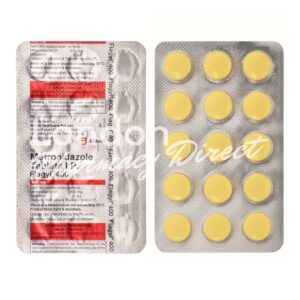
In brief
- Flagyl (metronidazole) is a prescription-only medicine (POM) in the UK.
- Flagyl is used to treat anaerobic bacterial infections and certain protozoal infections such as trichomoniasis, bacterial vaginosis, giardiasis and amoebiasis. It works as a nitroimidazole antibacterial/antiprotozoal agent by damaging the DNA of susceptible organisms.
- The usual dose depends on the condition: for bacterial vaginosis, 400 mg twice daily for 5–7 days; for trichomoniasis, 2 g as a single dose or 400 mg twice daily for 5–7 days; for anaerobic infections, 500 mg every 8 hours; and for giardiasis and amoebiasis, the dose is set by the prescriber.
- Flagyl is taken by mouth as tablets or oral suspension, or as intravenous infusion in hospital; it is also available as topical, vaginal gel, or cream formulations depending on the indication.
- It usually starts working within a few hours, although symptom improvement may take 1–3 days depending on the infection and severity.
- The duration of action is generally around 6–8 hours per dose, which is why it is often taken two to three times daily.
- Do not drink alcohol during treatment and for at least 3 days after the last dose, as metronidazole can cause a severe disulfiram-like reaction with flushing, nausea, vomiting, headache and a rapid heartbeat.
- The most common side effects are nausea, a metallic taste in the mouth, diarrhoea, abdominal discomfort and headache.
- Would you like to try Flagyl without a prescription?
Basic Flagyl information
- INN (international nonproprietary name): Metronidazole
- Brand names available in the United Kingdom: Flagyl
- ATC code: J01XD01
- Forms and dosages: Tablets 200 mg and 400 mg, oral suspension 200 mg/5 mL, IV infusion solution 500 mg/100 mL, topical gel/cream 0.75%, vaginal gel 0.75%, suppositories 500 mg
- Manufacturers in the United Kingdom: Sanofi (Flagyl) and generic manufacturers
- Registration status in the United Kingdom: Approved by the MHRA; prescription-only medicine (POM); listed on the WHO Essential Medicines list
- OTC / Rx classification: Prescription-only medicine (POM)
How to fit Flagyl into everyday life
Trying to remember metronidazole twice or three times a day can feel awkward when life is already full of school runs, shifts, trains, and packed lunches.
The good news is that Flagyl treatment is usually straightforward once it is built into a routine.
For twice-daily metronidazole tablets, many people find it easiest to take one dose in the morning and one in the evening, keeping them evenly spaced.
If it is prescribed three times a day, aim for roughly breakfast, mid-afternoon, and bedtime, rather than squeezing the doses together.
Phone alarms work well, and so do simple habit links such as taking a dose after brushing your teeth or with a routine tea break.
People travelling on public transport can keep a dose in a bag and set a reminder for when they leave the office or finish the school run.
Flagyl is a prescription only antibiotic in the UK, so it should always be taken exactly as written on the label.
Finish the full course even if symptoms settle after a couple of days.
Tablets are usually taken with or after food if nausea is a problem, which suits breakfast, a sandwich lunch, or an evening meal.
For children, metronidazole oral suspension may be used instead of tablets when the prescriber feels that is more suitable.
- How to remember doses: set alarms, use meal times, keep doses at the same times daily, and tick each dose off on your phone.
- What to do if you feel sick after taking it: take the next dose with food, sip water slowly, avoid rich meals, and speak to a pharmacist if nausea keeps coming back.
Safety priorities
Worried about whether it is safe to carry on as normal while taking metronidazole?
That is a sensible question, because Flagyl safety depends on a few important checks.
Flagyl should not be used if there is an allergy to metronidazole or to other nitroimidazoles.
Alcohol must be avoided during treatment and for 3 days afterwards because it can trigger flushing, nausea, vomiting, and palpitations.
Recent disulfiram use is also an absolute contraindication, and people with severe liver disease, seizures, neuropathy, or other central nervous system disorders should speak to a pharmacist, GP, or urgent care service before starting.
Pregnancy in the first trimester and breastfeeding need individual advice, as do severe liver problems and significant neurological history.
Some people notice dizziness or a metallic taste, and that can affect concentration at work.
That matters for drivers, machine operators, and anyone working at heights.
If you feel light-headed, do not drive or use machinery until it passes.
- Do not ignore: severe rash, breathing problems, numbness or tingling, confusion, seizures, or persistent vomiting.
- Safe to carry on as normal? Only if you are not drinking alcohol, are not dizzy, and your work is not safety-critical.
Dose choices and adjustments
How much Flagyl you need depends on the infection being treated, so the prescription label always comes first.
For NHS prescribing, common adult regimens include 400 mg twice daily for 5 to 7 days for bacterial vaginosis and either 2 g as a single dose or 400 mg twice daily for 5 to 7 days for trichomoniasis.
Anaerobic infections are often treated with 500 mg every 8 hours for 7 to 10 days, while giardiasis and amoebiasis use different oral doses for a shorter course.
When metronidazole is used for C. diff, the common adult approach is 500 mg three times daily for 10 to 14 days, depending on the case.
Children may be given oral suspension with weight-based dosing, and dose changes for older adults or people with liver or kidney problems should only be made by a clinician.
Older patients may need closer monitoring because neurological side effects are more likely.
Severe liver disease may need a reduced dose or longer spacing between doses.
| Condition | Usual dose | Typical duration |
|---|---|---|
| Bacterial vaginosis | 400 mg twice daily | 5 to 7 days |
| Trichomoniasis | 2 g single dose or 400 mg twice daily | Single dose or 5 to 7 days |
| Anaerobic infection | 500 mg every 8 hours | 7 to 10 days |
| Giardiasis | Dose set by the prescriber | 3 to 7 days |
| C. diff | 500 mg three times daily | 10 to 14 days |
- Children: weight-based dosing and oral suspension may be used.
- Elderly: standard doses are often used, with closer monitoring for neurological effects.
- Liver or kidney problems: dose changes should be made by a clinician.
Legal status and availability in the UK
Flagyl is a prescription-only medicine (POM) in the UK.
In our online pharmacy, Flagyl is available without a prescription, with discreet delivery to the United Kingdom in 9–21 days.
What Flagyl contains and how it works
Flagyl is the brand name for metronidazole, a nitroimidazole antibacterial used against certain anaerobic bacteria and some protozoa.
Its ATC code is J01XD01, and it is on the WHO Essential Medicines list.
The mechanism is simple enough to keep in mind: it helps stop the organisms that cause particular infections from surviving and multiplying.
That is why it is useful for bacterial vaginosis, trichomoniasis, and some gut or dental infections where anaerobes are involved.
It does not work for colds or flu, because those are viral infections.
- What it treats: anaerobic bacteria, protozoa, bacterial vaginosis, trichomoniasis, giardiasis, and selected other infections.
- What it does not treat: viruses, including colds and flu.
Main uses in UK practice
People often hear different infection names and wonder whether the same tablet is being used for all of them.
In UK practice, metronidazole is used for several recognised indications, but the exact dose and length of treatment depend on the diagnosis.
MHRA approved uses include bacterial vaginosis, trichomoniasis, anaerobic bacterial infections, giardiasis, amoebiasis, and selected cases of C. diff when metronidazole is prescribed.
In hospital, dental, and sexual health settings, it may also be used under clinician supervision for some infections where anaerobes are involved.
That is why the indication matters so much: the wrong duration can make treatment less effective.
| Condition | Common form | Typical duration |
|---|---|---|
| Bacterial vaginosis | Tablets or vaginal gel | 7 days |
| Trichomoniasis | Tablets | Single dose or 7 days |
| Anaerobic infections | Tablets or IV treatment | 7 to 10 days |
| Giardiasis and amoebiasis | Tablets or oral suspension | 5 to 10 days |
Interaction warnings to check first
The biggest interaction is alcohol, and it matters in ordinary UK life more than people expect.
That means no drinks at the pub, no wine at weddings, and no alcohol with holiday meals during treatment and for 3 days after the final dose.
Alcohol and Flagyl can cause flushing, fast heartbeat, nausea, and vomiting.
Tea and coffee are not major interaction problems, but they can make nausea feel worse in some people.
Disulfiram is a major avoid, especially if it has been taken within the last 2 weeks.
Always tell a pharmacist or prescriber about all prescription, over-the-counter, and herbal products before starting.
| Interaction | What to do |
|---|---|
| Alcohol | Avoid during treatment and for 3 days afterwards |
| Disulfiram | Do not use if taken within 2 weeks |
| Other medicines | Check with a pharmacist or prescriber first |
- Avoid or ask first: alcohol, disulfiram, and any medicine that might affect the nervous system.
- Speak to a pharmacist: if you are unsure about prescriptions, OTC remedies, or herbal products.
Other medicines that may be used instead
Sometimes another option is a better fit, especially if metronidazole is not tolerated or alcohol avoidance is a problem.
Common alternatives include clindamycin and tinidazole.
Clindamycin may be used for bacterial vaginosis or anaerobic infections.
Tinidazole has a similar role for some protozoal infections.
The best choice depends on the infection, pregnancy status, tolerance, and local guidance.
| Alternative | When it may be used | Points to consider |
|---|---|---|
| Clindamycin | Bacterial vaginosis, anaerobic infections | Often used when metronidazole is not suitable |
| Tinidazole | Protozoal infections | Similar mechanism to metronidazole |
Regulation and prescription rules
Metronidazole is approved by the UK MHRA and is a prescription only medicine.
It is widely used in NHS and private care, and community pharmacies dispense it regularly after a GP, dental, sexual health, or hospital review.
Exact packaging varies by manufacturer and dose, and generic versions are commonly supplied.
- Who can prescribe: GPs, dentists, sexual health clinicians, hospital teams, and private prescribers.
- Where it is dispensed: community pharmacies and registered online pharmacies.
- What to expect: branded or generic packaging, depending on supply.
Questions patients ask most often
Can I drink alcohol on Flagyl?
No, not during treatment and for 3 days afterwards, because of the risk of flushing, nausea, vomiting, and a fast heartbeat.
How long does metronidazole take to work?
Many people notice improvement within a few days, but the full course still needs to be finished.
Can I take it with food?
Yes, and taking metronidazole with food can help if nausea is an issue.
What if I miss a dose?
Take it as soon as you remember unless it is nearly time for the next dose, and do not double up.
If severe side effects such as seizures, severe allergy, or persistent vomiting happen, get urgent help.
Overdose symptoms can include nausea, vomiting, ataxia, and seizures.
How to use it properly
Need a pharmacist-style checklist that makes sense at home?
Keep tablets and liquids at room temperature, ideally 20 to 25°C, away from humidity and heat.
Protect liquid forms from freezing.
Take the full course even if you feel better early, and go back for review if symptoms do not improve as expected.
If nausea is troublesome, take the dose with food.
If avoiding alcohol is going to be difficult, speak to a pharmacist or prescriber before starting so that another option can be discussed.
Pregnancy and breastfeeding need individual advice, and breastfeeding usually needs to be avoided or paused during therapy and for 24 hours after the final dose.
- Use it properly: store correctly, stick to the schedule, avoid alcohol, and finish the course.
- Call NHS 111, your GP, or urgent care if: symptoms worsen, you develop a rash, you have severe dizziness, or you think you have had an overdose.
Delivery across the United Kingdom
| City | Region | Delivery time |
|---|---|---|
| London | Greater London | 9–21 days |
| Birmingham | West Midlands | 9–21 days |
| Manchester | North West England | 9–21 days |
| Glasgow | Scotland | 9–21 days |
| Edinburgh | Scotland | 9–21 days |
| Leeds | West Yorkshire | 9–21 days |
| Liverpool | North West England | 9–21 days |
| Bristol | South West England | 9–21 days |
| Sheffield | South Yorkshire | 9–21 days |
| Newcastle upon Tyne | North East England | 9–21 days |
| Nottingham | East Midlands | 9–21 days |
| Cardiff | Wales | 9–21 days |
| Belfast | Northern Ireland | 9–21 days |
| Leicester | East Midlands | 9–21 days |