Ciprofloxacin + Dexamethasone
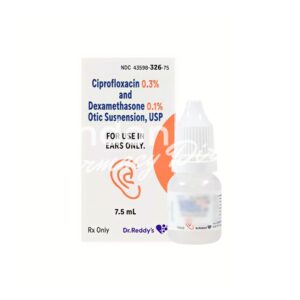
In stock
0.3/0.1%
from 28,24 £
In brief
- Ciprofloxacin + Dexamethasone treats ear canal infection (otitis externa) with an antibiotic and a steroid in the same drop.
- Listed in one 0.3/0.1% strength, with between 1 and 6 bottles per order.
- The UK-licensed equivalent is prescription-only, and the ear should be examined by a doctor or prescriber before treatment.
What Ciprofloxacin + Dexamethasone drops are made of
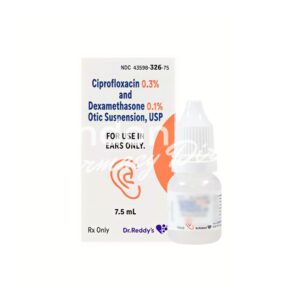
Ciprofloxacin + Dexamethasone brings two actions into one suspension for the ear. The antibiotic half, ciprofloxacin (a fluoroquinolone), tackles bacteria such as Pseudomonas aeruginosa and Staphylococcus aureus, the usual culprits in outer-ear infection. Dexamethasone is a corticosteroid, and its job is to damp down swelling and inflammation so the pain and itch ease. The target is acute otitis externa, commonly called swimmer’s ear: infection in the canal that runs from the eardrum to the outside. Trapped water, eczema and prodding with cotton buds are frequent triggers. The drops treat sensitive bacteria and inflammation in the canal, and they will not help a cold, a sore throat or fluid behind the eardrum.
Reading 0.3/0.1% and the bottle numbers
Here 0.3/0.1% means 0.3% ciprofloxacin plus 0.1% dexamethasone, that is 3 mg and 1 mg in every ml. The equivalent UK medicine is an ear-drop suspension, white or off-white. Here there is one strength, and the choice is one to six bottles. A course of Ciprofloxacin + Dexamethasone is just seven days, so several bottles go well beyond what a single episode needs; your prescriber can say what quantity makes sense.
Warm it, shake it, lie down
Adults and children from one year of age follow the same SmPC schedule: 4 drops in the sore ear, morning and evening, for 7 days. Start by shaking the Ciprofloxacin + Dexamethasone bottle well. Hold it in your closed hand for a minute or two so the liquid reaches body temperature; cold drops can bring on dizziness. With the sore ear facing up, gently pull the outer ear back to open the canal and let the drops run in. Stay in that position for about five minutes. Keep the dropper from touching the ear, your fingers or any surface. Nothing needs adjusting for older people or for kidney or liver problems, and the drops go in the ear and nowhere else.
Who should not use these drops
They are ruled out by allergy to ciprofloxacin, to related quinolone antibiotics, to dexamethasone or to any other component of the bottle. Viral infections of the ear canal, for example herpes simplex or chickenpox, and fungal ear infections are also unsuitable. In pregnancy the SmPC allows use only where clearly needed, and caution is advised during breastfeeding, so tell the prescriber. Say so if you have a perforated eardrum or grommets, as either may affect which drops are chosen.
Reported reactions
About one user in a hundred reports ear pain, the most frequent effect. Among the uncommon reactions are itchiness, a blocked sensation, discharge, tingling, flushing, an altered taste, vomiting, tiredness and fungal ear infection. Dizziness, headache, tinnitus and reduced hearing are rare, and blurred vision is also listed, its frequency unknown. If you get a rash, or a tendon becomes sore or swollen, stop the drops and see a doctor. Prolonged courses can let other organisms, fungi included, take over.
Why the ear should be examined first
The SmPC asks for reassessment if the infection has not cleared within a week. Ear discharge that will not stop, or returns twice or more within six months, might mean a foreign body, a cholesteatoma or a growth, all of which need to be looked at properly. Whether Ciprofloxacin + Dexamethasone is the right choice is therefore for your doctor or prescriber, not something to keep in the cupboard just in case.
Keeping the ear comfortable during treatment
General good sense helps an inflamed canal recover. Try to keep water out of the ear while the infection is active, and leave cotton buds and fingers alone, since scratching or probing can set the problem off again. Pain relief from a pharmacist can be used for comfort if appropriate. If the ear becomes more painful, the swelling spreads, you develop a fever, or hearing drops noticeably, get in touch with a doctor instead of waiting for the end of the course.