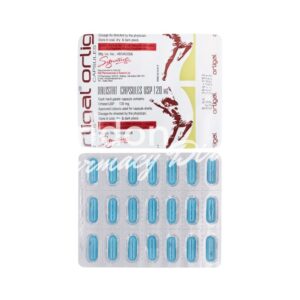
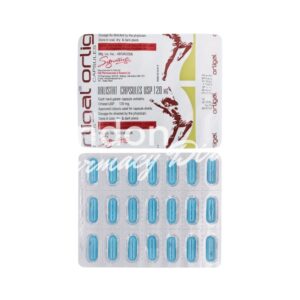
Xenical
In brief
- Xenical 120 mg is a prescription-only medicine (POM) in the UK; the 60 mg alli version is a pharmacy medicine (P).
- Xenical (orlistat) is used for weight management in adults with obesity or overweight alongside a reduced-calorie, low-fat diet. It works as a gastrointestinal lipase inhibitor, blocking the absorption of about one-third of dietary fat from the intestine.
- The usual dose is 120 mg taken three times daily with each main meal containing fat, or up to 1 hour after the meal. Do not exceed the recommended dose.
- The form of administration is an oral capsule.
- It starts working within hours by reducing fat absorption from the first doses, although noticeable weight-loss benefits usually build over weeks.
- The effect lasts through the meal period and is intended for ongoing daily use; treatment response is typically reviewed after 12 weeks, and long-term use may be continued if effective.
- Alcohol is not specifically contraindicated, but it is best consumed in moderation, as alcohol adds calories and can hinder weight-loss results.
- The most common side effects are oily stools, oily spotting, increased defecation, faecal urgency, flatulence with discharge, abdominal cramping, and rectal discomfort; these are more likely if dietary fat intake is high.
- Would you like to try Xenical without a prescription?
Basic Xenical information
- INN (international nonproprietary name): Orlistat
- Brand names available in the United Kingdom: Xenical (120 mg); alli (60 mg)
- ATC code: A08AB01
- Forms and dosages: Capsules 120 mg (Xenical), taken by mouth; capsules 60 mg (alli), taken by mouth
- Manufacturers in the United Kingdom: F. Hoffmann-La Roche (Xenical)
- Registration status in the United Kingdom: Xenical 120 mg is a prescription-only medicine (POM); alli 60 mg is a pharmacy medicine (P)
- OTC / Rx classification: Xenical 120 mg: prescription-only medicine (POM); alli 60 mg: pharmacy medicine (P)
Starting Xenical often raises the same practical question: do you take it in the morning, at lunch, or at night?
The simple answer is that Xenical capsules are usually taken with each main meal containing fat, or up to 1 hour after eating.
There is no special morning or evening preference.
The standard adult dose is Xenical 120 mg three times daily, which fits neatly around a normal UK routine of breakfast, lunch and the evening meal.
If a meal is skipped, or if a meal contains no fat, the dose is usually omitted.
Xenical is not taken on an empty stomach in the way some medicines are.
It works in the gut, so food fat needs to be present for it to do its job.
That matters with everyday UK eating habits, whether it is a takeaway curry, a packed lunch, canteen food, or a Sunday roast with all the trimmings.
Higher-fat meals are the main reason people notice oily stools, urgency and leakage, especially early on.
- Take it with the meal, or within 1 hour after eating.
- Skip the dose if the meal had no fat.
- Keep meals lower in fat to reduce oily bowel symptoms.
- Plan ahead for work, commuting and social events if your meal is likely to be rich.
- Choose smaller portions when you know a meal will be heavier than usual.
- Swap fried sides for grilled or baked options where possible.
- Carry spare underwear or wipes if you are still learning how Xenical affects you.
- Use the capsule as part of your weight loss medication plan, not as a stand-alone fix.
Safety priorities
Who should avoid Xenical, and what should be checked before the first capsule?
Weight loss treatment is generally not suitable in pregnancy, and Xenical should not be used in pregnancy.
It is also not recommended in breastfeeding.
Absolute contraindications include chronic malabsorption syndromes, hypersensitivity to orlistat or excipients, and pregnancy.
People with kidney stones, chronic kidney disease, gallbladder or pancreatic disorders, or those taking warfarin or ciclosporin should get advice first.
In UK practice, that means speaking to a pharmacist, GP, or obesity service before starting an orlistat prescription.
Xenical side effects are usually stomach and bowel related, not sleepy or sedating.
That said, urgent bowel movements, cramping, and oily leakage can make commuting, shift work, school runs, or long drives awkward.
If symptoms are severe, persistent, or linked with dehydration, seek medical help promptly.
| Situation | Advice | Why it matters |
|---|---|---|
| Avoid | Pregnancy, chronic malabsorption, known hypersensitivity | These are listed contraindications |
| Use caution | Kidney stones, chronic kidney disease, gallbladder or pancreatic disorders | Extra monitoring may be needed |
| Seek advice | Warfarin, ciclosporin, severe bowel symptoms, dehydration | Interaction and safety checks matter |
| Plan ahead | Driving, shift work, public-facing jobs, travel | Urgency or leakage can be disruptive |
Dosage and adjustments
What is the correct Xenical dose, and does it ever need changing?
The usual regimen is 120 mg capsule orally three times daily with each main meal containing fat.
Doses above 120 mg three times daily do not improve efficacy.
It is normally used alongside a nutritionally balanced reduced-calorie diet containing about 30% of calories from fat.
Progress should be reviewed after 12 weeks, and treatment should be stopped if less than 5% of body weight has been lost.
| Group | Practical point |
|---|---|
| Children under 12 | Not recommended; safety and efficacy are not established |
| Older adults | No routine dose change, but polypharmacy and comorbidity need consideration |
| Renal impairment | Specific studies are limited; caution is sensible in severe impairment |
| Hepatic impairment | Use caution and seek specialist advice if needed |
For most people, the practical message is the same: take Xenical with fat-containing meals, keep the diet lower in fat, and review whether it is helping.
Legal status and availability in the UK
In our online pharmacy, Xenical is available without a prescription, with discreet delivery to the United Kingdom in 9–21 days.
Xenical 120 mg is a prescription-only medicine (POM) in the UK, while alli 60 mg is the lower-strength pharmacy medicine (P) sold under pharmacist supervision.
What is inside and how it works
What exactly is Xenical, and why does it work differently from appetite suppressants?
The INN is orlistat, and Xenical is the best-known brand.
alli is the lower-dose (60 mg) pharmacy medicine.
The ATC code is A08AB01.
Xenical capsules are taken by mouth, with 120 mg capsules (prescription-only) as the standard strength; alli capsules are 60 mg.
In simple terms, orlistat is a lipase inhibitor.
It blocks some of the enzymes in the gut that break down fat, so part of the fat passes through unabsorbed.
That is why the medicine is described as a fat absorption blocker.
The same mechanism explains the common bowel effects.
If more fat stays in the bowel, stools can become oily or urgent, particularly after a rich meal.
| Term | Plain-English meaning |
|---|---|
| Orlistat | The active ingredient |
| Xenical | The branded prescription capsule |
| Lipase inhibitor | Blocks fat-digesting enzymes in the gut |
| Fat absorption blocker | Reduces how much dietary fat is absorbed |
Main uses
Who is Xenical meant for, and what is it actually approved to do?
Xenical is used for weight loss in adults.
It is intended to support a reduced-calorie diet, not replace one.
That makes it part of a wider weight-management plan, rather than a lifestyle-only product.
The medicine is most appropriate when there is a clear need for medical weight management.
| Use | Status |
|---|---|
| Adult weight loss support | Approved use |
| Reduced-calorie diet support | Approved use |
| Off-label use in clinics | Only discussed by a clinician; not routine |
| Obesity treatment pathways | Common UK focus, alongside BMI and metabolic risk |
Interaction warnings
Does Xenical clash with tea, coffee, alcohol, or other medicines?
The main food issue is fatty meals, not tea or coffee.
High-fat meals increase the chance of oily stools, urgency and abdominal discomfort.
Alcohol is not the main interaction, but heavy drinking can make weight goals harder and can affect food choices.
A few small swaps can make daily use easier.
- Choose grilled, baked or boiled foods instead of fried meals.
- Use smaller portions when eating out or ordering takeaway.
- Pick lower-fat sauces and dressings where possible.
- Keep an eye on hidden fats in pastries, creamy dishes and late-night snacks.
Some medicines need extra care, especially ciclosporin and warfarin.
Always mention prescription medicines, over-the-counter products and supplements before starting.
If side effects need reporting, the MHRA Yellow Card system is used in the UK.
| Medicine | Concern | Action |
|---|---|---|
| Ciclosporin | May need monitoring | Check with a pharmacist or prescriber |
| Warfarin | INR monitoring may be needed | Tell the anticoagulation team |
| Other medicines and supplements | Interaction history still matters | Ask before combining with Xenical |
Alternative choices
What else might be considered if Xenical is not the right fit?
Different medicines suit different people depending on whether they want capsules or injections, how well they tolerate side effects, and what is available on the NHS.
| Medicine | Pros | Cons |
|---|---|---|
| alli 60 mg | Lower strength, available from pharmacies | Not the same dose as Xenical 120 mg |
| Saxenda | Injectable option for some patients | Injection, prescription only |
| Wegovy | Injectable GLP-1 option | Suitability and NHS access criteria apply |
| Mysimba | Tablet option with a different mechanism | Not suitable for everyone |
Xenical alternatives should always be discussed with a prescriber or pharmacist, especially if the main issue is side effects, access, or lack of progress.
Regulation snapshot
How is Xenical classified in the UK?
Xenical is a licensed prescription-only medicine (POM) in the UK, and alli 60 mg is a pharmacy medicine (P).
The 120 mg strength is the standard prescription dose.
Pharmacists can answer questions about orlistat and how it is supplied.
Frequently asked questions
Do I take Xenical before or after food?
Take it with meals containing fat, or up to 1 hour after eating.
What happens if I miss a dose?
If the meal was within the last hour, take the dose; if more than 1 hour has passed, skip it and do not double up.
Is Xenical a prescription-only medicine?
Yes. In the UK Xenical 120 mg is a prescription-only medicine (POM); alli 60 mg is a pharmacy medicine (P).
How is Xenical different from alli?
Xenical is the 120 mg prescription capsule, while alli 60 mg is the lower-strength pharmacy medicine.
What if oily stools start early on?
That often means the meal was too high in fat, so lowering fat intake usually helps.
Guidelines for proper use
How would a UK pharmacist usually explain Xenical before you leave the counter?
Take one 120 mg capsule three times daily with your main meals containing fat.
Do not increase the dose, because doses above 120 mg three times daily do not improve efficacy.
Keep the capsules in the original packaging, stored at 15 to 30°C, away from moisture and light.
Do not freeze them.
If you miss a dose, follow the meal-based rule rather than trying to catch up later.
Book the 12-week review and be honest about progress, because treatment should be stopped if less than 5% body weight has been lost.
- Start with the first main meal containing fat.
- Keep the diet reduced in calories and lower in fat.
- Expect bowel side effects early if meals are too rich.
- Speak to a pharmacist if the symptoms are troublesome.
- Ask for advice if you have kidney concerns or take warfarin or ciclosporin.
Pairing Xenical with dietitian input, activity goals and regular weight checks gives the treatment the best chance of working.
Delivery across the United Kingdom
| City | Region | Delivery time |
|---|---|---|
| London | Greater London | 9–21 days |
| Birmingham | West Midlands | 9–21 days |
| Manchester | North West England | 9–21 days |
| Liverpool | North West England | 9–21 days |
| Leeds | West Yorkshire | 9–21 days |
| Glasgow | Scotland | 9–21 days |
| Edinburgh | Scotland | 9–21 days |
| Bristol | South West England | 9–21 days |
| Cardiff | Wales | 9–21 days |
| Newcastle upon Tyne | North East England | 9–21 days |
| Sheffield | South Yorkshire | 9–21 days |
| Nottingham | East Midlands | 9–21 days |
| Leicester | East Midlands | 9–21 days |
| Coventry | West Midlands | 9–21 days |
| Aberdeen | Scotland | 9–21 days |