Isotretinoin
In brief
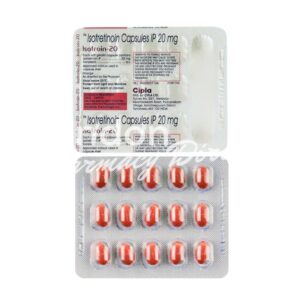
- Isotretinoin capsules at London Pharmacy Direct are offered as 10mg and 20mg, each in packs of 30, 60, 90, 120 or 180, and UK delivery takes 9–21 days.
- A retinoid related to vitamin A, it shrinks the oil glands and is kept for severe nodular or scarring acne that has failed antibiotics and creams; both 10mg and 20mg are UK-licensed strengths.
- Doses are set according to weight, with a full course typically adding up to 120–150 mg for every kilogram, and liver function and blood fats are checked before and during treatment.
- Because it can seriously harm an unborn baby, anyone able to conceive must follow the pregnancy prevention programme; vitamin A supplements are best avoided and tetracycline antibiotics must not be taken with it.
- Dry lips, sore eyes, nosebleeds and aching joints are common, so tell the clinician quickly about low mood or self-harm thoughts, and never pass capsules on to anyone else. It is a POM.
Basic isotretinoin information
- INN (international nonproprietary name): Isotretinoin
- Brand names available in the United Kingdom: Roaccutane; generic isotretinoin capsules
- ATC code: D10BA01
- Forms and dosages: Soft capsules, mainly 10 mg and 20 mg
- Manufacturers in the United Kingdom: Roche (Roaccutane); generic suppliers
- Registration status in the United Kingdom: Prescription-only medicine (POM) licensed by the MHRA
- OTC / Rx classification: Prescription-only medicine (POM)
Everyday use and best practices
Morning vs evening dosing
Isotretinoin works best when it is taken exactly as prescribed, at the same time each day if possible.
Morning or evening can both suit UK routines, so many people link it to breakfast, evening tea, or another regular habit that is hard to miss.
Never change the dose yourself, even if your acne seems to be improving or your skin feels dry.
If your pack is one of the common UK isotretinoin capsules, such as Roaccutane, always check the packet instructions, because absorption can depend on the formulation.
Taking with or without meals in UK eating patterns
For many patients, taking isotretinoin with food is the simplest way to build it into the day and reduce the chance of forgetting a dose.
That often fits a proper breakfast, lunch at work, or a main evening meal better than a rushed snack.
Practical daily tips make treatment easier.
- Keep capsules in the original packaging.
- Set a phone reminder.
- Take with a meal unless the prescriber says otherwise.
- Carry a small lip balm and moisturiser.
- Avoid splitting or crushing capsules.
UK patients often find it useful to ask a pharmacist for practical advice when collecting their prescription.
Safety priorities
Who should avoid it
The most important safety warning is simple: isotretinoin is prescription only in the UK and must not be used in pregnancy because of severe teratogenic risk.
Anyone who is pregnant, planning pregnancy, or breastfeeding should not take it.
Extra caution is needed in severe liver disease, very high blood lipids, hypervitaminosis A, or a known allergy to isotretinoin or capsule ingredients.
Activities to limit
Day-to-day safety matters as much as the prescription itself, especially when side effects affect vision or concentration.
Some people notice dry eyes or reduced night vision, so driving at night needs extra care if vision is affected.
High-risk work should be avoided if dizziness or blurred vision occurs, and the skin needs protection from sun exposure throughout treatment.
- Be careful driving at night if vision is affected.
- Avoid high-risk work if dizziness or blurred vision occurs.
- Protect skin from sun exposure.
- Avoid waxing or aggressive skin treatments during treatment.
MHRA warnings also remind patients to report mood changes, persistent headaches, and visual symptoms promptly.
In the UK, a pharmacist, GP, or dermatology team can help quickly if anything feels out of the ordinary.
Dosage and adjustments
General regimen
For severe acne, the usual isotretinoin course is weight-based and often starts low before increasing if it is tolerated.
A typical starting dose is around 0.5 mg/kg/day, rising to up to 1 mg/kg/day depending on response and side effects.
The standard course is usually 16 to 24 weeks, or until a cumulative dose of 120 to 150 mg/kg is reached.
Special cases
Specialist supervision matters here, because isotretinoin is not a one-size-fits-all treatment.
Children over 12 may be treated under specialist supervision, while older adults usually do not need a standard dose adjustment but may need closer monitoring.
Caution is needed in mild-to-moderate liver or kidney impairment, and severe hepatic impairment is a contraindication.
| Situation | Usual approach |
|---|---|
| Typical adult | Weight-based dosing |
| Teenager over 12 | Specialist-led, monitored dose |
| Liver or kidney problems | Lower starting dose, careful review |
Legal status and availability in the UK
Isotretinoin is a prescription-only medicine (POM) in the UK.
In our online pharmacy, isotretinoin is available without a prescription, with discreet delivery to the United Kingdom in 9–21 days.
What’s inside and how it works
Ingredients overview
The active ingredient is isotretinoin, also known as 13-cis-retinoic acid.
It is a systemic retinoid, classified under ATC code D10BA01, and is supplied as soft capsules, mainly in 10 mg and 20 mg strengths.
Mechanism basics explained simply
In plain English, isotretinoin reduces oil production, helps prevent blocked pores, and calms the acne process that drives severe nodular or cystic acne.
- Less sebum.
- Fewer clogged pores.
- Reduced inflammation.
- Fewer severe breakouts over time.
UK brands may vary, but the active ingredient is the same.
Main indications
Approved uses
The main approved use is severe recalcitrant nodular or cystic acne that has not responded well to standard treatment.
In UK practice, that usually means specialist dermatology assessment rather than routine GP prescribing.
Off-label uses in UK clinics
Some clinics may discuss isotretinoin for selected difficult acne cases, but only under specialist supervision and within local prescribing policies.
It should not be presented as a general remedy for ordinary acne.
- Severe cystic acne.
- Nodular acne.
- Acne not improving with topical or antibiotic treatment.
- Specialist-led follow-up required.
Before isotretinoin, alternatives such as doxycycline, adapalene, benzoyl peroxide, azelaic acid, and hormonal treatments are often considered depending on the case.
Interaction warnings
Food interactions
Alcohol can make side effects harder to manage, particularly liver strain and raised triglycerides, so drinking habits should always be discussed honestly with the prescriber.
Tea and coffee are not major direct interactions, but dehydration can worsen dry mouth and lips, so daily fluid intake matters.
Drug conflicts
Tell a pharmacist or GP about all medicines and supplements, especially vitamin A, tetracycline antibiotics such as doxycycline or minocycline, and any acne products that overlap.
UK Yellow Card reports help ongoing safety monitoring, so new symptoms should be reported promptly.
| Avoid or check first | Why it matters |
|---|---|
| Vitamin A supplements | Toxicity risk |
| Tetracyclines | Interaction risk |
| Excess alcohol | Liver and lipid concerns |
Strong exfoliants in over-the-counter skincare can also worsen irritation, so those are worth checking too.
Alternative choices
NHS prescribing alternatives
Alternatives are often chosen before isotretinoin, especially for milder acne or when pregnancy is possible.
Common NHS options include topical retinoids, benzoyl peroxide, azelaic acid, combined oral contraceptives, and oral antibiotics like doxycycline or minocycline where appropriate.
Pros and cons
- Topical retinoids: good for mild-to-moderate acne; may irritate.
- Benzoyl peroxide: reduces bacteria and resistance risk; can bleach fabrics.
- Azelaic acid: useful for sensitive skin and pigmentation.
- Antibiotics: helpful short term; not ideal long term.
- Hormonal options: useful for some women; needs contraception discussion.
Isotretinoin is usually reserved for severe, scarring, or treatment-resistant acne, where the benefit can outweigh the risk under specialist care.
Regulation snapshot
MHRA approval and NHS prescribing framework
Isotretinoin is licensed by the MHRA in the UK, but it remains prescription only because of significant safety risks, especially teratogenicity.
Access is tightly controlled and often runs through specialist dermatology services and local NHS pathways.
What UK patients should expect
Most patients can expect assessment by a GP or dermatologist, discussion of risks and contraception, baseline and follow-up monitoring, and repeat prescriptions under supervision.
Brands include Roaccutane and other isotretinoin capsules.
Never obtain isotretinoin from unregulated sources; it must be supplied on a valid prescription.
Frequently asked questions
Can I drink alcohol on isotretinoin?
Best kept low or avoided if your clinician advises, because alcohol can worsen side effects and liver or lipid concerns.
How long until it works?
Some people notice changes in a few weeks, but full benefit usually builds over the course.
What if I miss a dose?
Take it when you remember unless the next dose is due soon, and never double up.
Do I need contraception?
Yes, strict pregnancy prevention is essential for people who can become pregnant, before, during, and after treatment as advised.
Guidelines for proper use
UK pharmacist counselling style
Take capsules as directed, keep appointments, and report mood changes, headaches, severe abdominal pain, visual problems, or pregnancy immediately.
A pharmacist would usually keep the advice very practical, because small daily steps make the treatment easier to stick with.
NHS patient support advice
- Use bland moisturiser and lip balm daily.
- Expect dry skin and eyes.
- Avoid waxing, dermabrasion, or harsh exfoliation.
- Use sunscreen and limit sun exposure.
- Store capsules at 15–25°C, away from light and moisture.
Speak to your GP, dermatology nurse, or pharmacist if side effects are affecting work, study, or sleep.
NHS support may include blood tests and pregnancy testing where relevant, and if a dose is missed, follow the clinician’s instructions rather than improvising.
Delivery across the United Kingdom
| City | Region | Delivery time |
|---|---|---|
| London | England | 9–21 days |
| Birmingham | England | 9–21 days |
| Manchester | England | 9–21 days |
| Leeds | England | 9–21 days |
| Liverpool | England | 9–21 days |
| Glasgow | Scotland | 9–21 days |
| Edinburgh | Scotland | 9–21 days |
| Cardiff | Wales | 9–21 days |
| Belfast | Northern Ireland | 9–21 days |
| Sheffield | England | 9–21 days |
| Bristol | England | 9–21 days |
| Newcastle upon Tyne | England | 9–21 days |
| Nottingham | England | 9–21 days |
| Leicester | England | 9–21 days |