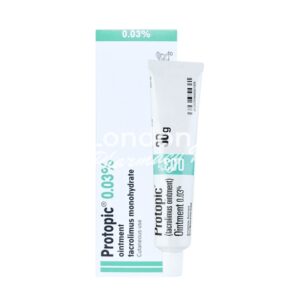
Protopic
In brief
- In some online and local pharmacies it may be possible to buy protopic without a prescription or receipt, but tacrolimus ointment is classified as prescription‑only (Rx) in most countries (USA, EU, etc.) and should normally be obtained under medical supervision.
- Protopic (tacrolimus) is used to treat moderate‑to‑severe atopic dermatitis (eczema); it is a topical calcineurin inhibitor that reduces T‑cell activation and inflammatory cytokine release in the skin.
- Usual dosage: apply a thin layer to affected areas twice daily until clear; children 2–15 years use 0.03% ointment, adults and adolescents ≥16 years may use 0.03% or 0.1% ointment; maintenance regimens may be once or twice weekly to prevent flares.
- Form of administration: topical ointment (apply directly to skin); do not apply to mucous membranes, open wounds or under occlusive dressings.
- Onset time: some patients notice symptom relief within a few days, with clearer improvement typically seen within 1–3 weeks of regular application.
- Duration of action: effects persist while treatment continues; maintenance once or twice weekly can reduce recurrences—long‑term use has been studied for selected patients for up to several years under supervision.
- Alcohol warning: avoid applying alcohol‑based products to treated skin and be aware some patients report flushing or sensitivity if alcohol is consumed after application.
- The most common side effect is transient local burning or stinging at the application site; other common effects include itching, erythema and occasional local infections (eg. herpes simplex).
- Would you like to try protopic without a prescription?
Basic Protopic Information
- INN (International Nonproprietary Name): Tacrolimus
- Brand Names Available In United Kingdom: Protopic; Tacrolimus Sandoz (generic options may be used)
- ATC Code: D11AH01 — Tacrolimus (Topical Calcineurin Inhibitors)
- Forms & Dosages: Ointment 0.03% (children ≥2 years and adults) and ointment 0.1% (adults and adolescents ≥16 years); commonly supplied in tubes (e.g., 30g, 60g)
- Manufacturers In United Kingdom: Astellas Pharma (original Protopic); generic supplies in the EU/UK market include Sandoz and other manufacturers
- Registration Status In United Kingdom: Prescription-only medicine indicated for moderate-to-severe atopic dermatitis from age 2; regulated by national agencies following EMA guidance
- OTC / Rx Classification: Prescription only (Rx) in the UK and most markets
Initial Instructions, Warnings And Daily-Life Integration For UK Patients
Read the Patient Information Leaflet that comes with the pack before you start treatment.
Keep Protopic (tacrolimus ointment) as a prescription-only medicine in the UK and follow your prescriber’s directions.
The two licensed strengths are tacrolimus ointment 0.03% and 0.1% and they are indicated for atopic dermatitis in adults and children from age 2 where appropriate.
Apply a thin layer twice daily to flares and consider once or twice weekly use for maintenance as advised by your clinician.
Do not apply Protopic to open wounds, mucous membranes or infected skin.
Avoid use if you are immunocompromised or taking systemic immunosuppressants unless a specialist advises otherwise.
Stop treatment and seek medical advice if you develop severe irritation, spreading infection or any signs of systemic reaction.
Report any suspected adverse reactions to the MHRA Yellow Card scheme.
Use Protopic as a steroid-sparing option for sensitive sites such as the face and eyelids where corticosteroid atrophy is a concern.
After gentle cleansing and patting the skin dry, apply a thin layer of ointment to the affected area.
Allow any routine moisturiser to be used on other parts of skin and reapply emollients as advised between tacrolimus applications.
Minimise UV exposure after application and wear sunscreen on exposed areas.
Store the tube below 25°C, keep it tightly closed and protect it from light.
Quick Application Checklist:
- Wash and pat skin dry before application.
- Apply a thin layer to affected areas only.
- Use twice daily during flares; stop when clear.
- Follow maintenance dosing if prescribed (once/twice weekly).
- Avoid occlusive dressings and do not use on broken skin.
Red Flags Checklist — seek urgent advice if any apply:
- Severe burning, worsening redness or spreading rash.
- Signs of skin infection such as increasing pain, pus, fever or crusting.
- New systemic symptoms such as severe flushing or dizziness.
- Marked and persistent worsening after starting treatment.
Everyday Use & Best Practices
Morning Vs Evening Dosing
Protopic is typically used twice daily during flares with a thin layer applied to affected areas in the morning and evening.
Most patients see symptoms clear within one to three weeks when used as directed.
Evening application can be preferable if transient burning or stinging occurs, as these sensations often settle overnight.
If you are switching from a topical steroid, follow the taper plan set out by your clinician before starting tacrolimus on areas that have regained skin integrity.
Avoid occlusive dressings unless specifically directed by a healthcare professional.
Step-by-step Application Checklist:
- Cleanse the area gently and pat dry.
- Squeeze a small, pea-sized amount and spread a thin layer over the lesion.
- Wash hands after applying unless treating the hands.
- Do not cover with dressings unless instructed by a clinician.
Do:
- Use as prescribed and report problems to your pharmacist or GP.
- Use long-term maintenance once or twice weekly if recommended.
Don’t:
- Apply to open wounds or mucous membranes.
- Double-dose if you miss an application.
Taking With Or Without Meals (UK Diet Habits)
Topical tacrolimus has minimal systemic absorption and there are no meal-related dosing requirements.
You can continue normal UK dietary patterns such as breakfast tea or a sandwich without worrying about dose timing.
Some people report facial flushing after drinking alcohol soon after application.
If you notice flushing sensitivity, avoid alcohol on the same day as a precaution.
Safety Priorities
Who Should Avoid It (MHRA Warnings)
Avoid Protopic if you have known hypersensitivity to tacrolimus or any ointment excipients such as mineral oil or paraffin.
Do not use if you are immunocompromised, for example post-transplant patients, people with uncontrolled HIV infection or those on systemic immunosuppressants unless under specialist supervision.
Do not apply to areas with active skin infection, including herpes simplex, varicella or bacterial infections.
Regulatory cautions note a theoretical malignancy concern, so clinicians use caution in patients with a personal or family history of skin cancer or premalignant lesions.
Always tell your prescriber about current immunosuppressive therapies and any history of skin malignancy.
Activities To Limit (Driving, Work Safety)
Topical use of tacrolimus does not impair ability to drive or operate machinery under normal circumstances.
If you experience severe local irritation or systemic symptoms such as marked dizziness or flushing, do not drive and seek medical help.
Minimise sun and UV exposure after application and cover treated sites or apply sunscreen to exposed areas.
Red-Flags Checklist And Contraindications:
- Known allergy to tacrolimus or ointment excipients.
- Immunocompromised status or concurrent systemic immunosuppression.
- Active viral, bacterial or fungal skin infection.
- History of skin cancer or premalignant skin conditions — discuss with your clinician.
Dosage & Adjustments
General Regimen (NHS Guidance)
Apply a thin layer of tacrolimus ointment to affected areas twice daily for flares until the lesions clear.
Adults can use either 0.03% or 0.1% strength depending on the prescriber’s choice and patient age.
Children aged 2–15 years should use 0.03% ointment only.
When lesions have cleared, some guidance supports maintenance dosing once or twice weekly to previous lesion sites to reduce recurrences.
No routine dosage adjustment is required for renal or hepatic impairment because systemic exposure is minimal, but seek prescriber advice for very thin or compromised skin.
Special Cases (Elderly, Comorbidities)
Elderly patients generally use the same dosing regimen as adults but should be monitored for increased skin sensitivity.
Children under 2 years are not approved for topical tacrolimus and should not receive Protopic.
Patients on systemic immunosuppressants or with widespread broken skin may require alternative treatments or specialist monitoring.
When large body surface areas are treated long term, clinicians may schedule regular reviews to check for infections and tolerability.
Dosing Decision Checklist:
- Confirm age-appropriate strength before dispensing.
- Check for widespread broken skin or active infection.
- Discuss maintenance plans and review frequency with prescriber.
User Testimonials
Positive Reports From UK Patients
Many UK patients say Protopic helps control eczema on the face and skin folds without the thinning associated with long-term corticosteroid use.
Users commonly report itch relief within one to three weeks of starting treatment.
Maintenance once or twice weekly is frequently cited on forums as useful to prevent relapses.
Patients often mention that pharmacist advice from familiar chains supports correct application and improves adherence.
Common Challenges (Patient.info, NHS Forums)
Transient burning or stinging at the application site is a commonly reported downside and usually settles over time.
Some patients note increased redness early in treatment or feel the ointment is greasy compared with creams.
Concerns about the labelled theoretical risk of malignancy appear in online discussions despite limited evidence for systemic cancer risk with topical use.
Access can sometimes be a barrier if GPs prefer a steroid-first approach and refer to dermatology only where necessary.
Patient Experience Checklist For GP Appointments:
- List sites affected and previous treatments tried.
- Note any side effects experienced with past topical medicines.
- Ask about maintenance plans and monitoring intervals.
Buying Guide
Pharmacy Sources (Boots, LloydsPharmacy, Superdrug)
Protopic and generic tacrolimus ointments are prescription-only and can be dispensed at major UK chains and independent pharmacies with an NHS or private prescription.
Registered online pharmacies may dispense against a valid prescription.
Generic options such as Tacrolimus Sandoz may be dispensed depending on local supply and formulary decisions.
Pharmacists are a reliable source of practical advice about application technique and storage.
Note: In our online pharmacy, Protopic is available without a prescription, with discreet delivery to United Kingdom in 5-14 days.
Price Comparison (NHS Prescription Charge Vs Private)
On the NHS, prescriptions are subject to national rules and charges in England apply per dispensed item unless you qualify for exemptions.
Prescriptions are free in Scotland, Wales and Northern Ireland.
If paying privately, prices vary between high-street chains and online sellers and generics are generally less expensive.
Cost Checklist:
- Check whether the prescriber will issue an NHS prescription.
- Ask the pharmacist about generic brands if price is a concern.
- Compare private costs between reputable suppliers if paying privately.
What’s Inside & How It Works
Ingredients Overview
The active ingredient is tacrolimus (INN).
Licensed strengths are ointment 0.03% and ointment 0.1% as described in licensed information.
Common excipients in ointment formulations include mineral oil and paraffin, so check the leaflet if you have sensitivities.
Branded and generic suppliers include Astellas (Protopic), Sandoz and other manufacturers depending on market availability.
Mechanism Basics Explained Simply
Tacrolimus is a topical calcineurin inhibitor that reduces inflammatory T-cell activity in the skin.
It decreases itch and inflammation without the steroid pathway that causes skin thinning.
Because it is steroid-free, tacrolimus is a useful option for sensitive sites such as the face and eyelids.
Systemic absorption in usual use is minimal, which is why food timing is irrelevant and dosage is topical.
Main Indications
Approved Uses (MHRA Listing)
Protopic (tacrolimus ointment) is indicated for moderate-to-severe atopic dermatitis.
Adults may use either 0.03% or 0.1% ointment according to prescriber decision.
Children aged 2–15 years may use 0.03% ointment only.
It is typically used when standard therapies, including topical corticosteroids, are inadequate or unsuitable for sensitive areas.
Standard approach is twice daily until clear and consider maintenance once or twice weekly as advised.
Off-Label Uses In UK Clinics
Specialists sometimes prescribe topical tacrolimus off-label for other localised inflammatory dermatoses such as seborrhoeic dermatitis in sensitive sites or selected lichen planus cases.
Off-label use depends on specialist judgement and local formulary policies and should be discussed with your dermatologist or GP.
Interaction Warnings
Food Interactions (Alcohol, Tea/Coffee)
Topical tacrolimus has minimal systemic absorption and routine food interactions are not expected.
Some people experience facial flushing linked to alcohol consumption soon after application.
Normal UK meals and caffeinated drinks do not require dosing changes.
If you notice flushing after alcohol, avoid alcohol on days you have applied the ointment.
Drug Conflicts (MHRA Yellow Card Reports)
Systemic drug interactions are not typically relevant for topical tacrolimus.
Avoid combining topical tacrolimus with systemic immunosuppressants without specialist oversight.
Do not use tacrolimus ointment with occlusive dressings or apply potent topical corticosteroids to the same site unless directed by your clinician.
Report any suspected interactions or unusual adverse effects to the MHRA Yellow Card scheme.
Medicines/Conditions To Mention At Your GP Visit:
- Current systemic immunosuppressants or chemotherapy.
- History of recurrent viral skin infections or skin cancer.
- Significant liver or kidney disease although topical dosing is usually unchanged.
Latest Evidence & Insights
Key UK & EU Studies 2022–2025
Recent UK and EU literature continues to support that topical tacrolimus is effective in controlling moderate-to-severe atopic dermatitis and supports steroid-sparing strategies.
Selected long-term studies show maintenance regimens used safely for up to several years in monitored patients.
Regulatory reviews keep advising caution in immunocompromised patients but have not established a clear causal link between topical tacrolimus and systemic malignancy in normal use.
Practical Takeaways For Patients
Tacrolimus is a valuable option for sensitive areas and for patients who wish to avoid steroid side effects such as skin thinning.
Expect clinical benefit within a few weeks and expect possible transient local irritation when you start.
Discuss absolute versus relative risk regarding labelled theoretical cancer concerns with your clinician and balance this against eczema control.
Evidence Points Summary:
- Effective for moderate-to-severe atopic dermatitis.
- Useful as a steroid-sparing treatment for facial and flexural eczema.
- Long-term monitored use has acceptable safety in selected studies.
Alternative Choices
NHS Prescribing Alternatives
Common NHS alternatives include topical corticosteroids of varying potency and pimecrolimus cream (Elidel) as another calcineurin inhibitor option.
Crisaborole is a non-steroidal PDE4 inhibitor used in some settings for mild-to-moderate eczema where available.
GPs usually follow a stepwise approach starting with emollients, then topical steroids, and escalate to steroid-sparing agents or specialist referral if needed.
Pros/Cons Checklist
- Topical Corticosteroids — Pros: quick and potent relief. Cons: risk of skin thinning with prolonged use.
- Pimecrolimus (Elidel) — Pros: steroid-free and less greasy. Cons: may be less effective for severe flares.
- Tacrolimus (Protopic) — Pros: effective on sensitive sites and steroid-sparing. Cons: transient stinging and labelled cautions in certain patients.
Decision Aid For GP Discussion:
- Describe the sites affected and previous steroid exposure.
- Ask about maintenance strategies and monitoring for infections.
- Consider specialist referral for widespread or refractory disease.
Regulation Snapshot
MHRA Approval & NHS Prescribing Framework
Tacrolimus ointment is a prescription-only medicine in the UK and is regulated in line with EMA evidence summaries.
Indications include moderate-to-severe atopic dermatitis from age two, with supplied strengths reflecting age limits.
Local NHS formularies may position tacrolimus as second-line after topical steroids or require dermatology approval for certain strengths or durations.
Product literature and the summary of product characteristics (SPC) give details on storage below 25°C, shelf life and contraindications.
Practical Steps For Patients
Ask your GP whether the formulary prefers a brand or generic preparation.
Request pharmacist counselling at dispensing on strength and application technique.
Keep follow-up appointments to review efficacy and side effects.
If you experience serious adverse effects, submit an MHRA Yellow Card report and keep prescription documentation while travelling.
Paperwork Checklist For GP/Chemist Visits:
- Bring a list of current medicines and any previous dermatology letters.
- Note sites treated, duration of symptoms and responses to past treatments.
- Ask the pharmacist for the patient leaflet and storage advice.
FAQ
Common UK Patient Questions
Q: Can I get Protopic on the NHS?
A: Yes if clinically indicated; GPs may try steroid-first strategies and may refer to dermatology for second-line prescribing.
Q: Is Protopic safe for the face and eyelids?
A: Yes; it is often chosen for sensitive sites because it avoids steroid atrophy—apply thinly and follow prescriber advice.
Q: What if I get burning on application?
A: Mild transient stinging is common and often subsides; if it is severe or persistent, stop and contact your pharmacist or GP.
Q: Can I use Protopic in pregnancy or breastfeeding?
A: Use only if the benefits outweigh the risks; discuss with your prescriber as topical use is generally avoided unless necessary.
Guidelines For Proper Use
UK Pharmacist Counselling Style
Pharmacists will confirm the diagnosis and the prescribed strength before counselling on application technique.
Counselling points include applying a thin layer twice daily for flares, age-appropriate strength, storage below 25°C and common local side effects.
Pharmacists should advise against occlusive dressings and not applying to broken skin.
Ask the pharmacist for a demonstration or the patient leaflet if you are unsure about application.
NHS Patient Support Advice
Keep a treatment diary noting sites treated, response and any side effects.
Book GP follow-up if symptoms persist, spread or suggest infection.
Use NHS resources and local patient groups for emotional and practical support and request specialist referral if quality of life is affected.
Report suspected adverse effects via the MHRA Yellow Card and retain prescription records for travel.
Support Checklist:
- Start a treatment diary and bring it to follow-ups.
- Ask the pharmacist about managing early stinging sensations.
- Report infections or systemic symptoms promptly.
Delivery Across United Kingdom
| City | Region | Delivery time |
|---|---|---|
| London | Greater London | 5-7 days |
| Birmingham | West Midlands | 5-7 days |
| Manchester | Greater Manchester | 5-7 days |
| Glasgow | Scotland | 5-7 days |
| Leeds | West Yorkshire | 5-7 days |
| Edinburgh | Scotland | 5-7 days |
| Bristol | South West England | 5-7 days |
| Liverpool | Merseyside | 5-7 days |
| Sheffield | South Yorkshire | 5-7 days |
| Nottingham | East Midlands | 5-9 days |
| Newcastle Upon Tyne | North East England | 5-9 days |
| Belfast | Northern Ireland | 5-9 days |
| Cardiff | Wales | 5-9 days |
| Coventry | West Midlands | 5-9 days |
| Leicester | Leicestershire | 5-9 days |