Misoprostol
In brief
- Misoprostol is a prescription-only medicine (POM) in the UK and is supplied on prescription.
- Misoprostol is a synthetic prostaglandin E1 analogue used for gastric ulcer prevention in NSAID users, medical abortion (usually with mifepristone), miscarriage management, labour induction and prevention/treatment of postpartum haemorrhage; it acts by reducing gastric acid secretion and by stimulating uterine contractions and cervical ripening.
- Usual dosages vary by indication: gastric protection 200 mcg 2–4 times daily; medical abortion 800 mcg (4×200 mcg) buccal/vaginal/sublingual after mifepristone 200 mg; miscarriage management 800 mcg vaginally (may repeat after 3–12 h); labour induction 25 mcg vaginally every 4–6 h (off‑label); postpartum haemorrhage 600–800 mcg oral single dose.
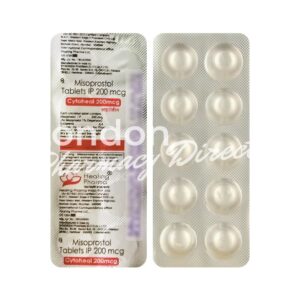
- Forms of administration include oral tablets (200 mcg), and routes such as oral, buccal, sublingual or vaginal; there are also combination tablets (e.g. with diclofenac) for gastric protection.
- Onset time depends on route: sublingual ~15–30 minutes, oral and vaginal ~30–60 minutes for systemic/clinical effects; uterine activity may begin within this time window.
- Duration of action: the active metabolite has a short plasma half‑life, but clinical effects typically last several hours (commonly 2–6 hours for uterine activity; acid suppression requires repeated dosing for ongoing effect).
- Avoid excessive alcohol while taking misoprostol — alcohol can worsen gastrointestinal side effects and may increase the risk of vomiting, dizziness and dehydration; avoid alcohol entirely if using in pregnancy‑related protocols.
- The most common side effect is diarrhoea; other frequent effects include abdominal pain/cramps, nausea, vomiting, flatulence, headache and uterine bleeding/cramping when used for obstetric or gynaecological indications.
- Would you like to try misoprostol without a prescription?
Basic Misoprostol information
- INN (international nonproprietary name): Misoprostol
- Brand names available in the United Kingdom: Cytotec and generic misoprostol tablets; Arthrotec (combination with diclofenac)
- ATC code: G02AD06
- Forms and dosages: Tablets 200 mcg; combination tablets with diclofenac (Arthrotec)
- Manufacturers in the United Kingdom: Pfizer (Cytotec) and generic manufacturers
- Registration status in the United Kingdom: Prescription-only medicine (POM)
- OTC / Rx classification: Prescription-only medicine (POM)
Important instructions and safety-first notes for UK patients (do read before the sections)
- Misoprostol is a prescription-only medicine (POM) in the UK and regulated by the MHRA; do not obtain it from unverified sellers.
- Use only as prescribed by an NHS clinician or private prescriber.
- If prescribed for gastric protection, avoid use in pregnancy unless part of a supervised abortion protocol.
- For abortion or miscarriage care, follow clinic instructions exactly — timing and route matter (vaginal, buccal, sublingual).
- Store tablets below 25°C in the original blister or bottle; keep dry and out of reach of children.
- If you experience severe diarrhoea, fainting, heavy vaginal bleeding, signs of hypersensitivity or suspected ectopic pregnancy, seek urgent help (NHS 111 or emergency department).
- Report adverse events via the MHRA Yellow Card scheme.
- Daily-life integration: plan dosing around mealtimes to reduce nausea; avoid alcohol the day you take misoprostol for reproductive care because it can worsen bleeding and nausea.
- Pharmacists are widely trusted — ask them for counselling.
- Keep this checklist with your medication for quick reference.
Everyday use and best practices
Morning vs evening dosing
Which time of day you take misoprostol depends on why it was prescribed.
For gastric ulcer prevention, multiple daily doses are usual and an evening dose at bedtime reduces gastric irritation overnight.
For reproductive single-use regimens, timing follows the clinic protocol and is often planned to allow recovery the same day.
When a night-time dose is included, expect more pronounced gut side effects initially and arrange rest.
Taking with or without meals (UK diet habits)
Taking misoprostol with main meals reduces nausea and abdominal discomfort for most people.
Typical UK meal patterns — breakfast, lunch, evening meal — suit a 200 mcg two-to-four-times daily schedule for gastric protection.
For single reproductive doses, food has less effect on uterine action but reduces nausea; choose a calm, familiar setting.
Always check tablet strength (200 mcg) and expiry before use.
- Quick reference by indication:
- Gastric protection: 200 mcg two–four times daily with food; include a bedtime dose if prescribed.
- Medical abortion: 800 mcg (4×200 mcg) buccal, vaginal or sublingual after mifepristone 200 mg per clinic timing.
- Miscarriage management: 800 mcg vaginally; may repeat after 3–12 hours if advised.
- Postpartum haemorrhage (PPH): single 600–800 mcg oral dose in emergency protocols (off-label).
Safety priorities
Who should avoid it (MHRA warnings)
Absolute contraindications include known hypersensitivity to misoprostol or prostaglandins.
Misoprostol is contraindicated in pregnancy when used for gastric ulcer prevention; it is only used intentionally in supervised abortion or miscarriage protocols.
Suspected ectopic pregnancy must be ruled out before use for abortion or miscarriage management.
Relative cautions include inflammatory bowel disease, severe cardiovascular disease, asthma, poorly controlled hypertension and prior uterine surgery.
Activities to limit (driving, work safety)
Misoprostol can cause dizziness, severe diarrhoea and fainting; avoid driving or operating heavy machinery during treatment and for 24 hours after significant symptoms.
If you work in manual jobs or at heights, plan recovery time after reproductive doses; consider a day off for medical abortion recovery.
Pharmacists should provide a written checklist of warning signs and when to seek urgent care.
- Contraindications vs cautions:
- Contraindications: hypersensitivity; pregnancy for gastric protection; suspected ectopic pregnancy in abortion care.
- Cautions: IBD/chronic diarrhoea; severe cardiovascular disease; multiple caesarean sections when inducing labour.
Dosage and adjustments
General regimen (NHS guidance)
Follow the exact regimen prescribed by your clinician.
For gastric protection the product data recommends 200 mcg two–four times daily with food and at bedtime where applicable.
Medical abortion commonly uses 800 mcg misoprostol (four 200 mcg tablets) by buccal, vaginal or sublingual route after mifepristone 200 mg according to clinic timing.
PPH protocols use a single 600–800 mcg oral dose; miscarriage management often uses 800 mcg vaginally with possible repeat after 3–12 hours.
Special cases (elderly, comorbidities)
No routine dose reductions are specified for the elderly, but gastrointestinal side effects are more likely.
Renal impairment usually requires caution rather than formal adjustment; severe impairment needs specialist advice.
Hepatic impairment requires caution as metabolic clearance may be reduced.
Children and neonates are managed only under specialist protocols.
- Missed dose advice:
- Ulcer prophylaxis: take as soon as remembered unless close to the next dose, then skip.
- Abortion/labour protocols: consult your clinic; do not double a missed dose.
Legal status in the UK
Misoprostol is a prescription-only medicine (POM) in the UK.
What’s inside and how it works
Ingredients overview
Misoprostol tablets contain the active ingredient misoprostol, a prostaglandin E1 analogue.
The standard strength is 200 mcg tablets.
Some combination products pair misoprostol with diclofenac for NSAID gastric protection.
Mechanism basics explained simply
For gastric protection misoprostol increases mucus and bicarbonate secretion while reducing stomach acid, helping prevent NSAID-induced ulcers.
In reproductive care misoprostol stimulates uterine contractions and softens the cervix, which helps in medical abortion, miscarriage management and treating postpartum haemorrhage.
Route matters: vaginal or buccal routes often give higher local uterine concentrations; oral administration produces rapid systemic effects.
- Common side effects stem from prostaglandin action on the gut and uterus, explaining diarrhoea, cramping and nausea.
Main indications
Approved uses (MHRA listing)
Misoprostol is licensed in the UK for gastric and duodenal ulcers, including prevention of NSAID-associated ulcers; obstetric uses such as medical abortion, miscarriage management, labour induction and postpartum haemorrhage are off-label.
Typical regimens include 200 mcg two–four times daily for gastric protection and, in clinic protocols, 800 mcg misoprostol following mifepristone for medical abortion.
Off-label uses in UK clinics
Off-label but common uses include medical abortion (with mifepristone), postpartum haemorrhage, miscarriage management with vaginal 800 mcg doses that may be repeated, and labour induction using low-dose vaginal regimens (often 25 mcg) under specialist supervision.
Off-label uses require consultant-led protocols because of variable risks such as uterine rupture in scarred uteri.
- Indication → dose → route → supervision:
- Gastric protection → 200 mcg 2–4×/day → oral → primary care supervision.
- Medical abortion → 800 mcg → buccal/vaginal/sublingual → clinic protocol.
- PPH → 600–800 mcg single dose → oral → emergency/obstetric setting.
Interaction warnings
Food interactions (alcohol, tea/coffee)
Taking misoprostol with meals reduces nausea and is recommended for gastric protection.
Avoid alcohol around reproductive doses as it can worsen bleeding and nausea; limit strong tea or coffee on dosing days if you notice increased stomach irritation.
Drug conflicts
Misoprostol can be co-formulated with diclofenac, so check combination product labels to avoid duplicate NSAID dosing.
Concurrent use with other uterotonics such as oxytocin or carboprost must be managed in hospital settings.
Tell prescribers about asthma, cardiovascular medications, anticoagulants and any previous uterine surgery.
Report suspected adverse reactions via the MHRA Yellow Card scheme.
Alternative choices
NHS prescribing alternatives
Alternatives depend on the indication.
For gastric protection consider PPIs such as omeprazole or lansoprazole which tend to cause less diarrhoea than misoprostol.
For uterotonic purposes injectable oxytocin is first-line for PPH where available; dinoprostone or carboprost may be used in specific settings.
- Pros and cons:
- Efficacy: misoprostol effective for both gastric protection and uterotonic uses; PPIs more tolerable for many patients with fewer gut side effects.
- Route: oral misoprostol is practical; injectables require hospital access.
- Side effects: misoprostol causes diarrhoea/cramping; alternatives have different profiles.
- Accessibility: check NHS formularies and local availability.
When to talk to your clinician about switching
Discuss switching if side effects are intolerable, if contraindications arise, or if a more appropriate alternative exists for your clinical situation.
Shared decision-making should consider efficacy, monitoring needs and route of administration.
Regulation snapshot
MHRA approval and NHS prescribing framework
Misoprostol is a prescription-only medicine (POM) in the UK and is on the WHO Model List of Essential Medicines for PPH and abortion care.
Local NHS formularies define how it is used within trusts and clinics, particularly for obstetric protocols.
Prescriptions are issued by GPs, sexual and reproductive health clinics, or hospital teams.
Practical regulatory notes for patients
Expect pharmacist counselling at the point of supply; ask for written information and a leaflet if one is not offered.
Report suspected adverse reactions via the MHRA Yellow Card and raise confidentiality concerns with your prescriber or pharmacist.
Frequently asked questions
Is misoprostol available without a prescription?
No. In the UK misoprostol is a prescription-only medicine, available only with a valid prescription from an NHS or private prescriber.
Avoid unverified sellers offering medicine without a prescription.
What are the most common side effects patients report?
Common side effects include diarrhoea, abdominal cramps, nausea and headache.
Reproductive doses commonly cause heavy vaginal bleeding and strong uterine cramping as expected effects.
Seek urgent help for very heavy bleeding, fainting or signs of infection.
- Q: Is misoprostol safe in pregnancy? A: It is used intentionally in supervised medical abortion and miscarriage protocols; it is contraindicated for gastric protection in pregnancy.
Guidelines for proper use
UK pharmacist counselling style
Pharmacist counselling should confirm indication, explain exact dose, route and timing, and discuss side effects such as diarrhoea and cramping.
Advise on activity limits, provide a written dosing sheet, and outline warning signs that require urgent care.
For reproductive care counsel on expected bleeding patterns, suitable pain relief options, and contraception afterward if relevant.
NHS patient support advice
Provide a contingency plan naming who to call: clinic, GP, NHS 111 or emergency department.
Storage advice: keep tablets below 25°C in the original packaging and avoid humidity.
Encourage Yellow Card reporting and offer a printable checklist covering before dose, during dose, after dose, and when to seek help.
Delivery across the United Kingdom
| City | Region | Delivery Time |
|---|---|---|
| London | England | 9–21 days |
| Birmingham | England | 9–21 days |
| Manchester | England | 9–21 days |
| Glasgow | Scotland | 9–21 days |
| Leeds | England | 9–21 days |
| Liverpool | England | 9–21 days |
| Bristol | England | 9–21 days |
| Edinburgh | Scotland | 9–21 days |
| Sheffield | England | 9–21 days |
| Newcastle Upon Tyne | England | 9–21 days |
| Belfast | Northern Ireland | 9–21 days |
| Cardiff | Wales | 9–21 days |
| Coventry | England | 9–21 days |
Final notes and practical reminders
Misoprostol is a prescription-only medicine (POM) in the UK and should only be used under clinical advice and supervision.
Our online pharmacy can supply misoprostol to UK patients with a valid prescription, with discreet delivery across the United Kingdom in 9–21 days.
Always store tablets below 25°C in their original packaging and keep them away from children.
If you see signs of severe adverse reactions such as fainting, severe diarrhoea, or suspected ectopic pregnancy, seek immediate medical help.
Report any suspected side effects via the MHRA Yellow Card scheme and ask your pharmacist for written instructions to keep with your medication.