Duphaston
In brief
- In our pharmacy, you can buy Duphaston without a prescription, with delivery in 9–21 days throughout the United Kingdom. Discreet and anonymous packaging.
- Duphaston (dydrogesterone) is used for secondary amenorrhoea, luteal phase deficiency and infertility support, dysfunctional uterine bleeding, threatened and habitual abortion, endometriosis, dysmenorrhoea and as part of HRT; it is a synthetic progestogen that binds progesterone receptors to stabilise the endometrium and support the luteal phase, with minimal androgenic, oestrogenic or glucocorticoid effects.
- Usual adult doses vary by indication: secondary amenorrhoea 10 mg twice daily (often days 11–25), luteal support 10 mg daily (commonly days 14–25), dysfunctional bleeding 10 mg twice daily for 5–7 days, threatened abortion initial 40 mg then 10 mg every 8 hours, habitual abortion 10 mg daily (often continued until ~20 weeks), endometriosis 10–20 mg daily, dysmenorrhoea/PMS 10 mg twice daily.
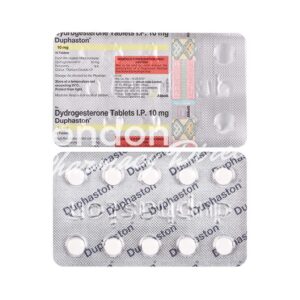
- Form of administration: oral tablet, typically 10 mg tablets in blister packs.
- Onset time: pharmacological effects begin within a few hours after oral dosing; clinical improvements in bleeding patterns or luteal support are usually seen within several days.
- Duration of action: dosing is commonly once or twice daily with therapeutic effect maintained while treatment continues; clinical effects are sustained with daily dosing (practical dosing interval ~24 hours for once-daily regimens).
- Alcohol warning: avoid excessive alcohol while taking Duphaston as alcohol can worsen side effects (dizziness, fatigue) and liver disease is a contraindication — use with caution in patients with hepatic impairment.
- The most common side effect is headache (other frequent effects include breast tenderness, nausea, abdominal discomfort and menstrual irregularities such as spotting or breakthrough bleeding).
- Would you like to try Duphaston without a prescription?
Basic Duphaston information
- INN (international nonproprietary name): Dydrogesterone.
- Brand names available in the United Kingdom: Duphaston is not marketed in the United Kingdom and was withdrawn in 2008.
- ATC code: G03DB01.
- Forms and dosages: Oral tablets only; typical strength 10 mg in blisters of 20 tablets.
- Registration status in the United Kingdom: Withdrawn from the UK market in 2008; no current UK marketing authorisation.
- OTC / Rx classification: Not licensed in the UK; prescription-only where authorised.
Everyday use and best practices
Morning vs evening dosing
Worried about when to take your tablet?
Dydrogesterone tablets are usually taken once or twice daily depending on the condition being treated.
If prescribed 10 mg once daily, choose either morning or evening and stick to that time each day.
For a 10 mg twice-daily regimen, aim for roughly 12 hours between doses unless your clinician advises otherwise.
Morning dosing suits people who already take vitamins, thyroid medication or other morning treatments.
Evening dosing may help reduce daytime nausea for those who notice stomach upset after a dose.
Taking with or without meals (UK diet habits)
Do I need to take Duphaston with food?
Taking dydrogesterone with food is optional, but many patients find taking the tablet after breakfast helps reduce mild stomach upset.
Typical UK breakfasts such as porridge, toast or a full English provide a comfortable routine to pair with medication.
Those with sensitive stomachs may prefer a small snack first, for example a banana or a slice of toast.
If you miss a dose, take it as soon as you remember unless it is almost time for your next scheduled dose.
Do not double up on doses to make up for a missed one.
Practical tips:
- Dosing tips: Keep tablets in their blister until use and choose a consistent time each day.
- Missed-dose steps: Take when remembered unless within two hours of the next dose; do not double up.
- Daily reminders: Set a phone alarm or use a pill organiser to build a habit.
- Storage: Store below 30°C and keep away from moisture and heat.
Safety priorities
Who should avoid it (MHRA warnings)
Is Duphaston safe for everyone?
Dydrogesterone is prescription-only and the Duphaston brand has not been marketed in the UK since 2008.
Absolute contraindications include known allergy to dydrogesterone, progestogen-dependent tumours, active or severe liver disease and unexplained vaginal bleeding.
Relative cautions include a history of depression, thromboembolic disorders, uncontrolled hypertension, renal impairment and diabetes.
Discuss personal and family clotting history, mood changes and signs of liver problems with your prescriber before starting treatment.
Activities to limit (driving, work safety)
Will Duphaston affect my driving or job?
Most people can drive and work normally while taking dydrogesterone.
If you experience dizziness, severe headaches or marked mood changes, avoid driving or operating heavy machinery until symptoms settle.
Stop the medicine and seek urgent medical care for signs of a clot (sudden breathlessness, chest pain, unilateral limb swelling) or severe liver symptoms (jaundice, persistent abdominal pain).
Keep a checklist to hand:
- Contraindications: Allergy, progestogen-dependent tumours, severe liver disease, undiagnosed vaginal bleeding.
- Red-flag symptoms: New severe headache, visual disturbance, sudden leg swelling, breathlessness, jaundice.
- When to stop: On advice from your clinician or immediately if a red-flag symptom appears.
- Reporting: Report suspected adverse reactions via the MHRA Yellow Card scheme.
Dosage and adjustments
General regimen (NHS guidance)
How is dydrogesterone usually dosed?
The standard tablet strength is 10 mg and regimens vary by indication.
Common regimens include 10 mg twice daily for secondary amenorrhoea, typically given on cycle days 11–25.
For luteal support in infertility, 10 mg once daily is commonly used on days 14–25 or continued as directed.
For threatened abortion some protocols use a higher initial dosing followed by maintenance, for example an initial 40 mg then 10 mg every eight hours, followed by continued dosing as advised.
Always follow the dose and schedule prescribed by your GP or fertility clinic rather than internet suggestions.
Special cases (elderly, comorbidities)
Do doses change for older patients or those with other conditions?
Elderly patients rarely require dydrogesterone, but if used apply standard progestogen precautions and monitor coexisting conditions.
No routine dose adjustment is required for renal impairment, but use with caution.
Avoid in severe hepatic impairment owing to hepatic metabolism.
Missed-dose guidance: take as soon as remembered unless it is nearly time for the next dose; do not double up.
Overdose is generally low in toxicity and managed with symptomatic support; seek medical advice if a significant overdose is suspected.
Common indication dosing table:
| Indication | Typical dose | Usual regimen |
|---|---|---|
| Secondary amenorrhoea | 10 mg twice daily | Cycle days 11–25 or as directed |
| Luteal support | 10 mg once daily | Days 14–25 or continuous |
| Threatened abortion | Initial high dose then maintenance | Initial 40 mg then 10 mg q8h, continue as needed |
Legal status and availability in the UK
Duphaston has no current marketing authorisation in the UK; dydrogesterone is a prescription-only medicine.
In our online pharmacy, Duphaston is available without a prescription, with discreet delivery to the United Kingdom in 9–21 days.
What’s inside and how it works
Ingredients overview
What is Duphaston made of?
The active substance is dydrogesterone, an oral synthetic progestogen supplied as 10 mg tablets in blisters of 20.
Inactive ingredients vary by manufacturer and are listed on the patient information leaflet; check the pack insert if you have known excipient allergies.
Mechanism basics explained simply
How does dydrogesterone act in the body?
Dydrogesterone mimics the action of natural progesterone on the uterus and endometrium without significant androgenic, oestrogenic or glucocorticoid activity.
It acts at progesterone receptors to stabilise the endometrium and support the luteal phase, which is why it is commonly used in infertility protocols and for certain bleeding disorders.
It generally does not suppress ovulation at standard dosages.
- Receptor action: binds progesterone receptors in the uterus.
- Endometrial stabilisation: reduces abnormal bleeding and supports implantation.
- Clinical effect: improved luteal function and symptomatic relief in some gynaecological conditions.
Main indications
Uses
What is dydrogesterone prescribed for?
Dydrogesterone (where authorised) is indicated for conditions such as secondary amenorrhoea, luteal insufficiency, dysfunctional uterine bleeding, threatened and habitual abortion, endometriosis, dysmenorrhoea/PMS and for use in HRT with oestrogen.
Dosing and duration depend on the indication; for example habitual abortion protocols continue at least to week 20 of gestation where used.
Off-label uses in UK clinics
Is it used in UK fertility clinics?
Although Duphaston brand is not marketed in the UK, some fertility and obstetric clinics may arrange imported dydrogesterone for luteal support or recurrent miscarriage protocols under specialist governance.
These decisions are made in clinic protocols and are documented in patient records when an unlicensed import is used.
- Indication: Luteal support, recurrent miscarriage prevention, secondary amenorrhoea.
- Typical regimen: See dosage table for condition-specific dosing.
- Duration: Varies by condition — from single cycles to continuation through 20 weeks for habitual abortion protocols.
Interaction warnings
Food interactions (alcohol, tea/coffee)
Will food or drink change how it works?
There are no major declared food interactions for dydrogesterone, so it may be taken with or without food.
Alcohol can worsen drowsiness, nausea or mood effects and should be consumed in moderation while taking any hormone therapy.
High caffeine intake from tea or coffee may aggravate headaches or anxiety in susceptible patients.
Drug conflicts
Which medicines may affect dydrogesterone?
Dydrogesterone is metabolised in the liver and potent enzyme inducers such as some antiepileptics or rifampicin may reduce its effectiveness.
Discuss all medicines, including herbal products such as St John’s wort, with your prescriber or pharmacist.
If you suspect an interaction or adverse reaction, report it through the MHRA Yellow Card scheme.
| Drug class | Interaction risk |
|---|---|
| Enzyme inducers (antiepileptics, rifampicin) | May reduce dydrogesterone levels and effectiveness |
| Herbal products (St John’s wort) | May lower plasma concentrations |
| Alcohol | May worsen side effects such as nausea and mood changes |
Alternative choices
NHS prescribing alternatives with pros/cons checklist
What can the NHS prescribe instead?
Commonly used alternatives in the UK include norethisterone, medroxyprogesterone and micronised progesterone.
Micronised progesterone is closer to natural progesterone and may be given orally or vaginally, but it can cause sedation in some patients.
Norethisterone is widely available for bleeding control but may have more androgenic effects.
Medroxyprogesterone is effective for amenorrhoea and bleeding control but has a different side-effect profile.
- Indication match: Choose the agent that suits the clinical need — bleeding control, luteal support or HRT cover.
- Fertility impact: Some agents are preferred in fertility settings; discuss with a fertility specialist.
- Side-effect risk: Consider sedation with micronised progesterone and androgenic effects with norethisterone.
- Route: Oral and vaginal options exist for micronised progesterone, offering flexibility.
Discuss options with your GP, gynaecologist or fertility clinic and licensed alternatives.
Regulation snapshot
MHRA approval and NHS prescribing framework
Is Duphaston licensed in the UK?
The Duphaston brand is not marketed in the UK since 2008.
Dydrogesterone is a prescription-only medicine and is classified under ATC G03DB01.
Any UK use of dydrogesterone would usually be via licensed alternatives or special-order/imports handled under MHRA import guidance and local trust policies for unlicensed medicines.
Primary care prescribers will favour licensed options in line with local formularies.
| Jurisdiction | Status |
|---|---|
| United Kingdom | Duphaston not marketed; use via import or alternatives |
Frequently asked questions
Common questions from UK patients
Can I get Duphaston on the NHS?
Not routinely; the Duphaston brand is not marketed in the UK so discuss licensed alternatives or the possibility of a specialist import with your clinician.
Is it safe in pregnancy?
Dydrogesterone is used for threatened and recurrent miscarriage and for luteal support in specialist settings; any use in pregnancy should follow specialist advice and monitoring.
Will it affect contraception?
Standard dydrogesterone doses used for luteal support generally do not inhibit ovulation, but contraception needs and plans should be discussed with your clinician.
How do I report side effects?
Report suspected adverse reactions via the MHRA Yellow Card scheme and inform the prescriber.
- What to ask your prescriber: Is this licensed in the UK, why is it being chosen, what are alternatives and monitoring plans?
- Documents to bring: ID, prior prescriptions, allergy list and any relevant clinic letters.
Guidelines for proper use
UK pharmacist counselling style
What should a pharmacist cover when handing out dydrogesterone?
Confirm the indication and review medical history with emphasis on liver disease, clotting disorders and mood problems.
Check current medicines for interactions and explain the dosing regimen clearly using a simple calendar or chart.
Advise on missed-dose handling, common side effects and when to seek urgent care.
Provide written information and direct patients to report adverse events via the Yellow Card scheme.
NHS patient support advice
Where can patients get extra help?
Contact your GP or specialist clinic for clinical queries and monitoring.
Community pharmacies can advise on licensed alternatives or special-order pathways and can often obtain imported supplies when clinically justified.
- Counselling checklist: Confirm indication, contraindications, interactions, dose, storage (<30°C) and prescription status (Rx-only).
- Patient handout: A printable leaflet with dosing calendar, side-effect checklist and Yellow Card reporting instructions.
Delivery across the United Kingdom
| City | Region | Delivery Time |
|---|---|---|
| London | England | 9–21 days |
| Birmingham | England | 9–21 days |
| Manchester | England | 9–21 days |
| Glasgow | Scotland | 9–21 days |
| Leeds | England | 9–21 days |
| Bristol | England | 9–21 days |
| Liverpool | England | 9–21 days |
| Edinburgh | Scotland | 9–21 days |
| Belfast | Northern Ireland | 9–21 days |
| Cardiff | Wales | 9–21 days |
| Coventry | England | 9–21 days |
| Leicester | England | 9–21 days |
| Newcastle Upon Tyne | England | 9–21 days |
| Sheffield | England | 9–21 days |
| Bradford | England | 9–21 days |