Ivermectin
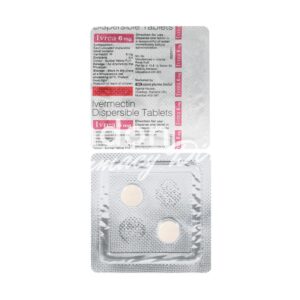
In brief
- Ivermectin is listed by London Pharmacy Direct in three tablet sizes: 3mg with 20 to 270 per pack, plus 6mg and 12mg with 10 to 100; UK delivery takes 9–21 days.
- This antiparasitic treats strongyloidiasis of the gut and scabies, including crusted scabies that creams alone do not clear.
- Only the 3mg tablet is UK-licensed, while 6mg and 12mg are not; the dose is calculated from body weight.
- Small children below 15 kg are generally excluded, and people from regions where Loa loa infection is endemic need testing beforehand, as the drug can trigger dangerous reactions in them.
- Anyone on warfarin may find the INR climbs, and dying parasites sometimes cause a low temperature, itch or weariness for a few days. Supply is by prescription (POM), with a clinician overseeing use.
Basic ivermectin information
- INN (international nonproprietary name): Ivermectin
- Brand names available in the United Kingdom: Stromectol (tablets), Soolantra (cream)
- ATC code: P02CF01
- Forms and dosages: 3 mg tablets; 1% cream
- Manufacturers in the United Kingdom: Merck (Stromectol), Galderma (Soolantra)
- Registration status in the United Kingdom: Prescription-only medicine (POM) for human use
- OTC / Rx classification: Prescription-only medicine (POM)
Ivermectin in everyday use
Morning vs evening dosing
Wondering whether ivermectin is better taken first thing in the morning or at night?
In practice, ivermectin is usually taken as a single oral dose on an empty stomach, or exactly as directed on the pharmacy label or SPC.
For UK patients, the best time is often the time that fits a normal routine, such as before breakfast, after the school run, or at bedtime if that is when the dose is easiest to remember.
If a topical form has been prescribed, it should be applied at the same time each day so the routine stays consistent.
That simple habit can help avoid missed doses.
Taking with or without meals
Should tablets be taken with food?
Some ivermectin tablets are taken with water on an empty stomach, while other prescriptions may differ depending on the indication.
There is no safe “one size fits all” rule here, so the label matters more than general advice.
A pharmacist may also explain how to take ivermectin if the pack strength is 3 mg tablets and the dose needs to be split by weight.
- Read the label before each dose.
- Do not double up if a dose is missed.
- Store the medicine safely at home, away from children.
- Keep veterinary products separate from human medicine.
That is the sort of practical UK pharmacy advice that prevents avoidable mistakes.
Safety priorities
Who should avoid it
In the UK, ivermectin is a prescription only medicine for human use and should not be taken without clinician advice.
There are some clear red flags where caution is especially important.
- Children under 15 kg or under 5 years old should not use oral ivermectin.
- Anyone with a known allergy to ivermectin or the excipients should avoid it.
- People with possible Loa loa infection risk need specialist review because serious CNS reactions can occur.
- Pregnancy and breastfeeding need a careful benefit-risk discussion.
- Severe liver disease needs extra caution because the medicine is metabolised in the liver.
That is why MHRA warnings and pharmacy screening matter before treatment starts.
Activities to limit
Common ivermectin side effects include dizziness, sleepiness and headache.
Those symptoms can affect driving, cycling, operating machinery, or any safety-critical work.
If someone already knows they feel drowsy after medicines, it is sensible to plan dose day around work, childcare and travel.
Veterinary ivermectin should never be used in humans, even if the pack looks similar to a human product.
Dosage and adjustments
General regimens
How much ivermectin is used depends on the condition being treated.
The table below gives usual adult regimens, but the prescription always takes priority.
| Indication | Adult dose | Notes |
|---|---|---|
| Onchocerciasis | 150 micrograms/kg orally, once | May repeat every 6–12 months |
| Strongyloidiasis | 200 micrograms/kg orally, once | A second dose may be used in some cases |
| Scabies | 200 micrograms/kg orally, repeated in 7–14 days | Topical treatment may also be used |
| Rosacea | Apply a thin layer once daily | Topical cream, up to 12 weeks |
The exact dose depends on body weight and on the condition being treated.
Special cases
Does age change the dose?
Older adults do not usually need a routine dose adjustment, but monitoring is sensible because adverse effects may be more noticeable.
For liver impairment, caution is needed and severe hepatic dysfunction may make ivermectin unsuitable.
Renal impairment usually does not require adjustment, although data are limited and close monitoring is wise in severe cases.
Children over 15 kg may use weight-based dosing under clinical supervision only.
If the pack contains ivermectin 3 mg tablets, an NHS pharmacist can help interpret the dose and check that the right strength has been supplied.
Legal status and availability in the UK
Ivermectin tablets and cream are prescription-only medicines (POM) in the UK.
Our online pharmacy can also arrange ivermectin with discreet delivery to the United Kingdom in 9–21 days.
What is inside and how it works
Ingredients overview
The INN is ivermectin, and the ATC code is P02CF01.
It belongs to the macrocyclic lactone antiparasitic class.
Human brands include Stromectol and Soolantra 1% cream, while Ivomec is the veterinary contrast.
Those names often help patients recognise whether they are looking at a human or animal product.
Mechanism basics explained simply
Ivermectin works against certain parasites by disrupting their nerve and muscle function.
That makes it harder for the parasite to survive and multiply.
In plain terms, it helps stop the parasite from functioning normally, which is why it has a role in some infections and skin conditions.
There is no need to understand deep pharmacology to use it safely; the main point is to use the correct product for the correct diagnosis.
Main indications
Approved uses
In UK-relevant practice, ivermectin is used for certain parasitic infections and for topical treatment of rosacea.
| Use | Route | Practical note |
|---|---|---|
| Strongyloidiasis | Oral | Weight-based tablet dosing |
| Onchocerciasis | Oral | Repeat may be needed months later |
| Rosacea | Topical cream | Once daily, up to 12 weeks |
The exact UK licence should always be checked by the prescriber or pharmacist before supply.
Off-label uses in UK clinics
Some clinicians may consider ivermectin off-label (for example for scabies) in specialist settings, but patients should never self-start it.
Off-label use depends on clinical judgement, especially if other treatments have failed or are unsuitable.
Scabies may be managed with oral ivermectin or with topical alternatives depending on the case, the patient’s weight and the clinical context.
Interaction warnings
Food interactions
Should alcohol, tea or coffee be avoided?
There is no routine tea or coffee restriction, but the pharmacy label should always be followed on whether the tablet should be taken with food or on an empty stomach.
If dizziness or drowsiness appears, caution with alcohol is sensible.
Drug conflicts
People should tell the prescriber about all medicines and supplements, especially if they have liver disease or neurological symptoms.
- Use the exact human medicine, not a veterinary product.
- Check the label for dose strength and form.
- Report suspected side effects through the MHRA Yellow Card scheme.
- Ask a pharmacist before combining ivermectin with any other prescription medicines.
Mixing human treatment with veterinary products should be avoided because concentration and excipients differ.
Alternative choices
NHS prescribing alternatives
If ivermectin is not suitable, other antiparasitic medicines may be considered.
- Permethrin for lice and scabies, especially when topical treatment is preferred.
- Albendazole for helminthic infections.
- Mebendazole for helminthic infections.
- Praziquantel for specific worm infections such as schistosomiasis and cestodes.
That shortlist gives a useful overview of NHS antiparasitic options.
How choices are made in practice
The best option depends on diagnosis, age, weight, pregnancy and whether the problem is skin-based or internal.
| Option | Pros | Cons |
|---|---|---|
| Permethrin | Useful topical choice for lice and scabies | May need repeated application |
| Tablet treatment | May suit certain infections and simpler dosing | Not suitable for everyone |
| Other antiparasitics | Can be preferred when ivermectin is unsuitable | Depends on the exact diagnosis |
In a UK clinic, the decision is usually made after checking the diagnosis, the pack strength and whether an oral or topical option is safer.
Regulation snapshot
MHRA approval and NHS prescribing framework
Human ivermectin is prescription only in the UK and is regulated through standard prescribing pathways.
Both human and veterinary products exist, but only the correct human product should be used for patients.
That distinction matters because veterinary medicine is not a substitute for a human prescription.
What patients should check on the label
Before taking the medicine, check the strength, form and brand.
| What to check | Examples |
|---|---|
| Strength | 3 mg tablets, 1% cream |
| Medicine type | Human medicine, not veterinary |
The label should clearly match the prescribed medicine.
Frequently asked questions
Can I get ivermectin on the NHS?
Yes, if a clinician decides it is appropriate and prescribes it for a recognised use.
Is it safe to take with other medicines?
Often it can be used safely, but all medicines and supplements should be checked first, especially in liver disease or neurological illness.
What if I miss a dose?
Take it as soon as remembered, unless it is nearly time for the next dose, and do not double up.
Is ivermectin available without a prescription in the UK?
No. In the UK, ivermectin for human use is a prescription-only medicine.
Guidelines for proper use
UK pharmacist counselling style
The safest approach is simple: take ivermectin exactly as prescribed.
Keep human medicine separate from veterinary packs, and store it below 25°C away from light and moisture.
If a repeat dose is prescribed, complete it on time rather than leaving it until later.
Overdose symptoms may include nausea, vomiting, ataxia and hypotension, so urgent help is needed if those occur.
- Take the dose exactly as written on the label.
- Do not use veterinary ivermectin in humans.
- Store tablets and cream safely at home.
- Keep any repeat appointment or second dose on schedule.
NHS patient support advice
If anything is unclear, speak to a GP, pharmacist or NHS 111.
Many UK patients find pharmacists especially helpful for everyday medicine advice, from dose timing to side effects and repeat treatment.
For that reason, a pharmacy consultation is often the best first step when questions come up.
Delivery across the United Kingdom
| City | Region | Delivery time |
|---|---|---|
| London | England | 9–21 days |
| Birmingham | England | 9–21 days |
| Manchester | England | 9–21 days |
| Liverpool | England | 9–21 days |
| Leeds | England | 9–21 days |
| Sheffield | England | 9–21 days |
| Bristol | England | 9–21 days |
| Newcastle upon Tyne | England | 9–21 days |
| Nottingham | England | 9–21 days |
| Leicester | England | 9–21 days |
| Coventry | England | 9–21 days |
| Cardiff | Wales | 9–21 days |
| Edinburgh | Scotland | 9–21 days |
| Glasgow | Scotland | 9–21 days |
| Belfast | Northern Ireland | 9–21 days |