Sotalol
In stock
40mg
from 20,60 £
In brief
- Sotalol combines beta-blockade with a stabilising effect on the heart’s electrical activity and is prescribed for particular abnormal rhythms.
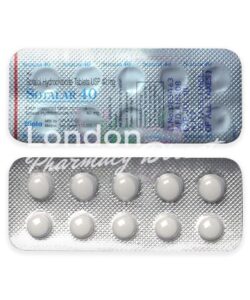
- A single 40 mg tablet strength; packs hold 20, 30, 60, 90, 120, 180 or 360.
- Prescription-only in the UK; start and adjust it only under medical supervision.
Sotalol: beta-blocker and rhythm stabiliser
Sotalol acts on the heart in two distinct ways. It blocks beta receptors non-selectively, protecting the heart from adrenaline and reducing the heart rate. Its class III antiarrhythmic side lengthens the time the heart’s electrical system needs to reset between beats, which makes abnormal rhythms harder to start. UK product information covers life-threatening ventricular tachycardias and symptomatic non-sustained ventricular arrhythmias, as well as preventing rhythms that start above the ventricles, such as paroxysmal atrial fibrillation and supraventricular tachycardias, and keeping rhythm normal after atrial fibrillation or flutter has been corrected.
The 40 mg tablet and seven pack sizes
A single 40 mg strength is sold, and a pack can contain 20, 30, 60, 90, 120, 180 or 360 tablets. Daily doses are often several multiples of 40 mg, which can mean a good many tablets a day, so follow the figure on your prescription. UK generics extend to an 80 mg tablet as well, while the product listed here is imported.
What is measured before sotalol is started
The SmPC asks for an ECG showing the corrected QT interval, a measure of kidney function, blood potassium and magnesium levels, and a list of all other medicines, before treatment and again before any increase. Rhythm monitoring should be possible at the start and at every increase. Treatment normally opens with 80 mg a day, taken once or twice, and is increased at intervals of two to three days. Most people are maintained on 160 to 320 mg a day divided into two doses about 12 hours apart; only those with severe, life-threatening arrhythmias go up to 480 or 640 mg, under close supervision. Because food cuts absorption by around 20 per cent, take it at a consistent point in relation to meals.
How the kidneys shape the dose
The kidneys remove sotalol, so doses depend on creatinine clearance. Above 60 ml/min the normal dose is given, between 30 and 60 half of it, between 10 and 30 a quarter, and below 10 none. The liver plays little part, so liver disease needs no adjustment. In the elderly it is kidney function that counts. Several UK companies hold licences for generic sotalol, which is a prescription-only medicine (POM).
Contraindications and drug interactions
The SmPC lists sick sinus syndrome, second- or third-degree heart block without a pacemaker, congenital or acquired long QT syndrome, a previous episode of torsade de pointes, a symptomatically slow pulse, uncontrolled heart failure, cardiogenic shock, untreated phaeochromocytoma, low blood pressure not caused by an arrhythmia, Raynaud’s phenomenon or severe circulatory disease, asthma or chronic obstructive airways disease, metabolic acidosis and severe kidney failure. Low potassium or magnesium, perhaps after a spell of severe diarrhoea, raises the danger of a serious rhythm disturbance, and other QT-prolonging medicines add to the danger, namely phenothiazines, tricyclic antidepressants, intravenous erythromycin, quinolones and class IA and III antiarrhythmics. Take care too with verapamil, diltiazem, digoxin or clonidine. Stopping suddenly is risky; the dose is tapered over a week or two.
Unwanted effects and when to call 999
Beta-blockade accounts for many of the unwanted effects, such as tiredness, breathlessness, dizziness, headache, a slow pulse and low blood pressure. Common further reactions include chest pain, palpitations, ankle swelling, rash, upset stomach, cramps, poor sleep, low mood and sexual difficulties. Greatest concern attaches to a new or aggravated arrhythmia, torsade de pointes among them. If palpitations come with faintness or a collapse, ring 999 or go to A&E. Follow your doctor’s or prescriber’s instructions on sotalol exactly.
Living with the treatment
Heart rhythm medicines depend on regular checks, so keep every ECG and blood test appointment. Tell the prescriber about vomiting or diarrhoea that lasts more than a day, since it can upset potassium and magnesium levels. Store the tablets in their blister away from damp and from children, and check the strip for the strength every time, because the imported carton may be printed for another country.