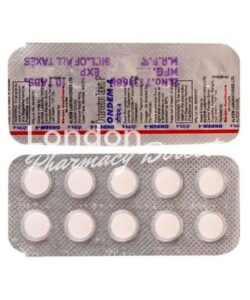
Ondansetron
In brief
- In our pharmacy, you can buy ondansetron without a prescription, with delivery in 9–21 days throughout the United Kingdom. Discreet and anonymous packaging.
- Ondansetron is used to prevent and treat nausea and vomiting caused by chemotherapy, radiotherapy and surgery. The drug is a selective 5‑HT3 (serotonin) receptor antagonist that blocks serotonin receptors in the central nervous system and gastrointestinal tract.
- The usual adult dose is 4–8 mg (commonly 4 mg or 8 mg); for chemotherapy prophylaxis 8 mg orally or intravenously is typical given shortly before treatment. Doses may be repeated every 8–12 hours as needed, as directed by the prescriber.
- The forms of administration include oral tablets (including orally disintegrating tablets), oral solution, and intravenous injection.
- The effect begins within about 30 minutes after oral administration and within 5–15 minutes after intravenous administration, with antiemetic effect usually evident within 30 minutes and peak effect in 1–2 hours.
- The duration of action is generally around 8–12 hours; the plasma half‑life is approximately 3–5 hours in adults.
- Avoid or limit alcohol while taking ondansetron as alcohol can increase dizziness and drowsiness and may worsen side effects.
- The most common side effect is headache (other frequent effects include constipation, dizziness and fatigue).
- Would you like to try ondansetron without a prescription?
Basic ondansetron information
- INN (international nonproprietary name): Ondansetron (as ondansetron hydrochloride)
- Brand names available in the United Kingdom: Zofran; generic ondansetron
- ATC code: A04AA01
- Forms and dosages: Tablets 4 mg and 8 mg; orodispersible tablets 4 mg and 8 mg; oral solution 4 mg/5 mL; injection 2 mg/mL
- Manufacturers in the United Kingdom: Novartis (Zofran); generic ondansetron from several manufacturers
- Registration status in the United Kingdom: Licensed by the MHRA; prescription-only medicine (POM)
- OTC / Rx classification: Prescription-only medicine (POM)
Instructions, warnings and daily-life integration
- Always keep ondansetron in its original packaging with the patient information leaflet and carry a brief medicines list to NHS appointments and pharmacy visits.
- Ondansetron is prescription-only in the UK (MHRA-regulated); supply is via a GP, hospital clinic or community pharmacy.
- Avoid alcohol while taking ondansetron if it makes nausea worse or causes drowsiness.
- Tell your GP or pharmacist about any heart problems, other medicines (especially those that prolong the QT interval), pregnancy or breastfeeding.
- Use a pill box or smartphone alarm to remember doses and keep NHS 111 or emergency numbers handy for severe side effects.
- If severe symptoms occur, such as fainting, palpitations or severe rash, seek immediate medical help.
Everyday use and best practices
Morning vs evening dosing
Many adults take a single ondansetron tablet of 4 mg or 8 mg every eight hours as needed for nausea.
Some specialist regimens use a single 8 mg dose for chemotherapy prophylaxis prescribed by oncology teams.
Choose times that match daily routines such as after breakfast, mid-afternoon and at bedtime so effect and side effects can be monitored.
For short-term uses like post-operative nausea or gastroenteritis, follow the hospital or GP instructions and stop when symptoms resolve.
- Tip: Set a phone alarm for each scheduled dose to avoid missed doses.
- Tip: Note symptom onset and relief time in a simple diary to support clinic follow-up.
- Tip: Discuss any repeated need for doses with your prescriber rather than self-extending treatment.
| Strength | Typical use |
|---|---|
| Ondansetron 4 mg | Common for mild to moderate acute nausea and as a regular PRN dose. |
| Ondansetron 8 mg | Used for stronger prophylaxis in chemotherapy regimens or when a higher single dose is required. |
Taking with or without meals
Ondansetron may be taken with or without food without affecting efficacy in most cases.
If tablets upset the stomach, take them with a small snack such as toast or yoghurt, which suits many UK breakfasts.
For orodispersible tablets such as Zofran Melt, allow the tablet to dissolve on the tongue without water.
Track whether taking ondansetron with food changes nausea relief, and mention this in follow-up appointments.
Safety priorities
Who should avoid it (MHRA warnings)
People with known hypersensitivity to ondansetron or any ingredient must not take it and should inform the prescriber.
Avoid ondansetron if you have congenital long QT syndrome or significant electrolyte disturbances such as low potassium or magnesium unless supervised by a specialist.
Check for concurrent medicines that prolong the QT interval, including some antipsychotics and certain antibiotics, before starting ondansetron.
Pregnant women should discuss risks and benefits with their GP or obstetric team, with specialist input for hyperemesis gravidarum.
Report any severe allergic reaction to emergency services immediately.
Activities to limit (driving, work safety)
Ondansetron can cause dizziness or blurred vision in a minority of people; test your response before driving or operating machinery.
Shift workers and heavy vehicle drivers should discuss alternative antiemetic options with the prescriber if affected.
- Red flags to act on: palpitations, fainting, severe rash, unusual bleeding or severe abdominal pain.
| High-risk drug interaction | Reason |
|---|---|
| Certain antipsychotics | May prolong the QT interval when combined with ondansetron. |
| Certain macrolide antibiotics | Also associated with QT prolongation; monitor carefully. |
Dosage and adjustments
General regimen (NHS guidance)
Common outpatient regimens include ondansetron 4 mg orally up to three times a day or 8 mg twice daily depending on the indication.
For postoperative nausea or chemotherapy, hospital teams normally provide specific schedules and written instructions at discharge or clinic visits.
Always check the prescription label and ask the pharmacist if the dosing schedule is unclear.
Do not exceed prescribed doses and do not combine different ondansetron products without clinical advice.
Special cases (elderly, comorbidities)
Older adults may be more susceptible to dizziness and cardiac effects and often start at lower frequency with close monitoring.
Liver impairment can require specialist-led dose adjustments, while routine renal adjustment is not usually required for ondansetron but review of total medication burden is essential.
Pharmacists can perform a medicines review to confirm appropriate dosing when multiple medicines are prescribed through the NHS or privately.
| Indication | Usual dose |
|---|---|
| Postoperative nausea | Single 4–8 mg dose as directed by the hospital team |
| Chemotherapy prophylaxis | Regimens vary; often a single 8 mg dose or specialist schedule |
| Acute outpatient nausea | 4 mg up to three times daily as needed |
- Pharmacist checklist: confirm indication, check ECG/lab history for QT risk, review concurrent medicines, advise on side effects and missed doses.
Legal status and availability in the UK
In our online pharmacy, ondansetron is available without a prescription, with discreet delivery to the United Kingdom in 9–21 days.
Ondansetron is a prescription-only medicine (POM) in the UK.
What’s inside and how it works
Ingredients overview
The active ingredient in ondansetron medicines is ondansetron hydrochloride or ondansetron hydrochloride dihydrate depending on the formulation and brand.
Tablet forms include film-coated and orodispersible (ODT) formulations in common strengths such as 4 mg and 8 mg.
Excipients vary by manufacturer, so check the patient information leaflet for potential allergens such as lactose or certain dyes.
- Formulations: film-coated tablets, orodispersible tablets, oral solution and injectable preparations in hospital settings.
Mechanism basics explained simply
Ondansetron is a 5-HT3 receptor antagonist that blocks serotonin receptors in the gut and the brainstem that trigger nausea and vomiting.
This action explains its effectiveness for chemotherapy-induced, radiotherapy-induced and post-operative nausea and vomiting.
Main indications
Approved uses (MHRA listing)
In the UK ondansetron is licensed for prevention and treatment of nausea and vomiting associated with cytotoxic chemotherapy, radiotherapy and postoperative states.
Hospital formularies and antiemetic pathways set out combination regimens, often pairing ondansetron with dexamethasone or NK1 antagonists for high-emetogenic chemotherapy.
Off-label uses in UK clinics
Clinicians sometimes prescribe ondansetron off-label for short-term severe gastroenteritis where oral rehydration is not possible, for refractory nausea in palliative care and for hyperemesis gravidarum after specialist review.
Off-label prescribing should always be documented with a clear discussion of risks and benefits and a plan recorded in the patient notes.
| Licensed indication | Common off-label use |
|---|---|
| Chemotherapy-related nausea | Refractory nausea in palliative care |
| Postoperative nausea | Severe gastroenteritis where oral fluids are not possible |
Interaction warnings
Food interactions (alcohol, tea/coffee)
Avoid alcohol while taking ondansetron as it can increase dizziness and may worsen nausea in some people.
Normal tea and coffee do not have a major chemical interaction with ondansetron, but caffeine can influence nausea perception so monitor personal response.
Drug conflicts
Key interaction concerns are with other QT-prolonging medicines such as some macrolide and fluoroquinolone antibiotics and certain antipsychotics.
Concurrent use with apomorphine is contraindicated.
Always tell the pharmacist about over-the-counter medicines, herbal remedies and supplements so interactions can be checked.
- Medicines to declare: antipsychotics, certain antibiotics, antiarrhythmics, tricyclic antidepressants, over-the-counter cold remedies.
| Drug | Interaction issue |
|---|---|
| Macrolide antibiotics | May increase the risk of QT prolongation |
| Apomorphine | Contraindicated with ondansetron |
Suspected adverse reactions can be reported to the MHRA Yellow Card scheme, and pharmacists can help with reporting.
Alternative choices
NHS prescribing alternatives with pros/cons checklist
Alternatives for nausea include metoclopramide, prochlorperazine, cyclizine and other agents selected by cause and patient factors.
Metoclopramide is a prokinetic but can cause extrapyramidal effects, particularly in younger patients or at higher doses.
Prochlorperazine is an antidopaminergic that may cause drowsiness and should be used with caution in the elderly.
Cyclizine is often chosen for vestibular causes of nausea and can be sedating.
- Pros for alternatives: different mechanisms may suit different causes.
- Cons for alternatives: each has distinct side-effect profiles and contraindications.
When to ask for a switch
Request a medication review if ondansetron is ineffective, causes intolerable side effects or is contraindicated because of heart problems or interactions.
Hospital oncology teams will follow NICE or local protocols for antiemetic switching and dosage adjustments.
Long-term nausea should prompt a full medicines review and investigation of underlying causes rather than indefinite antiemetic repeats.
If nausea persists after two courses, book a GP review, then a pharmacist medicines review, and ask for specialist referral if required.
Regulation snapshot
MHRA approval and NHS prescribing framework
Ondansetron is MHRA-regulated and is prescription-only in the United Kingdom.
Hospitals and primary care prescribe within NHS formularies and local trust antiemetic pathways, and pharmacists dispense against valid prescriptions with counselling on side effects and storage.
Community pharmacists are responsible for checking prescriptions, counselling and advising on missed doses and what to do in the event of side effects.
FAQ
Can I get ondansetron on the NHS for a stomach bug?
Ondansetron is usually prescribed for specific indications such as chemotherapy or post-operative nausea.
For severe gastroenteritis where oral rehydration is not possible, GPs or urgent care may prescribe it off-label; discuss risks and monitoring.
Is ondansetron safe in pregnancy/breastfeeding?
Discuss safety with your GP or obstetrician; specialists may use it for hyperemesis gravidarum after weighing risks and benefits.
Breastfeeding advice should be confirmed with maternity services and the pharmacy team.
Can I drive after taking ondansetron?
Do not drive if ondansetron causes drowsiness or dizziness.
Test your reaction to the medicine before driving or operating machinery.
What if I miss a dose?
Take the dose when remembered unless the next dose is due soon; never double up.
For repeated missed doses, ask the pharmacist about reminder tools or repeat-prescription options.
Guidelines for proper use
UK pharmacist counselling style
Pharmacists will check dose, indication and interactions and counsel on side effects, storage and missed-dose actions.
Expect questions about other medicines, pregnancy status, heart history and recent ECGs if relevant.
Ask for the patient leaflet and a demonstration of orodispersible tablet use if needed.
NHS patient support advice
Use NHS 111 for immediate non-emergency advice and book GP appointments for repeats or long-term need.
Request a medicines review for persistent nausea and use specialist nurse lines for oncology or surgical follow-up.
Keep a symptom diary recording the time of each dose, its effect and any side effects to help tailor therapy.
- Pharmacist counselling points: indication, dose, when to seek help, interactions, storage, missed dose instructions.
- Medicines review: current medicines, allergies, cardiac history, pregnancy/breastfeeding status, symptom diary.
Delivery across the United Kingdom
| City | Region | Delivery Time |
|---|---|---|
| London | England | 9–21 days |
| Birmingham | England | 9–21 days |
| Glasgow | Scotland | 9–21 days |
| Manchester | England | 9–21 days |
| Leeds | England | 9–21 days |
| Edinburgh | Scotland | 9–21 days |
| Liverpool | England | 9–21 days |
| Bristol | England | 9–21 days |
| Sheffield | England | 9–21 days |
| Newcastle Upon Tyne | England | 9–21 days |
| Leicester | England | 9–21 days |
| Nottingham | England | 9–21 days |
| Brighton | England | 9–21 days |
| Belfast | Northern Ireland | 9–21 days |
| Cardiff | Wales | 9–21 days |