Cilostazol
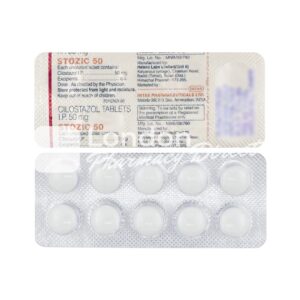
In brief
- In our pharmacy, you can buy cilostazol without a prescription, with delivery in 5–14 days throughout the United Kingdom. Discreet and anonymous packaging. (Note: cilostazol is generally a prescription-only medicine in most countries; check local regulations and consider medical advice.)
- Cilostazol is used to relieve walking discomfort from intermittent claudication in peripheral arterial disease; it works as a phosphodiesterase III inhibitor, increasing intracellular cAMP to inhibit platelet aggregation and promote vasodilation.
- The usual dose is 100 mg taken orally twice daily, typically at least 30 minutes before breakfast and dinner.
- Administration is oral, as film-coated tablets (commonly 100 mg; 50 mg tablets are also available in some markets).
- Onset of symptomatic benefit is gradual — some improvement may be noticed within weeks, with full effect often taking up to 12 weeks.
- Duration of action per dose is approximately 12 hours (hence twice-daily dosing); treatment is usually continued long-term and reviewed after about 3 months — discontinue if there is no benefit.
- Alcohol warning: avoid excessive alcohol while taking cilostazol, as it can increase dizziness, cause or worsen hypotension and may heighten bleeding risk.
- The most common side effect is headache (other frequent effects include diarrhoea, palpitations, dizziness, peripheral oedema and nausea).
- Would you like to try cilostazol without a prescription?
Basic Cilostazol Information
- INN (International Nonproprietary Name): Cilostazol (INN worldwide; also written as シロスタゾール in Japanese sources).
- Brand Names Available In United Kingdom: Pletal, Cilostazol — 100 mg tablets (blister, 56 or 112).
- ATC Code: B01AC23.
Classification: B: Blood and blood forming organs.
B01: Antithrombotic agents.
B01AC: Platelet aggregation inhibitors excluding heparin.
Cilostazol is classified as a phosphodiesterase III inhibitor with antiplatelet and vasodilator properties. - Forms & Dosages: Film-coated tablet available in 100 mg and 50 mg strengths.
Typical packaging includes blisters of 10, 14, 30, 56, 60 or 100 tablets. - Manufacturers In United Kingdom: Otsuka Pharmaceutical, Accord Healthcare, Mylan, Bluefish, EG Labo.
- Registration Status In United Kingdom: MHRA authorised prescription medicine.
- OTC / Rx Classification: Prescription only (Rx) in all countries above.
Initial Warnings And Daily-Life Integration
Quick Warnings: Cilostazol (Pletal) is prescription-only in the UK and MHRA authorised.
Do Not Take Cilostazol If You Have Any Grade Of Congestive Heart Failure, Moderate–Severe Liver Disease, Active Bleeding, Or Are Pregnant.
These Are Absolute Contraindications Consistent With MHRA And NHS Guidance.
Report Palpitations, Fainting, Severe Headache Or Black Stools Urgently To A Clinician.
In Overdose Seek Emergency Care For Tachycardia Or Hypotension.
Daily-Life Integration: Take cilostazol 100 mg twice daily at least 30 minutes before breakfast and dinner for best absorption.
If You Get Dizzy Or Experience Palpitations, Avoid Driving Or Operating Heavy Machinery Until Symptoms Settle.
Store Tablets Below 25°C In The Original Blister And Keep Out Of Sight Of Children.
Practical UK Tip: Get A Prescription From Your GP Or Vascular Clinic On The NHS.
Pharmacies Such As Boots, LloydsPharmacy Or Superdrug Can Supply Cilostazol When Prescribed.
Prescription Charges Apply In England; Scotland, Wales And Northern Ireland Have Different Arrangements.
Ask Your Pharmacist For A Medicines Use Review If Unsure About Interactions Or Side Effects.
Everyday Use & Best Practices
Morning Vs Evening Dosing
What Is The Standard Adult Regimen For Cilostazol?
The Typical Adult Dose Is 100 Mg Orally Twice Daily.
Take Each Dose At Least 30 Minutes Before Breakfast And Dinner To Match Typical UK Meal Times And Improve Absorption.
Keeping A Consistent Timing Helps Tracking And Reduces Missed Doses.
Missed Dose Advice: If You Miss A Dose Take It As Soon As You Remember Unless It Is Near The Next Dose.
Never Double Up To Make Up For A Missed Tablet.
Taking With Or Without Meals (UK Diet Habits)
Should Cilostazol Be Taken With Food?
Avoid Taking The Tablet Immediately After A Heavy, Fatty Meal Where Possible.
UK Breakfasts Vary Widely, So Aim For A Lighter Breakfast If Possible To Help Absorption.
A Practical Routine Is To Take The Tablet, Then Dress Or Do A Short Walk Before Eating.
If Gastrointestinal Side Effects Occur Such As Diarrhoea Or Nausea, Try Taking With A Small Snack And Speak To Your Pharmacist.
- Side-Effect Mitigation: Take tablets 30 minutes before meals, avoid large fatty breakfasts, stay well hydrated, and report ongoing nausea or diarrhoea.
- Routine Checklist: Morning dose 30 minutes pre-breakfast, evening dose 30 minutes pre-dinner, note dose times in a diary or phone alarm.
Safety Priorities
Who Should Avoid It (MHRA Warnings)
Who Must Not Be Prescribed Cilostazol?
Absolute Exclusions Include Congestive Heart Failure Of Any Grade.
Moderate To Severe Hepatic Impairment Is A Contraindication.
Severe Renal Impairment And Active Bleeding Also Preclude Use.
Pregnancy And Known Hypersensitivity To Cilostazol Or Excipients Are Absolute Contraindications.
Relative Cautions Apply In Patients With A History Of Arrhythmia, Unstable Ischaemic Heart Disease Or Uncontrolled Hypertension.
Combining With Multiple Antiplatelet Or Anticoagulant Agents Raises Bleeding Risk And Needs Specialist Review.
Activities To Limit (Driving, Work Safety)
What Activities Should Be Avoided On Starting Cilostazol?
If Dizziness, Severe Headache, Palpitations Or Visual Disturbance Occur, Do Not Drive Or Operate Machinery Until Cleared By A Clinician.
For Manual Labour Roles With Fall Risk, Inform Your Employer And Pharmacist Early.
Phased Return-To-Work Advice May Be Needed If Side Effects Appear After Starting Treatment.
- Checklist For Contraindications: No heart failure, no active bleeding, no moderate–severe liver disease, not pregnant, no severe renal impairment.
| When To Stop Driving | Reason |
|---|---|
| Immediately | Loss Of Consciousness, Fainting, Severe Dizziness |
| Until Reviewed | New Or Worsening Palpitations, Severe Headache, Visual Disturbance |
Dosage & Adjustments
General Regimen (NHS Guidance)
What Dose Does The NHS Recommend For Intermittent Claudication?
The Typical NHS Adult Dose Is 100 Mg Twice Daily Taken At Least 30 Minutes Before Breakfast And Dinner.
Onset Of Effect Is Gradual Over Several Weeks And Full Benefit May Take Up To 12 Weeks.
Therapy Is Often Reviewed After 12 Weeks And Clinicians May Discontinue If There Is No Clear Walking Benefit By Three Months.
Prescribers Will Balance Symptomatic Benefit Against Any Side Effects When Deciding Continuation.
Special Cases (Elderly, Comorbidities)
Are Dose Adjustments Needed For Older Patients?
Elderly Patients Usually Do Not Require Routine Dose Reduction.
Closer Monitoring Is Advisable Due To Increased Sensitivity And Comorbidities.
Hepatic Impairment Is Important: Cilostazol Is Contraindicated In Moderate To Severe Liver Disease.
Renal Impairment Requires Caution In Mild To Moderate Cases And Avoidance In Severe Renal Failure.
Children Are Not Recommended To Use Cilostazol.
| Situation | Dosing Rule |
|---|---|
| Elderly | No routine reduction; monitor heart rate and blood pressure. |
| Moderate–Severe Hepatic Impairment | Contraindicated. |
| Renal Impairment | Caution in mild–moderate; avoid in severe impairment. |
- Monitoring Checklist: Heart rate, blood pressure, liver function tests as clinically indicated, and symptom diary for walking distance.
User Testimonials
Positive Reports From UK Patients
Do Patients Notice Improved Walking Distance?
Many UK Patients Report Improved Walking Distance And Reduced Leg Cramp During Everyday Tasks Like Shopping Or Walking The Dog Within Several Weeks.
Benefits Are Most Noticeable When Cilostazol Is Combined With Supervised Exercise Programmes.
Patient Discussions On Sites Such As Patient.info Often Mention Increased Stamina And Reduced Need To Stop And Rest On Short Walks.
Common Challenges (Patient.info, NHS Forums)
What Are The Typical Downsides Patients Report?
Headaches, Palpitations, Diarrhoea And Difficulty Sleeping Are Common Complaints.
Some Patients Report Early Benefit Followed By A Plateau In Improvement.
Others Stop Treatment Because Of Palpitations Or General Intolerance.
- Typical Pros: Improved walking distance, increased stamina, non-invasive therapy compared with revascularisation.
- Typical Cons: Headache, palpitations, gastrointestinal upset, contraindications for some patients.
| Patient | Experience |
|---|---|
| Anon, 68, Surrey | Walking to the shops improved after six weeks; mild headache early on. |
| Anon, 74, Manchester | Noticeable stamina gain but stopped after palpitations—consulted GP. |
Buying Guide
Pharmacy Sources (Boots, LloydsPharmacy, Superdrug)
Where Can Patients Get Cilostazol In The UK?
Cilostazol Is Prescription-Only And Can Be Supplied By NHS Or Private Pharmacies After A Valid Prescription.
Major Chains Such As Boots, LloydsPharmacy And Superdrug Provide Dispensing And Repeat Services.
Community Pharmacists Can Also Give Advice On Side-Effect Management And Drug Interactions.
For Some Patients A Vascular Clinic Or Hospital Pharmacy May Arrange Initial Supply Following Specialist Review.
Price Comparison (NHS Prescription Charge Vs Private)
What Does It Cost Under NHS Versus Private Supply?
NHS Prescriptions In England Attract A Per-Item Charge Unless You Qualify For An Exemption Or A Prepayment Certificate.
Scotland, Wales And Northern Ireland Generally Provide Free Prescriptions.
Private Prices Vary By Brand And Pack Size.
Generic 100 Mg Blister Packs Are Typically Cheaper Than Brand-Name Pletal Packs.
Online Pharmacies May Offer Convenience; Confirm They Are MHRA-Registered Suppliers Before Ordering.
| Supply Route | Typical Cost |
|---|---|
| NHS Prescription (England) | Standard prescription charge per item unless exempt |
| NHS Prescription (Scotland/Wales/Northern Ireland) | Usually free |
| Private Purchase | Varies; generics usually less than branded Pletal |
In Our Online Pharmacy, Cilostazol Is Available Without A Prescription, With Discreet Delivery To United Kingdom In 5-14 Days.
What’s Inside & How It Works
Ingredients Overview
What Is The Active Ingredient?
The Active Ingredient Is Cilostazol, The International Nonproprietary Name (INN).
Typical Strengths In The UK Are 100 Mg Tablets.
Some Markets Also Offer 50 Mg Strengths.
Tablets Are Film-Coated And Supplied In Blister Packs.
Excipients Vary By Manufacturer So Check The Patient Leaflet If You Have Known Allergies To Fillers.
Mechanism Basics Explained Simply
How Does Cilostazol Work?
Cilostazol Inhibits Phosphodiesterase III, Which Raises Levels Of Cyclic AMP In Platelets And Vascular Smooth Muscle.
This Reduces Platelet Aggregation And Produces Vasodilation Of Peripheral Vessels.
The Result Is Improved Blood Flow To The Legs And Reduced Symptoms Of Intermittent Claudication.
Cilostazol Is Not Suitable For Acute Ischaemic Events Such As An Acute Limb Ischaemia Or Stroke Management.
- Increased cAMP → Less Platelet Clumping.
- Vasodilation → Improved Leg Blood Flow.
- Clinical Outcome → Better Pain-Free Walking Distance For Many Patients.
Main Indications
Approved Uses (MHRA Listing)
What Is Cilostazol Licensed To Treat In The UK?
The Primary Licensed Indication Is Treatment Of Intermittent Claudication To Improve Walking Distance In Peripheral Arterial Disease.
Cilostazol Is Not A Substitute For Cardiovascular Risk Management Such As Smoking Cessation Or Lipid Control.
Standard Vascular Risk Measures And Antiplatelet Therapy For Cardiovascular Risk Reduction Remain Separate Considerations.
Off-Label Uses In UK Clinics
Are There Any Off-Label Uses?
Off-Label Or Limited Uses May Be Considered In Specialist Vascular Clinics For Selected Symptomatic Patients.
These Decisions Are Specialist-Led And Require Informed Consent Because Evidence Beyond Claudication Is Mixed.
- Indications: Intermittent claudication in PAD where exercise or revascularisation is unsuitable.
- Non-Indications: Acute ischaemic events, primary stroke prevention, or as a standalone vascular risk reducer.
Interaction Warnings
Food Interactions (Alcohol, Tea/Coffee)
Can Food Or Drink Affect Cilostazol?
Alcohol May Aggravate Vasodilation And Increase Dizziness When Starting Therapy.
Avoid Excess Alcohol Intake During The Early Weeks Of Treatment.
There Are No Major Interactions With Tea Or Coffee Documented.
Excessive Caffeine Intake May Worsen Palpitations In Susceptible Individuals.
Drug Conflicts (MHRA Yellow Card Reports)
Which Drugs Interact Significantly With Cilostazol?
Cilostazol Is Metabolised By CYP3A4 And CYP2C19 Pathways.
Strong CYP3A4 Or CYP2C19 Inhibitors And Inducers Can Alter Cilostazol Levels.
Examples Include Some Macrolide Antibiotics, Azole Antifungals, Certain Antiretrovirals And Some Antidepressants.
Concomitant Use With Strong Antiplatelet Or Anticoagulant Therapy Raises Bleeding Risk And Calls For Close Monitoring.
- Common Interacting Drug Classes: Macrolides, azoles, some HIV drugs, and certain antidepressants.
- What To Tell Your Pharmacist: All current prescription and over-the-counter medicines, any herbal supplements, and recent antibiotic or antifungal courses.
Suspected Adverse Reactions Should Be Reported Via The MHRA Yellow Card Scheme.
Latest Evidence & Insights
Key UK & EU Studies 2022–2025
What Do Recent Analyses Show About Cilostazol?
Recent UK And EU Analyses Continue To Show Modest But Clinically Meaningful Improvements In Pain-Free And Maximal Walking Distance Versus Placebo.
Benefits Are Most Reliable When Combined With Structured Supervised Exercise Programs.
Safety Signals Continue To Focus On Cardiovascular Risks Such As Arrhythmias And Palpitations.
Increased Bleeding Is A Concern When Cilostazol Is Used With Other Antithrombotics.
Regulatory Reviews Reaffirm The Contraindication In Patients With Heart Failure.
Practical Takeaway For Patients
How Should Patients Interpret The Evidence?
Expect Gradual Benefit Over Weeks Up To Around Twelve Weeks.
Combine Cilostazol With Supervised Exercise And Optimisation Of Risk Factors Such As Smoking Cessation And Statin Therapy For Best Results.
Discuss Individual Risk–Benefit With Your GP Or Vascular Team Before Starting.
| Outcome | Summary |
|---|---|
| Pain-Free Walking | Modest Improvement Vs Placebo, Best With Exercise |
| Safety | Main Concerns: Palpitations, Arrhythmias, Bleeding With Other Antithrombotics |
Alternative Choices
NHS Prescribing Alternatives With Pros/Cons Checklist
What Are Non-Drug Options And Alternatives?
Supervised Exercise Therapy Is NHS First-Line Treatment For Intermittent Claudication.
Smoking Cessation And Optimisation Of Cardiovascular Risk Factors Remain Crucial.
Antiplatelet Agents Such As Clopidogrel Are Used For Vascular Risk Reduction But Do Not Specifically Improve Walking Distance Like Cilostazol.
Pentoxifylline Is An Older Option With Variable Benefit For Walking Distance.
Pros/Cons Checklist
- Cilostazol: Pros — Improves walking distance for many; Cons — Palpitations, contraindicated in heart failure and some hepatic/renal impairment.
- Supervised Exercise: Pros — No drug side effects, proven benefit; Cons — Access and waiting times.
- Pentoxifylline: Pros — Oral option; Cons — Less consistent efficacy than cilostazol.
| Option | When Considered |
|---|---|
| Supervised Exercise | First-line for most patients with claudication |
| Cilostazol | When exercise insufficient or unsuitable, and no contraindications |
| Pentoxifylline | Considered where cilostazol not tolerated or contraindicated |
Regulation Snapshot
MHRA Approval & NHS Prescribing Framework
Is Cilostazol Approved In The UK?
Cilostazol Is MHRA-Authorised And Prescription-Only In The United Kingdom.
Prescribing Follows National Formularies And Vascular Guidelines.
GPs Usually Initiate Therapy After Specialist Advice Or Continue Repeat Prescribing Following Vascular Clinic Review.
Monitoring & Reporting Requirements
What Checks Should Prescribers Make?
Prescribers Should Assess For A History Of Heart Failure And Check Liver And Renal Function Prior To Initiation.
Concomitant Medications Must Be Reviewed For Potential Interactions.
Patients Should Be Encouraged To Report Adverse Reactions Via The MHRA Yellow Card And Attend Follow-Up Reviews To Assess Benefit And Side Effects.
- Prescriber Checklist: Baseline heart failure screen, LFTs if clinically indicated, review interacting drugs, arrange 12-week review.
- Patient Checklist: Symptom diary, note palpitations/dizziness, report bleeding or black stools immediately.
FAQ Section
Will Cilostazol Make Me Walk Normally Again?
It Often Increases Pain-Free And Maximum Walking Distance Modestly Over Weeks To Months.
Expect Gradual Improvement.
Supervised Exercise And Risk Factor Control Magnify Benefits.
Can I Take It With My Blood Thinner?
Combining Cilostazol With Anticoagulants Or Multiple Antiplatelet Agents Raises Bleeding Risk.
This Combination Should Only Be Used Under Close Supervision.
Your GP Or Anticoagulation Clinic Will Weigh Risks Versus Benefits If Co-Prescribing Is Considered Necessary.
What If I Get Palpitations Or Severe Headache?
Stop Taking The Medicine And Seek Medical Review Promptly If You Experience New Or Severe Palpitations Or Headache.
For Severe Symptoms Attend A&E; For Less Severe But Concerning Symptoms Contact Your GP Or Pharmacist For Urgent Advice.
Report Significant Reactions Via The MHRA Yellow Card Scheme.
- When To Seek Urgent Help: Fainting, chest pain, severe shortness of breath, collapse, black stools.
- Daily Monitoring Mini-Checklist: Note walking distance, heart rate changes, dizziness episodes, and new bleeding signs.
Guidelines For Proper Use
UK Pharmacist Counselling Style
How Should Pharmacists Counsel Patients About Cilostazol?
Confirm The Indication And Reinforce The Dosing Schedule: 100 Mg Twice Daily, Thirty Minutes Pre-Meals.
Check For History Of Heart Failure Or Moderate–Severe Liver Disease And Review Any Interacting Medicines.
Advise On Common Side Effects Including Headache, Diarrhoea, Palpitations And Dizziness.
Offer Written Reminders, Dose Charts Or Adherence Aids And Propose A Medicines Use Review Where Needed.
NHS Patient Support Advice
What Support Can Patients Expect From The NHS?
Ask Your GP About Referrals To Supervised Exercise Programmes And Smoking Cessation Services.
Check Eligibility For Prescription Charge Exemptions Or Prepayment Certificates If Cost Is A Concern.
Keep A Symptom Diary Documenting Walking Distance And Any Side Effects To Bring To The Twelve-Week Review.
If There Is No Clear Benefit After Three Months Discuss Stopping Under Clinician Guidance.
A One-Page Mini-Plan For The First Twelve Weeks Helps Track Progress And Adherence.
Delivery Across United Kingdom
| City | Region | Delivery Time |
|---|---|---|
| London | Greater London | 5-7 days |
| Birmingham | West Midlands | 5-7 days |
| Manchester | Greater Manchester | 5-7 days |
| Glasgow | Scotland | 5-7 days |
| Liverpool | Merseyside | 5-7 days |
| Leeds | West Yorkshire | 5-7 days |
| Bristol | South West | 5-7 days |
| Sheffield | South Yorkshire | 5-9 days |
| Edinburgh | Scotland | 5-7 days |
| Cardiff | Wales | 5-7 days |
| Newcastle Upon Tyne | North East | 5-9 days |
| Belfast | Northern Ireland | 5-7 days |
| Leicester | Leicestershire | 5-9 days |
| Coventry | West Midlands | 5-9 days |