Ebixa
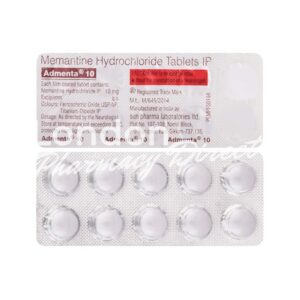
In brief
- Ebixa (memantine) is a prescription-only medicine (POM) in the UK.
- Ebixa is used for symptomatic treatment of moderate to severe Alzheimer’s disease; it is an N‑methyl‑D‑aspartate (NMDA) receptor antagonist that modulates glutamatergic neurotransmission.
- Usual adult dosing for tablets: start 5 mg once daily and increase by 5 mg weekly to a maintenance of 10 mg twice daily (20 mg/day). Reduce dosing in severe renal impairment (eg, max 5 mg twice daily in CrCl 5–29 mL/min).
- Administered orally as tablets (commonly 10 mg) or oral solution (10 mg/mL with dosing syringe/pipette).
- Clinical effects are not immediate — some patients may notice changes within 1–4 weeks, but meaningful symptomatic benefit can take several weeks of treatment.
- The symptomatic effect is sustained with daily dosing (effect persists over 24 hours); memantine has a long elimination half‑life (steady state in ~2–3 weeks) and benefit continues while treatment is maintained.
- Avoid excessive alcohol — alcohol can worsen dizziness, confusion and sedation and may exacerbate cognitive symptoms in dementia.
- The most common side effect is dizziness.
- Would you like to try Ebixa without a prescription?
Basic Ebixa information
- INN (international nonproprietary name): Memantine
- Brand names available in the United Kingdom: Ebixa; Memantine Accord
- ATC code: N06DX01 — “N06” (Psychoanaleptics), “DX01” (Other anti-dementia drugs, memantine)
- Forms and dosages: Tablets 5mg and 10mg (common 10mg); oral solution 10mg/mL in 30mL or 50mL bottles with dosing syringe/pipette.
- Manufacturers in the United Kingdom: Accord; Lundbeck
- Registration status in the United Kingdom: Authorised prescription-only medicine for moderate to severe Alzheimer’s disease
- OTC / Rx classification: Prescription-only medicine (POM)
Preamble — immediate safety instructions and daily-life integration for United Kingdom patients
Memantine (INN: memantine; ATC N06DX01) is a prescription-only medicine in the UK.
If an overdose is suspected, call 999 or go straight to A&E without delay.
Report any adverse reaction via the MHRA Yellow Card scheme or speak to your GP or local pharmacist.
Keep tablets in their original packaging and do not transfer loose tablets into unlabelled containers.
The oral solution (10 mg/mL) must be measured using the supplied syringe or pipette.
Store memantine at room temperature, typically 20–25°C, and protect the oral solution from light.
When attending A&E, carry NHS red/blue repeat prescription details or hospital clinic letters if available.
Use a weekly pillbox, phone reminders or a linked NHS app to help with dosing adherence.
Tell the DVLA and your insurer if memantine causes dizziness or episodes of confusion that could affect driving.
Community pharmacists can counsel on dosing, supply repeat prescriptions and demonstrate oral-syringe technique.
Emergency actions checklist:
- If unconscious, call 999 immediately.
- If there are severe symptoms after overdose (breathing difficulty, seizures, hallucinations), go to A&E.
- Keep the medication packet to show clinicians and note the time and amount taken.
- Report suspected adverse reactions to the MHRA Yellow Card scheme after stabilisation.
Daily tips:
- Match a dose to an established routine such as breakfast or tea-time to reduce missed doses.
- Use an NHS prescription reminder or set phone alarms for twice-daily dosing.
- Keep a one-page med list and pharmacy contact in your wallet for emergencies.
Everyday use and best practices
Morning vs evening dosing
Most adults start memantine at 5mg once daily and titrate up weekly by 5mg increments to 10mg twice daily (total 20mg/day).
Many carers split the maintenance doses into morning and early evening to minimise dizziness at night.
Taking with or without meals
Memantine may be taken with or without food without affecting absorption.
Pairing a pill with a regular UK mealtime or a tea-time helps reduce missed doses.
Avoid taking a dose immediately before bedtime if memantine causes insomnia or vivid dreams.
Practical aids
Use an AM/PM pillbox to separate morning and evening doses and reduce errors.
Set linked phone alarms that coincide with NHS repeat prescription reminders.
Ask a pharmacist to demonstrate how to use the dosing syringe for the 10 mg/mL oral solution.
| Example time | Suggested dose |
|---|---|
| 08:00 | 10 mg (tablet or measured oral solution) |
| 18:00 | 10 mg (tablet or measured oral solution) |
Safety priorities
Who should avoid it (MHRA warnings)
Do not use memantine in anyone with a known allergy to memantine or excipients.
Exercise caution or avoid memantine in severe renal impairment; dose reduction is required for CrCl 5–29 mL/min to a maximum of 5mg twice daily.
Use caution in people with a history of seizures and in conditions that alkalinise urine which can increase memantine levels.
Discuss use in pregnancy or breastfeeding with the prescriber as safety is not established.
- Absolute contraindication: Known hypersensitivity to memantine or any excipient.
- Relative concerns: Severe renal impairment, seizure history, conditions causing urine alkalinisation.
Activities to limit (driving, work safety)
Memantine can cause dizziness, confusion and blurred vision in some patients.
Avoid driving, operating heavy machinery or performing hazardous work until the individual knows how memantine affects them.
Follow DVLA guidance and tell the GP if cognitive fluctuations could impair driving competence.
Practical safety card:
- Keep a one-page safety card with prescriber and pharmacy contacts in your wallet.
- Use a simple checklist before returning to driving: no recent dizziness, no sudden confusion, stable on dose for at least one week.
Dosage and adjustments
General regimen (NHS guidance)
Titration commonly starts at 5mg once daily and increases by 5mg each week to reach 10mg twice daily (20mg/day) for moderate–severe Alzheimer’s disease.
Special cases (elderly, comorbidities)
Older adults generally follow the usual regimen but should have renal function monitored regularly.
Severe renal impairment (CrCl 5–29 mL/min) requires a maximum of 5mg twice daily.
Memantine is not approved for children.
| Situation | Suggested action |
|---|---|
| Standard Adult | Titrate 5mg weekly to 10mg twice daily |
| Severe Renal Impairment | Max 5mg twice daily |
Dispensing checklist for pharmacists:
- Confirm indication and titration schedule with the prescriber.
- Check recent renal function (eGFR/CrCl) before dispensing.
- Provide written dosing instructions and demonstrate oral-syringe use for solution.
Legal status and availability in the UK
Ebixa (memantine) is a prescription-only medicine (POM) in the UK.
In our online pharmacy, Ebixa is available without a prescription, with discreet delivery to the United Kingdom in 9–21 days.
What’s inside and how it works
Ingredients overview
The active ingredient is memantine hydrochloride (INN memantine).
Available forms include 5mg and 10mg tablets and an oral solution of 10 mg/mL supplied in 30–50 mL bottles with a dosing syringe.
Mechanism basics explained simply
Memantine is an NMDA receptor antagonist that modifies glutamatergic activity in the brain.
By reducing pathological NMDA receptor overactivation, memantine can help stabilise neuronal signalling linked to confusion and agitation in later-stage Alzheimer’s.
It is symptomatic treatment and not disease-modifying.
Patient-friendly summary:
- Think of memantine as a brain stabiliser that may reduce confusion and improve engagement.
- It is often used with a cholinesterase inhibitor for complementary effects.
Main indications
Approved uses (MHRA listing)
Memantine is licensed for moderate to severe Alzheimer’s disease as symptomatic therapy.
The typical maintenance dose is 10mg twice daily after titration.
Off-label uses in the United Kingdom clinics
Some specialists trial memantine in vascular or mixed dementia or for behavioural symptoms, but evidence varies and these uses should be documented as off-label.
| Use | Licence status |
|---|---|
| Moderate–Severe Alzheimer’s | Licensed |
| Vascular/Mixed Dementia | Off-Label (specialist decision) |
Documentation checklist:
- Ensure indication appears on repeat prescriptions and MAR charts.
- Record treatment goals and planned review dates.
Interaction warnings
Food interactions (alcohol, tea/coffee)
No major food interactions are established for memantine.
Alcohol can worsen dizziness, sedation and cognitive effects and should be limited.
Tea or coffee have no specific interaction but stimulants may affect sleep when doses are taken late.
Drug conflicts
Drugs that alkalinise urine can reduce memantine elimination and raise plasma levels.
Concurrent use with other NMDA-active agents such as amantadine or ketamine requires review.
Confusion, hallucinations or falls can occur when memantine is combined with other CNS medicines.
Medication reconciliation checklist:
- Check all prescribed and OTC medicines and supplements each time memantine is dispensed.
- Review drugs that affect renal clearance or urine pH.
- Advise carers to inform hospital teams of memantine when admitted.
Alternative choices
NHS prescribing alternatives with pros/cons checklist
AChE inhibitors such as donepezil, rivastigmine and galantamine are first-line for mild–moderate Alzheimer’s.
- Donepezil: once-daily dosing and generally well tolerated.
- Rivastigmine: patch option useful for swallowing difficulties.
- Galantamine: offers cholinesterase inhibition with nicotinic receptor modulation.
Combining memantine with AChE inhibitors (practice points)
Combination therapy can offer incremental benefits for some patients but increases the need for monitoring for side effects.
Decision checklist for combination use:
- Agree goals with prescriber and record them clearly.
- Perform baseline monitoring and review at 3–6 months.
- Consider stopping if no clinically meaningful benefit is observed.
Regulation snapshot
MHRA approval and key points
Memantine (INN memantine; ATC N06DX01) is authorised in the UK as a prescription-only medicine for moderate–severe Alzheimer’s disease.
Ebixa and Memantine Accord are marketed in the UK.
NHS prescribing framework (repeat prescriptions, hospital vs GP)
Initiation may occur in memory clinics or secondary care, with many GPs continuing prescriptions under shared-care agreements.
Community pharmacies routinely dispense memantine and can provide counselling at point of supply.
Practical prescribing checklist:
- Confirm whether initiation was hospital-led and whether a shared-care protocol exists.
- Document follow-up appointments and monitoring responsibilities.
Frequently asked questions
Will memantine cure Alzheimer’s?
No — memantine is symptomatic treatment and does not cure or modify the underlying disease process.
How soon will I see effects / what if side effects occur?
Some carers notice changes within weeks, but clinicians usually allow around three months to judge benefit.
If side effects such as dizziness, headache, constipation or confusion occur, contact the GP or pharmacist for advice on dose adjustment or slower titration.
Can I stop memantine and how is this managed?
Do not stop memantine abruptly without clinical advice except in the case of a severe adverse event.
Planned discontinuation should be documented in GP and hospital notes and agreed with the prescriber.
Decision checklist for side effects:
- Assess severity and onset of symptoms.
- Consider dose reduction or slower titration under clinician supervision.
- If severe, arrange medical review and consider stopping immediately if directed by prescriber.
Guidelines for proper use
United Kingdom pharmacist counselling style
Pharmacists should use plain language, confirm the indication, and demonstrate oral-syringe use for the 10 mg/mL solution.
They should review concomitant medicines, check recent renal function and warn about common side effects such as dizziness, constipation and headache.
Offer adherence aids such as weekly boxes and signpost to memory clinics or the Alzheimer’s Society for extra support.
NHS patient support advice
Patients should receive a clear treatment plan with start/titrate schedule, a planned review date (commonly 3–6 months) and monitoring parameters.
Use NHS dementia support services and local Alzheimer’s Society branches for carer support and practical advice.
Provide a one-page written summary at dispensing and a checklist for carers that includes safety, monitoring and contact numbers.
Delivery across the United Kingdom
| City | Region | Delivery Time |
|---|---|---|
| London | England | 9–21 days |
| Birmingham | England | 9–21 days |
| Manchester | England | 9–21 days |
| Glasgow | Scotland | 9–21 days |
| Edinburgh | Scotland | 9–21 days |
| Leeds | England | 9–21 days |
| Liverpool | England | 9–21 days |
| Bristol | England | 9–21 days |
| Newcastle Upon Tyne | England | 9–21 days |
| Leicester | England | 9–21 days |
| Coventry | England | 9–21 days |
| Belfast | Northern Ireland | 9–21 days |
| Cardiff | Wales | 9–21 days |
| Nottingham | England | 9–21 days |
Final notes
Keep all memantine dosing information and clinic letters together to show at reviews.
Report any new or unexpected adverse events to the MHRA Yellow Card scheme and discuss concerns with the GP or community pharmacist.
Use a symptoms diary to support clinical reviews and to decide whether memantine provides a meaningful benefit for daily life.