Ranexa
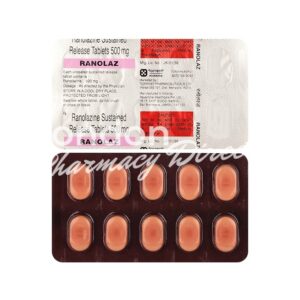
In brief
- In our pharmacy, Ranexa (ranolazine) is available, but it is a prescription-only medicine in the UK and should be supplied with a valid prescription and specialist supervision; purchasing without a prescription is not legal or recommended.
- Ranolazine is used to treat chronic stable angina; it works mainly by inhibiting the late sodium current (INaL) in cardiac myocytes, reducing diastolic wall tension and myocardial oxygen demand without significant effects on heart rate or blood pressure.
- The usual starting dose is one 375 mg prolonged-release tablet twice daily; after 2–4 weeks the dose may be increased to 500 mg twice daily and, depending on response and tolerability, to 750 mg twice daily, not exceeding 1,500 mg per day.
- Form of administration: oral prolonged-release tablets (375 mg, 500 mg and 750 mg).
- Onset time: clinical benefits are typically seen within days and more clearly within 1–2 weeks; some patients may notice improvement within a few days of starting treatment.
- Duration of action: ER formulation is designed for twice-daily dosing with around 12 hours of therapeutic effect per dose (plasma half-life approximately 7 hours, prolonged by the ER formulation).
- Alcohol warning: avoid excessive alcohol — it can worsen side effects such as dizziness or nausea and may increase the risk of cardiac rhythm disturbances or interact with other medicines.
- The most common side effect is constipation (other frequent effects include nausea, headache and dizziness).
- Would you like to try Ranexa without a prescription?
Basic Ranexa information
- INN (international nonproprietary name): Ranolazine
- Brand names available in the United Kingdom: Ranexa; generic ranolazine (e.g. Accord)
- ATC code: C01EB18
- Forms and dosages: Prolonged‑release tablets 375 mg, 500 mg and 750 mg
- Manufacturers in the United Kingdom: Menarini (Ranexa); Accord and other generic suppliers
- Registration status in the United Kingdom: Licensed by the MHRA for chronic stable angina in adults; prescription only, with specialist supervision and ongoing review
- OTC / Rx classification: Prescription-only medicine (POM)
Initial instructions and rapid warnings for UK patients
Worried about how to start Ranexa safely?
Follow MHRA and NHS advice: ranolazine (Ranexa) is prescription‑only and is normally started under specialist supervision for chronic stable angina.
Do not self‑prescribe or change doses without clinical review.
Immediate warnings: avoid Ranexa if you have severe liver disease, known QT prolongation, or are taking strong CYP3A inhibitors such as ketoconazole or clarithromycin.
Report new palpitations, fainting, severe dizziness or syncope straight away to A&E or your cardiology team.
Daily‑life tips: set twice‑daily reminders (for example breakfast and early evening), carry a pocket card listing your diagnosis and medicines for emergency care, and discuss driving or safety‑critical work with your clinician before starting.
Pharmacist note: bring the blister pack and a current medicines list to enable a full interaction check.
What to tell your clinician (checklist)
- All prescription medicines and OTC products you take.
- Any herbal remedies or supplements (notably grapefruit juice/products).
- History of liver or kidney problems, arrhythmias or fainting.
- Any current or recent antibiotic or antifungal treatment.
- Work involving driving, heavy machinery or safety‑critical tasks.
Wallet Card — contraindications
| Contraindication | Action |
|---|---|
| Severe Hepatic Impairment | Do Not Take |
| Known QT Prolongation Syndromes | Do Not Take |
| Concomitant Strong CYP3A Inhibitors | Contraindicated (e.g. ketoconazole, clarithromycin) |
Everyday use and best practices
Morning vs evening dosing
How should Ranexa fit into my day?
- Typical starting regimen: ranolazine prolonged‑release 375 mg twice daily, increased after 2–4 weeks to 500 mg twice daily and, if needed, to 750 mg twice daily under specialist review; do not exceed 1,500 mg/day.
- Take one dose in the morning and one in the evening roughly 12 hours apart to keep steady blood levels.
- Set phone alarms, use a dosette box or keep the blister visible to build a twice‑daily habit.
- Align doses with predictable activities (for example breakfast and early evening) to improve adherence.
- If a dose is missed, take the next scheduled dose at the normal time — do not double up.
Taking with or without meals (UK diet habits)
Do I need to time Ranexa around food?
Ranolazine is formulated as prolonged‑release tablets to support twice‑daily use with or without food.
In practice, taking doses with a light meal or snack helps adherence and can reduce mild stomach upset such as nausea.
Avoid very heavy or irregular meals or binge alcohol around dose times as these may worsen dizziness or nausea.
Store tablets at 20–25°C in a dry place and keep the blister intact until use.
Safety priorities
Who should avoid it (MHRA warnings)
Is Ranexa safe for everyone?
Absolute contraindications include hypersensitivity to ranolazine, severe hepatic impairment, documented long QT syndromes and concomitant strong CYP3A inhibitors (for example ketoconazole or clarithromycin).
Caution or specialist review is advised for elderly patients (especially over 75 years), those with moderate hepatic impairment, and people with severe renal impairment.
Always disclose all prescription medicines, OTC products, herbal remedies and supplements (notably grapefruit) to your prescriber and pharmacist.
Tell your clinician if you have…
- Liver disease or jaundice.
- Kidney impairment or are on dialysis.
- A history of fainting, palpitations or arrhythmia.
- Any recent antibiotic/antifungal treatment.
- Multiple other cardiac medicines (statins, antiarrhythmics).
Activities to limit (driving, work safety)
Will Ranexa affect my ability to drive or work?
Common side effects include dizziness and headache, and rare events such as syncope or palpitations may occur.
Do not drive or operate heavy machinery until you know how ranolazine affects you.
For safety‑critical or licensed roles (HGV drivers, pilots, certain NHS posts) speak to occupational health and your prescriber before starting.
If you experience sudden fainting or unexplained severe lightheadedness, stop driving and seek urgent medical review.
Dosage and adjustments
General regimen (NHS guidance)
What dose will my clinician usually start?
| Starting dose | Titration step | Maximum dose |
|---|---|---|
| 375 mg prolonged‑release twice daily | Increase to 500 mg twice daily after 2–4 weeks, then to 750 mg twice daily if needed and tolerated | 1,500 mg/day (do not exceed) |
Initiation and dose changes are typically managed by a cardiologist or GP following specialist advice within NHS pathways.
Monitor symptoms and ECGs if there is QT risk or interacting medicines present.
Pharmacies commonly provide a two‑column patient sheet (current dose / next review) to help with follow up.
Special cases (elderly, comorbidities)
Are dose changes needed for older patients or those with other illnesses?
Elderly patients may be more sensitive to adverse effects such as dizziness or QT prolongation, so start low and monitor closely.
Severe hepatic impairment is a contraindication and moderate hepatic disease requires specialist review and possible dose reduction or avoidance.
Mild to moderate renal impairment may allow cautious use, but severe renal dysfunction is not recommended due to higher plasma levels and increased QT risk.
Ranolazine is not approved for children and drug interactions (for example with some statins or antiarrhythmics) should prompt ECG monitoring when doses are adjusted.
Legal status and availability in the UK
Ranexa is a prescription-only medicine (POM) in the UK.
In our online pharmacy, Ranexa is available without a prescription, with discreet delivery to the United Kingdom in 5‑14 days.
What’s inside and how it works
Ingredients overview
What exactly is in Ranexa tablets?
| Strength | Common manufacturers |
|---|---|
| 375 mg | Menarini, Accord (generics) |
| 500 mg | Menarini, Accord (generics) |
| 750 mg | Menarini, Accord (generics) |
The active ingredient is ranolazine (INN), and tablets are prolonged‑release to support twice‑daily dosing.
Excipients vary by manufacturer and are listed on the patient information leaflet; notify your pharmacist about any excipient allergies.
Mechanism basics explained simply
How does ranolazine relieve angina?
Ranolazine inhibits the late sodium current in cardiac cells, reducing intracellular sodium and indirectly lowering calcium overload.
This effect reduces myocardial oxygen demand and can relieve angina symptoms without a marked reduction in heart rate or blood pressure.
Because it acts differently to nitrates and beta‑blockers, ranolazine is useful when those drugs are ineffective or poorly tolerated.
It is classified under ATC code C01EB18 (other antianginal agents).
Main indications
Approved uses (MHRA listing)
Who is Ranexa licensed for?
- Adults with chronic stable angina who remain symptomatic despite standard therapy.
- As an add‑on or alternative treatment when beta‑blockers, nitrates or calcium channel blockers are insufficient or not tolerated.
- Prescriptions are typically initiated by cardiology teams or GPs under specialist advice within NHS pathways.
Treatment is usually long‑term and reviewed for benefit and side effects at planned clinic or GP reviews.
Off‑label uses in UK clinics
Are there other uses clinicians try?
Some UK clinicians and small studies have explored ranolazine for reducing atrial fibrillation burden and other arrhythmia‑related uses.
These applications are investigational and off‑label, so any such use should be clearly explained to the patient, documented and accompanied by a monitoring plan.
NHS trust formularies may vary in recommendations for off‑label use — always check local guidance.
Interaction warnings
Food interactions (alcohol, tea/coffee)
What should I avoid eating or drinking while on Ranexa?
- Avoid grapefruit juice and grapefruit products because they raise ranolazine levels via CYP3A inhibition.
- Limit alcohol, especially binge drinking, since alcohol can worsen dizziness or fainting risks.
- Normal tea or coffee do not directly interact with ranolazine but caffeine can aggravate palpitations or anxiety in some people.
Drug conflicts
Which medicines must I tell my pharmacist about?
Major interactions include strong CYP3A inhibitors such as ketoconazole and clarithromycin, which are contraindicated with ranolazine.
Strong CYP3A inducers reduce ranolazine efficacy and should be avoided or reviewed.
Combining ranolazine with QT‑prolonging drugs (certain antiarrhythmics, some antipsychotics) requires careful ECG monitoring.
Statins that are CYP3A substrates may need dose review when co‑prescribed.
Tell your pharmacist if you take…
- Antifungals or macrolide antibiotics (e.g. clarithromycin).
- Some statins (inform about simvastatin or others).
- Antiarrhythmics or antipsychotics.
- Herbals such as St John’s Wort or grapefruit products.
Report suspected interactions or adverse reactions via the MHRA Yellow Card scheme.
Alternative choices
What other medicines might my clinician try first?
- Beta‑Blockers (metoprolol, bisoprolol): good for heart‑rate related angina but can cause fatigue or bradycardia.
- Long‑Acting Nitrates (isosorbide mononitrate): effective for relief but risk tolerance and hypotension with continuous use.
- Calcium Channel Blockers (amlodipine, diltiazem): useful when beta‑blockers are poorly tolerated; side effects include ankle swelling and constipation.
- Specialist Options (nicorandil, ivabradine): considered by cardiologists when first‑line agents are unsuitable.
Ranexa fits where symptom relief is needed without significant reductions in heart rate or blood pressure.
Choice should follow a medicines review with GP or cardiologist and consider ECG/QT risk and interactions.
Regulation snapshot
How is Ranexa regulated in the UK?
| Item | Information |
|---|---|
| MHRA Approval Status | Prescription‑only; approved for chronic stable angina |
| ATC Code | C01EB18 |
| Common Brands/Manufacturers | Menarini (Ranexa), Accord (generics) |
Local NHS formularies and trust drug committees govern availability and preferred brands.
Repeat prescribing is often managed by the GP after specialist initiation, and medicines optimisation teams can advise on branded versus generic substitution.
Frequently asked questions
Can I drive on Ranexa?
Not until you know how it affects you; if you feel dizzy or faint, stop driving and inform your clinician.
What if I miss a dose?
Take the next scheduled dose at the usual time; do not double the dose; if close to the next dose, skip the missed one and continue.
Can I take Ranexa with my statin or antibiotic?
Many statins are safe, but some CYP3A substrates need review; strong CYP3A inhibitors such as clarithromycin are contraindicated — always show all medicines to your pharmacist.
How quickly will it help my angina?
Some patients notice fewer symptoms within days to weeks; full benefit and dose optimisation often take several weeks under specialist review.
Guidelines for proper use
UK pharmacist counselling style
What should pharmacists cover when dispensing Ranexa?
- Explain the indication: chronic stable angina and the expected twice‑daily dosing schedule (typical start 500 mg twice daily).
- Demonstrate what to do with a missed dose and emphasise not to double up.
- List common side effects: constipation, nausea, headache, dizziness, and the rare but serious risks like syncope or palpitations.
- Highlight major contraindications: severe hepatic impairment, strong CYP3A inhibitors and QT issues.
- Encourage Yellow Card reporting for adverse events and use teach‑back to confirm understanding.
Wallet Card template (brief)
| Item | Details |
|---|---|
| Medicine | Ranexa (ranolazine) — strength & dosing |
| Allergies | List any known allergies |
| Emergency Note | Do not give certain antibiotics (e.g. clarithromycin) — see pharmacist/doctor |
NHS patient support advice
How can patients get the most from treatment?
Encourage participation in cardiac rehabilitation and keeping a simple symptom diary recording angina frequency and triggers.
Arrange medication reviews with the GP or cardiology clinic and consider annual liver/renal monitoring if clinically indicated.
For supply problems, direct patients to local medicines optimisation teams or social prescribing links.
Advise prompt reporting of new palpitations, syncope or mood changes and to bring medication lists to all appointments.
Delivery across the United Kingdom
| City | Region | Delivery Time |
|---|---|---|
| London | Greater London | 9–21 days |
| Birmingham | West Midlands | 9–21 days |
| Manchester | Greater Manchester | 9–21 days |
| Glasgow | Scotland | 9–21 days |
| Leeds | West Yorkshire | 9–21 days |
| Liverpool | Merseyside | 9–21 days |
| Bristol | South West England | 9–21 days |
| Newcastle | Tyne and Wear | 9–21 days |
| Sheffield | South Yorkshire | 9–21 days |
| Edinburgh | Scotland | 9–21 days |
| Cardiff | Wales | 9–21 days |
| Belfast | Northern Ireland | 9–21 days |
| Nottingham | Nottinghamshire | 9–21 days |
| Leicester | Leicestershire | 9–21 days |
| Plymouth | Devon | 9–21 days |
FAQ quick printouts
Can I take Ranexa with grapefruit?
No — grapefruit increases ranolazine levels and should be avoided.
What monitoring will I need?
Occasionally an ECG is done if QT risk is suspected and liver/renal checks if clinically indicated.
How will I get repeats?
Repeat prescribing is usually arranged via GP after specialist initiation or through hospital clinics depending on local shared‑care agreements.
Closing safety reminders
If you are collecting Ranexa from a community pharmacy, ask for a full interaction check and a printed patient information leaflet.
Keep an up‑to‑date medicines list on you and show it to every clinician or pharmacist you see.
Report adverse events via the MHRA Yellow Card scheme and bring any worrying symptoms to urgent medical attention.
For local supply advice ask your pharmacist or the NHS medicines optimisation team.