Tropicamide
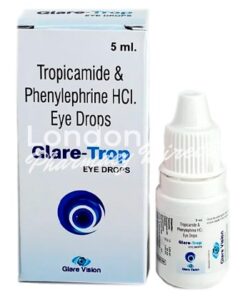
In stock
1%
from 28,24 £
In brief
- Tropicamide is an antimuscarinic eye drop with a quick onset and brief action, used to enlarge the pupil before the inside of the eye is examined.
- The 1% solution is the only strength listed, sold as one to five bottles at a time.
- A POM in the UK. Mydriacyl and Minims single-dose units hold UK licences, while the bottles listed here are imported.
Tropicamide and how it opens the pupil
Tropicamide drops belong to the antimuscarinic group. Placed in the eye, they stop acetylcholine from signalling to two small muscles: the one that tightens the pupil, and the ciliary muscle that adjusts the lens for near focus. The pupil therefore dilates to its widest, and whoever is looking into the eye gets an unobstructed view of the retina and optic nerve. Older drops such as atropine can leave the pupil enlarged for days. It begins within minutes and wears off within hours, which makes it the natural pick for a routine check.
Why a clinician would prescribe it
The UK SmPC presents the drops as a diagnostic aid. One purpose is examining the fundus, the back of the eye, through a dilated pupil. The second is cycloplegic refraction, where focusing is briefly paralysed so that the true need for glasses shows up, which matters most in children. A further use is short-term dilation either side of eye surgery. Because young eyes can focus very strongly, it may not paralyse focusing enough in a child, and atropine is sometimes required.
Strength, bottles and the way a dose is given
The listing covers a 1% solution only. A buyer chooses between one, two, three, four or five bottles; the volume of each and the choice of preservative are not given. One or two drops are placed in the eye ahead of the examination. For cycloplegic refraction, repeat the one or two drops of 1% solution after five minutes; if the patient is not examined within twenty to thirty minutes, an additional drop may be instilled to prolong the effect. The SmPC keeps very small infants to the 0.5% strength, which makes the 1% drops here inappropriate for them. After instillation, gently press over the tear duct beside the nose for at least two minutes to reduce absorption into the bloodstream. Anything else going into the eye should wait five minutes, with ointments last of all.
Warning signs and people who need extra care
Closed-angle glaucoma, or an eye with a narrow drainage angle, makes tropicamide unsuitable, as does allergy to it. Narrow angles often lurk undetected in later life, so the SmPC asks for caution with older people. The same caution applies to children, to people with Down syndrome and to anyone who reacts to atropine-like medicines. After a child has had drops, both child and adult should wash their hands. Where the drops contain benzalkonium chloride, as Mydriacyl does, soft lenses go back in only after a quarter of an hour. Pain in the eye, rings of colour around lights, or an eye that turns red and feels firm can signal acute angle closure and calls for immediate medical attention. Dark glasses are comfortable while the pupil remains wide.
Driving, interactions and what you may feel
Expect hazy sight and a dislike of bright light until the effect fades, which can take as long as six hours. Do not drive or operate machinery until then. If the pupil is still large, or reading remains difficult, long after that, ask for advice. Stinging, a red or sore eye, headache, dizziness, nausea, fainting, a fall in blood pressure and prolonged dilation have been reported; their frequencies are unknown. Children absorb more and so show whole-body anticholinergic effects sooner. Amantadine, antihistamines, antipsychotics, phenothiazines and tricyclic antidepressants share the same pharmacology and can add to the action.
Where tropicamide stands in the UK
Tropicamide is a prescription-only medicine, with specified legal exemptions for professional supply, including supply by a pharmacy against an optometrist’s signed order. Licensed products include Mydriacyl 1% drops and the Minims single-dose units in 0.5% and 1% strengths. Mydriacyl is thrown away four weeks after the bottle is first opened; with the imported bottles, go by the instructions in the box or ask a pharmacist for the date. The optometrist, ophthalmologist or other prescriber decides whether Tropicamide is the right drop for the examination.