Timoptic
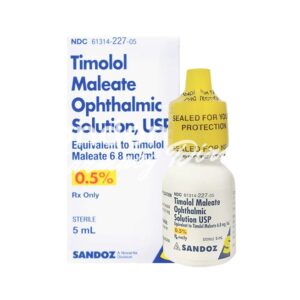
In stock
0.5%
from 24,42 £
In brief
- Timoptic contains the beta-blocker timolol as eye drops, used to bring down raised eye pressure in ocular hypertension and glaucoma.
- Sold as 0.5% only, in sets of two, four or six bottles.
- Needs a UK prescription, with supervision from an optometrist, eye clinic or doctor.
How Timoptic reduces pressure in the eye
Timoptic’s active ingredient is timolol maleate, a non-selective beta-blocker formulated for the eye. The eye constantly makes a clear fluid, and timolol lowers the amount produced, so the pressure inside drops. If pressure stays high it can injure the optic nerve and shrink the field of sight bit by bit, frequently without pain or early warning. A 0.5% solution corresponds to 5 mg of timolol per ml. The drops control the pressure; they do not cure the underlying condition.
Which glaucoma and pressure problems it treats
Licensed uses are ocular hypertension, chronic open-angle glaucoma (aphakic eyes included, that is where the natural lens has been removed) and some secondary glaucomas. Since glaucoma can advance silently, pressure is measured at regular visits throughout treatment, and an optician or eye clinic usually inspects the optic nerve and tests the visual field too. Expect long-term use of Timoptic; if you stop without advice, eye pressure could climb back.
Strength and bottle numbers
Timoptic reaches you as an import. Here there is one strength, 0.5%, sold as sets of 2, 4 or 6 bottles, and the bottle volume is not stated. A bottle in use should be thrown away after 28 days, so write the opening date on the box; spare bottles are only worth having while they remain sealed.
A step-by-step routine for the drops
Treatment under the SmPC opens with a drop of 0.25% solution into the eye concerned, morning and evening. Where pressure remains high, the 0.5% solution is substituted at the same frequency. After about four weeks the pressure is checked, and when it is steady some people need only one drop a day. Afterwards, shut the eye and gently press the inner corner for two minutes; this reduces the amount that drains down into the nose and into the body. Do not let the bottle tip touch the eye, eyelids or fingers. Soft contact lenses come out first and go back after 15 minutes, because the preservative can collect in them. Using two beta-blocker eye drops together is not recommended.
Timolol in the UK: brands and category
Every timolol eye drop sold in Britain falls under prescription-only (POM) rules. Brands include Timoptol, one version of which lasts longer, alongside generics, and some combination drops contain timolol too. The name Timoptic itself belongs to no UK-licensed medicine. It is for the prescriber to decide whether Timoptic is right for you.
Cautions and interactions
A small amount of timolol enters the bloodstream, which is why the warnings echo those for beta-blocker tablets. The drops are unsuitable if you have, or ever had, asthma. Severe chronic obstructive pulmonary disease, a very slow pulse and sick sinus syndrome also rule them out, as do sino-atrial block and second- or third-degree heart block without a pacemaker, overt heart failure and cardiogenic shock. Caution rather than prohibition applies to coronary heart disease, low blood pressure, Raynaud’s phenomenon and milder lung disease. In diabetes, beta-blockers can dull the warning signs of low blood sugar, and they can hide those of an overactive thyroid. The heart effect can be increased by beta-blocker tablets, calcium channel blockers, digoxin and amiodarone; quinidine, fluoxetine and paroxetine may in turn push timolol levels higher. Pregnant women should use it only when clearly needed; small amounts reach breast milk.
What you might notice
Brief blurring straight after the drop, and stinging, burning, itching or redness of the eye, are usual. Timolol taken up by the body can cause a slow pulse, dizziness, tiredness, wheezing or breathlessness; seek prompt medical advice if you notice these.