Vesicare
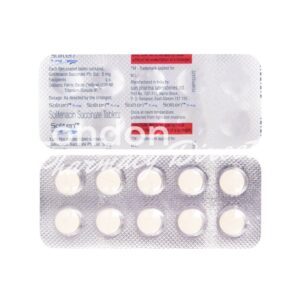
In brief
- In our pharmacy, you can buy Vesicare without a prescription, with delivery in 9–21 days throughout the United Kingdom. Discreet and anonymous packaging.
- Vesicare (solifenacin) is used to treat overactive bladder symptoms such as urinary urgency, frequency and urge incontinence; it is a competitive muscarinic (mainly M3) receptor antagonist that reduces involuntary bladder (detrusor) contractions.
- The usual dose is 5 mg once daily, which may be increased to 10 mg once daily if needed and well tolerated; lower doses or avoidance are advised in significant renal or hepatic impairment and in frail elderly patients.
- The form of administration is an oral tablet, taken once daily with or without food.
- Many patients notice an effect within a few days (commonly 3–7 days), although symptomatic improvement may take up to 4 weeks.
- The duration of action covers 24 hours with once‑daily dosing; the drug has a relatively long elimination half‑life, supporting daily administration.
- Avoid excessive alcohol as it can increase drowsiness and worsen anticholinergic side effects such as dizziness, blurred vision and impaired coordination.
- The most common side effect is dry mouth; other frequent effects include constipation, blurred vision and possible urinary retention, and elderly patients may experience confusion or dizziness.
- Would you like to try Vesicare without a prescription?
Basic Vesicare information
- INN (international nonproprietary name): Solifenacin (as solifenacin succinate)
- Brand names available in the United Kingdom: Vesicare; generic solifenacin succinate
- ATC code: G04BD08
- Forms and dosages: Film-coated tablets 5 mg and 10 mg; oral suspension 1 mg/mL
- Manufacturers in the United Kingdom: Astellas (Vesicare) and several generic manufacturers
- Registration status in the United Kingdom: Licensed by the MHRA; prescription-only medicine (POM)
- OTC / Rx classification: Prescription-only medicine (POM)
Initial instructions, warnings and daily-life integration for UK patients
Worried about side effects or stopping treatment suddenly?
Vesicare (solifenacin) is a prescription-only medicine in the United Kingdom, so do not stop or change dose without speaking to your GP or a pharmacist.
If you have urinary retention, severe hepatic impairment, uncontrolled narrow‑angle glaucoma or a known allergy to solifenacin, avoid it and seek medical advice promptly.
Take Vesicare at the same time each day to build a routine around breakfast or bedtime depending on which timing suits your symptoms and side effects.
Carry an NHS 111 or GP contact if you get sudden vision changes, difficulty passing urine, severe constipation or new confusion.
Keep a simple bladder diary for 3–7 days to help consultations; a checklist style diary works best for clinic review.
Store Vesicare tablets at room temperature and protect them from moisture and light.
Prefer placing the pack in a dry cupboard rather than the bathroom to avoid humidity damage.
Practical storage checklist
- Store at room temperature (below 25°C).
- Keep in original packaging to check expiry and batch details.
- Protect from moisture and light; avoid bathroom storage.
- Dispose of any out‑of‑date medicine via pharmacy take‑back.
Everyday use and best practices
Should I take Vesicare in the morning or the evening?
Morning vs evening dosing
Vesicare is commonly started as 5 mg once daily, with the option to increase to 10 mg once daily after a review if needed.
Morning dosing tends to suit people whose daytime urgency and frequency cause the main problem.
Evening dosing can help night‑time frequency but may increase dry mouth or blurred vision on waking for some people.
Whichever time you choose, stick to the same time each day to keep steady blood levels.
If you miss a dose, take it as soon as you remember unless it is close to the next dose; do not double up.
Taking with or without meals
Vesicare can be taken with or without food, which makes it flexible for UK routines that include a cooked breakfast or a heavier evening meal.
If stomach upset occurs, take the tablet after food to ease gastrointestinal discomfort.
- Pick the dose time that fits your usual routine to reduce missed doses.
- If you plan a late shift or an evening out, keep a reminder aligned with meals.
- Store the blister or bottle somewhere visible so you remember each day.
Missed dose checklist: Take remembered dose unless near next dose; never take two doses together; contact GP if unsure after multiple missed doses.
Safety priorities
Who should avoid Vesicare and what activities should be limited?
Who should avoid it (MHRA warnings)
- Do not use Vesicare if you have urinary retention.
- Avoid if you have severe hepatic impairment.
- Do not use with uncontrolled narrow‑angle glaucoma.
- Stop and seek advice if you have a known hypersensitivity to solifenacin or any excipient.
- Use caution in the elderly, those with significant renal impairment, or people with conditions that predispose to constipation or cognitive impairment.
- If pregnant, planning pregnancy or breastfeeding, discuss risks with your prescriber before starting.
Activities to limit (driving, work safety)
Solifenacin can cause drowsiness, blurred vision or dizziness in some people.
Avoid driving or operating heavy machinery until you know how Vesicare affects you.
For safety‑critical jobs such as HGV driving or machinery operation, discuss medication effects with occupational health and your prescriber.
Before you drive checklist
- No new visual disturbance since starting medication.
- No excessive drowsiness or dizziness today.
- Not taking other sedating medicines that might increase risk.
Dosage and adjustments
What dose should most people start on, and how are special cases handled?
General regimen (NHS guidance)
The typical starting dose is 5 mg once daily, with a reassessment after 4–8 weeks to decide on continuing, changing or increasing to 10 mg once daily if benefits outweigh risks.
Review symptom scores and side effects before escalating dose.
Vesicare is prescription‑only and will usually appear on repeat prescriptions if effective and tolerated.
Special cases (elderly, comorbidities)
| Scenario | Recommended approach |
|---|---|
| Standard Adult | Start 5 mg once daily; consider 10 mg after 4–8 weeks if needed. |
| Elderly | Start 5 mg; monitor for confusion, urinary retention and falls; avoid escalation without review. |
| Moderate Renal/Hepatic Impairment | Avoid escalation to 10 mg; monitor eGFR and LFTs; specialist advice advised. |
| Severe Renal/Hepatic Impairment | May be contraindicated; specialist review required. |
Monitoring checklist: Watch for reduced urine output, new blurred vision, constipation, dizziness or cognitive change; report these to GP or pharmacist.
Legal status and availability in the UK
Vesicare is a prescription-only medicine (POM) in the UK.
In our online pharmacy, Vesicare is available without a prescription, with discreet delivery to the United Kingdom in 9–21 days.
What’s inside and how it works
What is in a Vesicare tablet and how does it reduce urgency?
Ingredients overview
Vesicare contains solifenacin succinate as the active ingredient, in 5 mg and 10 mg tablet strengths.
Generic formulations may vary in excipients, so check the patient information leaflet for any specific allergens.
Keep original blister packs or bottles to check expiry dates and batch numbers.
Mechanism basics explained simply
Solifenacin is an antimuscarinic agent that relaxes the bladder detrusor muscle by blocking M3 muscarinic receptors in the bladder wall.
Blocking these receptors reduces the frequency of involuntary bladder contractions that cause urgency and urge incontinence.
- M3 receptor blockade → Reduced detrusor overactivity.
- Clinical effect usually appears within 1–4 weeks and may improve with continued use.
- Side effects commonly reflect overall anticholinergic action: dry mouth, constipation, blurred vision.
Tablet strengths and packaging checklist: 5 mg and 10 mg tablets; typically supplied in blister packs or bottles.
Main indications
What conditions is Vesicare licensed to treat, and are there off‑label uses?
Approved uses (MHRA listing)
| Indication | Typical first‑line choice | When to refer |
|---|---|---|
| Overactive Bladder (urgency, frequency, urge incontinence) | Antimuscarinic such as solifenacin or alternatives depending on comorbidity | Refractory symptoms, suspected neurogenic bladder, recurrent UTIs, significant impact on quality of life |
Use follows MHRA and relevant NICE guidance, with treatment decisions informed by symptom burden, bladder diary and shared decision‑making.
Off‑label uses in UK clinics
Specialist clinicians sometimes use antimuscarinics in selected neurogenic bladder cases or combine them with other agents such as mirabegron under specialist supervision.
Such off‑label strategies are specialist‑led and documented in clinical records.
Interaction warnings
Which foods or medicines interact with Vesicare?
Food interactions (alcohol, tea/coffee)
Alcohol may worsen drowsiness and dizziness when taking Vesicare, so discuss alcohol use with your prescriber.
Caffeine from tea and coffee can increase urgency and frequency, so cutting down caffeine often helps bladder symptoms even when taking medication.
Drug conflicts
- Solifenacin is mainly metabolised by CYP3A4; potent CYP3A4 inhibitors can raise solifenacin levels and increase side effects.
- Concurrent anticholinergic medicines (some antihistamines, tricyclic antidepressants, oxybutynin) increase anticholinergic burden and risk of dry mouth, constipation and cognitive effects.
- Always bring a list of current medicines and supplements to the pharmacy for an interaction check.
Report suspected adverse interactions via the MHRA Yellow Card scheme; pharmacists can help file reports.
Alternative choices
What other NHS options are available for overactive bladder and when should I switch?
NHS prescribing alternatives with pros/cons checklist
| Drug | Mechanism | Typical side effects | Suitability |
|---|---|---|---|
| Tolterodine | Antimuscarinic | Dry mouth, constipation | Good balance of efficacy/tolerability |
| Oxybutynin | Antimuscarinic | Higher anticholinergic effects, cognitive risk | Effective but less suitable for older people |
| Trospium | Antimuscarinic | Dry mouth, constipation | Less CNS penetration; useful in older adults |
| Mirabegron | Beta‑3 agonist | Hypertension, tachycardia in some | Non‑anticholinergic; preferred if anticholinergic burden is a concern |
When to consider switching or combining
- Switch if unacceptable side effects occur or inadequate response after 4–8 weeks.
- Consider combination therapy (antimuscarinic plus mirabegron) under specialist guidance for partial responders.
- Prefer mirabegron where anticholinergic load or dementia risk is a concern.
Regulation snapshot
Who regulates Vesicare in the UK and how do I report problems?
MHRA approval and NHS prescribing framework
Vesicare (solifenacin) is licensed and prescribed under UK regulatory frameworks with oversight by the MHRA.
Prescriptions should be written and dispensed through regulated NHS or private routes and repeats issued where clinically appropriate.
Reporting problems (Yellow Card)
Report serious side effects such as severe urinary retention, new visual disturbances, severe constipation or sudden confusion via the MHRA Yellow Card scheme.
Pharmacists and GPs can assist patients with submitting a Yellow Card report to ensure safety data are captured.
Frequently asked questions
Common questions UK patients ask about Vesicare.
How long before Vesicare works?
Many patients see benefit within 1–4 weeks, with review suggested at 4–8 weeks to assess effectiveness.
Can I drive on Vesicare?
If you feel drowsy or have blurred vision, do not drive and seek advice.
Inform the DVLA only if a condition or medication affects your driving long‑term or causes significant impairment.
What if I can’t tolerate side effects?
Speak to your GP or pharmacist about dose reduction, switching to another antimuscarinic or trying mirabegron.
Is Vesicare safe with other medicines?
Check with your pharmacist for potent CYP3A4 inhibitors and other anticholinergics; bring a list of all medicines and supplements for an interaction check.
Seek urgent help if…
- You cannot pass urine at all.
- You have severe abdominal pain.
- You develop sudden blurred vision or confusion.
Guidelines for proper use
What should pharmacists tell patients when dispensing Vesicare?
UK pharmacist counselling style
Confirm the indication of overactive bladder and the chosen dose, usually 5 mg or 10 mg once daily.
Explain common side effects including dry mouth, constipation and blurred vision, and discuss interactions such as CYP3A4 inhibitors and other anticholinergics.
Advise storage at room temperature, protected from moisture and light, and explain missed dose instructions and when to seek help.
NHS patient support advice
Primary care, practice nurses, community continence services and specialist urology clinics offer bladder training and pelvic floor physiotherapy alongside medication.
Ask your GP about local continence services commissioned by your Integrated Care Board if symptoms remain problematic despite initial treatment.
Dispensing checklist for pharmacists
- Confirm allergies and pregnancy status.
- Check current medicines and possible interactions.
- Request a bladder diary if not already provided.
- Provide patient leaflet and storage advice.
Delivery across the United Kingdom
| City | Region | Delivery Time |
|---|---|---|
| London | England | 9–21 days |
| Birmingham | England | 9–21 days |
| Manchester | England | 9–21 days |
| Glasgow | Scotland | 9–21 days |
| Leeds | England | 9–21 days |
| Edinburgh | Scotland | 9–21 days |
| Bristol | England | 9–21 days |
| Cardiff | Wales | 9–21 days |
| Belfast | Northern Ireland | 9–21 days |
| Newcastle | England | 9–21 days |
| Nottingham | England | 9–21 days |
| Southampton | England | 9–21 days |
| Plymouth | England | 9–21 days |
| Aberdeen | Scotland | 9–21 days |