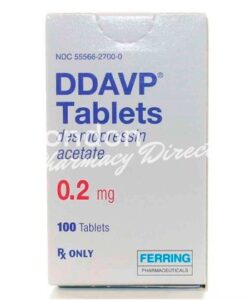
Desmopressin
In stock
200mcg
from 70,22 £
In brief
- Desmopressin is a man-made copy of vasopressin, the antidiuretic hormone, and works by reducing the amount of urine the kidneys make.
- 200 mcg is the strength on offer, with 30, 60, 90, 120 or 180 tablets in a pack.
- Legal category POM. The UK has licensed 0.2 mg tablets, whereas this listing is for imported stock.
Desmopressin: borrowing the body’s water-saving hormone
Desmopressin is a laboratory version of vasopressin, the antidiuretic hormone that the pituitary gland releases when the body needs to hold on to water. It instructs the kidneys to take water back, so less urine comes out and the urine that does is more concentrated. It outlasts natural vasopressin, and the dose is adjusted individually. The 200 micrograms printed on this listing equal 0.2 mg, the strength of the UK tablets.
The pituitary form of diabetes insipidus
The UK-licensed 0.2 mg tablet is indicated for cranial diabetes insipidus, in which the pituitary makes too little vasopressin, so a person passes large amounts of weak urine and feels constantly thirsty. The same two symptoms, polyuria and polydipsia, are treated after pituitary surgery. Treatment commonly opens with 0.1 mg three times a day. The dose is adjusted individually; most patients need 0.1 to 0.2 mg three times daily, while the usual total daily range is 0.2 to 1.2 mg. Following surgery, the urine osmolality guides the dose. Before the diagnosis is made, psychogenic polydipsia and alcohol misuse must be ruled out.
Night-time bedwetting, and why fluid limits matter
A separate UK licence, held by Desmotabs 0.2 mg, covers primary nocturnal enuresis in people aged 5 to 65. The dose is 0.2 mg at bedtime, which can go up to 0.4 mg, and after three months the treatment is stopped for at least a week to see if it is still required. Blood pressure must be normal, and nobody over 65 should start. Fluid intake must be restricted from one hour before the bedtime dose until the next morning, and for at least eight hours after the dose. This rule is essential, because heavy drinking after a dose is the usual route to water retention. Vomiting or diarrhoea means pausing treatment, and swimming needs thought about how much water is swallowed.
Packs and what imported means
The pack choices are 30, 60, 90, 120 or 180 tablets of 200 mcg. The tablet itself does not change between the two uses; what changes is the timetable. Diabetes insipidus can need up to three doses daily. Bedwetting needs one, at bedtime. Imported packs can look different from UK ones, so the carton is worth keeping for a prescriber or pharmacist to inspect. Sublingual desmopressin tablets sold in the UK come in other strengths and cannot be swapped unit for unit.
Who should not take it, and interactions
Desmopressin is not given in heart failure or in any condition treated with diuretics. Reduced kidney function, circulatory or heart disorders, cystic fibrosis and increased intracranial pressure are all reasons for extra caution. Tricyclic and SSRI antidepressants, chlorpromazine, carbamazepine, anti-inflammatory painkillers and loperamide can increase the chance of low blood sodium or alter the response, and a fatty meal changes absorption. In pregnancy the SmPC advises care and blood-pressure monitoring. As one tablet serves such different purposes, the prescriber must match the dose and the fluid advice to the reason.
Practical points before starting
Expect the prescriber to ask about thirst, how much urine is passed by day and by night, and how much is drunk. Some will arrange a baseline sodium test, and others a repeat after the first week or so, particularly in older people. Keep a note of fluid intake in the days after starting. Desmopressin for bedwetting is not usually a lifelong plan, and the periodic break is there to see whether the problem has settled by itself. For bedwetting, pause treatment during vomiting or diarrhoea until fluid balance returns to normal; for diabetes insipidus, seek urgent medical advice rather than stopping desmopressin on your own.
Hyponatraemia and other effects
The reported effects include headache, abdominal pain, nausea and allergic reactions; children may also become emotionally unsettled or aggressive. The serious danger is hyponatraemia, too little sodium in the blood. Early signs are headache, nausea, confusion and weight gain, and in severe cases seizures, which need urgent medical help. Extreme drowsiness or confusion following a dose should be treated as an emergency. It falls to the prescriber to decide whether and how Desmopressin is used and to arrange sodium checks where they are required.