Ddavp
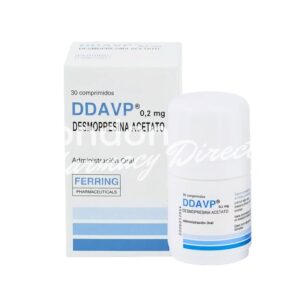
In brief
- In our pharmacy, you can buy Ddavp without a prescription, with delivery in 9–21 days throughout the United Kingdom. Discreet and anonymous packaging.
- Ddavp (desmopressin) is used as replacement therapy in central diabetes insipidus, for nocturnal enuresis in children and for some bleeding disorders; it is a synthetic analogue of vasopressin that acts on kidney V2 receptors to increase water reabsorption and reduce urine volume.
- The dose depends on the indication and is individualised: for nocturnal enuresis a single dose is taken at bedtime (for example a melt of 120 micrograms, increased to 240 micrograms if needed), while in central diabetes insipidus the dose is divided through the day and titrated to response, with sodium monitoring.
- Administration is oral (tablets or orodispersible melts placed on the tongue), as a nasal spray, or by injection in hospital.
- The antidiuretic effect starts within about an hour of an oral dose.
- A dose usually acts for around 8–12 hours, which is why a bedtime dose is used for night-time symptoms.
- Avoid alcohol and excessive fluid around dosing, as both increase the risk of hyponatraemia (low blood sodium); follow the fluid restriction your clinician gives you.
- The most important risk is hyponatraemia, with headache, nausea and vomiting as early warning signs; other effects include abdominal pain and, with nasal forms, nasal irritation.
- Would you like to try Ddavp without a prescription?
Basic Ddavp information
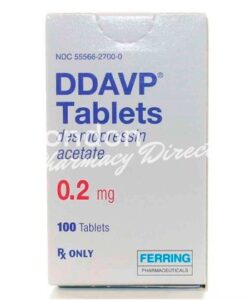
- INN (international nonproprietary name): Desmopressin (desmopressin acetate)
- Brand names available in the United Kingdom: DDAVP, DDAVP Melt, DesmoMelt, Desmotabs, Desmospray, Octim; generic desmopressin
- ATC code: H01BA02
- Forms and dosages: tablets 100 micrograms and 200 micrograms; oral lyophilisates (melts) 120 micrograms and 240 micrograms; nasal spray 10 micrograms per dose; injection 4 micrograms/mL
- Manufacturers in the United Kingdom: Ferring Pharmaceuticals (DDAVP); generic desmopressin from several manufacturers
- Registration status in the United Kingdom: Licensed by the MHRA; prescription-only medicine (POM)
- OTC / Rx classification: Prescription-only medicine (POM)
Initial practical instructions, warnings and daily-life integration for UK patients (read first)
Safety alert: Desmopressin (DDAVP) can cause life‑threatening hyponatraemia if fluid intake is not restricted after a dose.
Never change dose or frequency without your prescriber.
Seek immediate medical help for severe headache, vomiting, confusion or seizures.
For emergencies call 999; for advice contact NHS 111 or your GP.
Plan doses around your routine — take at night for enuresis or at regular daytime times for central diabetes insipidus as advised by your clinic.
Carry your NHS repeat prescription slip and a current list of medicines with you.
Ask your community pharmacist for verbal counselling and a printed action plan.
Prescription notes: DDAVP is prescription‑only in the UK and regulated by the MHRA; if travelling carry a GP or hospital letter.
Everyday use and best practices
Morning vs evening dosing
Which time you take DDAVP depends on why it is prescribed.
For nocturnal enuresis most UK prescribers recommend a single dose at bedtime with a clear fluid restriction window.
For central diabetes insipidus dosing is personalised and some patients take once daily while others have divided daytime doses following endocrinology advice.
For bleeding indications the timing is peri‑procedural under haematology direction; do not self‑time these doses.
Taking with or without meals (UK diet habits)
Oral melts and tablets can be taken regardless of meals, so they fit British breakfast or supper routines.
For nasal spray ensure the nose is clear and avoid heavy sniffing; do not administer immediately after a hot drink.
Daily checklist:
- Take your dose at the agreed time.
- Stop drinking 1–2 hours beforehand if treating bedwetting and avoid drinks for 8–12 hours after dosing unless told otherwise.
- Carry medication list and repeat slip.
- Set a reminder on your phone for fluid restriction windows.
Safety priorities
Who should avoid it (MHRA warnings)
The main hazard with DDAVP is dilutional hyponatraemia, which can be serious.
MHRA guidance highlights caution in the elderly and in those with low sodium, heart failure or renal impairment.
Avoid DDAVP if you already have clinically significant hyponatraemia.
Check baseline serum sodium before starting and repeat within a week or sooner if symptoms occur.
Absolute exclusions include severe renal impairment, uncontrolled heart failure and known hypersensitivity to desmopressin.
Activities to limit (driving, work safety)
Avoid driving or operating machinery if you experience dizziness, drowsiness or confusion while taking DDAVP.
These symptoms can be early signs of hyponatraemia and affect safety‑critical tasks.
Inform your employer if your role requires high levels of alertness until you are stable on treatment.
Red flags checklist:
- Severe headache, nausea or vomiting.
- Confusion, fit or loss of consciousness.
- Marked swelling or sudden weight gain.
Dosage and adjustments
General regimen (NHS guidance)
DDAVP dosing is tailored to the indication and individual response and NHS practice is to start low and titrate carefully.
For nocturnal enuresis clinicians typically prescribe a single nocturnal dose with fluid restriction instructions.
For central diabetes insipidus dosing is titrated to control polyuria and thirst with regular review and sodium monitoring.
For bleeding disorders dosing is determined by haematology and given around procedures as required.
Special cases (elderly, comorbidities)
Elderly patients usually start on lower doses and require closer electrolyte monitoring because of higher hyponatraemia risk.
Clinicians may avoid DDAVP in severe renal impairment or heart failure or prescribe only under specialist oversight.
Children should receive paediatric endocrinology or urology guidance and carers must be given written dosing and fluid restriction instructions.
Monitoring checklist for prescribers and pharmacists:
- Baseline sodium and renal function.
- Repeat sodium within 3–7 days of initiation or after dose change.
- Document fluid restriction plan in records.
Legal status and availability in the UK
Ddavp (desmopressin) is a prescription-only medicine (POM) in the UK.
In our online pharmacy, Ddavp is available without a prescription, with discreet delivery to the United Kingdom in 5‑14 days.
What’s inside and how it works
Ingredients overview
Desmopressin is a synthetic analogue of vasopressin, the antidiuretic hormone.
Formulations available in the UK include nasal spray, oral tablets and orodispersible melts, and injectable forms used in hospital.
Excipients differ by product; always ask your pharmacist about potential allergens such as lactose or dyes.
Mechanism basics explained simply
Desmopressin acts on kidney V2 receptors to increase water reabsorption and reduce urine volume.
In nocturnal enuresis it reduces night‑time urine production so the bladder does not overfill.
In central diabetes insipidus it replaces deficient antidiuretic hormone to lessen thirst and urine volume.
In haematology desmopressin transiently increases factor VIII and von Willebrand factor in responders, reducing bleeding risk for some procedures.
Main indications
Approved uses (MHRA listing)
Desmopressin is approved in the UK for central diabetes insipidus as replacement therapy and for nocturnal enuresis where behavioural measures have failed.
It is also used in selected bleeding disorders such as mild haemophilia A or von Willebrand disease under haematology guidance.
For each approved indication clinicians must provide written guidance on fluid restriction and monitoring.
Off‑label uses in UK clinics
Specialist centres may use desmopressin for peri‑operative bleeding prophylaxis in responders or for tailored regimens in partial or gestational DI under specialist oversight.
GPs should follow local shared‑care protocols and make referrals for complex paediatric, endocrine or haematology cases.
Interaction warnings
Food interactions (alcohol, tea/coffee)
Avoid alcohol around dosing because it increases hyponatraemia risk and can blunt cognition.
Excessive fluid intake including sports drinks is hazardous after DDAVP and must be avoided during the restriction window.
Caffeine from tea or coffee can increase urine production and may reduce perceived benefit if consumed close to dosing.
Drug conflicts
Medicines that predispose to hyponatraemia — for example thiazide diuretics, SSRIs and SNRIs — can additively increase risk with DDAVP and should prompt review.
Some anticonvulsants and antipsychotics may also alter sodium balance; NSAIDs can potentiate antidiuretic action in certain cases.
Report suspected serious adverse effects via the MHRA Yellow Card scheme and always show your full medicines list when collecting DDAVP so the pharmacist can flag interactions.
Alternative choices
What are the options if DDAVP is unsuitable?
Nocturnal enuresis first‑line remains the enuresis alarm and behavioural strategies supported by schools and carers.
Alternative drug options can include tricyclics such as imipramine prescribed only by specialists and with caution for side effects.
For nephrogenic DI treatments focus on thiazide diuretics and a low‑salt diet under specialist management rather than desmopressin.
For bleeding disorders tranexamic acid or clotting factor concentrates may be appropriate depending on diagnosis and procedure.
Pharmacists can advise on non‑drug measures, safety of alternatives and support referrals back to the clinic.
Regulation snapshot
Desmopressin products such as DDAVP and DesmoMelt are MHRA‑approved and prescription‑only in the UK.
Hospital specialists commonly initiate therapy and provide a transfer‑of‑care plan for GP monitoring under shared‑care agreements.
Pharmacies must supply patient information leaflets and counsel on fluid restriction and monitoring requirements when dispensing DDAVP.
MHRA Yellow Card reporting is encouraged for serious adverse events such as hyponatraemia or seizures.
Frequently asked questions
Q1: Can my child drink water after taking DDAVP at night?
A1: Follow the exact fluid restriction your clinician gave — typically no drinks for several hours after dosing to reduce hyponatraemia risk.
Q2: Is DDAVP safe with my antidepressant?
A2: Antidepressants such as SSRIs and SNRIs can raise hyponatraemia risk when combined with DDAVP; tell your prescriber and request sodium monitoring.
Q3: Can I drive while taking DDAVP?
A3: You may drive if you feel well but do not drive if you experience dizziness, confusion or other neurological symptoms as these may indicate hyponatraemia.
Q4: What if I miss a dose?
A4: For nocturnal enuresis generally skip a missed night dose and resume your normal schedule the next night; do not double dose. For CDI, contact your clinic for tailored advice.
Guidelines for proper use
How should pharmacists counsel patients taking DDAVP?
Confirm the indication and dosing time and provide clear verbal and written fluid restriction instructions at the point of supply.
Check baseline sodium and renal function arrangements and document planned follow‑up tests.
Ask about concurrent medicines such as SSRIs or diuretics and comorbidities including heart or renal failure and pregnancy.
Demonstrate nasal spray technique and show how to place and let orodispersible melts dissolve on the tongue without chewing.
Provide an emergency plan that describes hyponatraemia symptoms and when to call 999 or NHS 111.
Signpost patients to local diabetes, endocrine or urology clinics and to NHS information pages for further reading and support.
Delivery across the United Kingdom
| City | Region | Delivery Time |
|---|---|---|
| London | England | 9–21 days |
| Birmingham | England | 9–21 days |
| Manchester | England | 9–21 days |
| Glasgow | Scotland | 9–21 days |
| Edinburgh | Scotland | 9–21 days |
| Leeds | England | 9–21 days |
| Belfast | Northern Ireland | 9–21 days |
| Cardiff | Wales | 9–21 days |
| Bristol | England | 9–21 days |
| Newcastle | England | 9–21 days |
| Sheffield | England | 9–21 days |
| Liverpool | England | 9–21 days |
| Nottingham | England | 9–21 days |
| Southampton | England | 9–21 days |