Verapamil HCl
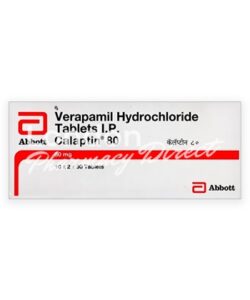
In stock
40mg · 120mg
from 15,26 £
In brief
- Verapamil HCl is a calcium channel blocker, taken for high blood pressure, for angina and for fast rhythms that start above the ventricles.
- Two strengths are listed, 40 mg and 120 mg, with 30 to 270 tablets in a pack.
- Legal category POM in the UK; for these imported tablets the listing does not say if the release is standard or modified.
Verapamil HCl: what the tablets are for
Verapamil HCl is verapamil hydrochloride, a drug that restricts the passage of calcium into cardiac muscle and into the smooth muscle of the arteries. Less calcium means that arteries relax, the heart uses less oxygen, and the electrical signal slows as it travels through. The SmPC names three groups of problems. Blood pressure that is mildly to moderately raised is the first. Angina is the second, in its stable, vasospastic and unstable forms. Third come supraventricular rhythm disturbances, where verapamil can end an episode of paroxysmal supraventricular tachycardia, prevent the next, or slow the pulse in atrial fibrillation and flutter.
Two strengths, and the question of release
Pack sizes for the 40 mg tablet are 60, 90, 120 and 270. For 120 mg they are 30, 60, 90, 120 and 270. Because the stock is imported, it is unclear whether the 120 mg tablet releases its content straight away or over many hours. The release formulation determines the dosing schedule and handling instructions, so any switch must be checked by the prescriber or pharmacist. Before any dose is chosen, a prescriber should look at the actual box and confirm the formulation.
Dose schedules for the standard-release form
Hypertension: 120 mg twice a day to begin, 160 mg twice a day as the next step, and at most 480 mg a day in divided doses. Angina: 120 mg three times a day, though 80 mg three times a day can be adequate when pain comes on with effort, while vasospastic angina rarely responds to anything under 120 mg three times a day. Rhythm disorders: between 40 mg and 120 mg, three times a day. Adults who are older take the standard adult dose unless the kidneys or liver are working less well. When the liver is impaired, treatment begins lower and rises slowly. None of these doses applies to a modified-release tablet.
When the tablets must not be used
Verapamil HCl is excluded in cardiogenic shock, a complicated acute heart attack, second- or third-degree AV block, sino-atrial block, sick sinus syndrome without a pacemaker, uncompensated heart failure, a heart rate under 50 and systolic pressure below 90. The same applies to atrial flutter or fibrillation that travels over an accessory pathway, including Wolff-Parkinson-White syndrome, and to porphyria. Intravenous dantrolene, ivabradine and grapefruit juice must not be taken with it. The reasoning is simple: the drug dampens conduction and contraction, which a slow or failing heart cannot afford.
Enzymes, other medicines and alcohol
Verapamil HCl is itself metabolised by CYP3A4 and holds that enzyme back in turn. Anything that blocks the enzyme, including erythromycin, clarithromycin, ketoconazole and ritonavir, pushes verapamil levels higher, and inducers like rifampicin and phenytoin pull them down. The tablets also lift concentrations of carbamazepine, digoxin, ciclosporin, dabigatran and alcohol, and they need caution alongside statins. Beta-blockers and rhythm-correcting drugs compound the effect on the heart.
Tolerability and the UK picture
Most people find Verapamil HCl acceptable. A sluggish bowel is the familiar nuisance, with flushing, puffy ankles and low blood pressure next; high doses can cause a slow or irregular beat and heart failure. Headache, dizziness, nausea and tiredness are reported less often, and thickened gums, a very rare effect, subside once treatment ends. Securon SR and other modified-release brands are licensed in Britain, with an oral solution and an injection, all on prescription. Report fainting, marked breathlessness or a pulse that feels very slow without delay. Verapamil HCl should only be started, adjusted or stopped on the prescriber’s say-so.