Avelox
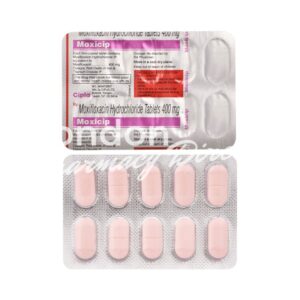
In brief
- In our pharmacy, you can buy Avelox without a prescription, with discreet delivery throughout the United Kingdom.
- Avelox (moxifloxacin) is used to treat bacterial infections such as community-acquired pneumonia, acute sinusitis, exacerbations of chronic bronchitis, complicated skin and intra-abdominal infections and pelvic inflammatory disease; it is a fluoroquinolone antibiotic that inhibits bacterial DNA gyrase and topoisomerase IV.
- The usual dose for adults is 400 mg once daily (not recommended for children or adolescents under 18 years).
- Available as 400 mg film-coated tablets for oral use and as a 400 mg/250 mL IV infusion (flexibag) for intravenous administration.
- The drug reaches peak blood levels within about 1–3 hours and may begin to have an antibacterial effect soon after, with clinical symptom improvement often within 24–48 hours.
- The elimination half-life is about 12 hours, allowing effective once-daily dosing and roughly 24 hours of activity per dose.
- Avoid alcohol while taking avelox, as alcohol can increase side effects such as dizziness and may impede recovery.
- The most common side effect is nausea (other frequent effects include diarrhoea, headache and dizziness).
- Would you like to try Avelox without a prescription?
Basic Avelox information
- INN (international nonproprietary name): Moxifloxacin
- Brand names available in the United Kingdom: Avelox — 400 mg film-coated tablets
- ATC code: J01MA14; Classification: Systemic antibacterial, fluoroquinolone class
- Forms and dosages: Film-coated tablet 400 mg (oral); IV solution/flexibag 400 mg/250 mL (intravenous infusion)
- Manufacturers in the United Kingdom: Bayer (Avelox)
- Registration status in the United Kingdom: Licensed by the MHRA; prescription-only medicine (POM)
- OTC / Rx classification: Prescription-only medicine (POM)
Everyday use and best practices
Morning vs evening dosing
Worried about when to take Avelox so it fits your day?
The usual adult dose is Avelox 400mg once daily, prescribed as a single tablet or given intravenously in hospital settings.
Choose a regular time each day that matches your routine so you remember every dose.
Many UK patients prefer taking Avelox in the morning with breakfast to make it part of their routine and to monitor side effects early in the day.
If you plan to drive, do manual work or be physically active, morning dosing can help you spot dizziness or light-headedness before a full workday.
Do not crush the tablet; swallow it whole with a full glass of water.
Taking with or without meals (UK diet habits)
Can Avelox be taken with food?
Avelox may be taken with or without food, so it can fit into typical UK eating habits such as a breakfast with tea and milk.
If Avelox causes nausea on an empty stomach, take it with a small meal or a biscuit and tea to reduce discomfort.
Avoid taking Avelox at the same time as antacids containing aluminium or magnesium, sucralfate, iron supplements, calcium or multivitamins with zinc or calcium — separate these by 4–8 hours to preserve absorption.
In hospital, the IV form follows local protocols for administration and monitoring.
- Quick rules — Take one 400 mg tablet once daily; swallow whole with a full glass of water.
- Do not double up if you miss a dose.
- Avoid antacids, iron, calcium or multivitamin supplements near the dose (4–8 hour window).
- Complete the full course to reduce resistance.
- MHRA note — Use only where benefits outweigh risks.
- Missed-dose checklist: Take the missed Avelox dose as soon as you remember unless the next dose is due soon.
- If it is almost time for the next dose, skip the missed dose and continue the schedule.
- Do not take two tablets on the same day to make up for a missed dose.
Safety priorities
Who should avoid it (MHRA warnings)
Who must not take Avelox?
Do not use Avelox if you have a known allergy to moxifloxacin or any other quinolone antibiotic.
Avelox is contraindicated in people with a history of tendon disorders related to quinolone use and in those with myasthenia gravis.
Use caution or avoid Avelox if you have a prolonged QT interval, uncorrected hypokalaemia, severe bradycardia, heart failure or are taking other QT‑prolonging drugs.
Systemic corticosteroid use raises the risk of tendon rupture when combined with quinolones.
Activities to limit (driving, work safety)
What activities should you avoid while taking Avelox?
- Avoid heavy manual labour, climbing or working at height during treatment and for a short period afterwards if you experience tendon pain.
- Avoid vigorous exercise if you develop tendon discomfort or swelling.
- If you develop dizziness, drowsiness, blurred vision, light‑headedness or convulsions, do not drive or operate heavy machinery until symptoms resolve.
- Report any new muscle weakness if you have myasthenia gravis; quinolones can exacerbate symptoms.
| Contraindications | Caution / monitoring |
|---|---|
| Allergy to moxifloxacin or quinolones | Check ECG if high QT-risk; monitor potassium if low |
| History of quinolone-related tendon disorders | Avoid concurrent systemic corticosteroids where possible |
| Myasthenia gravis | Monitor for CNS effects and neuropathy |
- Red-flag symptoms: sudden tendon pain, persistent numbness/tingling, chest pain, fainting or severe dizziness.
- Action: stop physical activity and seek urgent advice from your GP, 111 or A&E if severe.
Dosage and adjustments
General regimen (NHS guidance)
How is Avelox dosed for adults?
The standard adult regimen is Avelox 400 mg once daily by mouth, or 400 mg/250 mL IV in hospital when required.
Typical treatment durations vary by condition: community‑acquired pneumonia 7–14 days; acute bacterial sinusitis 7–10 days; acute bacterial exacerbation of chronic bronchitis about 5 days; complicated infections may require 7–21 days with an IV to oral switch where appropriate.
Take each oral tablet whole with a full glass of water and complete the prescribed course.
| Indication | Usual duration |
|---|---|
| Community‑acquired pneumonia | 7–14 days |
| Acute bacterial sinusitis | 7–10 days |
| Acute bacterial exacerbation of chronic bronchitis | 5 days |
| Complicated skin/skin‑structure infections | 7–21 days |
| Complicated intra‑abdominal infections | 5–14 days |
Special cases (elderly, comorbidities)
Do elderly patients need a lower dose?
No routine dose reduction for elderly patients is required, but clinical monitoring is important.
Monitor older adults closely for QT prolongation, CNS effects and tendinopathy, especially with cardiovascular disease, electrolyte imbalance or interacting drugs.
Children and adolescents under 18 are not recommended to receive Avelox because of musculoskeletal risk.
Renal or hepatic impairment does not usually require dose adjustment, but assess clinical response and consider alternatives if significant comorbidity exists.
- Checklist for elderly/comorbid monitoring — review ECG if QT-risk factors present; check electrolytes; review concomitant medicines (antiarrhythmics, diuretics, steroids).
- Do not use Avelox in under‑18s unless specifically advised by a specialist.
Legal status and availability in the UK
Avelox is a prescription-only medicine (POM) in the UK.
In our online pharmacy, Avelox is available without a prescription, with discreet delivery to the United Kingdom in 9–21 days.
What’s inside and how it works
Ingredients overview
What is in an Avelox tablet?
The active ingredient is moxifloxacin 400 mg per film-coated tablet for oral use.
For hospitals, the intravenous option is 400 mg/250 mL in a flexibag formulation with 0.8% NaCl for infusion.
Excipients and non-active ingredients vary by manufacturer; if you have excipient allergies, check the packaging or ask the pharmacist.
Mechanism basics explained simply
How does moxifloxacin kill bacteria?
Moxifloxacin belongs to fluoroquinolones and works by inhibiting bacterial DNA gyrase and topoisomerase IV, enzymes needed for DNA replication.
Blocking these enzymes prevents bacteria from copying their DNA and results in bactericidal activity against many Gram‑positive, Gram‑negative and atypical organisms commonly causing respiratory and intra‑abdominal infections.
Avelox does not treat viral infections such as colds or influenza.
| Active ingredient | Form | Typical targets |
|---|---|---|
| Moxifloxacin 400 mg | Oral tablet / IV infusion | Common respiratory pathogens, some Gram‑negative and atypicals |
Main indications
Approved uses (MHRA listing)
For which infections is Avelox authorised?
Avelox is authorised in adults for community‑acquired pneumonia, acute bacterial sinusitis, acute bacterial exacerbation of chronic bronchitis, complicated skin and skin‑structure infections, complicated intra‑abdominal infections and pelvic inflammatory disease.
The usual adult dose is 400 mg once daily with duration dependent on the condition being treated.
Off-label uses in UK clinics
When might clinicians consider Avelox off-label?
UK clinicians may sometimes consider moxifloxacin for resistant infections when first-line agents are unsuitable or culture results support its use.
Antimicrobial stewardship and MHRA cautions recommend restricting fluoroquinolones where possible because of safety concerns and resistance pressure.
- Stewardship caution: document the clinical rationale for using Avelox and seek culture/sensitivity where feasible.
- Off‑label: limited to specialist advice for resistant or complicated infections only.
| Condition | Usual dose / duration |
|---|---|
| Community‑acquired pneumonia | 400 mg once daily, 7–14 days |
| Acute bacterial sinusitis | 400 mg once daily, 7–10 days |
| Complicated intra‑abdominal infection | 400 mg once daily, 5–14 days |
Interaction warnings
Food interactions (alcohol, tea/coffee)
Do food and drink affect Avelox?
Alcohol does not change how Avelox works but may increase dizziness or other CNS side effects; avoid heavy drinking while on treatment.
Typical UK tea and milk are not contra‑indicative, but antacids containing aluminium or magnesium, sucralfate, iron supplements and calcium‑containing products can reduce absorption if taken at the same time.
Separate these products from Avelox by 4–8 hours where possible to maintain absorption.
Drug conflicts
Which medicines interact seriously with Avelox?
- Other QT‑prolonging drugs and certain antiarrhythmics (class IA and III) — co‑administration may increase risk of cardiac arrhythmia.
- Drugs that lower potassium or magnesium, and diuretics that cause electrolyte loss, can raise QT risk.
- Systemic corticosteroids increase tendon‑rupture risk when combined with quinolones.
- Antacids, iron and calcium supplements interfere with absorption and should be separated from dosing.
Always tell your prescriber and pharmacist about all prescription, over‑the‑counter and herbal medicines and supplements.
- Medicines to declare: steroids, antiarrhythmics, diuretics, iron/calcium supplements, antacids, other quinolones.
- Reporting: report suspected adverse reactions (tendon injury, neuropathy, cardiac events) to the MHRA Yellow Card scheme.
Alternative choices
NHS prescribing alternatives with pros/cons checklist
What are common NHS alternatives to Avelox?
For community respiratory infections, consider amoxicillin, doxycycline or macrolides depending on likely pathogens and patient factors.
Fluoroquinolones such as levofloxacin or ciprofloxacin have similar safety concerns and are not automatically safer choices.
For skin and soft tissue infections, flucloxacillin or co‑amoxiclav are commonly used first‑line agents.
- Amoxicillin — pros: well tolerated and widely available; Cons: not effective for atypical organisms.
- Doxycycline — pros: good for atypicals; Cons: avoid in pregnancy and in children under 12 (photosensitivity).
- Macrolides (clarithromycin) — Pros: useful when penicillin allergy; Cons: may prolong QT interval, interactions with statins.
- Levofloxacin / ciprofloxacin — pros: active against certain Gram‑negatives; Cons: overlapping fluoroquinolone safety concerns.
| Alternative | When to consider | Key caveat |
|---|---|---|
| Amoxicillin | Most community chest infections where pneumococcus is likely | Not active against atypicals |
| Doxycycline | Atypical coverage or penicillin allergy | Avoid in pregnancy and children |
Regulation snapshot
MHRA approval and NHS prescribing framework
What is Avelox’s regulatory status in the UK?
Avelox (moxifloxacin) is approved by the MHRA and is a prescription‑only medicine in the fluoroquinolone class (ATC J01MA14).
NHS antimicrobial stewardship encourages using the narrowest effective antibiotic and documenting reasons when a second‑line agent such as a fluoroquinolone is chosen.
Safety communications from the MHRA highlight the risk of tendon problems, peripheral neuropathy and CNS effects.
| Regulatory status | Reporting channel |
|---|---|
| MHRA Approved; Prescription only (Rx) | MHRA Yellow Card scheme for adverse event reporting |
- Practical steps for prescribers: check drug history, consider ECG if QT risk, counsel on red‑flag symptoms and storage.
FAQ
Common UK patient questions
- Can I take Avelox if I have a history of tendon pain? — No. Previous quinolone‑related tendon disorders are a contraindication; stop and seek advice if new tendon pain develops.
- How soon should symptoms improve? — Many patients notice improvement within 48–72 hours for bacterial respiratory infections; contact your GP if there is no improvement.
- Can I drink alcohol? — Moderate alcohol is not contraindicated but avoid heavy drinking as it can worsen dizziness and other CNS side effects.
When to contact NHS 111 or your GP: if you have sudden tendon pain or swelling, new numbness, severe dizziness, fainting, chest pain or signs of severe allergic reaction.
Guidelines for proper use
UK pharmacist counselling style
What should a pharmacist tell you at collection?
Confirm the indication and duration of therapy and emphasise the once‑daily 400 mg dose and the need to complete the full course.
Advise to take each tablet whole with a full glass of water and to separate antacids, iron and calcium supplements by 4–8 hours.
Warn about tendinopathy and peripheral neuropathy signs and ask patients to stop activity and seek advice if these occur.
Review other medicines for interactions — especially steroids and QT‑prolonging drugs — and provide Yellow Card reporting information and written handouts for recall.
- Counselling checklist — dose/duration, take with water, don’t double doses, interaction review, storage (20–25°C) and Yellow Card reporting details.
NHS patient support advice
Where can patients get support?
If symptoms do not improve within the expected time, arrange GP review or contact NHS 111 for out‑of‑hours advice.
Urgent review is indicated for severe side effects, and local pharmacy minor ailment services can help with symptomatic relief.
Small patient leaflet template:
- Take one Avelox 400 mg tablet once daily with water.
- Do not take antacids, iron, calcium or multivitamins within 4–8 hours of dose.
- Stop activity and seek medical advice for sudden tendon pain or new numbness.
- Report adverse effects to MHRA Yellow Card and your prescriber.
Delivery across the United Kingdom
| City | Region | Delivery time |
|---|---|---|
| London | Greater London | 9–21 days |
| Birmingham | West Midlands | 9–21 days |
| Manchester | Greater Manchester | 9–21 days |
| Glasgow | Scotland | 9–21 days |
| Leeds | West Yorkshire | 9–21 days |
| Edinburgh | Scotland | 9–21 days |
| Bristol | South West England | 9–21 days |
| Cardiff | Wales | 9–21 days |
| Belfast | Northern Ireland | 9–21 days |
| Newcastle | North East England | 9–21 days |
| Southampton | South East England | 9–21 days |
| Plymouth | South West England | 9–21 days |
| Norwich | East of England | 9–21 days |
| Derby | East Midlands | 9–21 days |