Trazodone
In brief
- In our pharmacy, you can buy trazodone without a prescription, with delivery in 9–21 days throughout the United Kingdom. Discreet and anonymous packaging.
- Trazodone is used primarily to treat major depressive disorder and is commonly used off‑label for insomnia; it is a SARI (serotonin antagonist and reuptake inhibitor) that blocks 5‑HT2 receptors and inhibits serotonin reuptake.
- The usual dose for depression is 150 mg per day in divided doses or as a single bedtime dose (increased to 300 mg/day if needed; up to 600 mg/day in hospital under specialist care); for insomnia lower single doses of 25–100 mg at bedtime are commonly used.
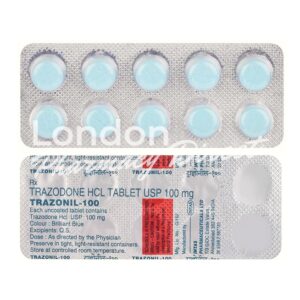
- The drug is given orally as capsules (50 mg, 100 mg), tablets (150 mg) or an oral liquid.
- For sedation (insomnia) trazodone often begins to work within 30–60 minutes; antidepressant effects typically take 2–4 weeks of regular treatment to become apparent.
- The sedative effect usually lasts around 6–8 hours; antidepressant benefit requires ongoing daily use.
- Do not drink alcohol while taking trazodone — alcohol increases sedation and the risk of respiratory depression and other adverse effects, and acute intoxication is a contraindication.
- The most common side effects are sedation/drowsiness, dizziness or lightheadedness (orthostatic hypotension), headache, dry mouth, nausea, blurred vision, constipation and fatigue; rare but serious risks include priapism, arrhythmias, serotonin syndrome and hyponatraemia.
- Would you like to try trazodone without a prescription?
Basic trazodone information
- INN (international nonproprietary name): Trazodone
- Brand names available in the United Kingdom: Molipaxin; generic trazodone products
- ATC code: N06AX05
- Forms and dosages: Capsules 50 mg and 100 mg; tablets 150 mg; oral liquid 50 mg/5 ml
- Manufacturers in the United Kingdom: Various generic manufacturers
- Registration status in the United Kingdom: authorised by the MHRA; prescription-only medicine (POM)
- OTC / Rx classification: Prescription-only medicine (POM)
Initial instructions, warnings and daily-life integration
Read this before using trazodone.
Trazodone is prescription only and must be used as directed by your prescriber and pharmacist.
Do not take trazodone if you have known hypersensitivity to it or any excipient.
Do not take trazodone after a recent myocardial infarction or during acute alcohol or CNS‑depressant intoxication.
Very rare but serious reactions include priapism, dangerous arrhythmias, serotonin syndrome and hyponatraemia (SIADH).
If you develop chest pain, breathing problems, severe fainting or a prolonged painful erection seek urgent care or call 999.
Avoid alcohol while taking trazodone because it increases sedation and respiratory depression risk.
Be cautious with driving or using machinery until you know how it affects you due to sedation, dizziness and orthostatic hypotension.
Store trazodone tablets in the original pack at room temperature between 15–30°C and keep out of reach of children.
Practical tip: nominate one pharmacy for repeat prescriptions and request a pharmacist counselling session on first dispense.
Use this checklist as a quick-reference card you can keep in your wallet.
- Prescription only — follow prescriber instructions.
- Absolute exclusions: hypersensitivity, recent MI, acute alcohol/CNS depressant intoxication.
- Watch for priapism, arrhythmias, serotonin syndrome, hyponatraemia.
- Seek urgent care or 999 for chest pain, breathing difficulty, fainting or prolonged erection.
- Avoid alcohol; store 15–30°C; keep away from children.
- Nominated pharmacy and pharmacist counselling recommended.
Everyday use and best practices
Morning vs evening dosing
When are you worried about daytime sleepiness or sleepless nights?
The usual starting dose for depression is 150 mg per day, in divided doses or as a single bedtime dose, while many UK clinicians use 25–100 mg at bedtime for insomnia as an off‑label approach.
Aim to take the sedating dose at night to reduce daytime drowsiness.
If you feel sleepy during the day, shift the larger dose to bedtime and take the smaller daytime dose if you are on twice‑daily dosing.
For sleep‑focused use, take trazodone immediately before bed and expect sedative onset within 30–90 minutes.
Taking with or without meals
Will food change how quickly trazodone helps you sleep?
Trazodone absorption can be affected by food.
A heavy evening meal may delay onset, so take the sedating dose with a light snack if you need faster sleep induction.
Avoid large alcohol‑containing meals or drinks as they increase sedation risks.
Practical daily tips:
- Set a phone alarm for dosing times.
- Keep a simple medication chart with dose and time.
- Note side effects in a diary for your GP or pharmacist review.
- Carry a wallet card listing dose, prescriber and emergency warnings.
Safety priorities
Who should avoid it
Who should not take trazodone according to MHRA cautions?
Do not start trazodone if you have a known allergy to it or have had a recent myocardial infarction.
Do not use trazodone during acute intoxication with alcohol, hypnotics or other CNS depressants.
Use caution and specialist advice if you have significant cardiac disease because of arrhythmia and QT‑risk concerns.
Also use caution with angle‑closure glaucoma, seizure disorders, bipolar disorder and severe hepatic or renal impairment.
Activities to limit
Which activities should you avoid until you know how trazodone affects you?
Do not drive, cycle or operate heavy machinery until you know the effects due to sedation and dizziness.
Avoid tasks requiring alertness if you feel drowsy, dizzy or lightheaded because trazodone can cause orthostatic hypotension.
Monitoring and red flags:
- New or worsening chest symptoms or palpitations — contact GP or A&E.
- Severe fainting or ongoing dizziness — seek urgent review.
- Prolonged or painful erection — attend A&E immediately for priapism.
- Severe confusion, sudden mood changes or suicidal thoughts — contact GP, NHS 111 or A&E.
Pharmacy safety step:
- Ask for pharmacist counselling on interactions and side effects at first dispense.
- Report severe adverse events via the MHRA Yellow Card scheme; pharmacists can assist.
Dosage and adjustments
General regimen
What dose will my GP usually start with for depression?
For depression the usual starting dose is 150 mg per day, in divided doses or as a single bedtime dose, with upward titration to effect.
The dose can be increased to 300 mg per day if needed; up to 600 mg per day in divided doses may be used in hospital under specialist care.
Review response at 2–4 weeks and, for depression, continue therapy for at least six months after remission.
Special cases
How should dosing change for older people or those with comorbidities?
Elderly patients should start low, often around 50 mg at bedtime if used for sleep, and titrate slowly while monitoring for falls, confusion and hyponatraemia.
In hepatic or renal impairment start at lower doses and titrate slowly because of possible accumulation.
Children: safety and efficacy are not established and routine use is not recommended.
Missed dose and overdose
If you miss a dose take it when you remember unless it is almost time for the next dose and do not double up.
In suspected overdose seek immediate medical help; symptoms can include drowsiness, vomiting, cardiac arrhythmias, respiratory depression, priapism and seizures.
| Patient group | Practical adjustment |
|---|---|
| Elderly | Start low (e.g., 50mg at night), titrate slowly, monitor for falls and hyponatraemia. |
| Hepatic/renal impairment | Reduce starting dose and increase interval between titrations. |
| General adults | Start 150 mg/day for depression; 25–100 mg at night for sleep off‑label. |
Legal status and availability in the UK
Trazodone is a prescription-only medicine (POM) in the UK.
In our online pharmacy, trazodone is available without a prescription, with discreet delivery to the United Kingdom in 9–21 days.
What’s inside and how it works
Ingredients overview
What is trazodone made of and which strengths are common?
Trazodone hydrochloride is supplied in the UK as 50 mg and 100 mg capsules, 150 mg tablets and an oral liquid.
Excipients vary by manufacturer so check the patient information leaflet if you have allergies.
Mechanism basics explained simply
How does trazodone improve mood and cause sedation?
Trazodone works by inhibiting serotonin reuptake and antagonising 5‑HT2 receptors.
This dual action can improve mood and produce sedative effects that clinicians often use for sleep.
Its ATC classification is N06AX05.
Additional antihistaminic and alpha‑adrenergic blockade contribute to sedation and orthostatic blood pressure effects.
| Ingredient/formulation | Main effect |
|---|---|
| Trazodone hydrochloride (capsules 50 mg, 100 mg; tablets 150 mg) | Antidepressant effect and sedation. |
Main indications
Approved uses
What is trazodone licensed for?
Trazodone is licensed in the UK for depressive illness (with or without anxiety) and for anxiety.
It is prescription‑only and commonly used by psychiatrists and GPs for depression.
Off-label uses in UK clinics
How do UK clinicians use trazodone off‑label?
Low‑dose trazodone is frequently used off‑label for insomnia because of its sedating properties, typically 25–100 mg at night for short‑term sleep problems.
Longer or higher‑dose use for insomnia should be monitored and considered alongside non‑drug approaches such as CBT‑I.
For depression review at 2–4 weeks and continue treatment for at least six months after remission.
Indication checklist:
- Depressive illness and anxiety — licensed indications.
- Insomnia — common off‑label use at low bedtime doses.
- Titrate and review regularly; consider psychological therapies alongside medication.
Interaction warnings
Food interactions
Can tea, coffee or alcohol affect trazodone?
Avoid alcohol while taking trazodone because it increases sedation, respiratory depression and fall risk.
Caffeine will not counteract trazodone sedation and may worsen sleep when taken late in the day.
Drug conflicts
What medicines should not be mixed with trazodone?
Combining trazodone with other serotonergic drugs such as SSRIs, SNRIs, tramadol and some triptans increases the risk of serotonin syndrome.
There is interaction potential with other CNS depressants and certain antiarrhythmics due to QT and arrhythmia risk.
Hepatic enzyme modulators can alter trazodone levels so check for drug interactions with the pharmacist.
| Drug/food | Effect | Action |
|---|---|---|
| Alcohol | Increased sedation and respiratory depression | Avoid concomitant use |
| SSRIs, SNRIs, tramadol | Raised serotonin syndrome risk | Inform prescriber and monitor; seek urgent care for high fever, rigidity or agitation |
| Antiarrhythmics / QT-prolonging drugs | Arrhythmia risk | Use caution and ECG monitoring if required |
Bring a checklist of current medicines, OTCs and herbal remedies to every appointment so the clinician and pharmacist can check interactions.
Alternative choices
NHS prescribing alternatives
What else might be offered instead of trazodone?
Common NHS alternatives for depression include SSRIs such as sertraline, escitalopram and fluoxetine.
For insomnia or depression with sleep disturbance, mirtazapine or low‑dose doxepin may be used to take advantage of sedating properties.
CBT for insomnia is an effective non‑drug option available through NHS services.
Pros and cons checklist
- SSRIs — effective antidepressant profile; may cause activation or insomnia in some patients.
- Mirtazapine — sedating and may increase appetite and weight.
- Doxepin — sedating tricyclic with anticholinergic effects; caution in elderly.
- Trazodone — sedating with low abuse potential; watch for orthostatic hypotension and rare priapism.
Shared decision aid:
- Discuss priorities such as sexual side effects, weight change, daytime sedation and interactions.
- Make a plan with your GP or mental health team and schedule review points.
Regulation snapshot
MHRA approval and NHS prescribing framework
Is trazodone regulated in the UK and how is it prescribed?
Trazodone is a prescription‑only medicine (POM) in the UK and is authorised by the MHRA.
GPs in the UK typically prescribe generic trazodone; the brand is Molipaxin.
Prescription, repeat prescriptions, and dispensing tips
What should you check at the pharmacy?
Use GP repeat services to manage ongoing prescriptions and nominate one pharmacy for convenience.
When dispensed, check the strength and formulation (capsules 50 mg and 100 mg, tablets 150 mg, oral liquid) and read the leaflet for excipients if you have allergies.
Report adverse reactions via the MHRA Yellow Card scheme.
| Regulatory status | Patient action |
|---|---|
| Prescription only; licensed for depression and anxiety | Bring a valid prescription and ask pharmacist about generics and formulation |
| Repeat prescribing through GP services | Nominate a pharmacy for repeat dispensing and counselling |
Frequently asked questions
Will trazodone make me sleepy all day?
Many people experience initial sedation, especially when starting or increasing dose.
If daytime sleepiness continues talk to your GP about changing dose timing or reducing the dose.
Avoid driving until you know how it affects you.
Is it safe with my other antidepressant?
Combining serotonergic agents raises the risk of serotonin syndrome.
Always inform your prescriber and pharmacist about all prescription, OTC and herbal medicines you take.
How long before it works?
Sleep effects may occur within nights of starting trazodone at bedtime.
Mood improvement usually takes several weeks, so review at 2–4 weeks and plan longer follow‑up.
What about sexual side effects?
Some people experience sexual dysfunction while on trazodone.
Discuss alternatives or dose adjustments with your clinician if sexual side effects affect quality of life.
Guidelines for proper use
UK pharmacist counselling style
What should a pharmacist cover at first dispense?
Confirm the indication, dose and formulation, and explain timing and common side effects.
Discuss drug interactions, when to seek urgent help and missed‑dose advice.
Offer a printed medication plan and encourage use of NHS repeat prescription services.
NHS patient support advice
For worsening mood or self‑harm thoughts contact your GP, urgent mental health services, NHS 111 or A&E immediately.
Non‑urgent queries can be handled by your GP practice, local community mental health team or Samaritans on 116 123.
Practical follow-up:
- Schedule a medication review at 1–2 weeks for sleep effects and at around 4 weeks for mood response.
- Then review three‑monthly while stabilised unless clinical circumstances require sooner checks.
Delivery across the United Kingdom
| City | Region | Delivery time |
|---|---|---|
| London | Greater London | 9–21 days |
| Birmingham | West Midlands | 9–21 days |
| Manchester | Greater Manchester | 9–21 days |
| Glasgow | Scotland | 9–21 days |
| Leeds | West Yorkshire | 9–21 days |
| Liverpool | Merseyside | 9–21 days |
| Bristol | South West England | 9–21 days |
| Edinburgh | Scotland | 9–21 days |
| Cardiff | Wales | 9–21 days |
| Newcastle | North East England | 9–21 days |
| Sheffield | South Yorkshire | 9–21 days |
| Belfast | Northern Ireland | 9–21 days |
| Plymouth | South West England | 9–21 days |
Final notes and safety reminders
Trazodone is a useful antidepressant with sedating properties that many clinicians use off‑label for insomnia when appropriate.
Always follow prescriber instructions and keep one nominated pharmacy for repeat prescriptions and counselling.
Monitor for rare but serious effects and seek urgent care for chest pain, breathing problems, severe fainting or priapism.
Report adverse events via the MHRA Yellow Card scheme and ask pharmacists for help checking interactions.