Pamelor
In brief
- In our pharmacy, you can buy Pamelor without a prescription, with delivery in 9–21 days throughout the United Kingdom. Discreet and anonymous packaging.
- Pamelor (nortriptyline) is used to treat depression and is sometimes prescribed off‑label for neuropathic pain and chronic headache; it is a tricyclic antidepressant that inhibits the reuptake of noradrenaline and serotonin and has anticholinergic properties.
- The usual dose for adults is 25 mg three to four times daily or 75–100 mg once daily, with maintenance doses up to 150 mg/day; elderly patients often start at 30–50 mg/day and children are not recommended to use nortriptyline.
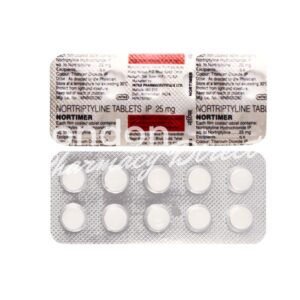
- The drug is given orally as tablets or capsules (10 mg and 25 mg; capsules 50 mg).
- Initial clinical effects may begin within 1–3 weeks, but meaningful antidepressant response usually takes 4–6 weeks.
- The effect of a typical dose lasts about 24 hours; the elimination half‑life is generally in the range of about 18–44 hours (commonly ~20–30 hours), so once‑daily dosing is often used.
- Do not drink alcohol while taking pamelor — alcohol increases sedation and central nervous system depression and can worsen side effects like dizziness and orthostatic hypotension.
- The most common side effect is dry mouth.
- Would you like to try Pamelor without a prescription?
Basic Pamelor information
- INN (international nonproprietary name): Nortriptyline
- Brand names available in the United Kingdom: generic nortriptyline (Pamelor is a US brand name that is not marketed in the UK)
- ATC code: N06AA10
- Forms and dosages: Tablets and capsules 10 mg and 25 mg; capsules 50 mg
- Manufacturers in the United Kingdom: Various generic manufacturers
- Registration status in the United Kingdom: Nortriptyline is licensed by the MHRA; prescription-only medicine (POM)
- OTC / Rx classification: Prescription-only medicine (POM)
Read this before using Pamelor (nortriptyline)
Pamelor is a US brand name of nortriptyline, a tricyclic antidepressant that is a prescription-only medicine in the UK.
Start only after a consultation with a GP or psychiatrist and with documented MHRA/NHS advice when relevant.
Keep medicines in their original packaging and store at room temperature between 15–30°C.
Do not take nortriptyline with a monoamine oxidase inhibitor (MAOI) within 14 days.
Avoid if you have had a recent myocardial infarction or a known allergy to tricyclics.
Use extreme caution with heart disease, glaucoma, urinary retention, epilepsy, liver impairment or frailty in older adults.
An overdose can be life‑threatening; seek immediate urgent care for severe drowsiness, seizures or palpitations.
Avoid alcohol while taking nortriptyline and be cautious driving during dose changes.
Carry a simple checklist of symptoms to report to your prescriber or pharmacist (see checklists in relevant sections).
Everyday use and best practices
Morning vs evening dosing
Many prescribers start nortriptyline at a low dose and titrate upwards to tolerance and effect.
Two common regimens are split doses (for example 25 mg three times daily) or a single daily dose (commonly 75–100 mg once daily).
If daytime drowsiness is a problem, taking the larger dose at night often helps with tolerability.
If new or worsened insomnia occurs, switching to morning dosing may be preferable.
Elderly patients typically start lower, often around 30–50 mg per day, and taking the dose at night reduces daytime sedation.
Discuss the intended dosing schedule with your GP and pharmacist before making any change.
Taking with or without meals (UK diet habits)
Nortriptyline can be taken with or without food according to the product information and clinical practice.
A light breakfast or evening meal helps reduce nausea for those who experience it when starting treatment.
Avoid heavy, greasy breakfasts when dosing in the morning because those meals may increase sleepiness for some people.
Practical dosing tips:
- Start low and increase only as advised by your clinician.
- If drowsy, take the main dose at night to aid sleep and reduce daytime sedation.
- If insomnia appears, try taking doses earlier in the day and discuss alternatives with your GP.
- Use sugar-free gum and small snacks for dry mouth if needed.
Checklist — contact your GP if you notice excessive drowsiness, palpitations or fainting.
Safety priorities
Who should avoid it (MHRA warnings)
Nortriptyline is contraindicated with MAOI use within 14 days and after a recent myocardial infarction.
Do not use if you have known hypersensitivity to nortriptyline or other tricyclic antidepressants.
Use extreme caution in people with cardiovascular conduction abnormalities, significant liver impairment, glaucoma, urinary retention or prostate enlargement.
Avoid use in children as it is not recommended for paediatric patients.
Patients with epilepsy or a history of seizures need careful review before starting nortriptyline because it can lower seizure threshold.
Report serious or unexpected adverse effects to the MHRA Yellow Card scheme and ask your community pharmacist for help filing a report if needed.
Activities to limit (driving, work safety)
Nortriptyline commonly causes drowsiness, blurred vision and orthostatic hypotension, especially during dose changes.
Do not drive, cycle or operate heavy machinery until you know how the medicine affects you.
Shift workers and people in safety‑critical roles should discuss alternatives with their GP due to sedative risk.
Pharmacist counselling is recommended at community pharmacies to discuss activity restrictions and timing.
Checklist — avoid these activities until stable on the dose: driving at night, operating machinery, and working at heights.
Dosage and adjustments
General regimen (NHS guidance)
Typical adult initiation is 25 mg three to four times daily or a single daily dose of 75–100 mg, titrated by the prescriber.
Maintenance and maximum daily doses can reach up to 150 mg per day in some patients depending on response and tolerability.
NHS practice is to start with a low dose, review after one to two weeks and titrate slowly as needed.
Treatment for depressive episodes usually continues for several weeks to months and requires a gradual taper when stopping.
Special cases (elderly, comorbidities)
Elderly patients should start lower, commonly 30–50 mg per day, with slow titration and close monitoring for confusion and falls.
In liver or kidney impairment, reduce the dose and increase review frequency because of accumulation risk.
Not recommended for children; avoid use in paediatric practice.
For high doses above 100 mg per day consider therapeutic drug monitoring with a target plasma nortriptyline range of around 50–150 ng/mL to guide dosing.
Dose ranges:
- Adults: start 25 mg tds or 75–100 mg once daily; up to 150 mg/day.
- Elderly: start 30–50 mg/day with slow titration.
Checklist — monitor ECG and liver tests in high‑risk patients and consider blood level checks when doses are high.
Legal status and availability in the UK
Nortriptyline is a prescription-only medicine (POM) in the UK; Pamelor is a US brand name that is not marketed in the UK.
In our online pharmacy, Pamelor is available without a prescription, with discreet delivery to the United Kingdom in 9–21 days.
What’s inside and how it works
Ingredients overview
The active ingredient is nortriptyline (INN), supplied in the UK as tablets and capsules.
Strengths commonly available are 10 mg and 25 mg, with 50 mg capsules.
Inactive ingredients vary between manufacturers; always check the product leaflet if you have known excipient allergies.
Mechanism basics explained simply
Nortriptyline is a tricyclic antidepressant that blocks the reuptake of noradrenaline and serotonin in the brain.
This action increases concentrations of these neurotransmitters and can improve mood and reduce certain types of neuropathic pain.
Because nortriptyline acts on multiple receptor types it also produces anticholinergic and sedative effects such as dry mouth, constipation and drowsiness.
ATC classification N06AA10 places it among non‑selective monoamine reuptake inhibitors (TCAs).
Practical patient note — the mechanism explains both benefits and common side effects and why review and monitoring are required.
Main indications
Approved uses (MHRA listing)
Nortriptyline is licensed in the UK for depression and is prescription‑only; Pamelor is a US brand name that is not marketed in the UK.
Clinicians follow the summary of product characteristics and local formularies when prescribing nortriptyline for depression.
Off-label uses in UK clinics
In UK primary and secondary care nortriptyline is commonly used off‑label for neuropathic pain such as diabetic neuropathy or post‑herpetic neuralgia.
Low-dose regimens may be trialled for chronic neuropathic pain and for some headache prevention strategies in specialist clinics.
Nortriptyline is not usually first‑line in frail or cardiac patients because of its anticholinergic and cardiovascular risk profile.
Approved versus off‑label uses:
- Licensed: depression.
- Off‑label: neuropathic pain, some chronic headache prevention.
Checklist for indication monitoring — use pain scales, mood scoring and ECG when cardiac risk is present.
Interaction warnings
Food interactions (alcohol, tea/coffee)
Avoid alcohol while taking nortriptyline because alcohol increases sedation and may worsen depression.
Strongly caffeinated drinks such as coffee or some teas can worsen tremor or anxiety in sensitive patients.
There are no major dietary restrictions beyond avoiding alcohol, but moderating caffeine is sensible if tremor or insomnia develops.
Drug conflicts
Nortriptyline interacts with MAOIs (contraindicated within 14 days) and with other serotonergic drugs, increasing the risk of serotonin syndrome.
Caution is needed when combining nortriptyline with antihypertensives, anticholinergic medicines, certain antipsychotics and drugs that prolong QT interval.
Many interactions require dose adjustment or ECG monitoring, particularly at higher doses over 100 mg per day.
High‑risk interactions — avoid MAOIs, monitor when co‑prescribing SSRIs, check QT‑prolonging medicines and consult pharmacists for interaction checks.
Report suspected adverse interactions to the MHRA Yellow Card scheme; community pharmacists can assist with reports.
Alternative choices
NHS prescribing alternatives with pros/cons checklist
Common NHS alternatives include SSRIs (sertraline, fluoxetine), SNRIs (venlafaxine, duloxetine), other TCAs (amitriptyline, lofepramine) and non‑pharmacological options such as CBT and exercise.
For neuropathic pain alternatives include duloxetine, gabapentin, pregabalin and topical agents guided by local pain services.
Pros/cons checklist:
- SSRIs — generally better tolerated in elderly and cardiac patients but can cause sexual side effects and GI upset.
- SNRIs — effective for depression and some neuropathic pain (duloxetine) but can raise blood pressure.
- Amitriptyline — effective for pain but typically more sedating and more anticholinergic than nortriptyline.
Discuss the balance of effectiveness and side-effect risk with your GP to choose the best option for your situation.
Regulation snapshot
MHRA approval and NHS prescribing framework
Nortriptyline is prescription-only (Rx) and classified under ATC N06AA10.
The MHRA provides oversight and clinicians should follow the SPC for licensed indications, contraindications and monitoring advice.
Local NHS formularies may restrict nortriptyline to specialist or second‑line use depending on indication and patient risk profile.
Prescribing framework
GPs should document informed consent, perform baseline assessments such as blood pressure and pulse, and obtain an ECG if cardiac risk is present.
Follow-up plans should include mood or pain scoring, side-effect checks and regular medication reviews.
Community pharmacists should be involved for repeat dispensing checks and adherence support.
Checklist for baseline work‑up: ECG if cardiac risk, liver function review and medication reconciliation.
Frequently asked questions
Common UK patient questions
Can I drink alcohol on nortriptyline? No — avoid alcohol because it increases sedation and may worsen mood.
How long until it works? Mood and neuropathic pain improvements often take two to six weeks; keep a symptom diary for review with your GP.
What if I miss a dose? Take the dose as soon as you remember unless it is close to the next dose; never double up to make up a missed dose.
Is it safe for older relatives? Use caution; elderly people usually start at lower doses (around 30–50 mg/day) with close monitoring for confusion, falls and anticholinergic effects.
Patient action items: carry a summary card listing current medicines and allergies, ask a community pharmacist for pill‑box or adherence advice and seek urgent care for breathlessness, fainting or seizures.
Guidelines for proper use
UK pharmacist counselling style
Community pharmacists should confirm indication, dose strength (10/25/50/75 mg), side‑effects and interactions at supply.
Advise on storage at 15–30°C, safe disposal and symptom management such as sugar‑free gum for dry mouth.
Screen for high‑risk medicines and counsel on driving, alcohol avoidance and when to seek medical attention.
Document counselling and encourage Yellow Card reporting for adverse events.
NHS patient support advice
GPs should provide written information, a clear treatment and review plan, and signpost to NHS talking therapies, local pain services and psychological therapies.
Recommend follow-up within one to two weeks of initiation or after a dose change and consider ECG in patients with cardiac risk.
Consider therapeutic drug monitoring for doses above 100 mg/day and involve secondary care when appropriate.
Checklist for pharmacy counselling: indication, dosing schedule, common side effects, interactions and follow‑up timeline.
Delivery across the United Kingdom
| City | Region | Delivery Time |
|---|---|---|
| London | England | 9–21 days |
| Birmingham | England | 9–21 days |
| Manchester | England | 9–21 days |
| Glasgow | Scotland | 9–21 days |
| Edinburgh | Scotland | 9–21 days |
| Bristol | England | 9–21 days |
| Leeds | England | 9–21 days |
| Cardiff | Wales | 9–21 days |
| Belfast | Northern Ireland | 9–21 days |
| Newcastle | England | 9–21 days |
| Southampton | England | 9–21 days |
| Plymouth | England | 9–21 days |
| Norwich | England | 9–21 days |
| Stirling | Scotland | 9–21 days |