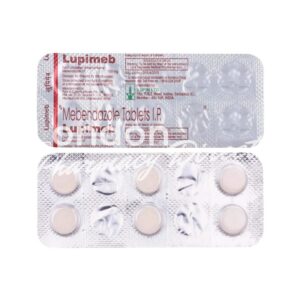
Mebendazole
In brief
- Mebendazole is a prescription-only medicine (POM) in the UK, although small packs for threadworm treatment are pharmacy (P) medicines.
- Mebendazole is used to treat intestinal worm infections such as pinworm, roundworm, whipworm and hookworm. It works by inhibiting the worms’ glucose uptake and microtubule formation, which depletes their energy stores and kills them.
- The usual dose for adults and children over 2 years is 100 mg once for pinworm, repeated after 2–3 weeks if needed; for many other worm infections, 100 mg twice daily for 3 days is typical. Some infections may require 200 mg twice daily for 3 days.
- The form of administration is a chewable tablet or oral suspension.
- It usually starts working within a few hours after taking a dose, although the worms are cleared over the following days.
- The duration of action is usually 1–3 days for most helminth infections, with repeat treatment sometimes needed after 2–3 weeks to prevent reinfection, especially with pinworm.
- Alcohol is best avoided during treatment, as it may increase gastrointestinal side effects and may not be suitable if you have liver problems.
- The most common side effects are abdominal pain, diarrhoea and nausea; less commonly, rash, headache and raised liver enzymes can occur.
- Would you like to try mebendazole without a prescription?
Basic mebendazole information
- INN (international nonproprietary name): Mebendazole
- Brand names available in the United Kingdom: Vermox, Ovex
- ATC code: P02CA01
- Forms and dosages: Chewable tablets 100 mg; oral suspension 100 mg/5 mL (20 mg/mL), 30 mL
- Registration status in the United Kingdom: Licensed; small packs for threadworm are pharmacy (P) medicines, other uses are prescription-only (POM)
- OTC / Rx classification: P (threadworm treatment for adults and children over 2 years) / POM (other indications)
Worm treatment needs to fit into real life, not the other way round.
For many people in the UK, that means a simple routine, a repeat dose when needed, and clear advice on who in the household should be treated too.
Everyday use and best practices
Morning versus evening dosing
Mebendazole can usually be taken at a time that suits the patient, unless the prescriber or pharmacist gives different instructions.
That flexibility helps with busy UK routines, whether the dose is easier to remember after brushing teeth, at breakfast, or just before bed.
If the tablet or suspension is part of a short course, the main point is to keep to the schedule you were given.
For pinworm treatment, a repeat dose after 2 to 3 weeks may be advised to reduce reinfection risk, so it helps to set a reminder straight away.
Taking with or without meals
Mebendazole tablets or suspension can generally be taken with or without food.
For anyone who feels a bit nauseous, or for families juggling school runs and work shifts, taking it with a light meal may feel easier.
A short course does not usually mean stopping normal activities.
If a 3-day course is prescribed, finish the full course even if symptoms improve early.
- Take the dose at a time you are most likely to remember.
- Use the full course if one has been prescribed.
- For threadworm or pinworm, ask about repeat dosing after 2 to 3 weeks.
- Keep up handwashing and laundry routines to help prevent reinfection.
Safety priorities
Who should avoid it
The main MHRA warnings are straightforward and should come first.
Do not use mebendazole if you have had hypersensitivity to mebendazole or any of the ingredients.
It should also be avoided in pregnancy, especially during the first trimester, because of potential embryotoxicity.
Children under 2 years are not generally recommended to take it unless a specialist advises it.
Severe liver problems need extra caution because levels may build up in the body.
Activities to limit
Most people do not need to stop driving while taking mebendazole.
That said, anyone feeling unwell, dizzy, or affected by side effects should avoid driving and other safety-critical tasks until they feel better.
That includes shift workers, parents who need to lift children, and anyone doing manual work with tools or machinery.
Any worrying reaction should be reported through a pharmacist, GP, or the MHRA Yellow Card scheme.
| Situation | Advice |
|---|---|
| Avoid | Hypersensitivity, first-trimester pregnancy, and use in very young children unless advised |
| Use with caution | Severe liver impairment, children under 2 years, and any situation involving CYP450-interacting medicines |
| Usually fine | Driving, ordinary work, and normal daily activity if you feel well |
Dosage and adjustments
General regimen
NHS guidance for mebendazole dosage depends on the worm involved.
For pinworm, the usual pattern is 100 mg once, with a repeat dose after 2 to 3 weeks if needed.
For Ascaris, Trichuris, and hookworm, 100 mg twice daily for 3 days is a common regimen.
Some infections, including Strongyloides and Taenia, may need 200 mg twice daily for 3 days, sometimes longer.
In most helminth infections, mebendazole is used short term, often for 1 to 3 days.
Special cases
Older adults usually do not need a standard dose change, although liver function may need monitoring.
Kidney impairment has no specific rule, so clinicians use judgement based on the person in front of them.
Children under 2 years should only be treated if a clinician advises it.
| Condition | Usual dose | Duration |
|---|---|---|
| Pinworm | 100 mg once, repeat after 2 to 3 weeks if needed | 1 to 2 doses over 3 weeks |
| Ascaris, Trichuris, Hookworm | 100 mg twice daily | 3 days |
| Strongyloides, Taenia | 200 mg twice daily | 3 days, sometimes longer |
| Children under 2 years | Not generally recommended unless prescribed by a specialist | As directed |
Legal status and availability in the UK
Mebendazole is a prescription-only medicine (POM) in the UK, although small packs for threadworm treatment are pharmacy (P) medicines.
In our online pharmacy, mebendazole is available without a prescription, with discreet delivery to the United Kingdom in 9–21 days.
What is inside and how it works
Ingredients overview
The active ingredient is mebendazole.
Common UK forms include Vermox chewable tablets 100 mg and oral suspension.
Mebendazole is an anthelmintic, meaning a worm treatment, and it carries the ATC code P02CA01.
Mechanism basics explained simply
In plain English, mebendazole works by stopping worms from taking in nutrients and surviving.
That makes it a practical worm medicine for common intestinal infections.
| Form | Strength | Common UK packaging |
|---|---|---|
| Chewable tablets | 100 mg | Blister packs |
| Oral suspension | 20 mg/mL or 100 mg/5 mL | 30 mL bottle |
Main indications
Approved uses
In UK practice, mebendazole is commonly used for pinworm or threadworm, roundworm, whipworm, and hookworm.
People often notice itchiness, tummy upset, or spread through the household before they suspect a worm infection.
Off-label uses
Some uses may be specialist-led depending on the infection type and local guidance.
Treatment decisions depend on age, travel history, and the diagnosis made by the clinician.
| Infection | Usual dose pattern | Repeat treatment |
|---|---|---|
| Pinworm / Threadworm | 100 mg once | May be needed after 2 to 3 weeks |
| Roundworm, Whipworm, Hookworm | 100 mg twice daily for 3 days | Sometimes, depending on infection and advice |
| Strongyloides, Taenia | 200 mg twice daily | May need longer treatment |
Interaction warnings
Food interactions
There are no major everyday food rules for most UK patients taking mebendazole.
A light meal can help if nausea occurs.
Alcohol should be treated cautiously if you feel unwell or have liver problems.
Drug conflicts
Interactions are mainly a concern with medicines that affect liver enzymes, especially CYP-related drugs.
Pharmacists should be told about anything that could change how the medicine is processed.
- Tell your pharmacist if you take liver-affecting medicines.
- Tell them about any regular prescription treatment.
- Tell them if you are taking anything for infection, epilepsy, or long-term illness.
- Tell them if you have liver disease or have had previous side effects.
- New rash or hives.
- Persistent vomiting or stomach pain.
- Yellowing of the skin or eyes.
- Unexpected worsening after starting treatment.
Alternative choices
NHS prescribing alternatives
Mebendazole is not the only anthelmintic tablet, and the best option depends on worm type and clinician preference.
Alternatives include albendazole and praziquantel.
| Medicine | Typical use | Key point |
|---|---|---|
| Albendazole | Worm infections | Similar class, different product choice |
| Praziquantel | Certain parasite infections | Used when a different worm type is involved |
When another treatment may be preferred
One-size-fits-all does not apply in worm treatment.
Some parasites need different medicines, and some alternatives may be less familiar to patients.
- Pros of mebendazole: familiar, short course, useful for common worms.
- Cons of mebendazole: not suitable for everyone, and repeat dosing may be needed.
- Pros of alternatives: may better match a specific parasite.
- Cons of alternatives: choice depends on diagnosis and prescribing preference.
Regulation snapshot
MHRA approval and NHS prescribing framework
Mebendazole is a licensed medicine in the UK. It is a prescription-only medicine (POM), although small packs for threadworm treatment in adults and children over 2 years are pharmacy (P) medicines.
What UK patients should check
Always check the brand, strength, and expiry date before taking the medicine.
Frequently asked questions
Common UK patient questions
- Can I take mebendazole with food? Yes, it can usually be taken with or without food.
- Do I need to treat the whole household? For threadworm, household treatment is often discussed because reinfection spreads easily.
- Can children take it? Children over 2 years are commonly treated, but under 2 years need clinician advice.
- When should I repeat the dose? For pinworm, a repeat dose after 2 to 3 weeks may be advised.
When to seek help
Contact a pharmacist, GP, or NHS 111 if symptoms persist, there is blood in the stool, or a child is very unwell.
Guidelines for proper use
UK pharmacist counselling style
Use mebendazole exactly as the label or pharmacist tells you.
Complete the course if one has been prescribed.
Treat all household members if that has been advised.
Wash hands regularly, keep nails short, and focus on morning washing for the areas most likely to spread eggs.
Hot-wash bedding and follow normal laundry routines to reduce the chance of reinfection.
NHS patient support advice
Ask the pharmacist about supply, side effects, or repeat treatment if anything is unclear.
Store mebendazole below 25°C, away from moisture and light.
Transport in ordinary ambient conditions and avoid excess heat or humidity.
If a dose is missed, take it as soon as remembered unless the next dose is nearly due, and do not double the dose.
If too much is taken, stomach upset such as nausea, vomiting, or abdominal pain may happen, and severe cases need support.
- Follow the label carefully.
- Finish the course when prescribed.
- Keep up hygiene measures at home.
- Ask about repeat dosing if pinworm keeps coming back.
Delivery across the United Kingdom
| City | Region | Delivery Time |
|---|---|---|
| London | Greater London | 9–21 days |
| Birmingham | West Midlands | 9–21 days |
| Manchester | North West England | 9–21 days |
| Glasgow | Scotland | 9–21 days |
| Edinburgh | Scotland | 9–21 days |
| Liverpool | North West England | 9–21 days |
| Leeds | West Yorkshire | 9–21 days |
| Sheffield | South Yorkshire | 9–21 days |
| Bristol | South West England | 9–21 days |
| Cardiff | Wales | 9–21 days |
| Belfast | Northern Ireland | 9–21 days |
| Nottingham | East Midlands | 9–21 days |
| Newcastle upon Tyne | North East England | 9–21 days |
| Leicester | East Midlands | 9–21 days |