Xifaxanta
In brief
- In our pharmacy, you can buy Xifaxanta without a prescription, with delivery in 9–21 days throughout the United Kingdom. Discreet and anonymous packaging.
- Xifaxanta (rifaximin) is used for travellers’ diarrhoea caused by E. coli, for IBS‑D (irritable bowel syndrome with diarrhoea; off-label in the UK) and for reducing recurrence of hepatic encephalopathy; it is a non‑absorbable rifamycin antibiotic that inhibits bacterial RNA polymerase, acting locally in the gut.
- Usual adult dosages: travellers’ diarrhoea 200 mg orally three times daily for 3 days; IBS‑D 550 mg orally three times daily for 14 days; hepatic encephalopathy 550 mg orally twice daily for chronic use. Paediatric dosing is generally not established below 12 years for most indications.
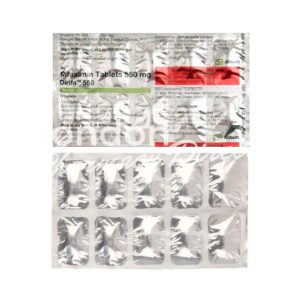
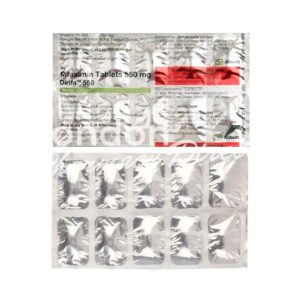
- Administered orally as tablets (commonly 200 mg and 550 mg).
- Onset of symptom relief is usually within 24–72 hours for acute travellers’ diarrhoea; for IBS‑D improvements may be seen over several days during the 2‑week course.
- Duration of action depends on the regimen: travellers’ diarrhoea is treated with a 3‑day course, IBS‑D with a 2‑week course (symptomatic benefit may persist for weeks in some patients), and hepatic encephalopathy often requires ongoing maintenance dosing.
- There is no specific alcohol contraindication for rifaximin, but avoid alcohol if you have hepatic impairment or hepatic encephalopathy, and discuss alcohol use with your prescriber.
- The most common side effects are gastrointestinal and include nausea, constipation, abdominal pain, bloating/flatulence; other common effects include headache and fatigue. Hypersensitivity reactions are rare.
- Would you like to try Xifaxanta without a prescription?
Basic Xifaxanta information
- INN (international nonproprietary name): Rifaximin.
- Brand names available in the United Kingdom: Xifaxanta (200mg); Targaxan (550mg).
- ATC code: A07AA11.
- Forms and dosages: Oral tablets 200mg and 550mg.
- Manufacturers in the United Kingdom: Norgine.
- Registration status in the United Kingdom: Licensed by the MHRA; prescription-only medicine (POM).
- OTC / Rx classification: Prescription-only medicine (POM)
Important instructions, warnings and daily-life integration for UK patients
Do you need to know whether you can get this medicine easily and how to use it safely?
Rifaximin (INN) is a prescription-only medicine in the UK, so consult your GP, NHS 111 or a specialist before starting treatment.
The ATC code for rifaximin is A07AA11 and common tablet strengths are 200mg and 550mg.
Typical regimens include 200mg three times daily for travellers’ diarrhoea for three days, 550mg three times daily for IBS‑D for 14 days (off-label in the UK), and 550mg twice daily for chronic hepatic encephalopathy.
Store tablets at 20–25°C and protect them from moisture during transport and storage.
Avoid rifaximin if you have a fever or bloody diarrhoea and report severe abdominal pain or any signs suggestive of Clostridioides difficile infection promptly.
MHRA guidance and local NHS prescribing pathways apply.
Community pharmacists can advise on common interactions and side effects.
Daily-life tip: carry a copy of your prescription or NHS repeat slip when travelling, keep tablets in original packaging to show expiry and batch information, and discuss repeat courses with your prescriber before travel or seasonal flares.
Everyday use and best practices
Morning versus evening dosing
Aim to space doses evenly through your waking hours for best symptom coverage.
For a 550mg three-times-daily regimen, a practical plan is morning, mid‑afternoon and evening to cover daytime symptoms and reduce urgency.
For 550mg twice daily in hepatic encephalopathy, take doses roughly 12 hours apart, for example morning and bedtime, to maintain steady effect.
If you work shifts or have irregular meals, set phone alarms or use a weekly pill organiser from your pharmacy.
Taking with or without meals (UK diet habits)
Rifaximin may be taken with or without food, which makes it convenient for typical British and Irish meal patterns.
For patients who find heavy breakfasts or fried foods upsetting, taking tablets with the main meal can reduce nausea and help build a routine.
- Travellers’ diarrhoea: 200mg three times a day for three days (tablets available as 200mg).
- IBS‑D (irritable bowel syndrome with diarrhoea): 550mg three times a day for 14 days (off-label in the UK; 550mg tablets).
- Hepatic encephalopathy (HE): 550mg twice daily as ongoing therapy under specialist supervision.
Practical tips
Keep your rifaximin tablets in their original packaging while travelling to show product information if asked.
Bring a copy of the NHS repeat slip or private prescription for quick reassessment if you need a further course.
Safety priorities
Who should avoid it (MHRA warnings)
Never use rifaximin if you have a known allergy to rifaximin or other rifamycins such as rifampicin or rifabutin.
Antibiotic treatment is not appropriate for bacterial diarrhoea with systemic features; avoid rifaximin if you have fever or bloody stools as it may worsen outcomes.
Exercise caution in severe liver impairment (for example Child‑Pugh C) and use specialist oversight when treating hepatic encephalopathy.
Absolute contraindications from available data include hypersensitivity to rifaximin and bacterial diarrhoea with systemic features.
Activities to limit (driving, work safety)
Systemic absorption of rifaximin is low, but dizziness is a reported adverse effect.
If you feel dizzy or drowsy after taking rifaximin, avoid driving or operating heavy machinery until you recover.
| Contraindications | Precautions |
|---|---|
| Known allergy to rifaximin or rifamycins | Severe hepatic impairment (specialist monitoring) |
| Bacterial diarrhoea with fever or bloody stools | History of C. difficile infection (increased risk with antibiotics) |
| Not indicated for non-bacterial diarrhoea | Monitor elderly patients for tolerance and hepatic function |
Dosage and adjustments
General regimen (NHS guidance)
Always follow your prescriber’s instructions and check the indication before starting rifaximin.
Common regimens drawn from standard product information include 200mg orally three times daily for travellers’ diarrhoea for three days, 550mg orally three times daily for 14 days for IBS‑D, and 550mg orally twice daily for ongoing hepatic encephalopathy management.
Document the indication and course length on GP records when prescribing or dispensing.
Special cases (elderly, comorbidities)
Renal dose adjustment is not routinely required because rifaximin has minimal systemic absorption.
Elderly patients do not require routine dose changes but should have hepatic function monitored and overall tolerance reviewed.
Severe hepatic impairment warrants specialist involvement, particularly for HE management.
- Pre-treatment checklist: review allergies (including rifamycins), check liver disease history, enquire about previous C. difficile infection, confirm current medicines and pregnancy/breastfeeding status.
Legal status and availability in the UK
In our online pharmacy, Xifaxanta is available without a prescription, with discreet delivery to the United Kingdom in 9–21 days.
Rifaximin is prescription-only in the UK and should be obtained with a valid prescription from a GP, urgent care or hospital specialist.
What’s inside and how it works
Ingredients overview
The active ingredient is rifaximin (INN) and tablets commonly come in 200mg and 550mg strengths.
Excipients vary by manufacturer so check the packaging if you have known intolerances to lactose, dyes or preservatives.
Mechanism basics explained simply
Rifaximin is a gut-targeted antibiotic that acts locally in the intestine against a range of bacteria implicated in diarrhoeal illnesses and bacterial overgrowth.
Because systemic absorption is minimal, rifaximin concentrates its effect in the gut and has a lower risk of systemic side effects and interactions compared with orally absorbed antibiotics.
| Action | Rifaximin | Typical systemic antibiotic |
|---|---|---|
| Primary site | Gut lumen | Plasma and tissues |
| Systemic absorption | Minimal | Significant |
| Interaction risk | Low | Higher (CYP interactions possible) |
Main indications
Approved uses (MHRA listing)
Rifaximin is licensed for key intestinal conditions with established dosing regimens.
Licensed indications in the UK are travellers’ diarrhoea due to non-invasive E. coli (Xifaxanta 200mg TID for three days) and reduction in recurrence of hepatic encephalopathy (Targaxan 550mg BID chronic therapy).
Local NHS formularies and the BNF supply prescribing notes and should be consulted for local approval and funding decisions.
Off‑label uses in UK clinics
Use for IBS‑D (550mg TID for 14 days) is off-label in the UK. Specialist clinicians may also use rifaximin off-label in situations such as small intestinal bacterial overgrowth (SIBO) or recurrent functional diarrhoea when other measures have failed.
- Checklist for off‑label use: document indication, record informed consent, note prior therapies tried and set a clear follow-up appointment.
Interaction warnings
Food interactions (alcohol, tea/coffee)
No major food interactions are established for rifaximin and routine UK dietary habits such as tea and coffee do not meaningfully alter absorption.
There is no specific interaction with moderate alcohol intake, but avoid excess alcohol until diarrhoea resolves.
Drug conflicts
Because rifaximin is minimally absorbed, systemic drug interactions are rare compared with systemically absorbed rifamycins.
Still, check concomitant use of other gut agents such as loperamide or lactulose and review the full medicines list for potential interactions.
- Drugs to check: loperamide, lactulose, recent systemic antibiotics.
- Reporting: report adverse reactions via the MHRA Yellow Card scheme and ask your pharmacist for help completing a report if needed.
Alternative choices
NHS prescribing alternatives with pros/cons checklist
For IBS‑D symptomatic care, consider loperamide for acute control, dietary strategies such as low FODMAP, or referral for psychological therapies when appropriate.
For hepatic encephalopathy, lactulose is often first‑line and may be used alone or with another non‑absorbable antibiotic such as neomycin in selected cases.
For travellers’ diarrhoea, alternatives include ciprofloxacin or azithromycin depending on destination and resistance patterns.
- Indication: IBS‑D. Benefit: symptomatic relief (loperamide). Risk: may not address bloating/underlying bacterial issues. Monitoring: response and bowel habit changes.
- Indication: HE. Benefit: lactulose reduces ammonia. Risk: bowel upset; monitoring: neurological status and electrolytes.
- Indication: Traveller’s diarrhoea. Benefit: rapid resolution with systemic agents. Risk: systemic side effects and resistance concerns.
When to choose rifaximin versus alternatives
Choose rifaximin when guidelines or specialist advice indicate it—typically when diet and loperamide fail in IBS‑D, or where HE recurs despite lactulose.
Consider local formulary approval and stewardship, and document prior therapies and rationale when prescribing.
Regulation snapshot
MHRA approval and NHS prescribing framework
Rifaximin is a prescription-only medicine (POM) in the UK and prescribers should follow MHRA approvals and local NHS formulary guidance.
Prescribers must adhere to antimicrobial stewardship principles and record indication and intended duration in the patient record.
Repeats, private prescriptions and online services
Repeat prescribing is not routine for short courses such as traveller’s diarrhoea or IBS‑D, though chronic HE may have authorised repeats from a specialist.
Private prescriptions are accepted by pharmacies but pharmacists must verify legitimacy.
Use registered online pharmacies that require a valid prescription and comply with MHRA and General Pharmaceutical Council standards when ordering medication online.
| Prescribing route | Notes |
|---|---|
| GP prescription | Common route for IBS‑D and travellers’ diarrhoea after assessment |
| Hospital specialist | Usual route for hepatic encephalopathy and complex cases |
| Private prescription / online pharmacy | Accepted if a valid prescription is provided; verify pharmacy registration |
Frequently asked questions
Can I get rifaximin on NHS for IBS‑D?
Use for IBS‑D is off-label in the UK; where local NHS formularies and clinical assessment support it, GPs may seek consultant advice before prescribing.
Typical IBS‑D dosing is 550mg three times daily for 14 days and eligibility usually requires documented failure of first‑line measures.
Is it safe for long‑term use?
Long‑term 550mg twice‑daily use is established for hepatic encephalopathy under specialist supervision.
For IBS‑D, repeated short courses may be considered but require clinician review and monitoring for diarrhoea changes and C. difficile risk.
Missed dose advice: take missed dose as soon as remembered unless close to the next scheduled dose; do not double up.
- When to call GP: persistent high fever, bloody diarrhoea, severe abdominal pain, signs of dehydration or confusion.
- Red flags: new rash, jaundice, severe dizziness or neurological change.
- Reporting: report suspected adverse reactions via the MHRA Yellow Card scheme.
Guidelines for proper use
UK pharmacist counselling style
Confirm the indication and review allergy history, particularly cross‑reactivity with rifamycins such as rifampicin.
Advise dosing clearly: travellers’ diarrhoea 200mg TID x3 days; IBS‑D 550mg TID x14 days; HE 550mg BID ongoing where indicated.
Discuss common side effects including nausea, constipation and headache and advise on storage at 20–25°C away from moisture.
NHS patient support advice
Encourage patients to report adverse effects via the MHRA Yellow Card scheme and to contact NHS 111 or their GP for systemic symptoms or deterioration.
Direct patients to their local pharmacy for advice about branded versus generic options.
- Checklist for patients: indication, start and stop dates, follow‑up plan, and what to do if symptoms worsen.
Delivery across the United Kingdom
| City | Region | Delivery Time |
|---|---|---|
| London | England | 9–21 days |
| Birmingham | England | 9–21 days |
| Glasgow | Scotland | 9–21 days |
| Manchester | England | 9–21 days |
| Leeds | England | 9–21 days |
| Liverpool | England | 9–21 days |
| Edinburgh | Scotland | 9–21 days |
| Bristol | England | 9–21 days |
| Sheffield | England | 9–21 days |
| Newcastle Upon Tyne | England | 9–21 days |
| Belfast | Northern Ireland | 9–21 days |
| Cardiff | Wales | 9–21 days |
| Coventry | England | 9–21 days |
| Nottingham | England | 9–21 days |