Seroxat
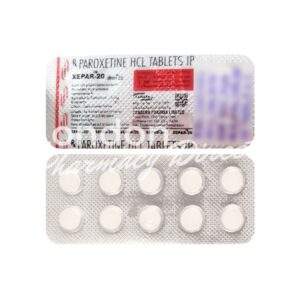
In brief
- In our pharmacy you can buy Seroxat (paroxetine) without a prescription, with delivery throughout the United Kingdom and discreet packaging available. Seroxat (paroxetine) is a prescription-only medicine (POM) in the UK.
- Seroxat is used to treat major depressive disorder, panic disorder, generalised anxiety disorder, social anxiety disorder, obsessive–compulsive disorder (OCD), and post‑traumatic stress disorder (PTSD). It is a selective serotonin reuptake inhibitor (SSRI) that increases serotonin levels by inhibiting its reuptake into presynaptic neurones.
- Usual dosages in adults: depression—start 20 mg once daily (maintenance 20–50 mg/day); panic—start 10 mg with titration (typical up to 40 mg/day); OCD—start 20 mg (maintenance up to 40–60 mg/day); GAD/social anxiety/PTSD—usually 20 mg/day. Elderly and those with hepatic/renal impairment usually start at 10 mg daily.
- Administered orally as tablets (10–40 mg) or oral suspension (10 mg/5 ml); taken once daily, with or without food.
- Some symptomatic effects (reduced anxiety, sleep improvement) may begin within 1–2 weeks, but antidepressant benefit generally takes 2–4 weeks and up to 6–8 weeks for full effect.
- Seroxat is usually taken once daily; paroxetine has an elimination half‑life of about 21–24 hours, so its clinical effect is maintained with daily dosing. Recommended treatment duration for depression/anxiety is commonly 6–12 months or longer to prevent relapse; OCD and panic disorders often require at least 12 months.
- Avoid or limit alcohol while taking Seroxat—alcohol can increase drowsiness and impairment, exacerbate side effects and worsen mood symptoms.
- The most common side effects include nausea, drowsiness or insomnia, dry mouth, sweating, dizziness, sexual dysfunction (reduced libido, delayed ejaculation), weight and appetite changes, mild tremor and gastrointestinal upset (diarrhoea or constipation).
- Would you like to try Seroxat without a prescription?
Basic Seroxat information
- INN (international nonproprietary name): Paroxetine
- Brand names available in the United Kingdom: Seroxat (tablets and oral suspension); generic paroxetine
- ATC code: N06AB05
- Forms and dosages: Tablets 10 mg, 20 mg, 30 mg, 40 mg; oral suspension 10 mg/5 ml
- Manufacturers in the United Kingdom: GSK (GlaxoSmithKline) is the original manufacturer; generic manufacturers include Apotex, Sandoz and Teva
- Registration status in the United Kingdom: Licensed by the MHRA for depressive and anxiety disorders; prescription-only medicine (POM)
- OTC / Rx classification: Prescription-only medicine (POM)
Initial instructions, warnings and daily-life integration
Read this before using Seroxat (paroxetine).
Seroxat is a prescription-only medicine (POM) in the United Kingdom and should be taken under the supervision of your prescriber.
Follow MHRA guidance and the treatment plan agreed with your clinician.
Do not stop Seroxat suddenly as abrupt cessation can cause withdrawal symptoms.
Tapering gradually under clinical supervision is recommended when stopping treatment.
Avoid starting Seroxat within 14 days of stopping a monoamine oxidase inhibitor (MAOI), and do not start an MAOI within 14 days of stopping Seroxat.
Tell your GP or pharmacist about all medicines you take, including herbal remedies and over‑the‑counter painkillers.
SSRIs such as paroxetine increase bleeding risk when combined with NSAIDs, aspirin or anticoagulants.
If you are pregnant, planning pregnancy or breastfeeding, discuss risks with your prescriber because paroxetine has specific pregnancy cautions.
Store Seroxat at room temperature in its original packaging and protect from moisture.
Use NHS repeat prescriptions, pharmacy counselling and the MHRA Yellow Card system to report adverse reactions.
At the point of dispensing the pharmacist will run a checklist covering interactions, pregnancy status, and any allergies.
Everyday use and best practices
Morning versus evening dosing
Many people start Seroxat in the morning to reduce the chance of sleep disturbance.
If Seroxat causes drowsiness it can be taken in the evening instead, after discussing this with the prescriber.
For panic disorder clinicians often start at a lower dose and titrate up to reduce early side effects and improve tolerability.
Keep dosing consistent by taking Seroxat at the same time every day to maintain steady blood levels.
If a dose is forgotten and remembered the same day, take it as soon as possible.
If it is close to the next dose, skip the missed dose and do not take a double dose.
Taking with or without meals
Paroxetine can be taken with or without food.
Taking Seroxat with food may ease nausea for those who experience stomach upset.
Typical UK breakfast habits such as a cooked breakfast or tea and biscuits do not affect absorption.
Avoid driving or operating heavy machinery until you know how Seroxat affects you, as it can cause dizziness or drowsiness early in treatment.
Do’s and don’ts
- Do take Seroxat at the same time each day.
- Do tell your pharmacist about all other medicines, including NSAIDs and herbal products.
- Do contact your prescriber if you plan pregnancy, become pregnant or wish to breastfeed.
- Don’t stop Seroxat suddenly; arrange a gradual taper with your clinician.
- Don’t mix heavy drinking with Seroxat, particularly during dose changes.
- Don’t start or stop MAO inhibitors without safe washout periods (14 days).
Daily routine checklist
- Confirm prescription and dose with pharmacist at collection.
- Take Seroxat at your chosen time each day (morning or evening).
- Use a pillbox or phone reminder for missed-dose prevention.
- Note any side effects and report them at your 2–4 week review.
Safety priorities
Who should avoid it
Do not use paroxetine if you are taking pimozide or thioridazine because the combination can cause serious heart rhythm problems.
Avoid Seroxat if you have taken MAO inhibitors within the previous 14 days due to the risk of serotonin syndrome.
Do not use Seroxat if there is known hypersensitivity to paroxetine or any excipients in the product.
Use paroxetine with caution and monitoring in people with a history of mania or bipolar disorder, epilepsy, severe liver disease, bleeding disorders or significant hyponatraemia risk.
Discuss pregnancy and breastfeeding carefully with your clinician because paroxetine has specific pregnancy cautions.
Activities to limit
Seroxat can cause dizziness, drowsiness or impaired concentration, especially during the first few weeks.
Avoid driving, operating heavy machinery or safety‑critical work until you are sure Seroxat does not impair your reactions.
Avoid heavy alcohol consumption while starting or changing dose, as alcohol can worsen side effects.
| Contraindication / caution | Work / activity advice |
|---|---|
| Concurrent pimozide or thioridazine | Avoid; do not combine — cardiology risk. |
| Recent MAOI use (within 14 days) | Do not start Seroxat until safe washout completed. |
| Known hypersensitivity | Do not take Seroxat. |
| Elderly (hyponatraemia risk) | Start at lower dose; avoid tasks requiring alertness until tolerated. |
| Bleeding disorders / on anticoagulants | Use with monitoring; avoid hazardous activities if bruising or bleeding occurs. |
Dosage and adjustments
General regimen
For most adults the usual starting dose is 20 mg once daily for depression and many anxiety disorders.
For panic disorder clinicians may start at 10 mg once daily and increase gradually to reduce side effects.
For obsessive‑compulsive disorder maintenance doses are often higher and can range up to 40–60 mg per day under specialist supervision.
An oral suspension is available for dose flexibility and swallowing difficulties.
Special cases
Elderly patients generally begin on a lower dose, commonly 10 mg daily, with careful up‑titration due to risk of hyponatraemia and accumulation.
Patients with liver or kidney impairment should start at a low dose (commonly 10 mg) and titrate slowly, with a lower maximum dose usually capped around 40 mg daily.
Children and adolescents are not routinely recommended paroxetine because of an increased risk of suicidality and limited efficacy data.
Typical dosing table
| Condition | Typical start dose | Usual maintenance / max |
|---|---|---|
| Major depressive disorder | 20 mg once daily | 20–50 mg/day |
| Panic disorder | 10 mg once daily (titrate) | Up to 40 mg/day |
| Generalised / social anxiety | 20 mg once daily | 20–50 mg/day |
| OCD | 20 mg once daily | 40–60 mg/day |
Decision checklist for dose changes
- Assess symptom response after 4–6 weeks at a therapeutic dose.
- Review side effects and tolerability with pharmacist or prescriber.
- Consider specialist review for doses above usual maintenance ranges.
Legal status and availability in the UK
Seroxat (paroxetine) is a prescription-only medicine (POM) in the UK.
In our online pharmacy, Seroxat is available without a prescription, with discreet delivery to the United Kingdom in 9–21 days.
What’s inside and how it works
Ingredients overview
The active ingredient in Seroxat is paroxetine, the international nonproprietary name (INN).
Formulations available in the UK include tablets (10 mg, 20 mg, 30 mg, 40 mg) and an oral suspension (10 mg/5 ml).
Excipients vary between manufacturers, so check the patient leaflet for specific allergy information.
Mechanism basics explained simply
Paroxetine is a selective serotonin reuptake inhibitor (SSRI) with the ATC code N06AB05.
It works by blocking the reuptake of serotonin in the brain, increasing available serotonin and helping mood and anxiety regulation.
Clinical effect typically builds over 2–6 weeks, while side effects often appear sooner.
Active versus inactive ingredients
- Active: paroxetine (various strengths depending on formulation).
- Inactive: formulation-dependent excipients; consult the patient information leaflet for details.
Timeline of effect
- First 1–2 weeks: side effects such as nausea or dizziness may appear.
- 2–6 weeks: partial improvement in mood and anxiety symptoms for many people.
- 6–12 weeks: fuller therapeutic effect for depression and anxiety conditions.
Main indications
Approved uses
Paroxetine (Seroxat) is licensed in the UK for major depressive disorder, generalised anxiety disorder, social anxiety disorder, panic disorder, obsessive‑compulsive disorder and post‑traumatic stress disorder.
Typical starting doses are condition‑specific, often 20 mg once daily for many indications and 10 mg for panic disorder when being titrated.
Off‑label uses in UK clinics
Occasionally clinicians may use paroxetine off‑label for symptoms such as menopausal vasomotor symptoms or chronic pain, but such use requires informed consent and specialist oversight.
Always check local NHS formularies and get specialist input for off‑label prescribing.
| Indication | Typical start dose | Usual maintenance |
|---|---|---|
| Major depressive disorder | 20 mg once daily | 20–50 mg/day |
| Panic disorder | 10 mg once daily (titrate) | Up to 40 mg/day |
| OCD | 20 mg once daily | 40–60 mg/day |
Interaction warnings
Food interactions
Avoid heavy drinking while starting or changing Seroxat as alcohol increases sedation and can worsen mood symptoms.
Tea and coffee do not have clinically significant interactions with paroxetine, but caffeine may aggravate anxiety in some people.
Drug conflicts
Do not combine Seroxat with MAO inhibitors — allow a 14‑day washout to reduce the risk of serotonin syndrome.
Concurrent use with pimozide or thioridazine is contraindicated due to QT prolongation and arrhythmia risk.
SSRIs increase bleeding risk when used with NSAIDs, aspirin or anticoagulants — always tell your prescriber about these medicines.
Report new or unexpected adverse reactions to the MHRA Yellow Card scheme or via your pharmacist.
Tell your prescriber about:
- Any recent or current MAOI use including linezolid.
- Use of antiplatelet drugs, NSAIDs, warfarin or DOACs.
- History of seizures, bipolar disorder or significant liver/renal disease.
| Interaction | Risk |
|---|---|
| MAO inhibitors | Serotonin syndrome — avoid within 14 days. |
| Pimozide / Thioridazine | QT prolongation and arrhythmia — contraindicated. |
| NSAIDs / aspirin / anticoagulants | Increased bleeding risk — monitor closely. |
Alternative choices
NHS prescribing alternatives with pros and cons
Common alternatives on NHS formularies include sertraline, fluoxetine, citalopram and escitalopram among SSRIs, as well as SNRIs like venlafaxine and duloxetine.
Sertraline is often chosen for anxiety and is considered when pregnancy planning is important.
Fluoxetine has a long half‑life which may reduce discontinuation symptoms.
Citalopram and escitalopram have generally favourable tolerability but require QTc monitoring at high doses.
Venlafaxine can be effective for resistant depression but may raise blood pressure and needs monitoring.
| Drug | Pros | Cons |
|---|---|---|
| Sertraline | Well tolerated for anxiety; favoured in pregnancy planning | GI upset common early on |
| Fluoxetine | Long half‑life, easier discontinuation | May take longer to reach full effect for some patients |
| Venlafaxine | Effective for resistant depression | Can increase blood pressure; withdrawal symptoms if stopped abruptly |
When to ask for a switch
Consider switching if side effects are severe and intolerable, or if there is inadequate response after 6–8 weeks at a therapeutic dose.
Switching should occur under clinician supervision with attention to appropriate washout or cross‑tapering strategies.
Regulation snapshot
MHRA approval and NHS prescribing framework
Paroxetine (Seroxat) is a prescription‑only medicine (POM) in the UK and its prescribing information, contraindications and dosing guidance are set out in the product SPC and PIL.
NHS prescribing follows local formularies and NICE guidance for depression, anxiety disorders and OCD, with clinicians required to document indication and monitor response.
Prescription, repeat and monitoring rules
Initial prescriptions are usually issued following GP or psychiatric assessment and repeats are managed via GP repeat prescriptions or shared‑care agreements with secondary services.
Monitoring should include review of mood, adverse effects, suicidality risk (especially in younger patients) and physical checks where indicated, such as electrolytes if hyponatraemia is suspected.
Typical prescribing pathway
- GP assessment and initiation of Seroxat where indicated.
- Follow‑up at 2–4 weeks to assess early tolerability and at 6–12 weeks for response.
- Repeat prescriptions managed via GP or shared care; refer to specialist if dose adjustments above standard ranges are required.
Frequently asked questions
How long until Seroxat works?
Most people see partial benefit within 2–4 weeks, with a fuller effect by 6–12 weeks for many conditions.
Can I drink alcohol?
Best avoided while establishing your dose, because alcohol increases sedation and can worsen mood symptoms.
Will I gain weight?
Weight changes can occur with Seroxat; monitor diet and activity and discuss alternatives if weight gain becomes problematic.
How do I stop safely?
Do not stop Seroxat abruptly; plan a gradual taper with your prescriber over weeks or months depending on dose and duration to reduce withdrawal risk.
Guidelines for proper use
UK pharmacist counselling style
At dispensing the pharmacist should confirm indication, dose and start date and review common side effects such as nausea, sleep changes and sexual dysfunction.
Pharmacists should perform interaction checks and encourage Yellow Card reporting of adverse events.
Offer a written checklist that includes emergency signs such as features of serotonin syndrome or severe allergic reaction and missed‑dose instructions.
NHS patient support advice
Use GP, practice nurse or NHS Talking Therapies for combined therapy such as CBT alongside medication.
Request a medication review if side effects interfere with daily life.
Encourage reporting adverse events through the Yellow Card scheme and seeking urgent help if severe reactions occur.
Pharmacist talking points
- Explain expected timeline for benefit and common early side effects.
- Confirm all current medicines and pregnancy status.
- Provide written advice on how to taper and what to do if a dose is missed.
Delivery across the United Kingdom
| City | Region | Delivery time |
|---|---|---|
| London | Greater London | 9–21 days |
| Birmingham | West Midlands | 9–21 days |
| Manchester | Greater Manchester | 9–21 days |
| Glasgow | Scotland | 9–21 days |
| Leeds | West Yorkshire | 9–21 days |
| Sheffield | South Yorkshire | 9–21 days |
| Liverpool | Merseyside | 9–21 days |
| Bristol | South West England | 9–21 days |
| Newcastle Upon Tyne | North East England | 9–21 days |
| Edinburgh | Scotland | 9–21 days |
| Cardiff | Wales | 9–21 days |
| Belfast | Northern Ireland | 9–21 days |
| Brighton | South East England | 9–21 days |
| Plymouth | South West England | 9–21 days |
| Norwich | East of England | 9–21 days |