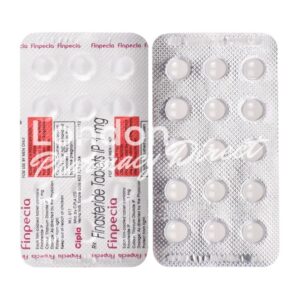
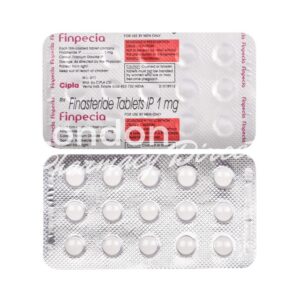
Finpecia
In brief
- Finasteride is a prescription-only medicine (POM) in the UK. Finpecia (finasteride 1 mg) is not licensed in the UK.
- Finpecia (finasteride) is used for male pattern hair loss (1 mg) and benign prostatic hyperplasia (5 mg). It works by selectively inhibiting 5α‑reductase (type II), reducing the conversion of testosterone to dihydrotestosterone (DHT).
- The usual dose is 1 mg orally once daily for hair loss (Finpecia/Propecia) and 5 mg orally once daily for BPH (Proscar); not indicated for women or children.
- Form of administration: oral tablet (film‑coated tablets, typically 1 mg or 5 mg).
- Onset time: for hair loss, visible effects are usually seen after about 3 months and more clearly by 6 months; for BPH symptomatic improvement may take at least 6 months.
- Duration of action: clinical benefit is maintained only with continuous daily use (effects reverse after stopping); the plasma half‑life is roughly 6–8 hours in adult men.
- Alcohol warning: there is no specific prohibition on moderate alcohol while taking finasteride, but avoid excessive drinking and discuss alcohol use with your prescriber—use caution if you have significant liver disease.
- The most common side effect is reduced libido; other frequent adverse effects include erectile dysfunction and ejaculatory disorders, with less common events such as breast tenderness/enlargement, depression and skin reactions.
- Would you like to try Finpecia without a prescription?
Basic Finpecia information
- INN (international nonproprietary name): Finasteride
- Brand names available in the United Kingdom: Propecia 1 mg and Proscar 5 mg; generic finasteride. Finpecia (finasteride 1 mg) is not licensed in the UK.
- ATC code: D11AX10 (for androgenetic alopecia); G04CB01 (for benign prostatic hyperplasia).
- Forms and dosages: 1 mg tablet for male pattern hair loss; 5 mg tablet for BPH.
- Manufacturers in the United Kingdom: Organon (Propecia, Proscar) and generic suppliers; Finpecia is made by Cipla.
- Registration status in the United Kingdom: Propecia 1 mg and Proscar 5 mg are licensed by the MHRA; Finpecia is not licensed in the UK.
- OTC / Rx classification: Prescription-only medicine (POM)
Important instructions and warnings for UK patients
Are you worried about safety or pregnancy risk?
Finasteride is a prescription-only medicine (POM) in the UK and should only be used after a prescriber and pharmacist check. Finpecia is not licensed in the UK.
Keep tablets in their original packaging and store below 30°C away from moisture and light.
Do not crush, split or chew tablets because handling broken tablets risks exposure to pregnant women; always swallow whole.
If you are a woman of childbearing potential, pregnant or trying to conceive, do not take finasteride and avoid handling crushed tablets.
If you suspect or experience adverse effects, report them via the MHRA Yellow Card scheme and speak to your GP or community pharmacist for advice.
Morning vs evening dosing
Which time of day is best and what happens if you forget a tablet?
The usual dose for male pattern hair loss is one tablet of 1 mg once daily, and for BPH it is 5 mg once daily.
Most patients take finasteride at the same time each day to build a routine and reduce missed doses.
Morning dosing with breakfast is common in the UK because it fits into daily rituals like tea or porridge and helps patients remember their tablet.
If you forget a dose, take it the same day as soon as you remember and do not double the next day.
Making finasteride part of a morning habit — for example after brushing teeth or with a pill box — improves long-term adherence.
Taking with or without meals (UK diet habits)
Can you take finasteride with tea, coffee or on an empty stomach?
Finasteride may be taken with or without food and food does not affect its efficacy.
For UK diets often centred on tea or coffee at breakfast, taking the tablet with a meal or breakfast helps make dosing routine and reduces the chance of forgetting.
Swallow tablets whole and avoid chewing, crushing or splitting as stated in product leaflets for Propecia and generic finasteride.
Pair dosing with a daily ritual and use a simple checklist or pill box to build a lasting habit.
- Tip: put your tablet next to your toothbrush or on the kettle to prompt morning dosing.
Who should avoid it (MHRA warnings)
Do I belong to a group that must not take finasteride?
Finasteride must not be used by women, children or anyone with known hypersensitivity to the drug or its excipients.
Women who are pregnant or may become pregnant must avoid exposure; finasteride is a known teratogen and can cause abnormalities in male fetal genitalia.
Use caution or avoid prescribing in severe hepatic impairment because finasteride is metabolised by the liver.
If you have unexplained breast lumps, severe urinary obstruction or a history of allergic reactions, consult your GP before starting finasteride.
Activities to limit (driving, work safety)
Will finasteride affect my ability to drive or work with machinery?
There are no routine driving or machinery restrictions in the licence.
If you experience dizziness, marked fatigue or mood changes, avoid driving or safety-critical tasks until you know how the medicine affects you.
Sexual side effects such as reduced libido, erectile dysfunction and ejaculatory disorders are commonly reported and can affect relationships and mental health.
- Use a pharmacy checklist at first supply to record counselling points and emergency contacts.
- Keep a written log of any side effects and contact your GP or sexual health service if problems arise.
General regimen (NHS guidance)
How should finasteride be taken for hair loss and for prostate enlargement?
The standard regimen for male pattern hair loss is finasteride 1 mg orally once daily.
For benign prostatic hyperplasia the standard dose is 5 mg orally once daily.
Treatment for hair loss is continuous; initial signs can appear after about three months with clearer results by six to twelve months.
Stopping treatment will usually reverse any benefits achieved over time.
For BPH expect at least six months of treatment to assess benefit and consider urology review as needed.
Special cases (elderly, comorbidities)
Do older patients or those with liver or kidney problems need dose changes?
Elderly patients do not routinely require dose reduction but should be monitored more closely for adverse events such as sexual dysfunction and mood changes.
Finasteride is hepatically metabolised so use with caution in patients with liver impairment and avoid in severe hepatic dysfunction.
No routine dose adjustment is required for mild to moderate renal impairment but exercise caution in severe cases.
Finasteride is not recommended for children; safety and efficacy have not been established.
Store tablets below 30°C in their original pack and never crush them because of the teratogenic risk to pregnant women.
Legal status and availability in the UK
Finasteride is a prescription-only medicine (POM) in the UK. Finpecia is not licensed in the UK.
In our online pharmacy, Finpecia is available without a prescription, with discreet delivery to the United Kingdom in 9–21 days.
Ingredients overview
What is in the tablet and which brands exist?
The active ingredient in all relevant products is finasteride (INN) in strengths of 1 mg and 5 mg depending on indication.
Licensed brands in the UK include Propecia (1 mg) and Proscar (5 mg), together with generic finasteride; Finpecia (Cipla) contains finasteride 1 mg but is not licensed in the UK.
Excipients differ by manufacturer; check the patient information leaflet for potential allergens.
Mechanism basics explained simply
How does finasteride actually help with hair loss or BPH?
Finasteride inhibits the enzyme 5α-reductase type II which converts testosterone into dihydrotestosterone (DHT).
Lowering DHT reduces miniaturisation of susceptible hair follicles in male pattern hair loss, allowing hair to stabilise and gradually regrow over months.
For BPH, reduced DHT can shrink an enlarged prostate over several months, improving urinary symptoms.
The effect is dose- and time-dependent and must be maintained by continuous treatment.
Approved uses (MHRA listing)
What are the licensed indications for finasteride in the UK?
The MHRA licences finasteride 1 mg for male androgenetic alopecia and finasteride 5 mg for benign prostatic hyperplasia.
Finasteride is prescription-only and not approved for use in women or children under 18.
Prescribers should document informed consent, discuss expected timelines and set review points with patients.
Off-label uses in UK clinics
Are there other ways doctors sometimes use finasteride?
Off-label prescribing happens but is limited; some specialists may consider different approaches for complex BPH cases or discuss alternatives such as dutasteride.
Dutasteride is more potent and inhibits both type I and II 5α-reductase isoenzymes and is sometimes discussed as an off-label option for hair loss with different risk and benefit considerations.
Finasteride remains not indicated for women and under-18s and should not be prescribed to these groups on-label.
Food interactions (alcohol, tea/coffee)
Will tea, coffee or alcohol change how finasteride works?
There are no major food interactions with finasteride and it may be taken with tea or coffee without reducing efficacy.
Alcohol does not interact pharmacologically with finasteride but excessive drinking can worsen sexual function and general health, which is relevant if patients report sexual side effects.
Advise moderation of alcohol and ask patients to report concerns to their pharmacist or GP.
Drug conflicts
Which medicines should be checked for interactions with finasteride?
Major pharmacological interactions are uncommon.
Avoid combining finasteride with other 5α-reductase inhibitors such as dutasteride.
Finasteride is commonly used with alpha-blockers like tamsulosin for BPH and this combination is acceptable with monitoring of symptoms.
Always reconcile prescription, over-the-counter and herbal products such as saw palmetto with the pharmacist and report unexpected reactions via the MHRA Yellow Card.
Alternative choices
What other options are available if finasteride is unsuitable or unwanted?
Topical minoxidil is available over the counter and can be used alone or in combination with finasteride for hair loss.
Dutasteride is a prescription alternative that is more potent but often used off-label for hair loss with a distinct safety profile.
Hair transplant surgery is an option in selected cases, and non-surgical options such as low-level laser therapy and platelet-rich plasma have variable evidence.
Supplements and herbal remedies have inconsistent data and are not regulated to the same standard as prescription medicines.
- Decision points: efficacy and main risks should be discussed with a GP or dermatologist.
Regulation snapshot
How is finasteride regulated in the UK?
Finasteride is licensed and prescription-only in the UK, with Propecia 1 mg and Proscar 5 mg approved by the MHRA and multiple generics available. Finpecia is not licensed in the UK.
Community pharmacists and prescribers must follow MHRA guidance and supply patient information leaflets at dispensing.
Online pharmacies must be registered with the General Pharmaceutical Council and comply with UK prescribing standards.
Will finasteride make me impotent?
How likely are sexual side effects and what should I do?
Sexual side effects such as reduced libido, erectile dysfunction and ejaculatory changes can occur in a minority of patients.
Discuss risks with your GP before starting and report any adverse events through the MHRA Yellow Card scheme.
Many sexual effects resolve after stopping treatment but some users report persistence; seek help from sexual health services or your GP if symptoms occur.
How long until I see results?
When can I expect to notice a difference in hair loss?
Expect first signs around three months and clearer regrowth or stabilisation by six to twelve months on continuous finasteride 1 mg daily.
Continue daily dosing to maintain benefit; stopping usually reverses any improvements.
Is finasteride available without a prescription?
Is it legal to obtain finasteride without a prescription?
No. In the UK finasteride is a prescription-only medicine and should not be obtained without a lawful prescription.
A prescription can be obtained via your GP or a private clinic.
Can I switch from Propecia to a generic finasteride?
Are generics equivalent and what should I check when switching?
Licensed generics contain the same active ingredient, finasteride, and can be used instead of Propecia. Finpecia is not licensed in the UK.
Check the pack labelling and consult your pharmacist if the tablet appearance differs.
After starting any finasteride product, follow a short checklist: monitor side effects, report concerns, and plan a review at three to six months with your prescriber.
UK pharmacist counselling style
What will the pharmacist cover when dispensing finasteride?
Pharmacists should confirm indication and dose, check contraindications including pregnancy risk, explain common and rare side effects and advise on missed-dose and storage instructions.
They should document counselling, provide a printed leaflet summarising safety advice and advise the patient to report adverse reactions via Yellow Card.
NHS patient support advice
What follow-up and support should NHS patients expect?
GP follow-up at three to six months is recommended to review effect and side effects and to consider referral to dermatology or urology if response is inadequate or adverse effects occur.
Patients should be signposted to sexual health and mental health services if sexual or mood effects emerge.
Pharmacies can offer a printable one-page checklist covering who to contact for routine review, urgent concerns and Yellow Card reporting steps.
Delivery across the United Kingdom
| City | Region | Delivery Time |
|---|---|---|
| London | England | 9–21 days |
| Birmingham | England | 9–21 days |
| Manchester | England | 9–21 days |
| Glasgow | Scotland | 9–21 days |
| Leeds | England | 9–21 days |
| Liverpool | England | 9–21 days |
| Bristol | England | 9–21 days |
| Edinburgh | Scotland | 9–21 days |
| Sheffield | England | 9–21 days |
| Newcastle Upon Tyne | England | 9–21 days |
| Belfast | Northern Ireland | 9–21 days |
| Cardiff | Wales | 9–21 days |
| Norwich | England | 9–21 days |