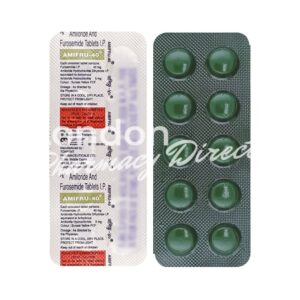
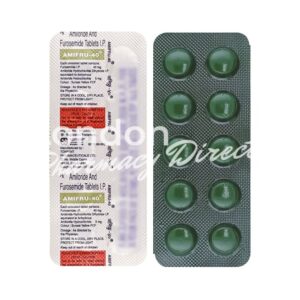
Furosemide
In brief
- Furosemide at London Pharmacy Direct is sold as 40mg and 100mg tablets, both in packs of 60 to 360, and orders reach UK addresses in 9–21 days.
- A loop diuretic, it makes the kidneys pass more salt and water, relieving swollen legs and breathlessness from fluid build-up in heart failure, liver cirrhosis and kidney problems.
- Only 40mg is a UK-licensed strength here, 100mg is not; weighing yourself at the same time each day is a simple way to notice fluid returning.
- Low potassium makes digoxin more toxic, furosemide may increase lithium levels, and some antibiotics add to the risk of hearing damage, so give the prescriber a full medicines list.
- If you become dehydrated through sickness or loose stools, check whether to hold a dose; you may also notice sunburn sooner and an attack of gout. UK law classes furosemide as a POM.
Basic furosemide information
- INN (international nonproprietary name): Furosemide (formerly frusemide in the UK).
- Brand names available in the United Kingdom: Lasix and generic furosemide (formerly frusemide) products.
- ATC code: C03CA01.
- Forms and dosages: Tablets 20 mg, 40 mg and 500 mg; oral solution 20 mg/5 mL, 40 mg/5 mL and 50 mg/5 mL; solution for injection 10 mg/mL.
- Registration status in the United Kingdom: Prescription-only medicine (POM), licensed by the MHRA.
- OTC / Rx classification: Prescription-only medicine (POM).
Everyday use and best practices for UK patients
Are you trying to fit furosemide into a normal day without spending half of it looking for a toilet?
That is the reality for many people taking furosemide tablets, especially when it is used for fluid retention, oedema, or heart failure.
As a loop diuretic, furosemide increases urine output, so timing matters more than it does with many other medicines.
Morning vs evening dosing
In most cases, furosemide is taken in the morning, because that gives the kidneys time to work while you are awake and able to get to the loo.
If it is prescribed twice daily, the second dose is often taken early in the afternoon rather than late in the evening, to reduce night-time urination.
That practical approach helps with commuting, school runs, shift work, and long meetings where toilet access may be limited.
If a dose is missed, take it when you remember unless it is nearly time for the next one.
Never double up to make up for a missed furosemide dose.
Taking with or without meals
Furosemide can usually be taken with or without food, but taking it in the same way each day helps build a routine.
A light breakfast may suit people who feel a bit nauseous after taking medicines on an empty stomach.
Drink normally unless your clinician has asked you to restrict fluids for a specific medical reason.
That balance is important with frusemide, because dehydration can make dizziness and low blood pressure more likely.
- Daily routine tips: take it early, keep a note of toilet access, weigh yourself regularly if advised, and keep doses aligned with work or travel plans.
- When to contact a pharmacist or GP: if you keep missing doses, if swelling is not improving, if you feel faint, if cramps become troublesome, or if urination suddenly becomes very reduced.
Safety priorities and who should avoid it
Could this medicine be unsafe for you, or for someone with several long-term conditions?
That is an important question with loop diuretic safety, because furosemide can shift fluids and salts quite quickly.
In the UK, it is prescription-only and should not be used if there is anuria, severe electrolyte depletion, or a known allergy to furosemide or sulfonamides.
Who should avoid it
Extra caution is needed in pregnancy and breastfeeding unless a clinician decides the benefits outweigh the risks.
Special care is also needed in severe liver disease, gout, diabetes, dehydration, urinary retention, and renal impairment.
Those conditions can change how the medicine behaves, and they can increase the chance of furosemide side effects such as low blood pressure or electrolyte imbalance.
Activities to limit
Dizziness, frequent urination, and low blood pressure can affect driving and operating machinery.
Planning matters for long-distance driving, lone working, warehouse roles, and any job with limited toilet access.
Standing up slowly and checking how you feel before risky tasks can reduce the chance of falls or near-fainting.
| Situation | Advice |
|---|---|
| Do not use | Anuria, severe electrolyte depletion, allergy to furosemide or sulfonamides. |
| Use with caution | Diabetes, gout, dehydration, urinary retention, renal impairment, severe liver disease. |
| Get advice first | Pregnancy, breastfeeding, driving, machinery, jobs with poor toilet access. |
Dosage and dose adjustments
How much furosemide is usually prescribed, and why does one person take more than another?
The answer depends on the condition being treated, the response achieved, and kidney and liver function.
Because furosemide is a prescription medicine, dosing should follow the prescriber’s instructions exactly.
General regimen
For oedema linked to heart failure, kidney disease, or liver disease, adults are commonly started on 20 to 80 mg orally once or twice daily.
Doses may then be titrated upwards to the lowest effective amount, and in some severe resistant cases the daily total can be much higher under specialist supervision.
For hypertension, adults are commonly prescribed 20 to 40 mg twice daily.
Acute pulmonary oedema may need intravenous treatment in hospital, usually 20 to 40 mg IV with repeat doses if needed.
That hospital setting matters because acute breathing problems can change quickly.
Special cases
Older adults often need a lower starting dose because they can be more sensitive to electrolyte imbalance and low blood pressure.
In renal impairment, higher or intravenous doses may sometimes be needed, but only with frequent monitoring of electrolytes and renal function.
Children need weight-based dosing and specialist oversight, with oedema doses of 1 to 2 mg/kg per dose and a maximum of 6 mg/kg/day.
Severe hepatic impairment needs careful handling because of the risk of precipitating encephalopathy.
| Group | Usual guidance |
|---|---|
| Adult | Oedema: 20 to 80 mg once or twice daily; hypertension: 20 to 40 mg twice daily; acute pulmonary oedema: 20 to 40 mg IV. |
| Child | 1 to 2 mg/kg per dose for oedema, oral or IV; specialist titration needed. |
| Elderly | Start at the lowest possible dose because of greater sensitivity to electrolyte imbalance. |
| Renal or liver impairment | Higher or IV dosing may be required, with frequent monitoring; ototoxic risk is higher. |
Legal status and availability in the UK
Furosemide is a prescription-only medicine (POM) in the UK.
In our online pharmacy, furosemide is available without a prescription, with discreet delivery to the United Kingdom in 9–21 days.
What’s inside and how it works
What actually makes furosemide such a fast-acting diuretic?
The answer starts in the kidney.
The active ingredient is furosemide, formerly written as frusemide in the UK.
It is available as tablets, oral solution, injection ampoules, and related hospital preparations.
Ingredients overview
Common tablet strengths include 20 mg, 40 mg and 500 mg, with injectable forms used when oral treatment is not suitable.
Mechanism basics explained simply
Furosemide is a loop diuretic that helps the body pass extra salt and water into the urine.
That reduces fluid overload, which can ease swelling and make breathing easier when fluid retention is part of the problem.
| Step | What happens |
|---|---|
| Salt leaves | The kidneys pass out more salt. |
| Water follows | Water moves out with the salt. |
| Fluid reduces | Swelling and overload may ease. |
Main indications and when it is used
Why is this medicine prescribed at all, and when is it the right choice?
In UK practice, furosemide for oedema is one of the commonest uses, especially when swelling is linked to heart, kidney, or liver disease.
It is also used for hypertension and for acute pulmonary oedema in urgent hospital care.
Approved uses
Approved uses include oedema linked to heart failure, kidney disease, and liver disease, as well as hypertension and acute pulmonary oedema.
UK use is MHRA-regulated and prescription-only.
Off-label uses in UK clinics
Specialist teams may sometimes use furosemide outside routine indications, but only with monitoring.
That decision belongs with the prescriber, not with a patient request made on the side.
| Condition | Usual setting | Monitoring needed |
|---|---|---|
| Oedema | Primary care or specialist care | Weight, swelling, blood pressure, electrolytes. |
| Hypertension | Prescribed when appropriate in routine care | Blood pressure, kidney function, symptoms. |
| Acute pulmonary oedema | Hospital emergency care | Close clinical and fluid monitoring. |
| Selected off-label use | Specialist setting only | Specialist supervision and follow-up. |
Interaction warnings with food, drink and medicines
Can a normal cup of tea, a glass of wine, or a painkiller make a difference?
With furosemide interactions, the answer can be yes.
Alcohol may worsen dizziness and dehydration.
Tea and coffee can add to fluid loss for some people if intake is high, so moderation is sensible.
Salt intake also matters, because following a clinician’s advice on diet can help fluid control.
Food interactions
Alcohol can make light-headedness worse, particularly if you are already losing fluid.
Large amounts of tea or coffee may add to the feeling of dryness in some people, so balance is sensible.
Drug conflicts
NSAIDs, aminoglycosides, antihypertensives, lithium, and other medicines that affect the kidneys or hearing can create higher-risk combinations.
Because loop diuretics can potentiate antihypertensives, blood pressure may fall more than expected.
If a new symptom appears after starting another medicine, the Yellow Card scheme is the right place to report suspected side effects.
| Medicine | Risk | What to do |
|---|---|---|
| NSAIDs | May interfere with diuretic effect and kidney safety. | Ask a pharmacist or GP before regular use. |
| Aminoglycosides | Higher ototoxicity risk. | Needs medical supervision. |
| Antihypertensives | Blood pressure may drop further. | Monitor symptoms and BP. |
| Lithium | Can be affected by fluid and sodium changes. | Only with prescriber oversight. |
- Check every regular medicine, including over-the-counter items.
- Tell the prescriber about kidney, hearing, or blood pressure problems.
- Report suspected side effects through Yellow Card.
Alternative choices in NHS prescribing
What if furosemide does not work well enough, or side effects become difficult to manage?
Other loop diuretics may be considered, but the right choice depends on the condition, kidney function, tolerability, and local formulary decisions.
Alternatives with pros and cons
- Torasemide: may be chosen if a specialist wants a different loop diuretic profile.
- Bumetanide: another option when a switch is needed, especially if response is poor.
- Ethacrynic acid: less commonly used, but still part of the loop diuretic group.
Furosemide remains widely used because it is familiar, effective, and commonly stocked.
When an alternative may be better
| Loop diuretic | Typical reason to consider it | Practical note |
|---|---|---|
| Furosemide | Standard first choice in many settings | Widely used. |
| Torasemide | May be considered if a different response is needed | Often specialist-led. |
| Bumetanide | May suit some patients when switching loop diuretics | Usually prescribed for a reason. |
| Ethacrynic acid | Alternative loop option in selected cases | Specialist choice. |
Regulation snapshot in the UK
Is furosemide properly regulated, and who can prescribe it?
Yes.
Furosemide is MHRA-regulated and prescription-only in the UK.
It may be prescribed in NHS care, via repeat prescriptions, or by specialists when more detailed monitoring is needed.
Frusemide is the older UK spelling of furosemide.
| UK status | Prescription type | Who can prescribe | Where dispensed |
|---|---|---|---|
| MHRA-regulated | Prescription only | GPs, hospital prescribers, and other authorised prescribers | NHS and private pharmacies |
Frequently asked questions
Why do I take it in the morning? Because furosemide increases urination, and an early dose reduces night-time trips to the toilet.
Can I take it with food? Yes, it can usually be taken with or without food, and some people prefer a light breakfast if it upsets their stomach.
What if I miss a dose? Take it when you remember unless the next dose is close, and never take two doses together.
When should I call my GP or pharmacist? If swelling is not improving, if you feel faint, if cramps are troublesome, or if urination is suddenly much less than usual.
Guidelines for proper use
What should a pharmacist check when someone starts or continues long-term furosemide?
In UK counselling, the focus is usually on weight, swelling, blood pressure, dehydration symptoms, and regular blood tests for kidney function and electrolytes.
That is because furosemide side effects often show up through fluid balance rather than through one dramatic event.
UK pharmacist counselling style
- Check daily weight if advised.
- Watch for swelling and breathlessness.
- Monitor blood pressure if you have a home cuff.
- Look out for thirst, cramps, dizziness, or weakness.
- Keep repeat prescriptions organised so doses do not run out.
NHS patient support advice
Urgent help is needed for severe weakness, fainting, confusion, very little urine, or hearing changes.
Practical support can include reminder apps, blister packs, and asking the pharmacy about synchronised repeats.
If the medicine stops working as expected, speak to a GP or pharmacist rather than changing the dose yourself.
- Seek urgent help for severe weakness, fainting, confusion, very little urine, or hearing changes.
- Use reminder apps or blister packs if timing is difficult.
- Ask about synchronised repeats if several medicines are due at different times.
- Contact a GP or pharmacist if furosemide seems less effective than before.
Delivery across the United Kingdom
| City | Region | Delivery time |
|---|---|---|
| London | Greater London | 9–21 days |
| Birmingham | West Midlands | 9–21 days |
| Manchester | North West England | 9–21 days |
| Glasgow | Scotland | 9–21 days |
| Edinburgh | Scotland | 9–21 days |
| Liverpool | North West England | 9–21 days |
| Leeds | West Yorkshire | 9–21 days |
| Bristol | South West England | 9–21 days |
| Newcastle upon Tyne | North East England | 9–21 days |
| Sheffield | South Yorkshire | 9–21 days |
| Nottingham | East Midlands | 9–21 days |
| Leicester | East Midlands | 9–21 days |
| Cardiff | Wales | 9–21 days |
| Belfast | Northern Ireland | 9–21 days |
| Coventry | West Midlands | 9–21 days |
If you are unsure whether furosemide is the right treatment, or if your swelling, blood pressure, or breathing is changing, speak to a pharmacist or GP before making any changes.