Baclofen
In brief
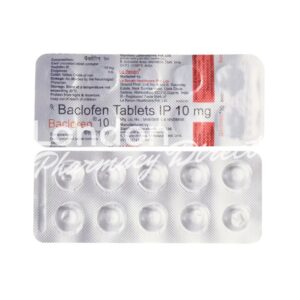
- Baclofen is a prescription-only medicine (POM) in the UK. It is supplied as 10 mg tablets, oral solution, and intrathecal preparations for specialist use.
- Baclofen is used to treat spasticity and muscle stiffness, especially in conditions such as multiple sclerosis, cerebral palsy, and spinal cord injury. It is a centrally acting muscle relaxant and antispastic agent that works by activating GABA-B receptors in the central nervous system, reducing the transmission of nerve signals that cause muscle tightness.
- The usual adult dose for spasticity starts at 5 mg three times daily, then is gradually increased. Typical maintenance is 30–80 mg per day in divided doses. Doses for children and intrathecal therapy are adjusted individually by a clinician.
- Baclofen is taken as oral tablets, oral solution/suspension, or given as an intrathecal injection via pump in specialist settings.
- Baclofen usually starts working within about 1–2 hours after an oral dose.
- The duration of action is generally around 4–8 hours for oral doses, which is why it is often taken in divided doses through the day.
- Do not drink alcohol while taking baclofen, as it can increase drowsiness, dizziness, and the risk of slowed breathing or poor coordination.
- The most common side effects are drowsiness, dizziness, weakness, fatigue, headache, low blood pressure, and nausea.
- Would you like to try baclofen without a prescription?
Basic baclofen information
- INN (international nonproprietary name): Baclofen
- Brand names available in the United Kingdom: Lioresal; Baclofen Actavis; generic baclofen
- ATC code: M03BX01
- Forms and dosages: Oral tablets 10 mg; oral solution; intrathecal injection in specialist settings
- Manufacturers in the United Kingdom: Actavis and other generic suppliers
- Registration status in the United Kingdom: Prescription-only medicine, licensed by the MHRA
- OTC / Rx classification: Prescription-only medicine (POM)
Everyday use and best practices for UK patients
Wondering when baclofen fits into a normal day, especially if tablets make you feel sleepy at first?
For most people, baclofen tablets are taken in divided doses through the day, and the exact timing depends on the prescription and how the body responds.
Some patients find an evening dose easier to manage early on because drowsiness can be stronger at the start, but consistency matters more than chasing a perfect clock time.
It may be taken with or without food, so the practical aim is to pick a routine you can repeat, whether that sits better with breakfast, lunch, or bedtime.
In the UK, baclofen is supplied as 10 mg tablets, including Baclofen Actavis.
Baclofen oral solution is also available, but patients should use the exact formulation prescribed, rather than switching brands or strengths on the day.
Keeping the pack in its original packaging also helps with dose checks, expiry dates, and pharmacy reorders.
- Do set phone reminders for each dose.
- Do link tablets to a daily routine event, such as breakfast, lunch, or brushing teeth at night.
- Do keep baclofen tablets in the original box or blister strip.
- Don’t alter the dose because one day feels better.
- Don’t swap to a different baclofen oral solution or tablet brand without checking first.
Morning vs evening dosing
New starters often ask whether a morning dose is the best way to begin.
That depends on how sleepy baclofen makes you feel, because sedation and somnolence are common effects.
If mornings feel too heavy, prescribers sometimes prefer the routine to be spread across the day with a stronger focus on the evening dose, but only as written on the label.
A simple daily routine can help: tablets after breakfast, after lunch, and at bedtime, with alarms on a mobile phone so doses are not missed when life gets busy.
Taking with or without meals
Baclofen can be taken with or without meals, so UK diet habits do not require a special menu change.
If someone tends to have a light breakfast or a late lunch, it is still fine to take baclofen consistently in the same place each day.
The main thing is not to keep changing the timing, because that makes it easier to miss a dose or double up by mistake.
That matters particularly with baclofen tablets, since the medicine works best when the timing is steady and predictable.
Safety priorities before starting baclofen
Before the first tablet, the most important question is not “will it help?”, but “is it safe for this person?”
Baclofen is prescription-only and can cause sleepiness, dizziness, weakness, and low blood pressure, so it needs proper review in anyone with higher-risk medical issues.
Extra caution is needed with kidney problems, epilepsy, psychiatric illness, a history of ulcer disease, pregnancy, breastfeeding, older age, or frailty.
Stopping suddenly can also cause serious rebound symptoms, which is why abrupt withdrawal is avoided in UK prescribing practice.
Who needs extra caution
| Group | Why extra review is needed |
|---|---|
| Kidney problems | Baclofen may accumulate and cause stronger adverse effects |
| Epilepsy | Needs close monitoring because seizure control may be more complex |
| Psychiatric illness | Neuropsychiatric effects may be more likely |
| Active or previous ulcer disease | Listed as a key contraindication or caution area |
| Pregnant or breastfeeding patients | Needs an individual benefit-risk review |
| Older or frail adults | Use the lowest effective dose and titrate slowly |
Activities to limit
Until the effect of baclofen is known, it is sensible to avoid driving, cycling, operating machinery, or working at height.
That advice matters in warehouses, on building sites, and even in office settings if the medicine makes concentration feel foggy.
MHRA-style safety thinking is simple here: if sedation is present, do not take avoidable risks.
- Do not drive until you know how baclofen affects alertness.
- Do not combine it casually with other sedating medicines.
- Do not stop abruptly if side effects appear; seek advice first.
- Do report severe drowsiness, confusion, or breathing concerns quickly.
Dosage and dose adjustments in UK practice
How much baclofen is enough is rarely a one-size-fits-all question.
NHS-style prescribing usually starts low, checks response, and increases gradually to reduce unwanted effects.
For adults with spasticity, the usual starting dose is 5 mg orally three times a day, with gradual titration to the dose that works best.
Typical maintenance sits around 30–80 mg a day in divided doses, although the exact amount depends on tolerance and clinical need.
For children, dosing is weight-based at about 0.3 mg/kg/day in divided doses, with age-appropriate limits and careful review.
Intrathecal baclofen is different and stays within specialist hospital treatment for severe cases.
General regimen
| Patient group | Usual approach | Typical dose information |
|---|---|---|
| Adults | Start low and increase slowly | 5 mg three times daily, then titrate to effect |
| Children | Weight-based divided dosing | 0.3 mg/kg/day, with strict limits |
| Older adults | Use the lowest effective dose | Slower titration because of higher sensitivity |
| Renal impairment | Review closely and consider reduction | Accumulation risk means extra caution |
Special cases
Older people often need a gentler start because baclofen can build up more easily and cause more sedation, weakness, or confusion.
The same logic applies when kidney function is reduced, since the medicine may not clear as well.
For that reason, “start low, go slow” is not just a phrase; it is the practical rule that protects patients in primary care and neurology clinics alike.
Intrathecal baclofen is reserved for specialist use and delivered by pump in severe spasticity, not as a routine community-pharmacy option.
Legal status and availability in the UK
Baclofen is a prescription-only medicine (POM) in the UK.
In our online pharmacy, baclofen is available without a prescription, with discreet delivery to the United Kingdom in 9–21 days.
What baclofen contains and how it works
Baclofen is one of those medicines where the name tells you almost everything you need to know.
The active ingredient is baclofen itself, while different brands may vary in tablet ingredients and presentation.
The ATC code is M03BX01.
Ingredients overview
- What it is: baclofen is the active medicine in baclofen tablets and related forms.
- What it does: it acts as a centrally acting muscle relaxant and antispastic drug.
- What it is not: it is not a painkiller in the usual sense, and it does not cure the underlying neurological condition.
Mechanism basics explained simply
In plain English, baclofen reduces overactive nerve signals in the spinal cord.
That can ease spasticity and muscle stiffness, which is why it is used in neurology and rehabilitation.
People sometimes know it by the brand Lioresal, especially when looking up baclofen tablets or discussing treatment options with specialists.
Main uses of baclofen in UK care
Why do clinicians reach for baclofen instead of a different muscle relaxant?
In UK care, the core use is severe spasticity linked with neurological conditions such as multiple sclerosis, cerebral palsy, spinal cord injury, or other causes of muscle rigidity.
It is widely used in neurology and rehabilitation, and the starting point for adults is usually 5 mg orally three times daily, with titration to effect.
Intrathecal baclofen is reserved for severe spasticity and managed by specialists when tablets are not enough.
Approved uses
| Condition | Why baclofen may be used |
|---|---|
| Multiple sclerosis | To reduce spasticity and muscle rigidity |
| Cerebral palsy | To help ease spasticity that affects movement and care |
| Spinal cord injury | To reduce overactive muscle tone |
Off-label uses in UK clinics
Some UK clinicians may use baclofen in selected situations outside the main licensed pattern, but that should stay specialist-led and closely reviewed.
The important point for patients is that the drug is chosen for spasticity care, not as a casual all-purpose relaxant.
Food, drink, and drug interactions to watch
Could a glass of wine or a night-time antihistamine make baclofen harder to tolerate?
Yes, alcohol can increase drowsiness and should usually be avoided or kept to a minimum when baclofen is being started or adjusted.
Tea and coffee do not have a major direct interaction, but caffeine will not reliably cancel out sedation and may worsen sleep for some people.
Other sedating medicines are the bigger concern, especially sleeping tablets, opioids, antihistamines, and any treatment that reduces alertness.
If a suspected interaction or serious side effect is seen, the MHRA Yellow Card system can be used for reporting.
Even then, baclofen should not be stopped suddenly without medical advice, because withdrawal can be serious.
Interaction checklist
- Alcohol may increase sedation and dizziness.
- Sleeping tablets and opioids can add to drowsiness.
- Antihistamines may increase tiredness.
- Driving, cycling, and machine use may become unsafe if alertness drops.
- Sudden stopping can trigger withdrawal symptoms and should be avoided.
Alternatives to baclofen on the NHS
Sometimes baclofen is not the best fit, even when spasticity is the problem.
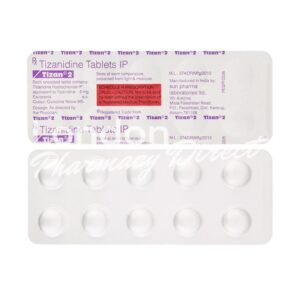
The main alternatives used in UK prescribing are tizanidine, diazepam, and dantrolene, each with different side effect patterns and monitoring needs.
Physiotherapy, stretching, splinting, and multidisciplinary rehabilitation often run alongside medicine rather than replacing it.
NHS prescribing alternatives with pros and cons
| Medicine | Pros | Cons |
|---|---|---|
| Tizanidine | Useful muscle relaxant option | Can cause sedation and low blood pressure |
| Diazepam | May help with spasms | Not ideal long term because of dependence risk |
| Dantrolene | Different mechanism can help selected patients | Needs its own monitoring and review |
When clinicians may switch or add treatment
A switch may be considered if baclofen side effects are too strong, the benefit is too small, or another condition makes a different drug safer.
In practice, treatment choice depends on the cause of spasticity, the person’s comorbidities, and how each medicine affects day-to-day function.
Regulation snapshot for UK patients
In the UK, baclofen sits within normal regulated prescribing pathways and is prescription-only.
MHRA oversight applies to the product class, while GPs, neurologists, and hospital specialists may prescribe it depending on the clinical situation.
Community pharmacies dispense it when stock is available, and pack sizes may vary, commonly 10 mg tablets.
Baclofen Actavis is one UK generic, and specialist formulations such as oral liquid or intrathecal products are used in selected settings.
How access works in the UK
- A clinician assesses the need for treatment.
- A prescription is issued in the NHS or private system.
- A community pharmacy supplies the pack if stock is available.
- Specialist hospital services manage intrathecal baclofen.
Common UK patient questions about baclofen
People usually want short, practical answers rather than a long leaflet when they are already in pain or dealing with stiffness.
How quickly does baclofen work?
Some people notice early changes as the dose is built up, but full benefit often depends on gradual titration.
Can I take baclofen with food?
Yes, baclofen can be taken with or without food, so the routine can fit breakfast, lunch, or bedtime.
What if I miss a dose?
Take it as soon as you remember unless the next dose is close.
Do not double up.
Can I stop baclofen suddenly?
No, sudden stopping can cause withdrawal risk, including severe rebound symptoms, so tapering under medical supervision is the safe approach.
Guidelines for proper use and pharmacist-style counselling
Good counselling is often what turns a difficult start into a manageable one.
Take baclofen exactly as prescribed, increase doses only when the prescriber says so, and do not share tablets with anyone else.
Store the medicine below 25°C, away from light and moisture, and keep it out of reach of children.
If troublesome drowsiness, confusion, weakness, urinary problems, rash, or breathing concerns appear, prompt advice is needed.
Withdrawal warning matters here too: if baclofen needs to be stopped, the dose should be tapered under medical supervision rather than cut off suddenly.
For UK support, speak to the community pharmacist, contact the GP surgery, use NHS 111 for urgent advice, or seek emergency help for overdose symptoms such as severe sleepiness, hypotonia, seizures, or breathing problems.
Do now
- Take the next dose exactly as prescribed.
- Keep tablets in the original pack.
- Use reminders to avoid missed doses.
Call for advice
- Report persistent drowsiness or dizziness.
- Ask about dose timing if work or driving is affected.
- Check with a pharmacist if a new medicine is started.
Seek emergency help
- Severe sleepiness.
- Breathing problems.
- Seizures.
- Sudden collapse or marked weakness.
Delivery across the United Kingdom
| City | Region | Delivery Time |
|---|---|---|
| London | England | 9–21 days |
| Birmingham | England | 9–21 days |
| Manchester | England | 9–21 days |
| Leeds | England | 9–21 days |
| Liverpool | England | 9–21 days |
| Newcastle upon Tyne | England | 9–21 days |
| Sheffield | England | 9–21 days |
| Bristol | England | 9–21 days |
| Nottingham | England | 9–21 days |
| Leicester | England | 9–21 days |
| Edinburgh | Scotland | 9–21 days |
| Glasgow | Scotland | 9–21 days |
| Cardiff | Wales | 9–21 days |
| Belfast | Northern Ireland | 9–21 days |
Extra practical points worth knowing
Store baclofen tablets below 25°C and protect them from light and moisture.
No special cold-chain transport is needed for tablets or oral solutions, although specialist intrathecal products follow manufacturer guidance.
If a dose is missed, it should be taken when remembered unless the next dose is due soon, and the dose should never be doubled.
Overdose symptoms can include respiratory depression, somnolence, hypotonia, and seizures, which need immediate hospital treatment.
That is why baclofen works best when the day-to-day routine is steady, the dose is reviewed carefully, and any worrying change is picked up early.