Dydrogesterone
In stock
10mg
from 45,49 £
In brief
- Dydrogesterone is a synthetic progestogen prescribed for menstrual disorders, endometriosis, premenstrual syndrome and as the progestogen component of HRT.
- The 10 mg tablet is the only strength, supplied in packs of 10, 30, 40 or 60.
- Legal category POM. In the UK the 10 mg tablet is sold as Nalvee, whereas the product on this page is an imported generic.
Dydrogesterone and its likeness to progesterone
Dydrogesterone is designed to resemble progesterone, the hormone the ovaries release in the second half of a cycle. It acts on the womb lining. Unlike some progestogens it carries no oestrogen-like, androgen-like or corticosteroid-like activity. It is also the partner given to women on HRT who still have a uterus, because oestrogen alone would thicken the lining and the progestogen counteracts that.
Why a doctor might prescribe it
UK labelling for the 10 mg tablet lists painful periods; endometriosis; cycles that are irregular; periods that have stopped because of a hormonal fault; heavy or erratic bleeding without a structural cause; and premenstrual syndrome. In HRT it is combined with an oestrogen. Each purpose has its own calendar, which is why one pack size does not fit all.
Which pack, and a word on imported stock
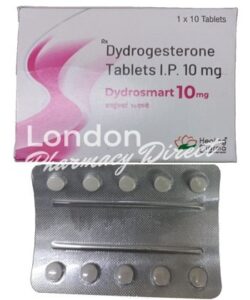
Choose from 10, 30, 40 or 60 tablets of 10 mg. A twice-daily course from day 5 to day 25 consumes 42 tablets, so a 40-tablet pack ends two doses short of a cycle. Imported stock is a generic and not the licensed UK medicine; its carton and leaflet may be written with another market in mind. Make sure the strip names dydrogesterone and the 10 mg strength before swallowing the first one.
Schedules by cycle day
Counting starts at the first day of full bleeding. The SmPC advice is as follows. Painful periods: one 10 mg tablet morning and evening, days 5 to 25. Endometriosis: 10 mg two or three times daily, either across those same days or throughout the cycle. Irregular cycles, or no periods: twice daily from day 11 to day 25, plus an oestrogen when periods are absent. Premenstrual syndrome: twice daily, days 12 to 26. Continuous oestrogen HRT: 10 mg daily for the final 14 days of every 28-day cycle. Cyclical oestrogen HRT: 10 mg daily across the final 12 to 14 days of the oestrogen course. If needed, 20 mg a day can be reached. Because the schedules depend on the calendar, many prescribers ask patients to note the first day of each bleed, how heavy it was, any spotting and the pain level. A diary of this kind shows whether the treatment is working and whether the dose days need changing.
Reasons not to use it, and medicines that weaken it
The SmPC rules it out for people allergic to its ingredients, for progestogen-dependent tumours such as meningioma, and for vaginal bleeding of unknown cause; the oestrogen contraindications join the list when it is part of HRT. Anything that speeds up liver metabolism can weaken it. The SmPC names St John’s wort, the antiepileptics phenobarbital, phenytoin and carbamazepine, the antibiotics rifampicin and rifabutin, and the HIV medicines nevirapine and efavirenz. Women who breastfeed should not take it, since nobody knows how much reaches the milk or what it does to the baby. Everything taken, herbal remedies too, belongs on the list given to the prescriber.
Possible effects, and when to act
Headaches, migraine, nausea, tender breasts and altered bleeding patterns, with spotting between periods, are the effects the SmPC puts first. Feeling dizzy or low, being sick, a rash and weight gain are reported less often. A sudden severe headache like a migraine or a sudden disturbance of vision means stopping and seeking medical advice at once; bleeding that carries on needs checking too. The MHRA Yellow Card scheme takes reports of suspected reactions.
What the UK licence covers
On its own, dydrogesterone is licensed in the UK as Nalvee 10 mg film-coated tablets, and the HRT products that pair it with oestrogen, Femoston for example, are also prescription-only. Whether Dydrogesterone is suitable, in what dose and on which days, is a decision for your doctor.